
Ravannan: The Complex Legacy of the Tamil King of Lanka
The Story of Ravannan: Abduction of Sita and War with Lord Rama
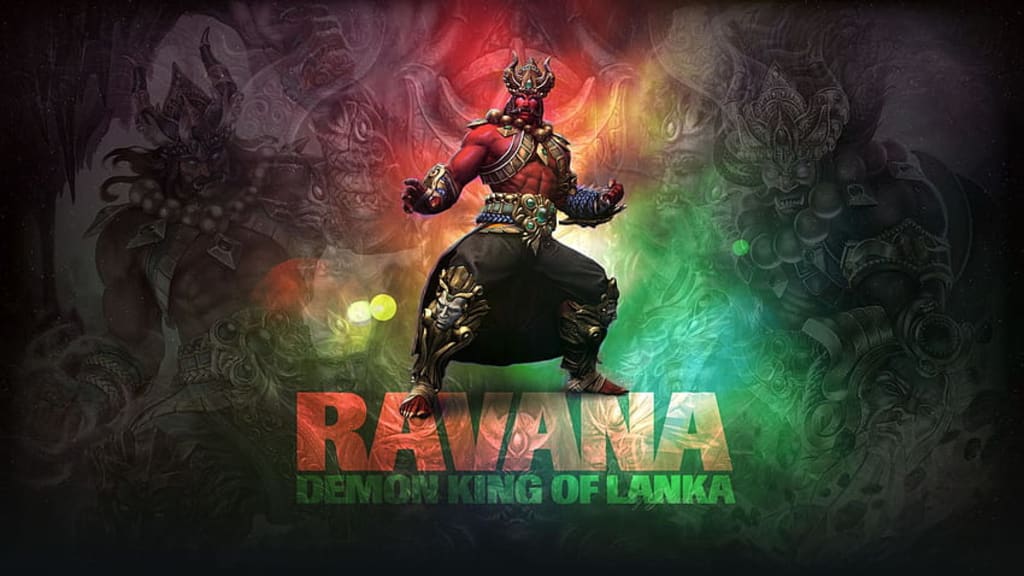
Ravana, also known as Ravannan or Dasamukha, is a prominent figure in Hindu mythology and is considered one of the most infamous villains in Indian history. He is known as the antagonist in the epic Ramayana, but his story extends far beyond that. In this article, we will explore the history of Ravannan, his reign as the king of Lanka, and his eventual downfall.
Ravannan's early life and ascent to the throne:
Ravana was born to a sage named Vishrava and his wife, Kaikesi. His father was a descendant of the sage Pulastya, one of the ten Prajapatis who were created by Brahma, the creator god. Ravana's mother was a rakshasa princess, who was the daughter of the demon king Sumali. Ravana had two brothers, Kumbhakarna and Vibhishana, and a half-brother named Kubera.
Ravana was a brilliant scholar and warrior, and he acquired many skills and powers through his rigorous training. He was particularly adept at black magic and had mastered the use of many weapons. He was also a skilled musician and was known to have invented the veena, a stringed instrument that is still popular in South India.
Ravana's father was the ruler of the kingdom of Rakshasa, and after his death, Ravana and his brothers inherited his vast wealth and power. However, Ravana's ambition knew no bounds, and he was not content with ruling just one kingdom. He set his sights on the island of Lanka, which was ruled by his half-brother Kubera.
Ravana attacked Lanka with a massive army and defeated Kubera's forces. He then seized control of the kingdom and declared himself king. Ravana was a powerful and ruthless ruler, and he quickly established himself as a dominant force in the region. He expanded his kingdom through conquest and annexed many neighboring territories.
Ravana's reign as the king of Lanka:
Ravana ruled Lanka with an iron fist, and his subjects lived in fear of his wrath. He was known for his extreme cruelty and was feared by both humans and rakshasas alike. However, he was also a patron of the arts and was known to be a generous patron of musicians, poets, and artists.
Ravana was a devotee of Lord Shiva, and he had built many temples and shrines in his honor. He was also a scholar of the Vedas and had a deep understanding of Hindu philosophy and mythology. He was known to be a wise and just ruler who dispensed justice fairly, but he could also be capricious and unpredictable.
Ravana's downfall:
Ravana's downfall began when he abducted Sita, the wife of Lord Rama, who was the prince of Ayodhya. Rama had been banished from his kingdom by his stepmother and had gone into exile with his wife and brother. Ravana, who was enamored with Sita's beauty, kidnapped her and took her to Lanka.
This act of kidnapping enraged Rama, who vowed to rescue his wife and punish Ravana. He formed an alliance with the monkey king Sugriva and his army of monkeys and bears, and together they marched towards Lanka. Rama's army fought a fierce battle with Ravana's forces, and in the end, Rama emerged victorious.
Ravana fought bravely in the battle, but he was ultimately defeated by Rama. He was killed by an arrow shot by Rama, who was aided by the monkey god Hanuman. Ravana's death marked the end of an era, and his reign as the king of Lanka came to an abrupt end.
Legacy of Ravannan:
Ravana is a complex figure in Hindu
mythology, and his legacy has been the subject of much debate and interpretation. Some view him as a demon and a symbol of evil, while others see him as a tragic figure who was misunderstood and unfairly demonized.
In some versions of the Ramayana, Ravana is portrayed as a tragic hero who was driven to commit his misdeeds by a combination of his own pride and the machinations of fate. In these versions, his death is seen as a tragic end to a flawed but ultimately sympathetic character.
Ravana is also seen as a symbol of the dangers of unchecked ambition and desire. His insatiable thirst for power and wealth led him to commit terrible deeds and ultimately brought about his downfall.
Despite his reputation as a villain, Ravana is still revered in some parts of India, particularly in Sri Lanka, where he is seen as a national hero. Many people see him as a symbol of resistance against colonialism and imperialism, and his story is often used as a metaphor for the struggle against oppression.
In conclusion, Ravannan, or Ravana, was a complex figure whose legacy is still the subject of debate and interpretation. He was a powerful and ambitious king who ruled over Lanka with an iron fist, but his downfall came when he abducted Sita, the wife of Lord Rama. Despite his reputation as a villain, his story continues to inspire and fascinate people to this day, and his legacy is sure to endure for generations to come.
It is worth noting that Ravana's story has been retold and adapted in many forms of media, including literature, theater, and film. His character has been reimagined and reinterpreted in various ways, reflecting the changing cultural and political contexts in which his story is told.
In recent years, there has been a renewed interest in Ravana and his place in Hindu mythology. Scholars and writers have explored the complexities of his character and the various ways in which his story has been told over the centuries. Some have even argued that Ravana represents a kind of Hindu antihero, whose story challenges traditional notions of good and evil.
Overall, the story of Ravannan is a fascinating and multifaceted one that continues to captivate and intrigue people around the world. Whether seen as a villain or a tragic hero, his story reminds us of the enduring power of myth and the rich cultural heritage of India.
Historically, the Tamil king Ravannan was believed to have lived during the time of the Ramayana, which is estimated to have occurred between 700 BCE and 200 BCE. However, there is little historical evidence to support this claim, and much of what we know about Ravana comes from Hindu mythology and legend.
According to the Ramayana, Ravana was the king of Lanka, a kingdom located in present-day Sri Lanka. He was a highly skilled warrior and scholar, with immense knowledge of magic and mysticism. He was also said to have had ten heads, which represented his vast knowledge and wisdom.
Despite his many talents and accomplishments, Ravana was known for his pride and arrogance. He believed himself to be invincible and invulnerable, and he often engaged in battles and conquests simply to prove his superiority. However, his downfall came when he abducted Sita, the wife of Lord Rama, one of the most revered figures in Hindu mythology.
Rama, aided by his brother Lakshmana and the monkey king Hanuman, waged war against Ravana to rescue Sita and defeat the tyrant king. The epic battle that followed is known as the Ramayana War, and it culminated in Ravana's defeat and death at the hands of Lord Rama.
While Ravana is traditionally seen as a villain and an antagonist in the Ramayana, his story is much more nuanced and complex than that. In some versions of the story, he is portrayed as a tragic hero who was undone by his own pride and ambition. In others, he is seen as a victim of circumstance, a figure who was misunderstood and unfairly demonized by history.
One of the most notable aspects of Ravana's story is his relationship with Sita, who is often portrayed as a symbol of purity and virtue in Hindu mythology. Ravana's abduction of Sita is seen as a heinous act of violence and a violation of the sacred bonds of marriage. However, some scholars have argued that Ravana's actions towards Sita were more complex than they initially appear.
For example, some have suggested that Ravana may have been motivated by a desire to protect Sita from Lord Rama, who was seen by some as a ruthless and aggressive warrior. Others have pointed out that Sita was not always portrayed as a helpless victim in the Ramayana, but rather as a strong and independent woman who was capable of defending herself.
Despite the many different interpretations of Ravana's story, there is no doubt that he remains one of the most intriguing and enigmatic figures in Hindu mythology. His legacy continues to inspire and fascinate people around the world, and his story serves as a reminder of the enduring power of myth and legend in shaping our understanding of the world around us.
About the Creator
The Inevitable Cocktail: A Timeless Classic to Savor
The Inevitable cocktail is one of those drinks that feels like it was destined to be. It’s smooth, balanced, and just a little bit mysterious — the kind of drink that you sip slowly while contemplating the night ahead. If you’re a fan of cocktails that combine the warmth of whiskey with the subtle sweetness of vermouth and a hint of herbal bitterness, then the Inevitable might just become your new go-to.
By Ava Mitchell2 days ago in Proof
Conscious Breathing: A Path to Present Awareness
Breathing is something we do every moment without thinking. Yet, when we bring conscious attention to our breath, it becomes a powerful tool to anchor us in the present moment. Conscious breathing helps calm the mind, relax the body, and open space for clarity and peace.
By Garold One6 days ago in Proof




Comments
There are no comments for this story
Be the first to respond and start the conversation.