
The Legend of Kumarikandam: A Fascinating Tale of a Lost Continent
The Origins of the Kumarikandam Legend in Tamil Literature
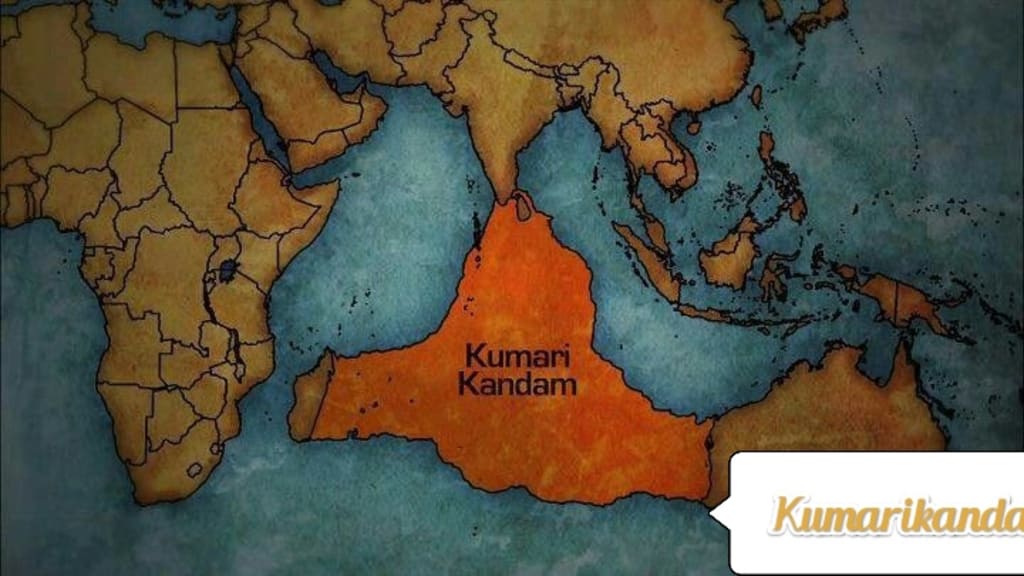
Kumarikandam is a hypothetical continent believed to have existed in the southern part of the Indian Ocean. The concept of Kumarikandam is based on the ancient Tamil literature, which mentions a lost continent that was submerged in the sea. The idea of a lost continent in the Indian Ocean has intrigued historians and geologists for decades.
The history of Kumarikandam can be traced back to the Sangam period of Tamil literature, which dates back to 300 BCE to 300 CE. The term Kumarikandam is mentioned in the ancient Tamil epic Silappathikaram, which describes the continent as a land of great wealth and prosperity. According to the legend, Kumarikandam was ruled by the Pandya kings, who were said to have a powerful navy and a vast empire.
The legend of Kumarikandam is linked to the story of the Tamil Sangam, which was said to have been a gathering of poets, scholars, and kings who met to discuss literature, science, and politics. According to the legend, the first Sangam was held in Kumarikandam, but the continent was destroyed by a great flood, which submerged the entire landmass. The second Sangam was said to have been held in the present-day city of Madurai, after the survivors of Kumarikandam migrated to the mainland.
The legend of Kumarikandam has been debated by scholars and historians for centuries. Some believe that the story of the lost continent is a myth, while others believe that there is some truth to the legend. There have been several attempts to locate the lost continent, but so far, no evidence has been found to support the existence of Kumarikandam.
Geologists have suggested that the concept of Kumarikandam may have originated from the theory of continental drift, which suggests that the continents on Earth have moved over time. According to this theory, the Indian subcontinent was once part of a larger landmass called Gondwana, which included Africa, Australia, and Antarctica. As Gondwana broke apart, the Indian subcontinent drifted northwards, eventually colliding with the Eurasian plate, which led to the formation of the Himalayan Mountains.
The theory of continental drift suggests that a large landmass may have existed in the Indian Ocean, which was eventually submerged by rising sea levels. However, there is no evidence to suggest that this landmass was called Kumarikandam or that it was ruled by the Pandya kings.
Another theory suggests that the legend of Kumarikandam may be based on the ancient Tamil trading networks that extended across the Indian Ocean. The Tamil people were known for their maritime skills and were involved in trade with the kingdoms of Southeast Asia and East Africa. It is possible that the story of Kumarikandam was a way of legitimizing the Tamil presence in these regions and establishing a sense of Tamil identity and pride.
Despite the lack of concrete evidence, the legend of Kumarikandam remains an important part of Tamil history and culture. It has inspired numerous literary works, including the Silappathikaram and the Manimekalai, and has been the subject of many scholarly debates and discussions.
In recent years, there has been renewed interest in the concept of Kumarikandam, with some researchers suggesting that the lost continent may hold the key to unlocking the secrets of ancient Tamil civilization. However, until concrete evidence is found to support the existence of Kumarikandam, the legend remains a fascinating mystery of the ancient world.
In conclusion, the story of Kumarikandam is a fascinating tale of a lost continent that was said to have been ruled by the Pandya kings. While there is no concrete evidence to support the existence of Kumarikandam, the legend remains an important part of Tamil historyand culture, and has inspired numerous works of literature and scholarship. The legend of Kumarikandam has also sparked the imagination of people around the world and has become a subject of interest and fascination for geologists, historians, and archaeologists.
Some scholars have suggested that the concept of Kumarikandam may have been influenced by ancient Tamil seafaring and trading networks, which extended across the Indian Ocean. The Tamil people were known for their maritime skills and were involved in trade with the kingdoms of Southeast Asia and East Africa. It is possible that the story of Kumarikandam was a way of legitimizing the Tamil presence in these regions and establishing a sense of Tamil identity and pride.
Despite the lack of evidence, the legend of Kumarikandam continues to capture the imagination of people around the world. In recent years, there has been renewed interest in the lost continent, with some researchers suggesting that it may hold the key to unlocking the secrets of ancient Tamil civilization. Some have even speculated that the continent may have been the cradle of human civilization, predating the ancient civilizations of Mesopotamia and Egypt.
However, until concrete evidence is found to support the existence of Kumarikandam, it remains a fascinating mystery of the ancient world. The legend of Kumarikandam has played an important role in shaping Tamil history and culture and continues to inspire people around the world to explore the mysteries of the past.
In conclusion, the story of Kumarikandam is a fascinating tale of a lost continent that has captured the imagination of people around the world. While there is no concrete evidence to support the existence of Kumarikandam, the legend remains an important part of Tamil history and culture and continues to inspire people to explore the mysteries of the past.
About the Creator
Ranatheera Koochadaiyan: The Warrior King and Patron of Tamil Culture
Ranatheera Koochadaiyan was a powerful king who ruled over the Tamil Nadu region of South India during the 10th century CE. He is known for his military prowess and his patronage of literature and the arts. In this article, we will delve deeper into the life and legacy of this fascinating king.
By Chandran3 years ago in Motivation
How did Hitler rise to power?
How did Adolf Hitler, a tyrant who orchestrated one of the largest genocides in human history, rise to power in a democratic country? The story begins at the end of World War I. With the successful Allied advance in 1918, Germany realized the war was unwinnable and signed an armistice ending the fighting. As its imperial government collapsed, civil unrest and worker strikes spread across the nation. Fearing a Communist revolution, major parties joined to suppress the uprisings, establishing the parliamentary Weimar Republic.
By Munesh Yadavabout 18 hours ago in Education




Comments
There are no comments for this story
Be the first to respond and start the conversation.