
Israel’s Netanyahu Agrees to Join Trump’s Board of Peace — A Deep‑Dive Into the New Global Initiative
“Israeli Prime Minister Benjamin Netanyahu accepts invitation to join Trump’s newly formed Board of Peace, signaling a bold step in global diplomacy and post-conflict governance initiatives.”

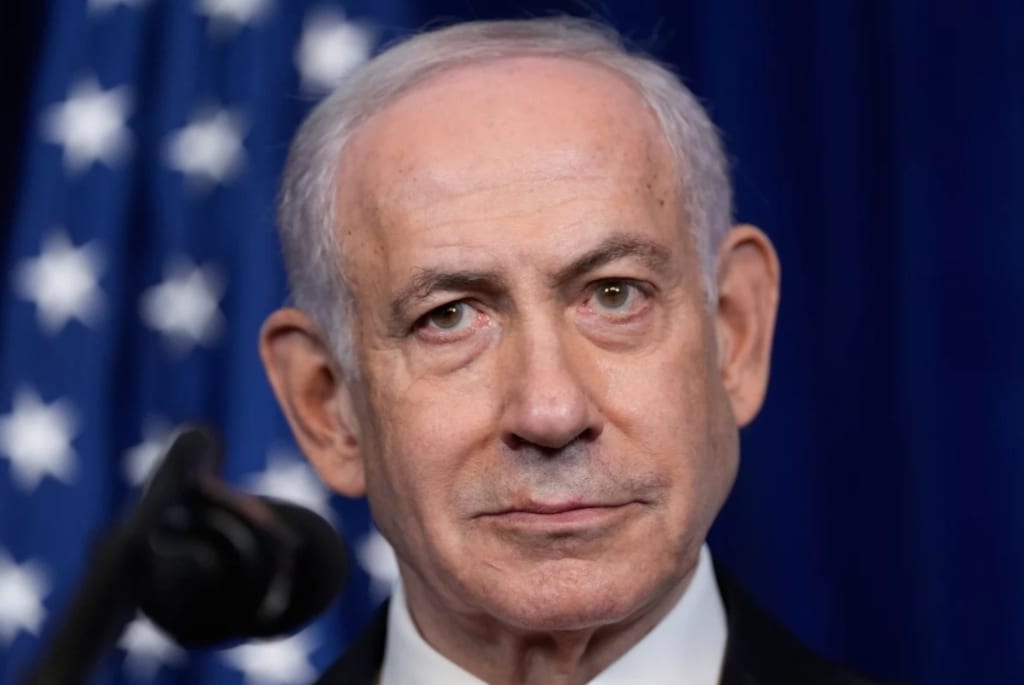
In a major diplomatic development on January 21, 2026, **Israeli Prime Minister Benjamin Netanyahu announced that he has agreed to join U.S. President Donald Trump’s newly created “Board of Peace,” a controversial international initiative aimed at resolving the ongoing conflicts in Gaza and, potentially, other regional crises around the world. The decision marks a significant shift in Israel’s diplomatic stance and underscores the expanding global ambitions of the Board itself.
What Is the Board of Peace?
The Board of Peace is a novel international body launched by President Trump in late 2025 as part of a broader strategy to manage peace and stabilization in post‑conflict regions, particularly the Gaza Strip, which remains mired in intermittent hostilities despite recent cease‑fire efforts. Initially envisioned as a small group dedicated to overseeing implementation of a Gaza peace plan, the initiative has rapidly evolved into a more expansive entity that Trump’s team suggests could serve as a global platform for conflict resolution — drawing comparisons to the United Nations Security Council.
A draft charter — not yet publicly released in full — reportedly centralizes substantial authority with Trump himself, positioning him as chair and setting financial barriers for permanent membership. Countries agreeing to participate can gain three‑year membership terms, but a $1 billion contribution is required to secure permanent status.
The Board’s broader mandate, as articulated by its proponents, encompasses diplomatic coordination, conflict prevention, reconstruction financing, and the establishment of political frameworks in war‑torn regions. At least eight nations, including Israel, the United Arab Emirates, Morocco, Vietnam, Kazakhstan, Hungary, Argentina, and Belarus, have already signaled their participation. Invitations have also been extended to Russia, India, the European Union’s executive arm, and other international leaders.
Netanyahu’s Decision and Its Implications
Prime Minister Netanyahu’s acceptance of Trump’s invitation marks a notable reversal from earlier reservations expressed by members of his government. His office had previously criticized aspects of the Board’s structure — particularly the inclusion of Turkey, a longtime regional rival — and strategic elements that seemed to overlap with Israeli policy prerogatives.
By agreeing to join, Netanyahu signals a willingness to engage directly with Trump’s peace apparatus, potentially recalibrating Israel’s diplomatic priorities amid ongoing regional tensions. Israel’s participation offers legitimacy to the Board and aligns Jerusalem more closely with the U.S. leadership’s vision for post‑conflict governance in Gaza.
However, Netanyahu’s acceptance does not come without domestic political risk. Hardline ministers within his government have previously vehemently opposed elements of the peace plan associated with the Board, arguing for military solutions over international governance structures. The inclusion of nations like Turkey and Qatar, historically critical of Israeli policy, has especially sparked controversy.
Structure and Key Figures
The Board’s executive committee brings together an eclectic mix of political and private sector figures:
U.S. Secretary of State Marco Rubio
Trump’s senior envoy Steve Witkoff
Trump’s son‑in‑law Jared Kushner
Former British Prime Minister Tony Blair
Apollo Global Management CEO Marc Rowan
World Bank President Ajay Banga
Trump’s deputy national security adviser Robert Gabriel
This composition has drawn mixed reactions. Supporters view it as a blend of diplomatic, financial, and practical expertise; critics set off alarms given the political histories of some participants — particularly Blair, whose role in the Iraq War remains contentious.
Alongside the Board of Peace, a Gaza Executive Board has been established to implement Phase Two of the Gaza cease‑fire plan. This subsidiary body is tasked with deploying an international security force, promoting disarmament of armed groups like Hamas, and facilitating reconstruction efforts in a territory ravaged by years of conflict. Its roster includes diplomats and officials from Turkey, Qatar, Egypt, and the UAE, as well as civilian representatives tasked with Gaza’s day‑to‑day governance.
Global Response and Controversy
The Board of Peace initiative has drawn significant international attention — both positive and critical. Proponents argue that current global institutions like the United Nations have struggled to resolve entrenched conflicts and that a leaner, Trump‑led body could inject fresh momentum into peace efforts. Trump himself has hinted that the Board might serve as a complement — or, in some interpretations, an alternative — to existing multilateral frameworks.
Yet critics question the board’s legitimacy and transparency:
Its financial barriers to permanent membership raise concerns about equity and influence.
Centralizing power under a single leader — Trump — troubles diplomats wary of undermining established international norms.
The absence of clear representation for Palestinian voices in key decision‑making roles challenges the Board’s credibility among stakeholders most affected by the conflict.
Some analysts worry the initiative could inadvertently deepen geopolitical fault‑lines if countries view participation as aligning with U.S. interests over collective diplomacy. Others criticize the early membership list as including nations whose human rights records and foreign policies are at odds with global peacebuilding principles.
What’s Next?
Netanyahu’s formal statement of acceptance will likely be followed by a high‑profile announcement during the upcoming World Economic Forum in Davos, Switzerland, where Trump is expected to outline the Board’s future ambitions. The speech is anticipated to shed further light on how the Board of Peace will operate, how membership dynamics will unfold, and how it plans to address persistent conflicts such as Gaza, Ukraine, and others.
As the Board takes shape, its ultimate effectiveness will hinge on its capacity to balance power, include diverse voices, maintain legitimacy, and produce tangible results on the ground. For now, Netanyahu’s decision marks a new chapter in international diplomacy — one that reflects both the promise and contention inherent in efforts to forge peace in an increasingly complex world.
About the Creator
Keep reading
More stories from Salaar Jamali and writers in Proof and other communities.
The Latest: Trump’s Plane Delayed on the Way to Second Day of Davos Economic Forum
In an unexpected twist early Wednesday morning, U.S. President Donald Trump’s trip to the prestigious World Economic Forum (WEF) in Davos, Switzerland was temporarily derailed after a minor electrical malfunction forced his official aircraft to return to the United States shortly after departure. The incident — though described by the White House as a precaution — delayed Trump’s arrival as he prepared to participate in the second day of the summit, where global leaders are debating pressing economic, geopolitical and security concerns.
By Salaar Jamali5 days ago in The Swamp
Crafting a Letter-Inspired Drink: A Cocktail with Personality
When it comes to cocktails, inspiration can come from anywhere — a memory, a place, or even a letter. A letter-inspired drink is a playful way to mix flavors and stories, turning the alphabet into a menu of tastes. Imagine a cocktail that embodies the spirit of the letter ""L"" — lively, luscious, and layered. Today, let's dive into the art of crafting a letter-inspired drink that’s as fun to say as it is to sip.
By Anna Walker6 days ago in Proof
Dialogue Menu Concept: Crafting Conversations with Cocktails
Imagine stepping into a bar where the menu isn’t just a list of drinks, but a lively conversation starter. The dialogue menu concept transforms the traditional cocktail menu into a dynamic interaction between bartender and guest. It’s about guiding the drinker through a story, tastes, and moods, rather than just ordering by name or ingredient.
By Ethan Chen5 days ago in Proof



Comments
There are no comments for this story
Be the first to respond and start the conversation.