
The Taste of Lies
“Bitter words linger longer than sweet ones, and some truths never wash away.”


The Taste of Lies
“Bitter words linger longer than sweet ones, and some truths never wash away.”
Lila always believed that honesty was like sugar—sweet, comforting, and easily savored. But over the years, she learned the other taste of the world: lies.
It started small, almost imperceptibly. A friend claiming she couldn’t make it to dinner when she could. A colleague promising support and vanishing when work piled up. Each fib was like a pinch of salt in a sweet recipe, slightly off, almost unnoticeable at first. But as they accumulated, Lila realized that dishonesty was not just salty—it was bitter, sour, and acrid, leaving a lasting sting in the mouth long after the words were spoken.
The first time she truly tasted it, she was in the kitchen with Daniel, the man she trusted more than anyone. He smiled, handing her a cup of tea, and whispered, “I love you more than anything.” The words, meant to soothe, were the first ingredient in a poison she would only later recognize. Weeks later, she discovered he had lied about a matter that touched her family deeply, a betrayal disguised as care. The sweetness of his smile curdled in her mind, leaving the aftertaste of betrayal lingering like burnt sugar.
Dishonesty, she realized, was unlike bitterness in chocolate or hops in beer. Those flavors were intended to delight some sense, to offer complexity. Lies, on the other hand, were coarse, unrefined, and persistent. They clung to the tongue, refusing to dissolve, waiting until the next honest word was spoken to awaken their poison. Each revelation was a reflux of distrust, a memory of sweetness tainted by a hidden impurity.
Lila began noticing the patterns. Lies often came dressed in flavors designed to deceive. Flattery was a honey that coated bitterness. Promises were sugar that masked arsenic. Apologies were syrup that could not undo the taste left by a harsh, untruthful word. And the longer the lie went undisturbed, the more it saturated the senses. She could almost taste them physically—metallic, acrid, stinging her throat in waves of remembered disappointment.
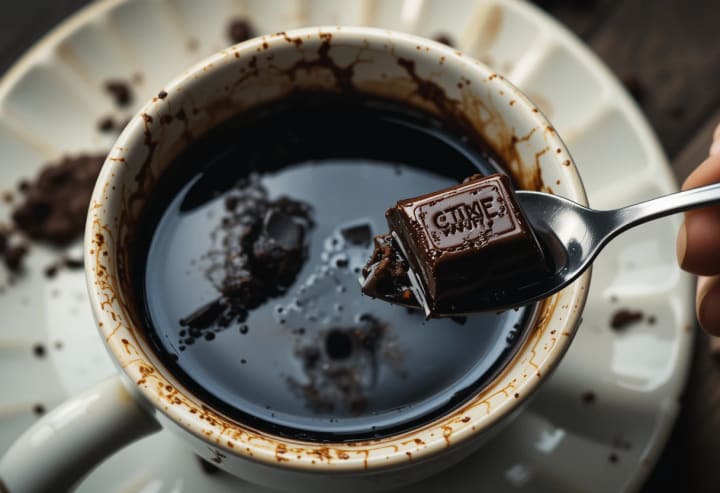
It was not only Daniel. Friends, acquaintances, strangers—they all carried their own flavors of deception. Some were subtle, like a barely perceptible undertone in a fine wine. Others were bold, like vinegar poured over fresh fruit. And Lila, once naive, had become a connoisseur of betrayal, learning to detect the sour, the rancid, the poisoned.
One evening, after a particularly bitter confrontation with a coworker who denied a mistake she knew to be true, Lila sat at her kitchen table with a glass of water. She swirled it, watching the ripples, imagining the lies dissolving in the liquid, yet tasting the aftertaste lingering on her own tongue. She realized then that the harm was not always in the lie itself but in the residue—the way it lingered in her perception, altering how she saw the liar, herself, and the world. Trust, she mused, was the palate of the soul. Dishonesty corrupted it slowly, like a food spoiled in secret, invisible until it had fully worked its way through the system.
And yet, there was a paradox. Some lies were beautiful at first, like sugar spun into cotton candy. They dissolved quickly, leaving temporary pleasure in their place. But soon, reality introduced its acid, and the sweetness turned to nothing, leaving only a void, a craving, and the awareness of what had been missing. She had tasted this many times—the delicious promise, the inevitable betrayal, the bitter aftertaste that lingered for hours, days, or even years.
Lila began to write, pouring her observations into journals, each entry a recipe of deceit. She compared deceit to foods, to drinks, to aromas. Some lies were like raw coffee grounds—bitter and impossible to swallow without grinding through the consequences. Others were like spoiled milk—smooth at first but curdling into a dangerous acidity when digested. She realized that dishonesty had its own flavor map, a lexicon of tastes that revealed character, intention, and impact.
In her poetry, she likened liars to chefs who deliberately poisoned their guests. Each false word, each exaggerated story, was a meal served with care, a hidden ingredient meant to delight the ego at the expense of another’s palate. And the diners—the betrayed—were left chewing, tasting, and remembering, their mouths full of bitterness, their senses altered forever.
Yet even as she cataloged bitterness, Lila understood that not all lies were meant to harm. Some were excuses, seasoning used to make unbearable truths slightly easier to swallow. Some were omissions, spices missing from a recipe that could have been perfect. But still, the aftertaste lingered, a reminder that taste, like memory, cannot be fully erased.
By the time she finished her journal, Lila was no longer naïve about flavor or words. She knew that sweetness could be fleeting, that some promises were spiced with deception, and that trust could be poisoned slowly, long before the lie was revealed. But she also knew resilience was possible. Just as one could cleanse the palate with water or fresh air, she could rebuild trust, layer by layer, bite by bite, flavor by flavor. The tongue remembers, but so does the heart.
In the end, she wrote, “Dishonesty leaves a taste. Bitter, sharp, lingering. But the memory of honesty—the sweetness that follows—is more profound. And it is in the contrast that we truly learn to taste life.”
About the Creator
Keep reading
More stories from waseem khan and writers in Poets and other communities.
Silver Screen Magic with Mae West
American actress and singer Mae West became a popular film actress during the Great Depression. She started entertaining in vaudeville, then performed on Broadway, and finally went to Hollywood. She signed up with Paramount Pictures and made her debut in the 1932 film “Night After Night.” She also starred in musicals, comedies, and crime dramas. The American Film Institute named her one of the best classic Hollywood actresses.
By Rasma Raisters5 days ago in Geeks


Comments
There are no comments for this story
Be the first to respond and start the conversation.