childrens poetry
Nostalgia-inducing poetry inspired by our earliest favorites; from Dr. Seuss to Mother Goose, children’s poetry is all grown up.
Poet Emotions
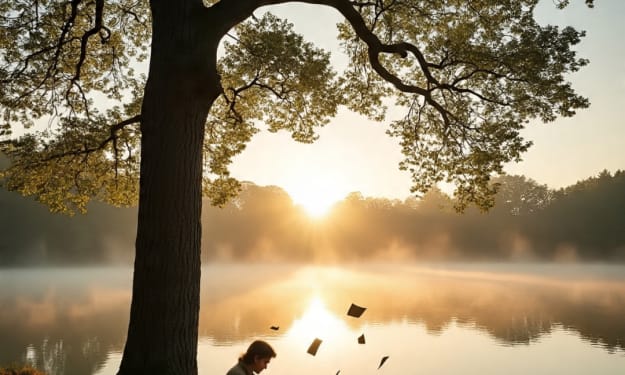
The evening sky was painted in gentle shades of orange and gold as Arham sat beneath the old banyan tree in his backyard. A notebook rested on his knees, and his pen tapped lightly against its corner. The world around him was calm, yet his mind swirled with a thousand thoughts — emotions he couldn’t explain, but always tried to write down. He was a boy of few words, not because he didn’t have thoughts, but because he felt them too deeply. Every emotion — joy, sorrow, wonder, or pain — echoed louder inside his heart than it did in the outside world. And so, he found refuge in poetry. It was his way of turning chaos into calm, and silence into expression. That day, as a light breeze passed through the leaves, he began to write: “Some hearts don’t speak in sound, They whisper in verses, soft and profound.” Arham smiled faintly. Poetry wasn’t something he planned; it was something that happened to him. It came from somewhere deep — like a spring of emotion hidden beneath his soul. When others talked about their day, he wrote about the sunlight dancing through the window, or the rain that carried memories. For him, words were not just letters; they were feelings wearing clothes. He remembered how his teacher once asked the class to describe happiness. Some said it was ice cream on a hot day, others said it was winning a game. When his turn came, Arham had quietly said, “Happiness is when your heart smiles even before your lips do.” The whole class had fallen silent. That was the moment he realized — emotions had their own language, and poetry was his way of speaking it. At home, his parents often found him lost in thought, staring at a blank page. They wondered if something was wrong. But Arham wasn’t sad — he was listening to his own heartbeats, waiting for them to turn into rhythm and rhyme. One rainy afternoon, as he wrote near the window, his younger brother peeked in. “Why do you always write alone?” he asked curiously. Arham smiled. “Because when I write, I meet myself.” The boy didn’t understand then, but Arham knew — poetry was his mirror. It showed him what words couldn’t say out loud. Sometimes, when he felt lonely, he wrote about hope — not the loud kind, but the quiet kind that keeps you going. He believed every emotion had a voice; it just needed the courage to speak. And poetry was that courage. One day, his English teacher announced a poetry contest. Arham hesitated at first — he never wrote for praise, only for peace. But that night, he looked at the blank page and decided to share a piece of his soul. He wrote a poem titled “The Silent Voice.” When the results came, Arham didn’t expect anything. But when his name was called as the winner, the applause felt like music. For the first time, he realized that when feelings are pure, they reach hearts beyond words. That evening, standing on the stage, he said softly, “I never thought my emotions could speak for me. But now I know — poetry isn’t about writing; it’s about feeling. Every word I write carries a heartbeat.” From that day, Arham continued to write — not just for himself, but for everyone who ever felt something too deep to explain. His poems began to appear in school magazines and local journals, each line filled with honesty and warmth. He learned that emotions are not weaknesses; they are colors of the soul. Some people paint, others sing, and some — like him — write. And every time he looked at his notebook, he smiled, knowing that poetry wasn’t simply about words. It was about turning feelings into art — capturing the invisible and making it eternal. Because in the end, Arham believed one truth above all: A poet doesn’t create emotions. He only reveals the ones that were already there — waiting to be understood.
By Muhammad Saad 2 months ago in Poets
The Poet of Nature
In every era, there has been one soul who listens not only to people but to the whispers of the earth itself. The Poet of Nature is such a soul — one who finds poetry not in grand halls or crowded cities, but in the rustle of leaves, the rhythm of rain, and the golden glow of dawn. This story celebrates the life and spirit of those poets who transform nature’s silence into eternal music through their words. On the edge of a quiet lake, surrounded by emerald hills and the perfume of wildflowers, sat Elias, a poet who believed that the truest language on earth was not spoken — it was felt. Every morning, he walked barefoot across the dew-soaked grass, greeting the day as if it were a dear friend. His notebook was never empty for long, for even the simplest scene — a bird diving into water, a breeze dancing through branches — became a living verse in his mind. Elias often said, “Nature never hurries, yet she completes everything in time. A poet must do the same.” His belief was that poetry is not about words alone, but about connection — the invisible thread that binds human hearts to the pulse of the world around them. To him, a single petal carried more meaning than a library of unfeeling lines. He was deeply inspired by great poets like William Wordsworth, Robert Frost, and Emily Dickinson, who each in their own way turned landscapes into lessons. Wordsworth saw nature as a teacher of peace and wisdom, Frost found life’s choices mirrored in woods and paths, while Dickinson felt the divine presence in every flower and breeze. Elias studied them not to imitate, but to understand how nature could speak through human expression. As he wrote, Elias realized that the beauty of the natural world lay in its balance — its quiet power, its patience, its endless renewal. He noticed how the river never resisted the rocks but flowed around them, teaching him to move through life’s obstacles with grace. He watched the sun disappear every evening, only to rise again with unwavering certainty, and learned that endings are often beginnings in disguise. One afternoon, a young student named Lila found him sitting under the old oak tree. She had read his poems in a local magazine and wanted to know how he wrote them. “Do you sit here waiting for words to come?” she asked. Elias smiled gently. “No, child. I don’t wait for words — I wait for silence. When the world grows quiet enough, nature begins to speak.” He taught her to listen — not just with her ears, but with her soul. To notice the way sunlight painted the surface of water, how every shade of green had its own emotion, and how the wind carried stories older than time. Through him, Lila discovered that poetry is not invented; it is revealed — waiting patiently within the folds of nature. As years passed, Elias’s health began to fade, but his passion never did. Even when he could no longer walk to the lake, he sat by his window, writing about the clouds, the scent of rain, and the song of crickets at night. His final collection, Whispers of the Earth, was published shortly before his passing. Each poem was a mirror of his spirit — calm, eternal, and deeply connected to the world he so loved. Readers who opened his book found more than verses; they found peace. His words reminded them that nature is not something outside us — it lives within us. Every heartbeat, every breath, every tear is part of the same rhythm that moves the oceans and sways the forests. Today, when people visit the lakeside where Elias once wrote, they say they can still feel his presence in the air — in the flutter of a bird’s wing, in the ripple of water, in the hush before sunset. It is as if the Poet of Nature never truly left; he simply became one with the very poetry he spent his life writing. And perhaps that is the truest destiny of every poet of nature — to let their words dissolve into the world they loved, leaving behind not just poems, but a legacy of harmony between the human heart and the living earth.
By Muhammad Saad 2 months ago in Poets
Poetry at Noon
The afternoon sun had reached its gentle peak, filling the world with a mellow golden glow. The town seemed to breathe slower at this hour, as if even time paused to rest in the warmth. For Alina, it was the perfect moment—the sacred hour of stillness she called poetry at noon. Every day, after the morning’s rush of work and noise, she would retreat to the small park near her home. It wasn’t grand or famous—just a patch of green surrounded by old trees, a stone bench, and a tiny pond where dragonflies danced above the water. But to Alina, it was a haven of quiet inspiration. She carried with her a brown leather notebook, worn at the edges, and a pen that had outlived countless refills of ink. She sat beneath her favorite oak tree, feeling the sunlight spill over her shoulders. The hum of the world around her faded as her thoughts began to take shape. Words came to her not like commands, but like whispers—gentle, inviting, alive. “At noon, the sun writes on the skin of the world,” she wrote, smiling softly. She paused, letting the breeze turn a page for her. A group of children played nearby, their laughter blending with the soft rustling of leaves. Every sound seemed to belong in her poem, as though the afternoon itself was collaborating with her. Writing had always been Alina’s escape and her connection. Through poetry, she found a way to express feelings that speech often failed to hold—grief, hope, wonder, and love. Years ago, after her father passed away, it was poetry that helped her rediscover joy. He had been the one who introduced her to it, often reading lines aloud from his favorite poets as sunlight filtered through their kitchen window. “Every poem,” he once said, “is a small prayer to the moment.” That memory lingered as she wrote. Her lines flowed with gratitude—for life, for memories, for the golden peace of the afternoon. Suddenly, a voice interrupted her thoughts. “That looks beautiful,” said a young man holding a camera. He smiled, his eyes reflecting the same sunlight that danced on her pages. Alina looked up, startled but not annoyed. “Just a few lines,” she replied modestly. “Do you write often?” he asked. “Every afternoon,” she said. “It’s my way of listening to the world.” He chuckled. “I guess I do the same, but with photographs. I try to capture moments before they disappear.” They shared a quiet laugh, realizing they were both chasing the same thing—beauty in fleeting time. He introduced himself as Omar, a photographer who often wandered through the park looking for inspiration. That day, however, he had found it not in scenery but in the sight of someone writing beneath the sun. “May I take a picture?” he asked gently. Alina hesitated, then nodded. As he adjusted his lens, she returned to her notebook. The camera clicked softly, framing her in sunlight and shadow. When he showed her the photo, she was surprised—it wasn’t just her image he had captured, but the serenity of her moment. The light on her notebook, the stillness of her smile, the poetry of the afternoon—all frozen perfectly in that single frame. “That’s beautiful,” she whispered. “So are your words,” Omar replied. “Maybe one day, they’ll meet again—your poem and this picture.” The thought made her smile. They talked for a while longer, sharing stories of art, dreams, and the quiet beauty of ordinary days. When he finally left, Alina felt something new stirring in her heart—an unwritten poem forming softly, like sunlight spilling across a blank page. As the day drifted toward evening, she wrote one last line before closing her notebook: “At noon, I found the world speaking in golden tones— and I listened.” She looked up at the sky, now glowing amber, and felt a deep peace settle within her. Poetry had given her words; the afternoon had given her meaning. And somewhere in that harmony of light and life, she realized—every moment holds its own poem, waiting for someone to listen.
By Muhammad Saad 2 months ago in Poets
Poetry at Dawn
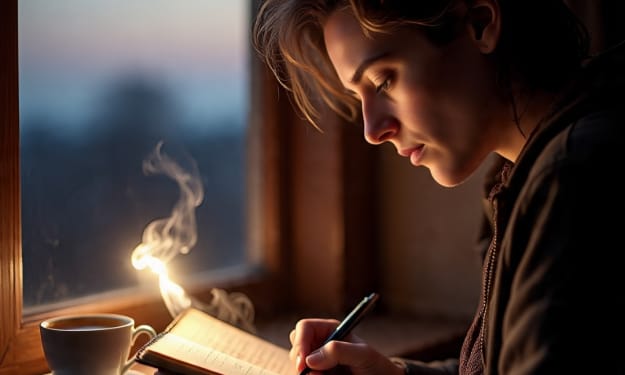
The first light of dawn crept gently across the horizon, brushing the sky with shades of rose and gold. In the stillness of the hour, before the world fully awoke, a young poet named Elara sat by her window with an open notebook and a steaming cup of tea. The village outside was wrapped in silence—broken only by the faint rustle of leaves and the occasional chirp of a waking bird. For Elara, dawn was more than a time of day. It was a promise—a soft reminder that every ending carried a new beginning. She loved how the world seemed reborn each morning, washed clean of yesterday’s noise and dust. And in that quiet rebirth, she found the perfect rhythm for her thoughts, the purest ink for her emotions. Her pen hovered over the page as she watched a ray of sunlight spill across her desk, turning her blank paper into a canvas of light. “What should I write today?” she whispered, smiling to herself. Words often arrived slowly, like shy guests waiting at her door, but she had learned to welcome them with patience. Today, her thoughts drifted to dreams—those delicate threads woven through sleep that sometimes disappeared by morning. “Dreams,” she murmured, tasting the word. “They are the poetry of the night.” With that thought, she began to write. Her poem spoke of stars fading as the sun rose, of silence transforming into song, and of hope awakening in the heart like light through a window. She wrote about the way dawn carried whispers of forgiveness, how it painted everything new, and how—if one listened closely enough—it sounded like a poem recited by the earth itself. Each word flowed effortlessly, as though the morning breeze itself was guiding her hand. And for a moment, she felt an invisible connection between her heart and the horizon—between her breath and the light that spread across the sky. As she paused to sip her tea, a soft breeze slipped through the window, carrying the scent of dew and jasmine. The village bell chimed in the distance, calling farmers to their fields and children to their morning chores. But Elara remained still, caught in that magical space between silence and sound. Her cat, Luna, leapt softly onto the windowsill, curling beside her notebook. Elara chuckled and scratched behind its ears. “You’re my first audience,” she said. Luna purred in approval, blinking at the sunlight as if to say, What a fine performance it will be. Elara reread her lines, tracing the ink with her finger. There was beauty, she thought, in watching the day unfold like a verse—each moment another stanza of existence. The laughter of a child outside, the flutter of wings, the glimmer of dew—all were part of life’s endless poem. Suddenly, she felt an impulse to share what she had written. She tore the page gently from her notebook, folded it, and stepped outside. The air was cool, and the village street shimmered faintly in the golden light. She walked to the old oak tree near the crossroads—her favorite spot—and pinned the poem to its trunk with a small wooden clip. She had done this many times before. Every morning, she left one poem for someone to find. Sometimes it was the baker who smiled when he read her verses about warmth and bread. Sometimes it was the young mother who paused on her way to fetch water, or the old shepherd who tucked her words into his coat pocket. To Elara, poetry was a gift meant to be shared, like the light of dawn itself. As she turned back toward her home, she glanced once more at the sunrise. The sky now blazed with brilliance, and the world had fully awakened. Yet in her heart, she still carried the peace of those first quiet moments. That morning, as the sun climbed higher, the poet’s simple verse fluttered gently in the wind—its ink shining in the light. Someone passing by stopped to read it, smiled softly, and whispered, “Beautiful.” And so, once again, dawn had fulfilled its promise—awakening not only words, but hearts.
By Muhammad Saad 2 months ago in Poets
Whispers of Winter ❄️
Whispers of Winter When Frost Painted the Earth and Warm Hearts Lit the Season The whisper of winter drifted near, Soft as a sigh that hearts could hear. Through silver clouds, the north winds flew, Bringing dreams dressed in sparkling dew. The trees stood still in robes of white, Their branches kissed by crystal light. Each leaf asleep beneath the snow, While stars above began to glow. In a quiet village, calm and small, Snowflakes danced and seemed to call. They twirled through air in soft embrace, And brushed each cheek with gentle grace. Children’s laughter filled the skies, As flakes fell soft before their eyes. They built tall men of snow and cheer, And crowned them kings of the passing year. A boy named Rehan watched the scene, His eyes alight with winter’s sheen. He loved the hush that nights would bring, When frost would hum and lanterns sing. But deep within, a longing stayed, For warmth beyond the fire’s shade. His father gone to lands unknown, His mother waiting all alone. Each evening by the window’s glow, They’d watch the flakes drift down below. And though the wind was cold and wide, Their love burned bright, a flame inside. Then came a night both calm and deep, When stars above refused to sleep. They shimmered bright through midnight blue, As if the heavens whispered too: “Hold on, young heart, though skies may freeze, For warmth is found in memories. Beyond the storm, beyond the snow, The seeds of spring already grow.” Rehan smiled, his eyes turned high, To constellations crowding the sky. He felt his father’s voice once more— A gentle echo through the door. “Be strong, my boy, the world is wide, But love will always be your guide.” And with that whisper, faint yet near, The night grew calm, the stars drew clear. He ran outside, his breath a cloud, The moon above both soft and proud. He built a lantern out of glass, And placed it shining in the grass. Its golden glow cut through the cold, A tiny sun the dark could hold. Neighbors saw its tender gleam, And came to join his silent dream. Soon every window lit with flame, And laughter through the village came. The snow still fell, but hearts were warm, Together safe through winter’s storm. The frost became a painted art, On every roof, on every heart. And though the world was still and white, It pulsed with love and gentle light. By morning’s rise, the hills would gleam, Like silver stitched in heaven’s seam. And Rehan knew — as all hearts do — That winter’s chill can’t dim what’s true. For warmth is not in hearths alone, But in the love that we have grown. And when the winds of winter sigh, They tell of hearts that never die. So let it snow, let night be long, For even cold can birth a song. In every frost, a spark will stay — To guide lost souls along their way. And when the seasons shift once more, And springtime knocks at winter’s door, The world will bloom — but still recall, The whisper that once blessed it all. For frost may fade and stars may flee, But love outlasts eternity. And through each flake, each frozen art, Winter will whisper — from heart to heart.
By Muhammad Saad 2 months ago in Poets
Justice in Verse: When Karma Rhymes with Right
About poetry Justice in Verse: When Karma Rhymes with Right In the small town of Greenwood, nestled between whispering forests and sun-drenched hills, stories had a way of unfolding like poetry — some sweet, some bitter, and some with justice so fitting, it felt as though fate itself had picked up a pen. Among its residents was Elena Marlowe, a high school literature teacher known for her soft voice, fierce intellect, and unwavering belief in the power of doing what’s right. She was the kind of teacher who saw potential in every student — especially the ones others gave up on. One of those students was Chase Donovan — smart, witty, and endlessly disruptive. While others saw a troublemaker, Elena saw a mind bursting with creativity. But Chase had a habit of cutting corners, mocking classmates, and using his quick tongue to manipulate situations to his favor. One day, the school announced a prestigious poetry competition. The winner’s poem would be published nationally, and a scholarship would be awarded. Elena encouraged all her students to enter, hoping the opportunity might inspire them, especially Chase. A week before the submission deadline, Chase turned in a stunning poem — vivid, emotional, and mature beyond his years. Elena was astonished. She praised his work but asked, “Did you write this yourself, Chase?” He smirked. “Of course I did.” But something didn’t sit right. The voice of the poem — its depth, its tone — didn’t match Chase’s usual style. That night, Elena did a little research. Within minutes, she found the exact poem online, written by a lesser-known poet in a forgotten blog. Elena was torn. She believed in second chances, but also in truth. Quietly, she took the matter to the principal, presenting the evidence without shaming Chase publicly. The school disqualified his entry without making a scene, but word spread among the students. Whispers followed Chase down the halls, and respect for him faded quickly. At first, he was angry. He called Elena a snitch. He sulked. He skipped class. But as the weeks passed, something shifted. The shame turned into reflection. Meanwhile, another student — Maya Singh, shy and often overlooked — had submitted a modest poem about hope and resilience. It wasn’t flashy, but it was honest. When the judges announced her as the winner, the school was surprised, but Elena smiled knowingly. Months later, Chase stayed after class. “I was mad at you,” he admitted, eyes low. “But you were right. I didn’t write that poem. I just wanted to win… for once.” Elena didn’t scold. She nodded gently. “Wanting to win isn’t wrong. But how you get there matters more.” Chase paused. “Can I try again? I want to write something real this time.” And he did. In the following months, Chase poured himself into writing. His poems weren’t perfect, but they were raw, authentic, and undeniably his. Elena helped him revise, encouraged his voice, and when the next year’s competition came around — Chase submitted a new poem. It didn’t win a scholarship. But it was featured in the school’s literary magazine, and more importantly, it earned him the respect he’d lost. Even Maya congratulated him. “Your voice is strong,” she told him. “Don’t trade it for someone else’s again.” Elena watched from afar, heart full. She didn’t need recognition. The moment justice had been served — quietly, correctly, and with compassion — she knew she’d done her part. Years later, Chase sent her a letter from college. > Ms. Marlowe, You taught me more than poetry. You taught me that doing the right thing doesn’t always feel good at first, but it lasts. Thanks for seeing me when I couldn’t see myself. P.S. I’m majoring in English. --- Moral of the Story: Poetic justice isn’t always dramatic or loud. Sometimes, it’s quiet, slow-burning, and deeply human. It’s when the truth gently triumphs, when integrity is rewarded, and when those who stray are guided — not punished — back to their better selves. In a world quick to condemn or cancel, Elena chose correction over humiliation, guidance over revenge. And that made all the difference. Because in Greenwood — as in life — the most meaningful verses are the ones written with honesty, courage, and heart. Thank you
By Muhammad Saad 2 months ago in Poets
Colors in Verse: The Rainbow of Poetry
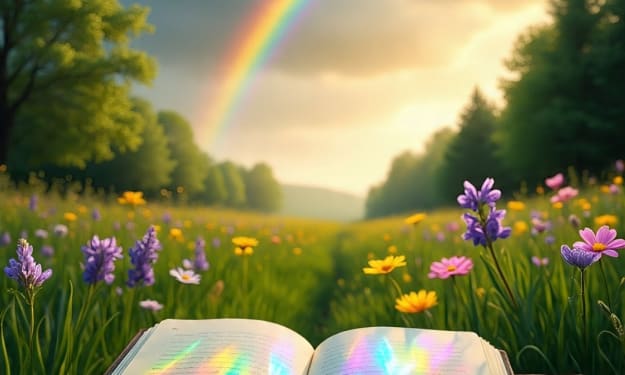
After a quiet rain, the sky opened like a freshly painted canvas. A delicate arch of colors stretched from one horizon to the other—seven glowing bands that seemed to hum softly with life. As droplets still clung to leaves, a young poet named Arham stood beneath the rainbow, notebook in hand, feeling as though the heavens themselves had spilled ink into the air. For Arham, poetry had always been a mystery. He loved words, yet they sometimes felt dull and gray—like clouds waiting for the right spark to release rain. He often wondered what gave poems their color, what made them breathe with emotion. That afternoon, as he gazed at the shining arc in the sky, the answer began to unfold. Each color of the rainbow, he realized, was a verse of its own—a poem written by nature. The deep red spoke of strength and love, bold and brave. The orange shimmered with creativity and warmth. Yellow danced like laughter and friendship. Green whispered of renewal and life. Blue carried peace and reflection. Indigo dreamed of mystery, and violet glowed with imagination and spirit. Arham took a deep breath and began to write. His words flowed like the rain that had just fallen. “Red, you are the heart of fire and dawn, Orange, the song of hope newly born, Yellow, the smile of a waking sun, Green, the promise when storms are done. Blue, the calm that follows pain, Indigo, the dreamer’s lane, Violet, the soul that feels the unseen— Together, you paint what words have been.” As his pencil moved, something inside him shifted. He realized that poetry wasn’t about difficult words or perfect rhymes—it was about feeling. Just as the rainbow didn’t ask to be admired, poems didn’t beg to be understood; they simply appeared, born from emotion, reflecting light through the prism of the heart. That day, Arham began to write differently. He no longer forced words onto paper. Instead, he listened—to the wind, to the birds, to the soft rhythm of his own thoughts. He wrote about moments: the hush after rain, the laughter of children splashing in puddles, the scent of wet earth, and the promise of sunlight breaking through clouds. Weeks passed, and his notebook filled with verses. When he read them aloud to his friends, their eyes glowed with the same wonder he had felt under the rainbow. “Your poems make us see feelings,” one friend said. “It’s like each line has a color.” Arham smiled. He had discovered that true poetry paints the soul. Every poem carries shades of joy and sorrow, light and shadow—just like a rainbow. And even when storms pass, what remains is the beauty they leave behind. Inspired, he began teaching younger children in his town how to write poetry. Instead of giving them rules, he gave them colors. “Write a red poem when you feel brave,” he said. “Write a blue poem when you need peace. Write a yellow one when you want to smile.” Soon, the little classroom walls were covered with colorful verses—words that glittered with feeling and imagination. One afternoon, as the sun dipped low, another rainbow appeared in the distance. The children ran to the windows, pointing and cheering. Arham watched them, smiling, and thought about how poetry—like the rainbow—connects heaven and earth, heart and mind. It appears when light meets rain, when joy meets struggle, when imagination meets truth. He picked up his pen once more and wrote: “In every color lies a song, In every heart, a place to belong. The rainbow fades, but leaves behind, A poem painted in the mind.” As the last rays of sunlight melted into the horizon, Arham closed his notebook. He knew then that poetry wasn’t just something to write—it was something to live. Every color of the world was a verse, and every day was a chance to read a new one. And so, the poet walked home beneath the glowing sky, carrying the colors of his heart—his own rainbow of poetry.
By Muhammad Saad 2 months ago in Poets
Echoes Through Time: The Journey of Poetry
From the moment humans first learned to express their emotions beyond simple sounds and gestures, poetry was born. It wasn’t written on paper or carved in stone—it lived in the rhythm of spoken words, in chants around campfires, and in the melodies of early songs. Poetry began as the heartbeat of language itself, carrying feelings, beliefs, and dreams from one generation to the next. In ancient times, when stories were passed down by word of mouth, poets were not just artists—they were historians, teachers, and spiritual guides. In Mesopotamia, “The Epic of Gilgamesh” was etched onto clay tablets around 2100 BCE, making it one of the oldest known works of poetry. This epic spoke of friendship, heroism, and the search for immortality—universal themes that still move hearts today. Meanwhile, in Egypt, hymns were written to honor gods and pharaohs, while in India, the sacred verses of the Rigveda echoed through temples as offerings to the divine. As centuries passed, poetry took on new forms across civilizations. In ancient Greece, poets like Homer and Sappho shaped literature forever. Homer’s Iliad and Odyssey were grand tales of war and adventure, while Sappho’s lyrical poems captured delicate emotions and love’s quiet beauty. The Greeks introduced structured meter and rhythm, showing that poetry could be both art and architecture of language. The Roman poet Virgil followed, blending myth with patriotism in his Aeneid, while Ovid celebrated the power of transformation in Metamorphoses. At the same time, in China, poets like Li Bai and Du Fu painted nature and emotion with words as delicate as brushstrokes on silk. Each culture added its own melody to the universal song of poetry. During the Middle Ages, poetry found new homes in the courts and churches of Europe. Troubadours and minstrels sang of love, chivalry, and sorrow, carrying their verses from castle to castle. In Persia, Rumi and Hafez wrote poems that blended mysticism with passion, showing that poetry could speak not only of earthly love but also of divine union. Their verses remain among the most quoted lines in the world, proving that true poetry never ages. The Renaissance marked another rebirth of poetry. In England, William Shakespeare transformed poetic drama with his sonnets and plays, exploring every corner of human emotion—from joy and jealousy to despair and hope. Meanwhile, poets like Dante Alighieri in Italy and Geoffrey Chaucer in England opened doors for poetry to become more personal, philosophical, and profound. As the world entered the modern age, poetry continued to evolve. The Romantic poets of the 18th and 19th centuries—Wordsworth, Keats, Shelley, and Byron—celebrated nature, imagination, and emotion. They believed poetry was not just art but a voice of the soul. Later, in the 20th century, modernists like T.S. Eliot and Ezra Pound broke traditional rules, experimenting with structure and sound to reflect a changing world. Today, poetry lives in more forms than ever before. It thrives not just in books but also on screens and stages. Spoken word poets and rappers bring rhythm, emotion, and truth to modern audiences. Social media has given rise to a new generation of poets—sharing short, heartfelt verses that connect millions across the globe. The tools may have changed, but the purpose remains the same: to express what words alone cannot. From the echo of ancient chants to the rhythm of modern verse, poetry continues to evolve, yet its essence remains timeless. It is both ancient and new—bridging the past and the present, the personal and the universal. Poetry reminds us that beneath all our differences, humans have always shared the same need: to speak from the heart and be heard. And so, the journey of poetry continues—flowing like a river through time, carrying with it the stories, dreams, and emotions of all who dare to write, to feel, and to listen.
By Muhammad Saad 2 months ago in Poets