buyers guide
Purchases for poets and poetry enthusiasts; best-selling collections, rare finds, writing tools and more.
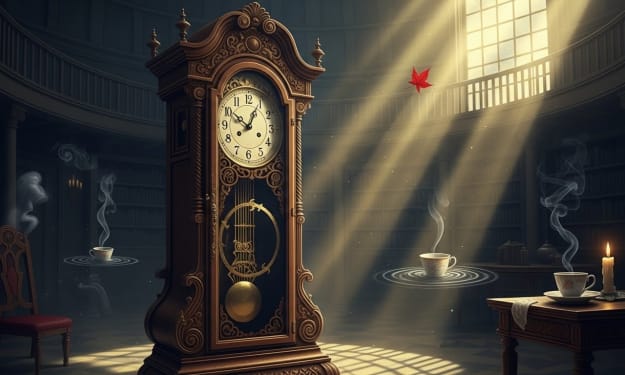
Why We Keep the Letters We’ll Never Send
The drawer was jammed again. I yanked at it, muttering under my breath, and a thin cascade of envelopes slid forward, fanning across the floor like pale autumn leaves. They smelled faintly of paper and time—slightly yellowed, edges curling inward, some stained with coffee rings or thumb-smudges.
By Muhammad Sabeel5 months ago in Poets
Power of Potes: The Strength of True Friendship
Power of Potes: The Strength of True Friendship By [Your Name] It started on a rainy Tuesday. Leila had just moved to a new city for work, dragging two suitcases, a tired heart, and a list of things she missed from home. She didn’t know anyone, and after her first week, loneliness started creeping in like fog under the door. Then she met Ana. Ana worked in the same building — loud laugh, paint on her jeans, always offering gum. One afternoon in the break room, she noticed Leila sitting alone, scrolling her phone with earbuds in. Ana tapped her shoulder, grinned, and said, “You always listen to music or are you hiding from the world?” Leila blinked, surprised. “A little of both.” Ana sat down. “Same.” That’s how it started — with a question and a shared silence. A week later, Ana invited Leila to a game night with some friends. “No pressure,” she said, tossing a bag of chips into her cart, “but we play like our lives depend on Uno.” Leila went. And that night, she laughed harder than she had in months. The group — Ana, Jules, Marcos, and Tania — welcomed her like they’d known her forever. They weren’t perfect people. They talked over each other, spilled drinks, argued about pizza toppings. But they showed up. They asked real questions. They remembered details. And soon, Leila started calling them her potes — the kind of friends who become your chosen family. --- In the months that followed, the potes became inseparable. They celebrated everything — promotions, birthdays, even bad days that needed cheering up. They met for late-night walks, last-minute road trips, lazy Sundays filled with pancakes and playlists. They were there when Ana’s art gallery finally opened. When Jules came out and cried with relief in Leila’s kitchen. When Marcos lost his dad and couldn’t speak for days. When Tania got her dream scholarship and the whole crew danced barefoot in the rain. Through every laugh, every tear, every shared coffee and text message that just said, “You okay?”, Leila realized something: friendship wasn’t just about fun. It was about being seen, truly seen — and loved anyway. --- One night, after a long day, they all sat on the rooftop of Ana’s apartment, watching the city lights blink like stars. “You know what I love?” Tania said, sipping her tea. “That we don’t have to pretend with each other. I could show up here crying or with a bad haircut, and nobody would judge me.” “Speak for yourself,” Jules joked. “If that haircut’s tragic, I will stage an intervention.” Everyone laughed, but it was true. They held each other accountable. They called each other out — with kindness. They pushed one another to grow, but never alone. Leila looked around at the group, her chest warm. She hadn’t just made friends — she’d found her people. --- As the seasons changed, so did life. Work got busier. Marcos moved across the country. Ana started dating someone seriously. Things shifted, as they always do. But the bond didn’t break. They scheduled virtual calls, planned yearly reunions, sent memes at midnight. When one of them was struggling, the others circled back like satellites to lift them up. One day, years later, Leila stood in front of a classroom — now a teacher — telling her students about the importance of kindness, connection, and community. She told them how she once felt invisible in a big city, and how one person — one question — changed everything. “Sometimes,” she said, “your whole world changes not because you planned it, but because someone made you feel like you belong.” --- Moral of the Story: Friendship isn’t always loud or dramatic. Sometimes it’s quiet, steady, and life-saving. Potes are the ones who show up — not just for the big moments, but for the small, silent ones too. And in a world that often moves too fast, finding people who see you, accept you, and grow with you is one of the most powerful things there is. So ask the question. Sit beside someone. Start the game night. You never know whose life you’ll change — including your own.
By Muhammad Saad 5 months ago in Poets
Voices of Truth: The Power of Strong Poetry
Voices of Truth: The Power of Strong Poetry How Bold, Honest Verse Inspires Change and Heals the Soul In a quiet corner of a community library in East Haven, a group of people gathered every Thursday evening. They weren’t there for a book club or a lecture. They came to share poetry—raw, unfiltered, and true. It began with one voice. Two years earlier, a young woman named Lena stood on that same library stage with trembling hands and a notebook filled with pain. She had written poetry all her life but never shared it. After surviving a difficult year—losing her job, ending a toxic relationship, and struggling with anxiety—Lena decided to face her fears. She joined “Open Pages,” a small local event meant for amateur writers. She read a poem titled “I Am Not My Silence.” The words weren’t polished, but they were real. They spoke of isolation, shame, and the courage to speak out. When she finished, the room was still. Then someone clapped. Then another. Soon the entire room was on their feet. That night sparked something powerful—not just in Lena, but in everyone who heard her. Over the months that followed, Open Pages grew. More people came—not just to listen, but to speak. Some read verses about love and loss, others about injustice, racism, and identity. Each poem, no matter the topic, held one thing in common: truth. One evening, an elderly man named Harold took the stage. No one had ever seen him before. He read a poem about his time in the war, about the guilt he carried for decades, and about how poetry became his way of processing what he couldn’t say out loud. “I never knew poetry could hold so much truth,” he said afterward. “It was just something I scribbled. But now I see—it’s a lifeline.” Lena, now the event’s organizer, watched as people of all ages and backgrounds began showing up, notebooks in hand. Some were shy. Some couldn’t even finish reading without crying. But every poem, every voice, left an imprint. One high school student named Jamal, usually quiet in school, shared a powerful piece about growing up Black in a neighborhood where he felt invisible. His poem, “I Walk Between Worlds,” moved the entire room to tears. Afterward, a teacher in the audience offered him a scholarship to attend a local writing workshop. Jamal later said that writing gave him something he’d never had before—self-worth. There’s something unshakable about poetry that tells the truth. It doesn’t have to rhyme. It doesn’t have to be perfect. It just has to be real. When people write from their core—without sugarcoating, without filters—they tap into a kind of power that resonates with others on a human level. Strong truth poetry isn’t about shouting or performing. It’s about revealing. It’s about saying, “This is what I’ve lived. This is who I am.” And in doing so, others feel less alone. They see parts of their own story in yours. Lena often said that poetry was never meant to be caged in textbooks or written only for the elite. “Poetry,” she told her audience one night, “belongs to the people. It belongs to anyone brave enough to be honest.” Over time, Open Pages became more than an event—it became a movement. A traveling group of poets from the community visited local schools, shelters, and rehabilitation centers, holding workshops that encouraged others to write their truths. They didn’t care about grammar or form—they cared about the message. One participant at a shelter said, “Writing gave me my voice back. For the first time, I felt seen.” And that’s what strong truth poetry does. It sees. It listens. It breaks down walls and builds bridges. It allows people to express trauma, joy, identity, and transformation—all in a few lines of verse. As Lena stood once again on the stage where she first read her poem, she looked out at the now-packed library. There were people standing in the back, leaning against shelves, eager to listen. She smiled, not out of pride, but gratitude. “This,” she said, holding up her notebook, “is more than ink and paper. It’s survival. It’s healing. It’s truth.” And as the next poet approached the microphone, the room leaned in—not to critique, not to judge—but to listen. To feel. To understand. Because in a world that often rushes past pain and hides from honesty, strong truth poetry remains a powerful act of courage—and a light that never goes out.
By Muhammad Saad 5 months ago in Poets
Somewhere Between Yesterday and Tomorrow
Somewhere Between Yesterday and Tomorrow The sun was low, a warm amber spilling over the horizon, casting long shadows that stretched like memories across the quiet bridge. I walked slowly, the steady rhythm of my footsteps mixing with the gentle whisper of the wind.
By waseem khan5 months ago in Poets