
The Legacy of a Dagestani Mastermind
The Life, Discipline, and Influence of the Father of Dagestani MMA

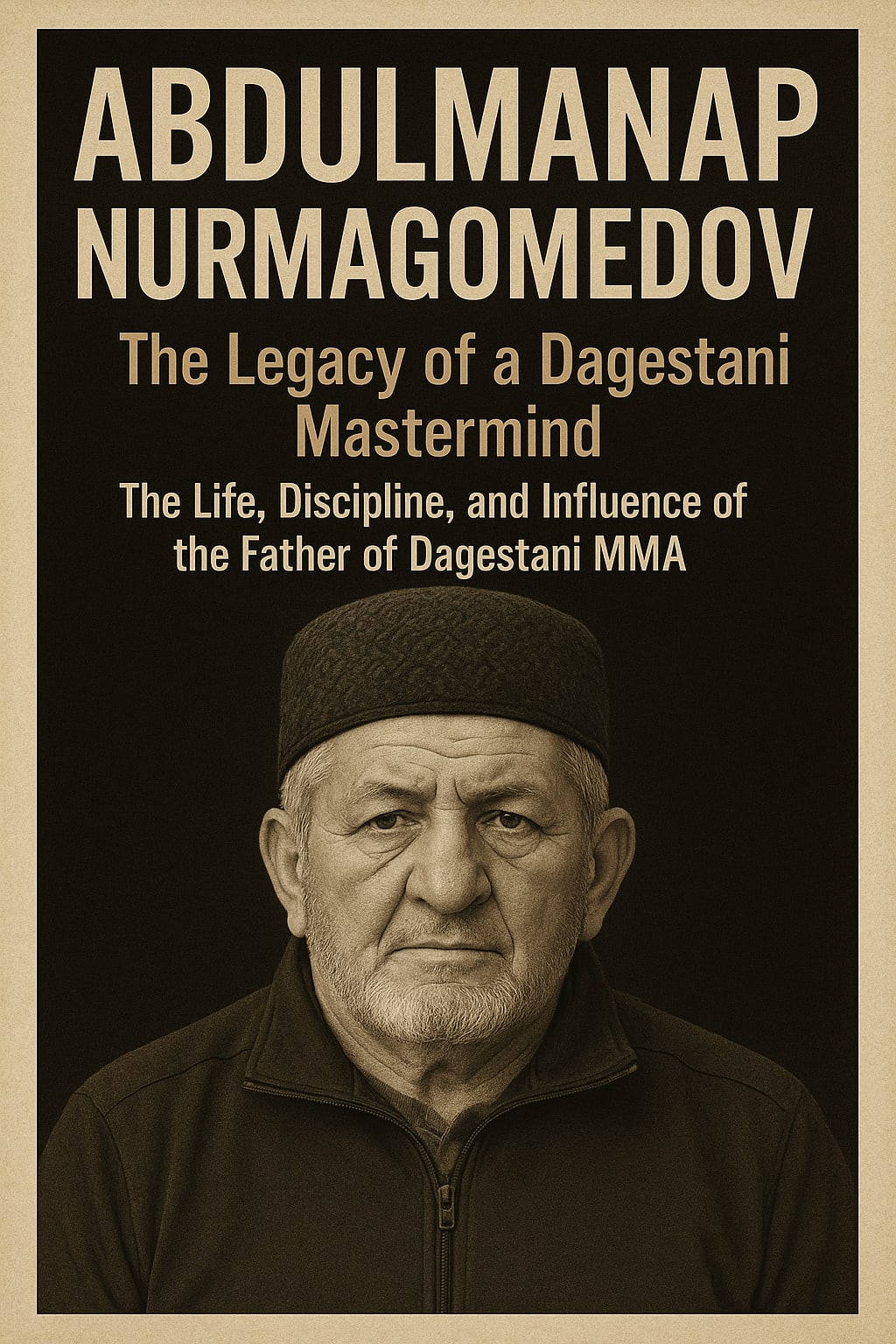
In the mountainous region of Dagestan, where snow-capped peaks cradle deep valleys, a quiet revolution in martial arts was born—not with fire or fanfare, but with discipline, humility, and vision. At its heart was Abdulmanap Nurmagomedov, a man whose name would become synonymous with excellence, not just in combat sports but in character and mentorship.
Born on December 10, 1962, in the small village of Sildi, Abdulmanap grew up in a traditional Avar family. Life in the rugged terrain demanded toughness, and from a young age, he was steeped in a culture that revered strength, resilience, and respect. His father, a shepherd, instilled in him the value of hard work and the importance of humility. But it was wrestling—Dagestan’s unofficial national sport—that captivated Abdulmanap’s imagination.
He pursued his education at the Poltava University of Physical Culture and Sports in Ukraine, where he studied judo and sambo. It was there that he honed not just his physical prowess, but also his philosophical approach to combat. He believed martial arts were not merely about defeating opponents—they were a means to forge better men.
Returning to Dagestan, Abdulmanap began coaching in the 1990s, a period marked by instability and economic hardship in post-Soviet Russia. While many saw Dagestan as a land of conflict and limited opportunity, he saw potential. With few resources but an unshakable will, he built training facilities in modest basements and open fields. For him, any place where discipline could be taught was a dojo.
One of his earliest and most important students was his own son, Khabib. From a young age, Khabib was immersed in the rigorous training and disciplined lifestyle that Abdulmanap championed. Stories of Khabib wrestling bear cubs as a child became legendary, but they were rooted in a serious commitment to conditioning the mind as much as the body. Abdulmanap emphasized faith, family, and mental fortitude, teaching that strength without control was a danger—not a virtue.
Abdulmanap’s training style was unique. While others focused on brute strength or flashy techniques, he stressed fundamentals—control, pressure, positioning, and patience. His athletes were taught to outthink and outlast their opponents. Under his guidance, a new generation of Dagestani fighters emerged, all carrying his stamp of discipline and humility. His influence grew quietly but steadily, reaching across Russia and into global MMA circles.
When Khabib made his UFC debut in 2012, the world began to witness the fruit of Abdulmanap’s labor. With each fight, Khabib showcased not just domination, but the philosophy of his father—respect for opponents, stoicism under pressure, and unwavering discipline. The phrase “Father’s Plan” became a symbol among fans, referencing the strategic brilliance Abdulmanap would impart to his son before each bout.
Despite gaining global attention, Abdulmanap remained grounded. He declined many offers to coach abroad, choosing instead to stay in Dagestan and raise the next wave of fighters. His dream was bigger than titles; it was to uplift his community through sport. He believed that in a region plagued by poverty and extremism, martial arts could offer a path to peace and purpose.
Tragically, in 2020, Abdulmanap’s life was cut short due to complications from COVID-19. The loss was felt deeply—not just by his family and countrymen, but by fighters, fans, and coaches around the world. Khabib, devastated, retired shortly after defending his lightweight title, honoring the promise he made to his mother following his father's passing.
But Abdulmanap’s legacy didn’t end there.
His teachings continued to echo through the halls of gyms across Dagestan and beyond. Fighters like Islam Makhachev, Umar Nurmagomedov, and many others carried his philosophy into the octagon, dominating with grace and tactical brilliance. They weren’t just trained to fight—they were raised to be champions of character.
Abdulmanap’s life serves as a testament to the transformative power of vision and integrity. He turned a war-torn region into one of the most respected breeding grounds for martial artists. He saw beyond poverty, beyond struggle, and believed that with faith, discipline, and the right mentorship, greatness could grow from the harshest soil.
Today, murals of Abdulmanap stand in towns across Dagestan. His words are quoted by aspiring athletes. His story is taught in coaching seminars. And in every disciplined step taken by a Dagestani fighter, there is a piece of his legacy.
Abdulmanap Nurmagomedov didn’t just raise champions. He raised men. His was not the loud legacy of fame, but the quiet, enduring legacy of a mastermind who changed lives—one disciplined soul at a time.
About the Creator
Irshad Abbasi
Ali ibn Abi Talib (RA) said 📚
“Knowledge is better than wealth, because knowledge protects you, while you have to protect wealth.
Keep reading
More stories from Irshad Abbasi and writers in Photography and other communities.
The Spirit and Struggle of Muhammad Ali
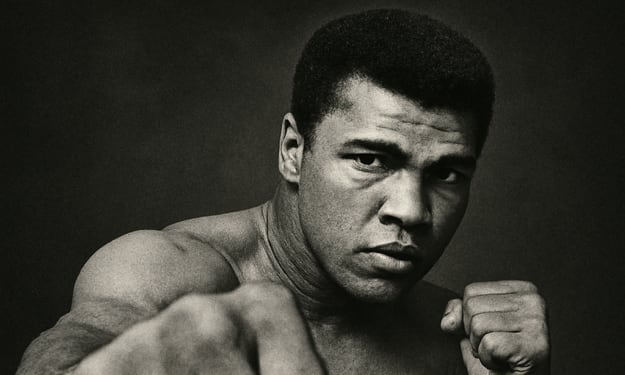
Muhammad Ali, born Cassius Marcellus Clay Jr. on January 17, 1942, in Louisville, Kentucky, was not just the greatest boxer of all time—he was a symbol of strength, conviction, and courage far beyond the ring. His life was marked by remarkable achievements in sports, but his lasting legacy was built on his fearless stance on social issues, religious freedom, and human dignity. Ali wasn’t simply a fighter in the ring; he was a warrior for justice, using his fame as a platform to speak truth to power.
By Irshad Abbasi 10 months ago in Photography
The Photographer's Code
You decide to visit your local park. You have become a close confidant to the homeless people who gather there most days. While talking to Cleo and Reed, you notice a new face in the crowd. It belongs to a stick-thin, middle-aged woman. She has her hand on her forehead as if taking her temperature.
By Paul Aaron Domenick5 days ago in Photography
TUS NUA - ch 53
TUS NUA – ch 53 New Beginnings – Mia and Midnight (*)(*)(*) Finola knew Ali’s brother-in-law needed to put his mind at rest. She fed her arm through his and led him outside. “We’ll sit here. If you like, I can put a block around us so our conversation will be private.”
By Margaret Brennan5 days ago in Fiction



Comments
There are no comments for this story
Be the first to respond and start the conversation.