
Why Does Your Dog Ignore the Come Command and How to Fix It
Recall problems are one of the most common challenges with owners. They can happen with puppies, but also emerge during adulthood.

You are standing at the dog park, leash in hand, already late. Your dog is twenty feet away, nose glued to the ground. You call their name. Nothing. You try again, louder this time. A few people glance over. Your dog looks up, considers you for half a second, then goes right back to sniffing. If you have ever felt your face get hot while calling your dog over and over, you are in familiar territory.
Recall problems are one of the most common struggles dog owners face. They show up with puppies, resurface during adolescence, and often feel worse with high-energy or scent-driven breeds. Many owners assume their dog is being stubborn or disrespectful. That assumption makes the situation more frustrating than it needs to be.
This article breaks down why dogs ignore the "come" command and what is actually happening in their brains when they do. We will cover the most common reasons recall falls apart, how learning and motivation affect your dog's choices, and how to rebuild recall step by step in a way that holds up in the real world. You will also learn how to keep your dog safe while training, especially during the messy middle stages when recall is unreliable.
If your dog ignores you when called, it does not mean they are bad, dominant, or trying to test you. In most cases, it means there is a gap in learning, motivation, or communication. With a clear plan and the right setup, nearly any dog can learn to come when called. Reliable recall is not about control. It is about trust, practice, and making yourself worth choosing.

Understanding why dogs ignore recall
It is not defiance. It is biology and learning.
When a dog ignores recall, there is almost always a reason that makes sense from the dog's point of view.
You are less interesting than the environment.
Dogs are built to notice movement, scent, and sound. A squirrel crossing the path or a fresh scent trail lights up parts of the brain tied to survival and reward. From your dog's perspective, a smell that tells a story about another animal is more compelling than a familiar voice calling from behind. This is not disobedience. It is prey drive and curiosity doing their job.
The word has lost its meaning.
Many dogs hear "come" dozens of times a day without anything changing. When the word is repeated again and again, the dog learns that it is optional background noise. The same thing happens when "come" always predicts the end of fun. If every recall leads to a leash, a car ride home, or a bath, the word becomes a warning instead of an invitation.
Dogs do not generalize well.
A dog that recalls perfectly in the living room has not learned recall everywhere. Dogs learn in pictures. The cue "come" in the kitchen is a different picture from "come" at the park. Each new place requires practice from the beginning. Without that practice, the dog is not ignoring you. They are confused.
The reward is not worth it.
Praise alone rarely competes with real-world distractions. Dry kibble does not beat chasing another dog or following a scent trail. Dogs choose the option that pays better. If recall does not reliably lead to something valuable, it will not hold up under pressure.
There is a negative association.
If a dog has ever been called and then scolded, grabbed roughly, or forced into something unpleasant, they remember. Dogs are excellent at connecting events. One bad outcome can poison a cue for a long time.
The adolescent factor
Many owners say the same thing: "My dog used to come every time. Then one day they just stopped." This often happens between six and eighteen months of age. Hormonal changes affect impulse control and decision-making. Dogs at this stage are more independent and more interested in the world. Recall is usually the first skill to fall apart.
This does not mean the training is gone. It means the dog has a harder time choosing it. Management during this phase, such as using a long line, is not a failure. It is how you protect the training you have already done. Think of it like a teenager who suddenly does not hear you calling them for dinner. The relationship is still there. Accessing it takes more work.
The psychology behind successful recall
Becoming the best option
For recall to work, your dog has to believe that coming to you leads to something good. This is sometimes called the party effect. When your recall word sounds like the start of something enjoyable, dogs move fast.

That excitement has to be real. Dogs read tone and body language better than words. A sharp or frustrated voice signals trouble. A light, upbeat voice paired with movement signals opportunity. Crouching down, opening your arms, and backing away often triggers a natural chase response. Standing still and staring tends to shut dogs down.
Celebration matters. When your dog arrives, make it clear that they made the right choice. Food helps, but so does play, praise, and release back to what they were doing. If recall always ends freedom, dogs learn to hesitate.
The power of association
Recall works through repetition and association. Every time your dog hears the recall word and something good follows, that pathway strengthens. Rewards do not have to be food every time, but during learning they should be consistent and meaningful.
Never use recall to punish or to end fun when you can avoid it. If you need to leave the park or give a bath, go get your dog instead. Protect the word. A clean recall cue is one of the most valuable tools you can have.
Setting dogs up to succeed
Training should feel easy most of the time. If your dog fails repeatedly, the setup is too hard. A useful guideline is the eighty percent rule. If your dog cannot succeed at least eight times out of ten, reduce the difficulty. That might mean shortening the distance, lowering distractions, or increasing reward value. Success builds confidence. Failure builds avoidance.
Step-by-step recall training method
Before you begin
Your dog should know their name and reliably look at you when they hear it. You will need high-value treats such as chicken, cheese, or hot dogs. Choose a recall word. If "come" has been overused, pick a new one like "here" or "back." Keep it short.
Use a long line, fifteen to thirty feet, attached to a harness. This prevents injury and gives you a safety net outdoors.
Phase 1: Foundation work indoors
Week one to two
Start in a quiet room.
Name game.
Wait until your dog looks away. Say their name once in a happy tone. The moment they look at you, mark it with "yes" and reward. Repeat until they respond every time.
Basic recall at short distance.
With your dog a few feet away, say their name followed by the recall word. Encourage movement by patting your legs or backing up. Praise the instant they move toward you. When they arrive, give several treats, not one. Touch their collar gently, then reward again. Release them to move away.
Practice in short sessions several times a day.
Build distance slowly.
Increase distance a few feet at a time. If your dog hesitates, shorten it again.
Recall does not end fun.
Call your dog away from a toy or sniff. Reward, then release them back to the activity. This teaches that coming to you does not mean losing access to what they enjoy.

Phase 2: Low-distraction outdoor training
Week three to four
Move to a yard or quiet outdoor area. Use the long line.
Start close, just like indoors. Increase distance gradually. Add mild distractions such as a tossed toy or a person walking by. Keep sessions short and upbeat.
Catch-me game.
While walking, get your dog's attention and jog away. When they chase, stop, crouch, and call them. Reward when they arrive. This uses natural chase instincts to your advantage.
Phase 3: Moderate distractions
Week five to eight
Practice in parks and trails during quiet hours. The long line stays on until your dog responds quickly and reliably.
Increase only one variable at a time: distance, distraction, or response time. Begin every new location at an easy level. Dogs do not carry success from one place to another without practice.
Aim for short daily sessions. End on a success.
Phase 4: High distraction and maintenance
After several months of consistent practice, begin working in busier areas. Keep the long line until recall is fast and dependable. Start rewarding unpredictably once the skill is solid, but continue to surprise your dog with jackpots.
Consider teaching an emergency recall with a different word. Use it only in true emergencies and always reward heavily.
Common mistakes
Do not call your dog to punish them. Do not repeat the cue. Do not chase your dog. Do not practice off leash before the skill is ready. Use management to prevent mistakes rather than reacting to them.
What are some common challenges?
My dog comes but dodges me.
This usually means collar grabs predict the end of fun. Practice touching the collar and rewarding without ending the activity. Build comfort before expecting a full recall hold.
My dog only comes when they see treats.
Hide the treats. Call first, reward after arrival. The cue should predict the reward, not the sight of food.
It works at home but nowhere else.
This is a generalization issue. Restart training in each new place. Progress faster the second or third time, but still start easy.
My teenage dog forgot everything.
Go back a step. Increase rewards. Use the long line consistently. This phase passes if you protect the training.
My dog ignores me around other dogs.
Practice at a distance from calm dogs. Reward attention on you. Sometimes release back to play as the reward. Coming to you should not always mean leaving other dogs.
Safety while training
The long line prevents your dog from practicing ignoring you and keeps them safe while they learn. Use a lightweight line attached to a harness. Let it drag in safe areas. Avoid corrections or sharp stops.
New environments raise the difficulty. Wildlife, unfamiliar scents, and open space increase risk. Keep the long line on during early visits. Bring higher value rewards than you think you need.
Some owners choose to use GPS dog collars as a backup when training recall in large or remote areas. These tools provide peace of mind during the learning process, especially with high-drive or adolescent dogs. They are not a replacement for training, but they can reduce risk while skills are still developing.
Avoid off-leash training near roads, in unfenced parks, or anywhere your dog could reach danger quickly.
Final Words
Recall failures are rarely about stubbornness. They reflect gaps in learning, motivation, or setup. Dogs need recall taught in every environment. They need rewards that compete with the world. They need management while they learn. Adolescence makes everything harder, but it does not erase training.
Reliable recall gives dogs freedom and gives owners confidence. It makes walks safer, hikes possible, and shared adventures less stressful. The process takes time. It is built through many small moments where your dog learns that choosing you pays off.
Start today. Pick a recall word. Get better treats. Use a long line. Practice for five minutes in your living room. Celebrate every success. One day, you will call your dog in a busy place and watch them turn and run straight to you. That moment is earned, and it is worth the work.
About the Creator
Aleksandar Mishkov
Former journalist turned freelance writer with a passion for all-things pet related. Been living with dogs my entire life, currently with an 8 year old male Jack Russell terrier
Keep reading
More stories from Aleksandar Mishkov and writers in Petlife and other communities.
Fun For Small Puppies - Best Toys for a Chihuahua
The best description of a Chihuahua is "a small dog with a big personality". These tiny dogs bust with energy and curiosity. Their playful spirit can rival any dog in the canine world. Some Chihuahuas love to chase, others to cuddle, and then there are those who love to chew. Finding the right toy for a Chihuahua might be one of the biggest challenges. With the right toys, you can keep these puppies happy and engaged.
By Aleksandar Mishkov11 months ago in Petlife
30 Days in a Shelter
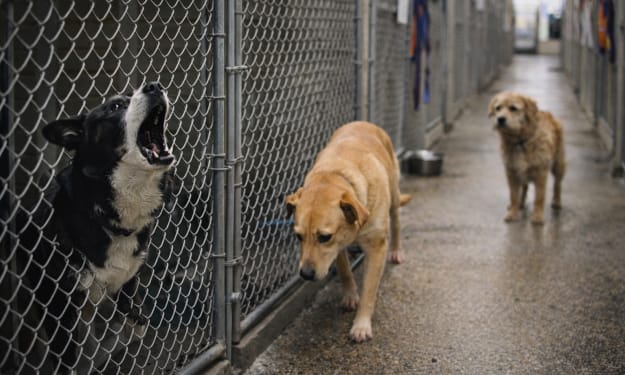
By day 3, the barking changes. The first 48 hours are chaos. Intake processing. New smells. Metallic doors slamming. By day 3, some dogs bark constantly. Others stop almost entirely. One paces the kennel line until the pads on his feet redden. Another stands motionless, eyes half-lidded, ignoring visitors.
By Dr. Mozelle Martin6 days ago in Petlife
Lion vs. Hyenas
The struggle between lions and hyenas is one of the most fascinating rivalries in the African wilderness. These two powerful predators share the same habitats, hunt similar prey, and constantly compete for food and territory. Their conflict is not just about strength but also about strategy, teamwork, and survival. Observing a confrontation between them reveals much about the balance of nature on the African savannah.
By Abubakar2207 days ago in Petlife
The BAFTA Awards
By now, in a stunning departure from recent years, most of the world is aware of what happened at the BAFTA film awards. Social Media Headlines will tell you the bare bones: that John Davidson, a Tourette's Syndrome advocate, shouted a racial slur at two Actors of Colour, Michael B Jordan and Delroy Lindo.
By Natasja Rose4 days ago in Psyche



Comments
There are no comments for this story
Be the first to respond and start the conversation.