
When the Sky Took My Best Friend
A Gaza Story of War, Loss, and Unconditional Love

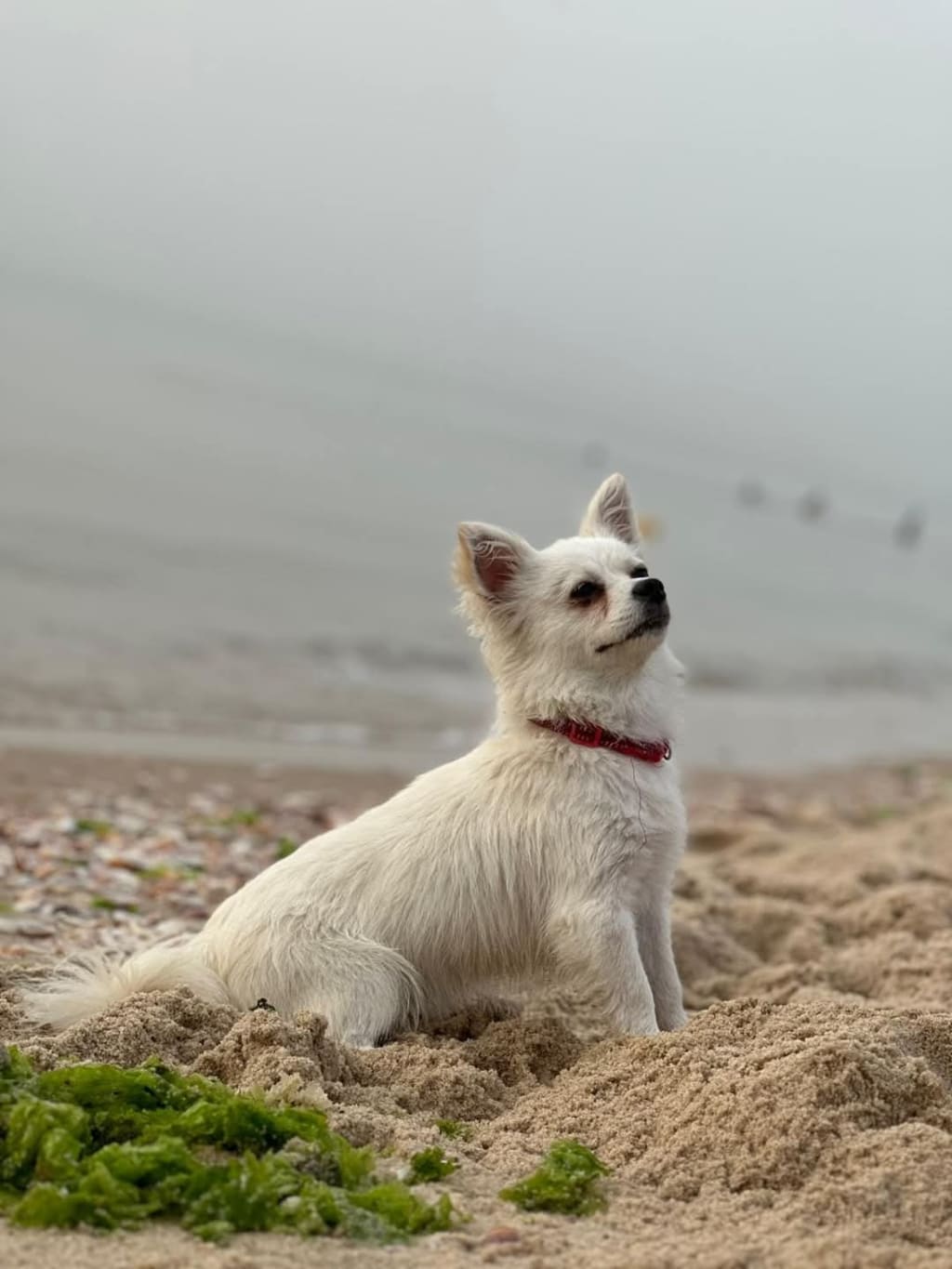
The Space Where My Dog Used to Sleep
I was born in Gaza, but I feel as if I truly learned what it meant to live there only during the war. Before that, life was narrow but familiar, painful yet predictable. During the war, everything became loud, unstable, and stripped of meaning—everything except grief. Grief became the only constant.
I raised my dog from the moment his eyes were still sealed shut, a small trembling body fitting into the palm of my hand. I named him Sami, because the name sounded like warmth. For seven years, Sami was not “just a dog.” He was the only creature who did not ask me to explain Gaza to him. He did not ask why the electricity disappeared, why the sky screamed at night, or why my hands shook when planes passed overhead. He simply stayed.
When the war began, Gaza did not change all at once. It cracked slowly, like glass under pressure. The air thickened first. Then the nights stretched longer, and sleep became a luxury that felt almost immoral. Bombs fell like heavy punctuation marks in the middle of our sentences, interrupting everything—meals, prayers, memories.
Sami understood before I did. Dogs know fear differently. He began to flinch at sounds that humans tried to normalize. Each explosion pressed his body closer to my legs, his heartbeat racing as if trying to escape his chest. I talked to him constantly, not because I believed my words could stop the bombs, but because silence felt like surrender.
We stayed indoors most days. Outside, buildings collapsed the way tired men fall—slowly, then all at once. Dust coated everything: our clothes, our lungs, our thoughts. Food became scarce. Water tasted of metal and desperation. Still, every morning, Sami waited by the door, tail wagging weakly, asking for a world that no longer existed.
The night I lost him was not the loudest night of the war. That is what haunts me the most.
The shelling began suddenly. Not close, then close, then impossibly close. The walls trembled. Windows shattered inward like rain made of knives. I grabbed Sami instinctively, wrapping my arms around him as if my body could shield his. He whimpered, a sound so small it felt illegal in the presence of such violence.
Then the building next to ours was hit.
The force threw us apart.
I remember screaming his name, but my voice sounded foreign, swallowed by dust and noise. The room filled with smoke. I crawled through rubble, my hands bleeding, my lungs burning, calling for him over and over again like a prayer I no longer believed in.
When I found him, he was still.
No blood. No visible wounds. Just silence.
I held him the way I did when he was a puppy, his head against my chest. His body was warm, but the life inside him was gone. In that moment, something inside me collapsed more completely than any building ever could.
I had lost family members before. Neighbors. Friends. War teaches you that loss is unavoidable, almost routine. But losing Sami broke me in a different way. He was innocence. He was the part of me that still believed in continuity—that tomorrow could resemble yesterday.
After that night, the war changed texture. Every sound carried his absence. Every corner of the room accused me. The place where he used to sleep became unbearable. I avoided it, then stared at it for hours, unable to reconcile the empty space with my memory of his breathing.
Grief during war is not given time. You are expected to keep moving, keep surviving, keep adapting. But how do you adapt to a silence that used to wag its tail when you came home?
Outside, Gaza continued to suffer. Hospitals overflowed. Children aged decades in weeks. Parents buried their dreams along with their dead. The smell of smoke mixed with the smell of fear. The sky was no longer a symbol of openness—it was a threat.
I walked through the streets carrying my grief like a visible wound. People around me were broken in their own ways. Some cried openly. Others had gone numb, their eyes hollow, their voices flat. I realized then that war does not only kill bodies—it kills relationships, habits, small joys. It kills the version of yourself that could love without fear of loss.
Sami had been my refuge. In a place where control is an illusion, he was something I could protect. Or so I thought. His death taught me the most brutal lesson of the war: that even love, pure and loyal, is not safe here.
Sometimes, at night, I still feel him. A phantom weight against my leg. A memory of warmth. I whisper his name without realizing it. The bombs have quieted somewhat, but the war inside me has not.
People ask why losing a dog hurts so much when so many humans have died. I do not know how to answer without screaming. Grief is not a competition. Pain does not become smaller because others suffer more. Sami was my family. He shared my fear. He trusted me completely. And I failed him—not by choice, but by circumstance.
Gaza took many things from me: safety, stability, the future I imagined. But losing Sami took something else—the last uncomplicated love I had.
Now, when I walk through the ruins, I understand something clearly. War is not only about politics or borders or power. It is about small lives erased quietly. About dogs who never understood why the sky hated them. About people who survive but are never whole again.
I am alive. But part of me is buried under the rubble, curled up in the shape of a dog who loved me until his final breath.
And every day I carry on, not because I am strong, but because even in loss, I owe him that much.
About the Creator
Ahmed aldeabella
"Creating short, magical, and educational fantasy tales. Blending imagination with hidden lessons—one enchanted story at a time." #stories #novels #story
Keep reading
More stories from Ahmed aldeabella and writers in Petlife and other communities.
Keeping your pets safe (and calm) this holiday season
The holiday season may be magical for some humans, but for pets it only means confusion, changed routines, overstimulation, extra noise, guests or pet sitters come and go, and sometimes the festive season means danger for pets.
By Susan Fourtané 17 days ago in Petlife
CBD Treats for Hyperactive Dogs: Promoting Calm and Focus
I have a confession. My Golden Retriever, Max, used to drive me absolutely nuts. I'm talking about the dog who would sprint laps around my living room at midnight, crash into furniture, bark at his own reflection, and somehow still have energy after a two-hour hike. My vet kept saying, "He's just a high-energy dog—he needs more exercise!" But here's the thing: I was already exercising him to death. There had to be something else going on.
By CBD Dog Health5 days ago in Petlife
Standing While Falling
Quotation from Friedrich Nietzsche "He who wrestles long with monsters should beware lest he himself become a monster. And if you gaze long into an abyss, the abyss also gazes into you. Man is not destroyed by suffering, but by the meaning he makes of it."
By LUCCIAN LAYTH5 days ago in Critique


Comments
There are no comments for this story
Be the first to respond and start the conversation.