
The Top 10 Most Deadliest Animals in the World: Nature’s Lethal Creatures.
Here is a artical about top 10 most deadliest animal in the world.

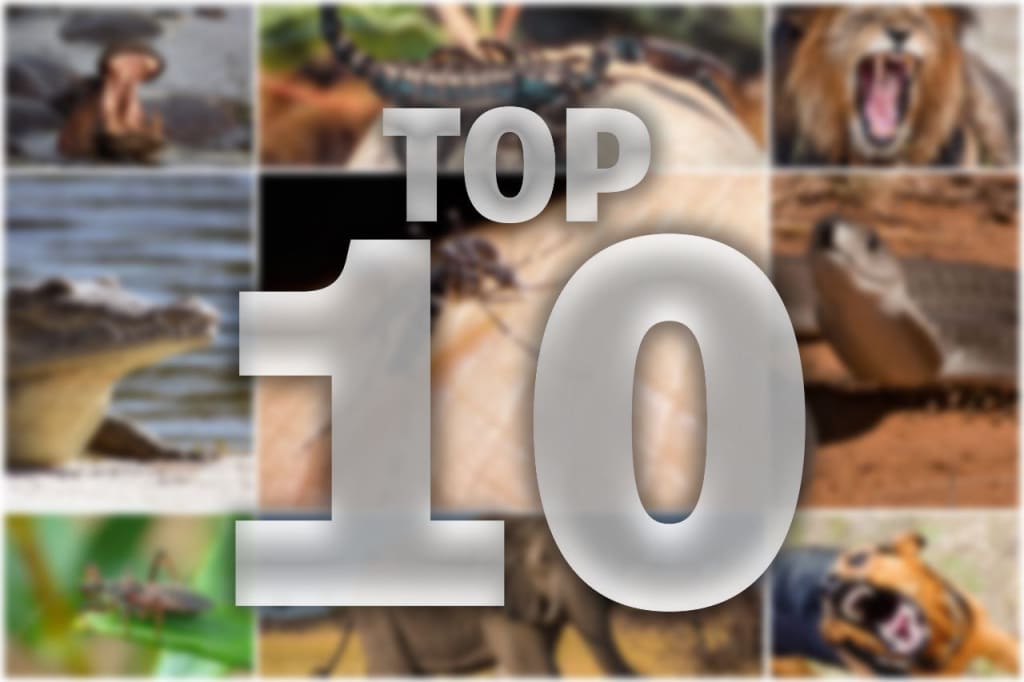
Introduction: Danger in the Animal Kingdom
The animal kingdom is vast and full of wonders. From the majesty of whales to the cunning of jungle predators, the diversity of species on Earth reflects millions of years of evolution. But for all their awe-inspiring variety, some creatures stand out not just for their biology — but for the deadly threat they pose to humans.
When we hear the term “deadly animal,” most people imagine lions, sharks, or crocodiles. Yet, the true dangers often lie where we least expect them. The most dangerous animals aren’t always the biggest, strongest, or most aggressive. Some are small, silent, and lethal through the diseases they carry. Others are apex predators or venomous creatures that kill in seconds.
In this extensive exploration, we will examine the top 10 most deadliest animals in the world, ranked not by how frightening they look, but by the number of human deaths they cause annually. This ranking is based on data from the World Health Organization (WHO), Centers for Disease Control and Prevention (CDC), and global public health sources.
#1. The Mosquito – The Tiny Serial Killer
Estimated Deaths Per Year: 725,000+
Primary Danger: Disease Transmission (Malaria, Dengue, Zika, Yellow Fever, etc.)
Regions Found: Global (especially tropical and subtropical regions)
Despite being barely the size of a fingernail, the mosquito is the deadliest animal on Earth by far. Over 3,500 species of mosquitoes exist, but only a few hundred bite humans, and fewer still transmit diseases. Those that do, however, are responsible for the spread of some of the most virulent diseases known to humankind.
Why Mosquitoes Kill
Mosquitoes act as vectors — carriers of viruses and parasites that they transmit to humans through their bites. Diseases like malaria, dengue fever, Zika virus, chikungunya, yellow fever, and West Nile virus are all spread this way.
Malaria alone infects more than 240 million people yearly and causes over 600,000 deaths, mostly among children under five in sub-Saharan Africa.
Dengue fever causes severe flu-like symptoms and can develop into potentially lethal dengue hemorrhagic fever.
The Mosquito Problem
Climate change and globalization have expanded the range of disease-carrying mosquitoes. Urbanization, poor sanitation, and stagnant water make for ideal breeding grounds, making mosquito control a top global health priority.
Efforts to Fight Back
Global health initiatives like Roll Back Malaria, insecticide-treated bed nets, and new malaria vaccines like RTS,S aim to reduce the impact. Gene-editing technologies (like the use of sterile or genetically modified mosquitoes) are also being tested.
#2. Humans – The Self-Destructive Species
Estimated Deaths Per Year: 400,000–500,000+
Primary Danger: Homicide, War, Terrorism
Regions Found: Worldwide
In a grim twist, humans are the second deadliest animal to their own kind. Through murder, warfare, organized crime, terrorism, and negligence, humans kill hundreds of thousands of other humans every year.
Types of Human-Caused Deaths
Homicide and domestic violence
Armed conflicts and wars
Terrorist attacks
Genocide and systemic oppression
Wars in Ukraine, Syria, Sudan, and conflicts across the globe continuously result in death and displacement. While we have the intelligence to build civilizations, we also have the capacity to destroy them — often in horrifyingly efficient ways.
#3. Snakes – Venom in the Grass
Estimated Deaths Per Year: 100,000–138,000+
Primary Danger: Snakebites (venomous envenomation)
Regions Found: Africa, Asia, South America, Australia
Snakes are widely feared, and with good reason. Of the roughly 3,000 snake species on Earth, about 600 are venomous, and several are deadly to humans.
Lethal Snake Species
Inland taipan (most venomous)
Black mamba
Russell’s viper
King cobra
Saw-scaled viper
While some of the deadliest snakes are rare and live in remote regions, others are common in populated areas. For instance, the saw-scaled viper is responsible for a significant portion of deaths in India due to its aggressive nature and proximity to humans.
The Global Snakebite Crisis
Snakebite is classified by the WHO as a neglected tropical disease. Victims often live in rural areas with little access to hospitals or antivenom. More than 400,000 people each year are left disabled or disfigured by bites, even if they survive.
#4. Dogs (Rabid Dogs in Particular)
Estimated Deaths Per Year: 59,000+
Primary Danger: Rabies Virus
Regions Found: Asia, Africa, Latin America
Dogs are often cherished pets, but unvaccinated or feral dogs can be deadly — especially in areas where rabies is prevalent.
Rabies: A Silent Killer
Rabies is nearly 100% fatal once symptoms appear, affecting the brain and nervous system. Most human rabies deaths occur in Asia and Africa, where access to vaccination and post-exposure treatment is limited.
Efforts to control dog rabies include mass vaccination campaigns, stray dog control, and public awareness efforts. Despite progress, the disease continues to claim tens of thousands of lives annually, primarily among children.
#5. Tsetse Fly – The Silent Desert Assassin
Estimated Deaths Per Year: 10,000+
Primary Danger: Sleeping Sickness (Trypanosomiasis)
Regions Found: Sub-Saharan Africa
The tsetse fly, found in the rural areas of sub-Saharan Africa, transmits the Trypanosoma brucei parasite, which causes African trypanosomiasis, commonly known as sleeping sickness.
How It Kills
The disease progresses from fever and headaches to confusion, poor coordination, and eventually coma and death if left untreated.
It affects the central nervous system and is difficult to diagnose in early stages.
Despite progress in reducing case numbers through tsetse fly control and screening programs, the disease still affects many impoverished communities with limited access to healthcare.
#6. Assassin Bugs (Kissing Bugs)
Estimated Deaths Per Year: 7,000+
Primary Danger: Chagas Disease (American Trypanosomiasis)
Regions Found: Latin America, now spreading to North America
Assassin bugs, particularly species that bite near the mouth (hence the nickname “kissing bugs”), transmit Trypanosoma cruzi, the parasite that causes Chagas disease.
Chagas Disease
Often asymptomatic at first, Chagas can lie dormant for years before causing heart failure, digestive system damage, or even sudden death. More than 6 million people are currently infected, mostly in Latin America.
#7. Freshwater Snails
Estimated Deaths Per Year: 4,400–200,000 (estimates vary)
Primary Danger: Schistosomiasis (parasitic flatworms)
Regions Found: Africa, Asia, South America
Freshwater snails may not seem deadly, but they host parasitic flatworms that cause schistosomiasis, a disease that infects over 200 million people annually.
Schistosomiasis Impact
Can cause liver damage, kidney failure, infertility, and cancer.
Often chronic and severely underdiagnosed.
Mainly affects poor communities with limited access to clean water and sanitation.
#8. Scorpions
Estimated Deaths Per Year: 3,000–5,000
Primary Danger: Venomous Stings
Regions Found: North Africa, Middle East, Latin America, Asia
While most scorpions aren’t dangerous, some species like Leiurus quinquestriatus (deathstalker) and Androctonus australis (fat-tailed scorpion) can deliver fatal stings — particularly to children, the elderly, or allergic individuals.
Scorpion stings cause intense pain, heart issues, and respiratory failure if untreated. Antivenom availability has improved survival rates in recent years.
#9. Crocodiles
Estimated Deaths Per Year: 1,000+
Primary Danger: Physical Attack
Regions Found: Africa, Asia, Australia, Americas
Crocodiles are aggressive, fast, and powerful ambush predators. The Nile crocodile is particularly dangerous, often killing more humans annually than sharks.
Unlike other predators, crocodiles will attack unprovoked and are known to target fishing communities or people bathing in rivers.
#10. Elephants
Estimated Deaths Per Year: 500+
Primary Danger: Stomping, Charging
Regions Found: Africa and Asia
Despite their gentle reputation, elephants can be extremely dangerous — particularly when provoked, injured, or during musth (a hormonal state in males).
Incidents often occur in regions where humans and elephants compete for space, especially in India and sub-Saharan Africa. Elephants have been known to destroy entire villages in retaliation for habitat encroachment.
Conclusion: Living with Deadly Creatures
From microscopic parasites to towering elephants, the creatures on this list remind us that danger in the natural world comes in many forms. Some kill through brute strength. Others kill through stealth and disease. But all are part of the complex ecosystems that support life on Earth.
Human activity — urbanization, deforestation, climate change — plays a huge role in exacerbating human-animal conflict and spreading disease. If we are to reduce the impact of these deadly creatures, we must invest in science, education, public health, and environmental stewardship.
Nature isn’t inherently cruel; it simply follows the rules of survival. It's our responsibility to understand these dangers and take action to protect ourselves and the planet we share.
Authenticity and Presence: What Animals Can Teach Actors About Emotional Truth
Actors spend years searching for authenticity. Acting schools teach technique, rehearsal methods focus on emotional preparation, and directors guide performers toward believable moments on screen. Yet sometimes the most meaningful lessons about authenticity come from unexpected places.
By Andreas Szakacs2 days ago in Petlife
Sometimes It's Like That and That'sThe Way It Is
It was the late 1960s, and ten-year-old Gloria Coleman was standing with her grandmother on the side of the highway waiting for the bus. As the Greyhound pulled up, it seemed monstrous and intimidating. Grandma Elizabeth grabbed Gloria's hand, holding it tightly as they boarded.
By Cheryl E Preston3 days ago in Fiction



Comments
There are no comments for this story
Be the first to respond and start the conversation.