
The Last Known Photograph of a Living Quagga: A Glimpse into Extinction
Unique Animal
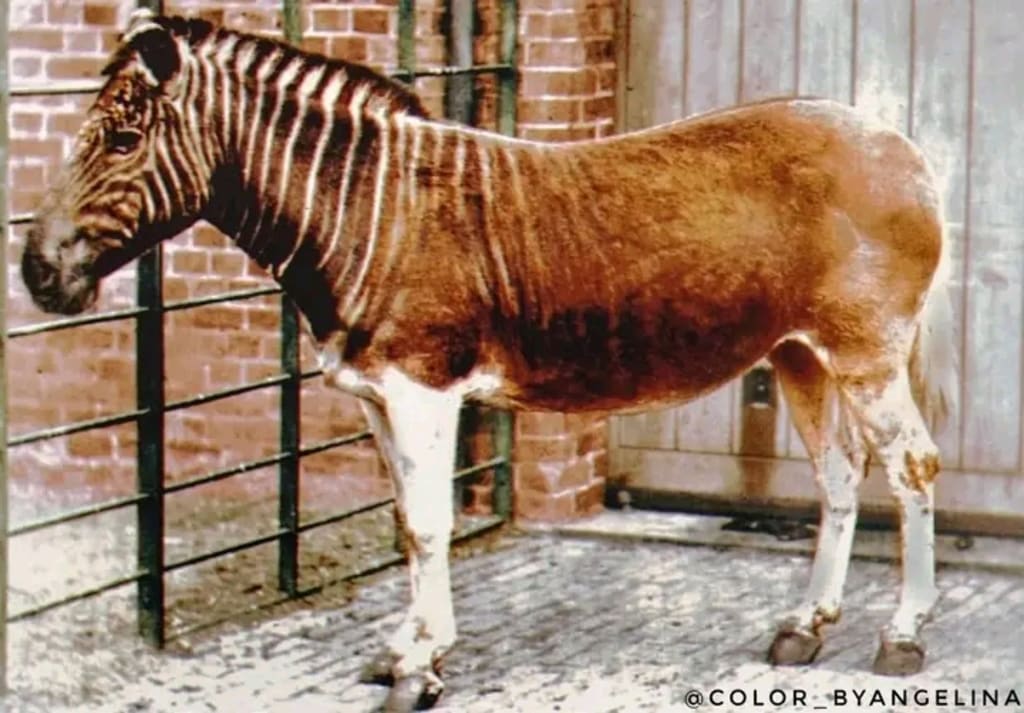
In the annals of extinction, few stories are as poignant or visually haunting as that of the quagga, a subspecies of the plains zebra once native to South Africa. This unique creature, characterized by its half-striped coat and brownish hindquarters, roamed the grasslands of Southern Africa until the pressures of human activity drove it to extinction in the late 19th century. Today, one of the most powerful reminders of its existence is a single photograph—an image taken in 1870 at London Zoo, in Regent's Park. This photograph of a lone quagga is both a relic and a symbol, encapsulating humanity’s tendency to take nature for granted until it’s too late.
The Quagga: A Unique Zebra Subspecies
The quagga, scientifically named Equus quagga quagga, stood out from other zebras with its striking, almost surreal appearance. It had a brownish body with distinctive black-and-white stripes along its neck and head, which faded into a solid, chestnut-colored coat towards its hindquarters. This unique pattern led it to be mistaken for a hybrid animal, although it was later confirmed to be a subspecies of the plains zebra.
Native to South Africa, the quagga lived in herds across the grassy plains of the Karoo region and was well adapted to its semi-arid environment. Unfortunately, its unique coloration also made it an attractive target for hunters and collectors in the 19th century. Early European settlers, unaware of the delicate balance of the local ecosystem, saw the quagga as a source of meat, hides, and sometimes even sport. By the time its population was recognized as declining, it was already too late.
The Last Quagga Photograph: Capturing a Final Glimpse
The photograph taken in 1870 at the London Zoo remains the only known image of a living quagga. Capturing an animal that would soon vanish from existence, this photograph is a stark reminder of how rare it is to have documentation of a creature on the brink of extinction. The image shows a solitary female quagga, standing placidly within her enclosure. Her coat, a mix of bold stripes at the front and a solid color at the back, emphasizes her distinctiveness from other zebras.
At the time, photography was still a burgeoning art form. The Victorian fascination with cataloging and documenting the world was just gaining momentum, but even so, few people realized the value of capturing this creature on film. The London Zoo photograph was likely taken out of curiosity rather than any foresight about the quagga’s impending extinction. Nonetheless, it endures as one of the most significant images in conservation history, providing a rare and irreplaceable visual record of an animal lost to time.
The Path to Extinction: A Tale of Overexploitation
As with many species that faced extinction during this era, the quagga’s fate was largely sealed by human exploitation. European settlers in South Africa viewed native animals as obstacles to agriculture and expansion, and the quagga, being relatively tame and less skittish than other zebras, became an easy target. Herds were decimated by hunters who sold their skins, while farmers eliminated quaggas to clear land for livestock grazing. By the early 19th century, quaggas were already rare in the wild.
Despite the quagga’s dwindling numbers, there was little organized effort to conserve it. In fact, the concept of species conservation was virtually unheard of at the time, and few people recognized the irreversible consequences of their actions. The last known wild quagga is believed to have been shot in 1878, and just five years later, the last captive quagga, a female, died at Amsterdam’s Artis Zoo in 1883. With her passing, the world lost the last living quagga, and the subspecies became a tragic emblem of extinction.
The Quagga Project: A Modern Effort to Reclaim the Past
In recent decades, however, the quagga has not been entirely forgotten. Inspired by advances in genetic research, a group of scientists launched the Quagga Project in 1987. This ambitious conservation initiative seeks to “resurrect” the quagga by selectively breeding plains zebras with similar coat patterns. The project began by identifying zebras with reduced striping patterns and selectively breeding them to resemble the quagga’s unique look.
The Quagga Project has seen some promising results, with zebras now displaying coats remarkably similar to the original quagga’s. While these animals are not genetically identical to true quaggas, they serve as a living memorial to the lost subspecies and highlight the importance of conservation in protecting vulnerable wildlife.
The Legacy of the Quagga and Lessons for the Future
The quagga’s story is a powerful reminder of the irreversible consequences of human exploitation. Its extinction, largely driven by hunting and habitat loss, emphasizes the need for a greater understanding of the impact of human activities on ecosystems. It also highlights the critical role that zoos and other institutions can play in raising awareness and conserving species. Although the London Zoo housed the last known quagga, there was little awareness at the time of the animal’s dwindling numbers. Today, zoos around the world work closely with conservationists to monitor endangered species, provide sanctuary, and promote public awareness.
The 1870 photograph of the quagga endures as a reminder of the fragile balance between humanity and the natural world. It captures an animal now gone forever, but it also tells a story with enduring relevance. For every quagga lost, there are countless other species at risk today due to similar pressures. From habitat destruction to climate change and poaching, many species face the same threats that once decimated the quagga’s population.
Ultimately, the story of the quagga is a cautionary tale about the cost of neglect and exploitation. The photograph from the London Zoo is more than a mere image; it is a testament to the consequences of unchecked human actions. By reflecting on this haunting relic of the past, we can find renewed purpose in protecting the diverse life forms with whom we share the planet. The quagga may be gone, but its story endures as a call to safeguard the future of our world’s precious biodiversity.
About the Creator
Keep reading
More stories from Deji Akomolafe and writers in Petlife and other communities.
The Dark Descent of a Renowned Zoologist: Adam Britton's Shocking Crimes Against Animals
In an appalling case that has shocked both the scientific community and the general public, 53-year-old British zoologist Adam Britton faces a 249-year jail sentence for his heinous crimes against animals. Britton, who once held a respected position as a zoologist, was found guilty of brutally raping, torturing, and killing dozens of pet dogs, actions he filmed and shared online. This tragic turn of events exposes a hidden side of a man who, for years, was trusted and admired in his field.
By Deji Akomolafe2 years ago in Petlife
A Dart at Dusk
Seconds ago, the sullen sun set on the two of us… my exuberant furry companion and me. A fresh breeze embraces us, delivering welcome relief from the day’s oppressive heat. His typical stumbling and staggering along — apace with a sloth — has turned into trip-trapping, high-stepping, almost skipping along.
By Angie the Archivist 📚🪶6 days ago in Petlife
Silver Screen Magic with Mae West
American actress and singer Mae West became a popular film actress during the Great Depression. She started entertaining in vaudeville, then performed on Broadway, and finally went to Hollywood. She signed up with Paramount Pictures and made her debut in the 1932 film “Night After Night.” She also starred in musicals, comedies, and crime dramas. The American Film Institute named her one of the best classic Hollywood actresses.
By Rasma Raisters7 days ago in Geeks



Comments
There are no comments for this story
Be the first to respond and start the conversation.