
The Grace of the Wild: A Cheetah's Vigil Over the Savanna
The article explores the captivating life of the cheetah, its unique physical adaptations, cultural symbolism, and its pivotal role in the ecosystem. It also sheds light on the challenges cheetahs face and the importance of conservation in preserving this magnificent species.

Introduction
African savanna, with its endless golden grasslands and vibrant sunsets, holds countless secrets of survival, beauty, and resilience. Among its iconic residents is the cheetah, the world's fastest land mammal, renowned for its agility, speed, and elegance.
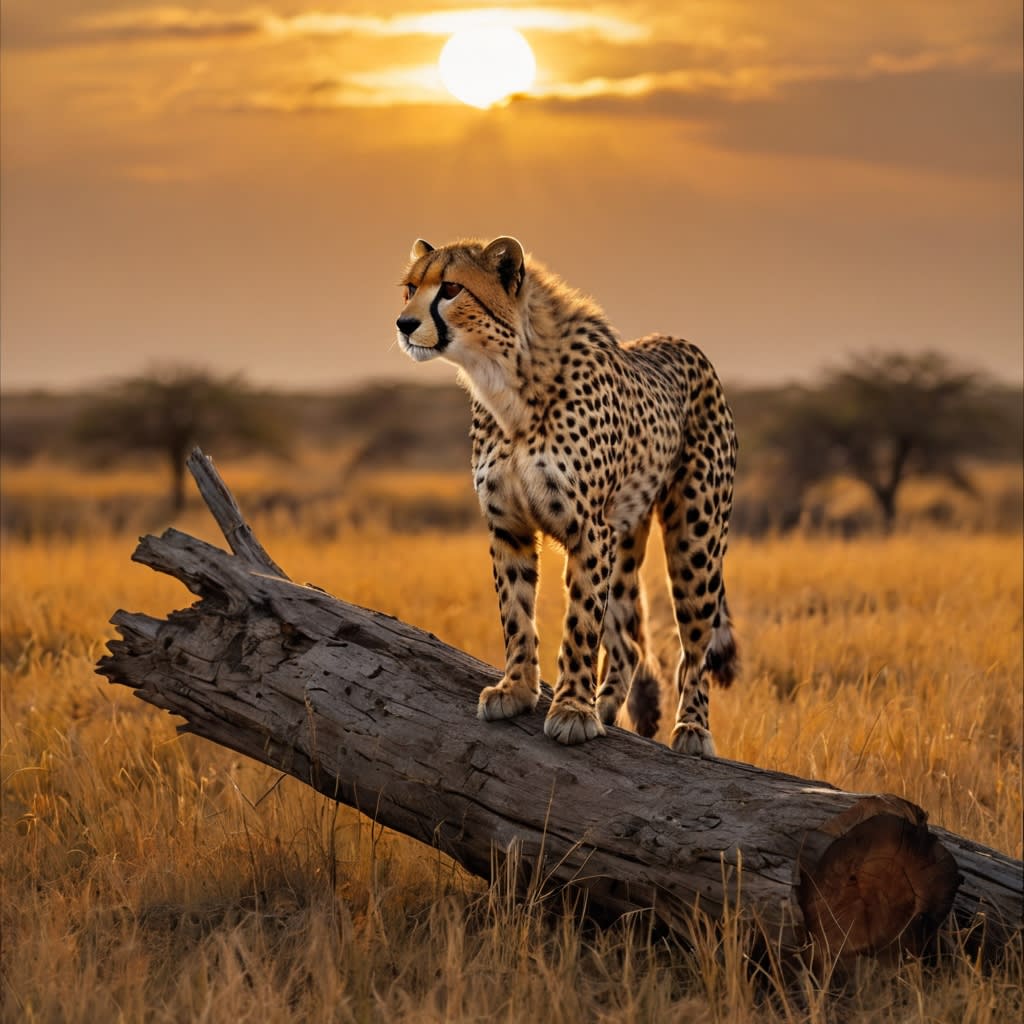
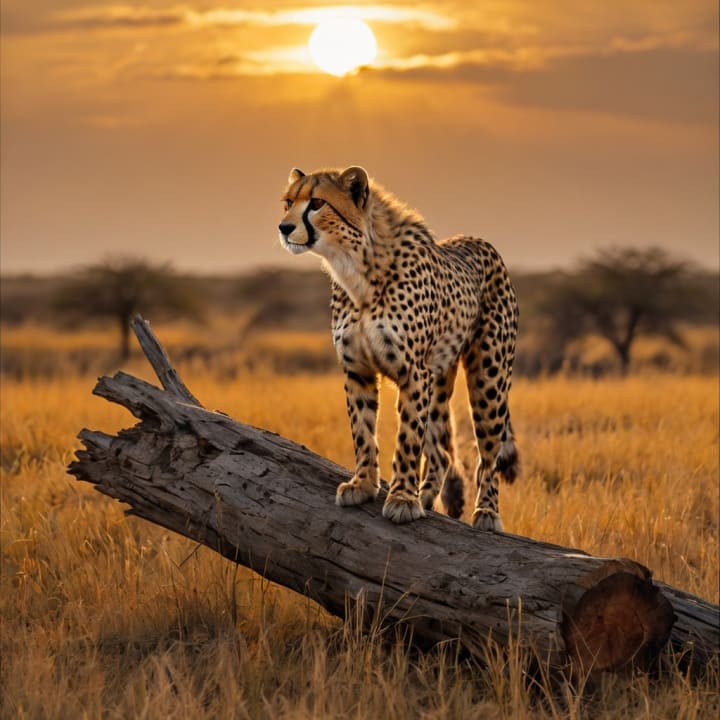
This apex predator not only symbolizes strength and focus but also plays an irreplaceable role in maintaining ecological balance. The image of a cheetah perched on a fallen tree, scanning the horizon, perfectly captures its essence: a combination of poise, power, and vulnerability.
The African savanna, with its endless golden grasslands and vibrant sunsets, holds countless secrets of survival, beauty, and resilience. Among its iconic residents is the cheetah, the world's fastest land mammal, renowned for its agility, speed, and elegance.
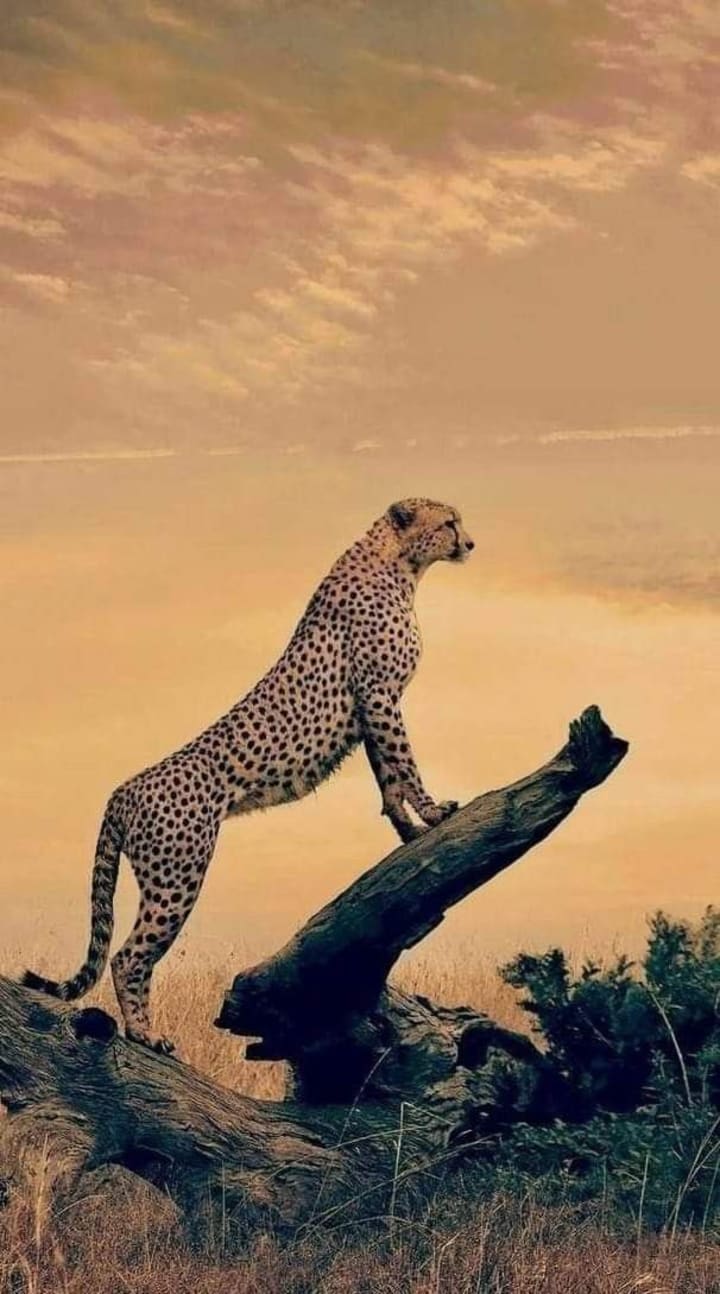
This apex predator not only symbolizes strength and focus but also plays an irreplaceable role in maintaining ecological balance. The image of a cheetah perched on a fallen tree, scanning the horizon, perfectly captures its essence: a combination of poise, power, and vulnerability.
The Anatomy of Speed

Cheetahs are nature’s marvel of engineering. Every aspect of their anatomy is designed for one purpose: speed. Their lean bodies, lightweight skeletons, and elongated spines enable powerful strides, while their muscular legs propel them to reach speeds up to 70 mph in mere seconds. Unlike most big cats, cheetahs have semi-retractable claws, akin to cleats, for added grip during high-speed chases.
Their large nasal passages and lungs allow them to take in enormous amounts of oxygen, while their wide-set eyes enhance depth perception and focus. Yet, this incredible design comes with limitations. Cheetahs lack the raw power of lions or leopards and must rely on bursts of energy, often lasting no more than 30 seconds, to catch prey. These traits make them both unique and highly specialized predators.
A Vital Role in the Ecosystem
As apex predators, cheetahs contribute to the delicate balance of the savanna ecosystem. By hunting weaker or slower prey, they prevent overpopulation and help maintain healthy herds of herbivores like gazelles and impalas.
In doing so, they indirectly support vegetation growth by ensuring that herbivores do not overgraze. This intricate cycle demonstrates how cheetahs are vital to the overall health of their environment.
Cultural and Symbolic Significance
The cheetah has long been a symbol of speed, focus, and royalty. Ancient Egyptians revered cheetahs, often depicting them in their artwork and associating them with the divine.
Pharaonic leaders considered the cheetah a companion of nobility and adorned their courts with its imagery. In modern times, the cheetah continues to inspire athletes, artists, and brands, serving as an emblem of excellence and determination.
Challenges and Conservation Efforts
Despite their magnificence, cheetahs face severe threats to their survival. Habitat loss due to human expansion, climate change, and poaching have led to a dramatic decline in their population.
Today, fewer than 7,000 cheetahs remain in the wild, with many subspecies, like the Asiatic cheetah, teetering on the brink of extinction.
Conservation efforts are underway to protect these majestic creatures.
Protected reserves, anti-poaching initiatives, and educational campaigns are key components of the fight to save cheetahs. Organizations like the Cheetah Conservation Fund work tirelessly to ensure that these cats continue to grace the savannas for generations.
A Call to Action
Protecting cheetahs is about more than preserving a single species; it’s about safeguarding the ecosystems they support and the cultural heritage they represent. Through collective action, from supporting conservation organizations to promoting sustainable tourism, humanity can help ensure that cheetahs thrive in the wild.
Conclusion
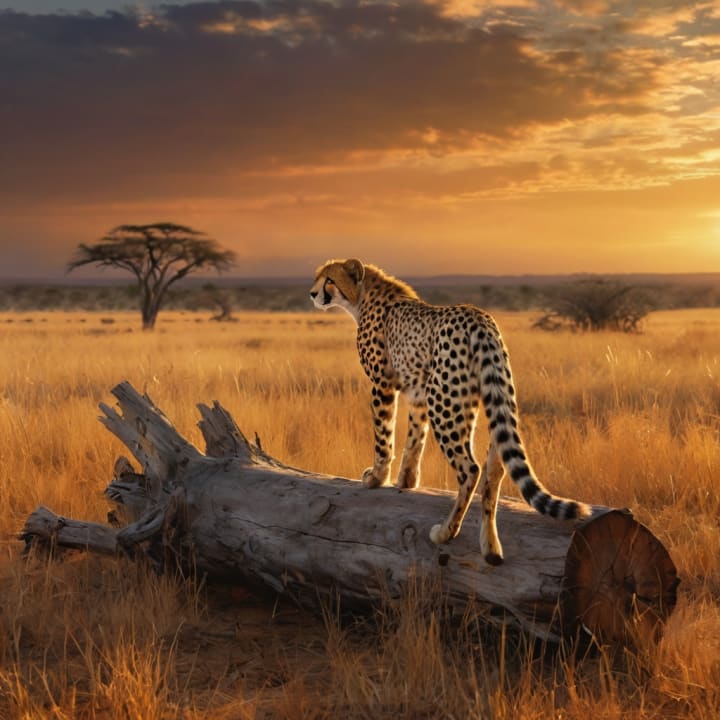
The cheetah, perched on its vantage point, represents the resilience of nature and the urgent need for its preservation. As we gaze at these creatures, we are reminded of the beauty of the wild and our responsibility to protect it.
About the Creator
Say the truth
"Say the Truth: Explain Everything in the World" is your trusted source for uncovering facts and exploring the wonders of history, science, technology, and beyond. We simplify complex ideas and reveal truths to inspire curiosity .
Keep reading
More stories from Say the truth and writers in Petlife and other communities.
"A Glimpse of Innocence: The White Cat in a Garden Paradise"
The Charm of a White Cat in a Garden: A Celebration of Nature and Innocence Innocence Captured The image of a white cat playfully peeking through lush green foliage in a garden is more than just a photograph; it is a narrative of curiosity and harmony. This setting highlights the connection between animals and nature, showcasing how even the most familiar domestic creatures can inspire awe when placed against a natural backdrop. This article delves into the beauty, symbolism, and significance of such moments, focusing on how they reflect the broader importance of preserving green spaces and cherishing the playful essence of animals.
By Say the truth about a year ago in Petlife
A Dart at Dusk
Seconds ago, the sullen sun set on the two of us… my exuberant furry companion and me. A fresh breeze embraces us, delivering welcome relief from the day’s oppressive heat. His typical stumbling and staggering along — apace with a sloth — has turned into trip-trapping, high-stepping, almost skipping along.
By Angie the Archivist 📚🪶6 days ago in Petlife
The Day I Realized My Home Might Be Stressing My Pet
For a long time, I thought my home was the safest place my pet could be. It was warm, familiar, filled with love. There were cozy corners for naps, toys scattered across the floor, and a predictable routine that gave us both comfort. I believed I was doing everything right — feeding the best food I could afford, keeping up with vet visits, and making sure my pet never felt alone.
By Inamullah Momand 5 days ago in Petlife




Comments (1)
This is the wonder of the world!