
Man's Best Friend - Famously Loyal Dogs
Some of the most faithful pooches in history!

It is a given: everyone knows that dogs are man's best friend. However, throughout history, there has been some stand-out examples of exceptionally loyal dogs who have touched the hearts of the people who have known them. These dogs have, on occasion, gone down in history or have had statues made to celebrate their lives. Here is a small selection of the most famous dogs.
Greyfriar's Bobby
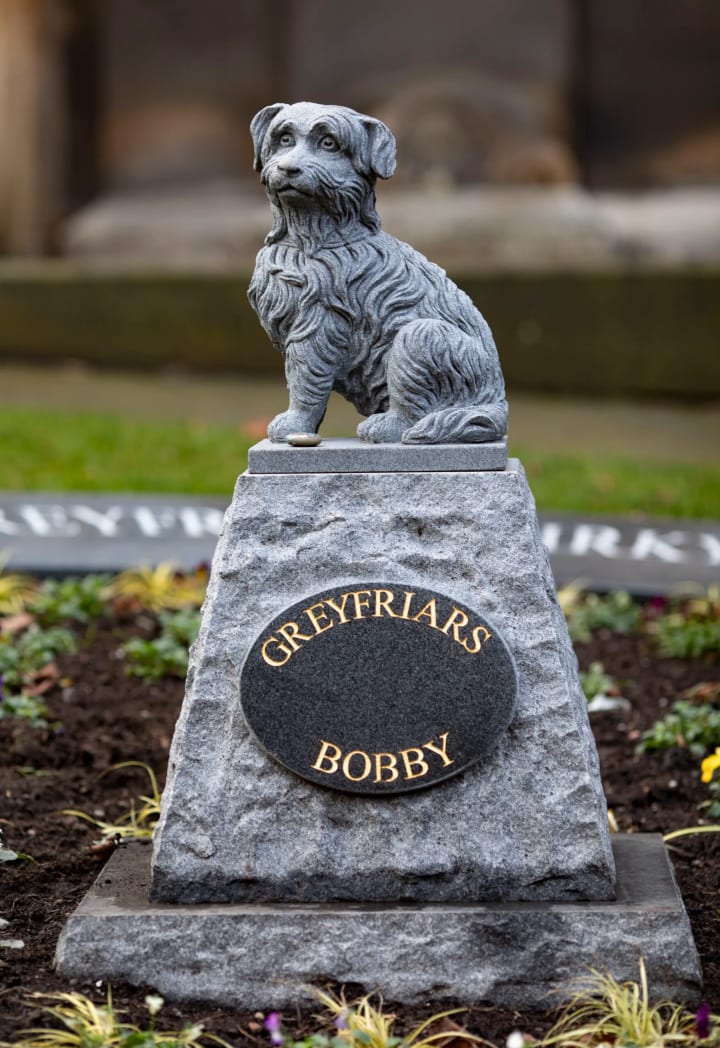
Greyfriars Bobby, a Skye Terrier, was the faithful dog of John Gray, known as Auld Jock, in Edinburgh, Scotland. When John Gray died and was buried in Greyfriars Kirkyard, his dog, Bobby, sat by the grave every day and guarded it for the remaining fourteen years of his life. When Bobby finally died of old age, the Skye Terrier was buried nearby.
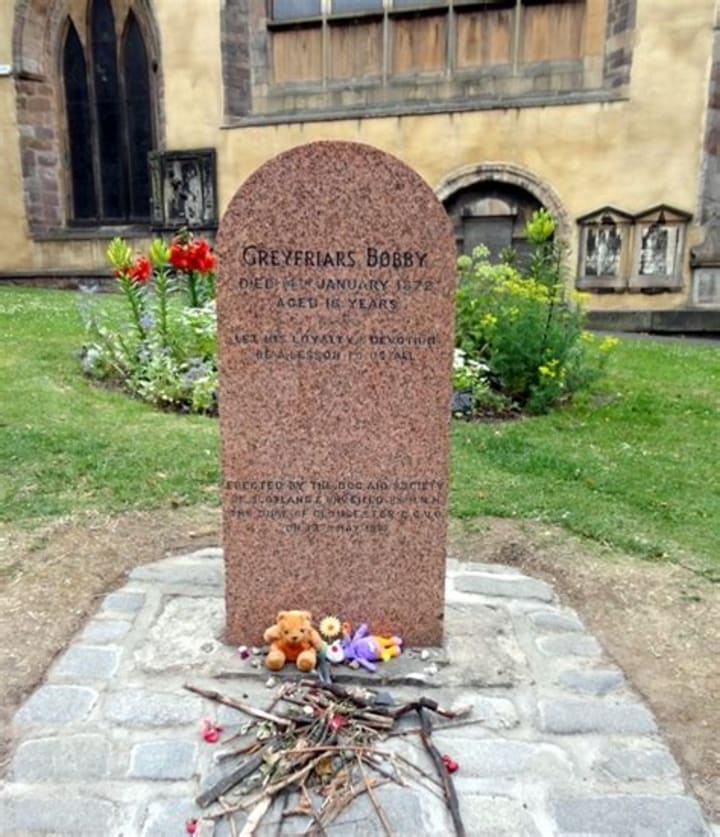
Bobby's devotion captured the heart of Edinburgh and he was commemorated with a statue in 1873 near the entrance to the graveyard. The story was then brought to world attention with a book by Eleanor Atkinson (1912) and then a Disney movie (1961).
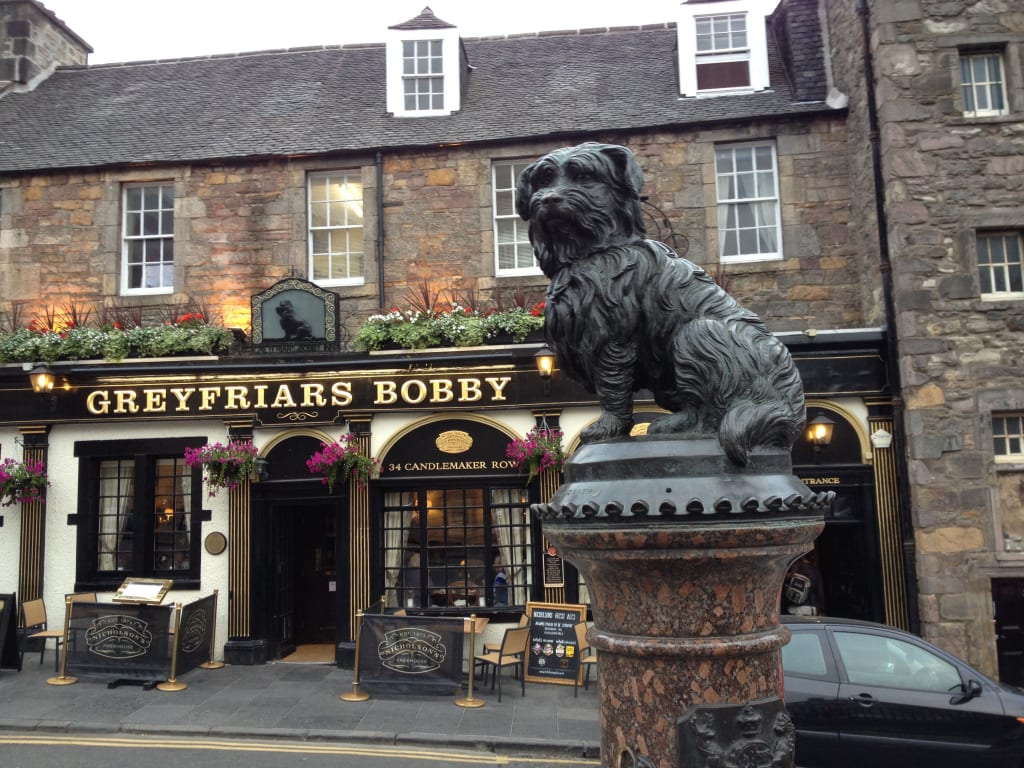
Tourists from around the world stop to pose and have their picture taken with Bobby in front of a pub of the same name (see photograph at the top of the page). Many touch the dog's nose for good luck, but that rubbing has left Bobby's face with a golden hue throughout the years.
Fala
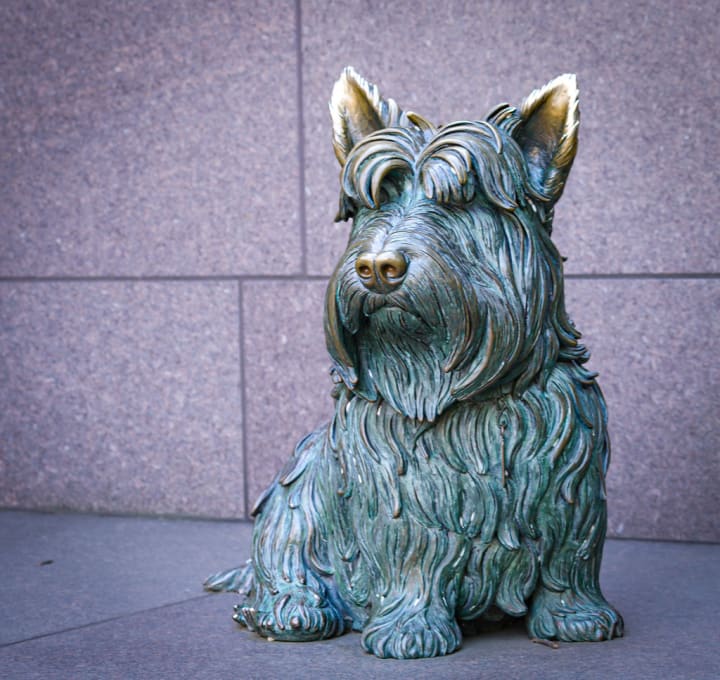
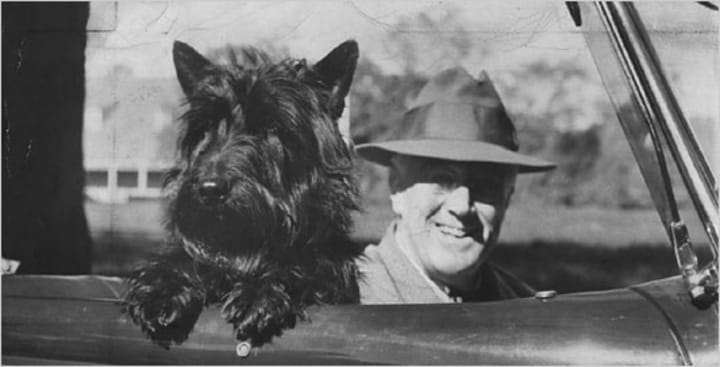
Fala, a Scottish Terrier, was perhaps the most famous White House dog ever. He was the trusty companion of President Franklin D Roosevelt (FDR) and was pictured with the President on many occasions.
One of the most famous chapters involved a presidential trip to the Aleutian Islands in 1944. FDR was accused by his political opponents of leaving his faithful hound behind on an island by mistake. He then sent a US ship back to pick him up at extortionate expense of the American taxpayer.
The story was political dynamite for the president's Republican adversaries, though FDR made light of the incident in what became known as the 'Fala speech'. The president, during a televised campaign event, said he didn't mind personal attacks on himself, but joked Fala was furious! FDR said he wanted to object to the "libellous statements about my dog".
Sergeant Gander
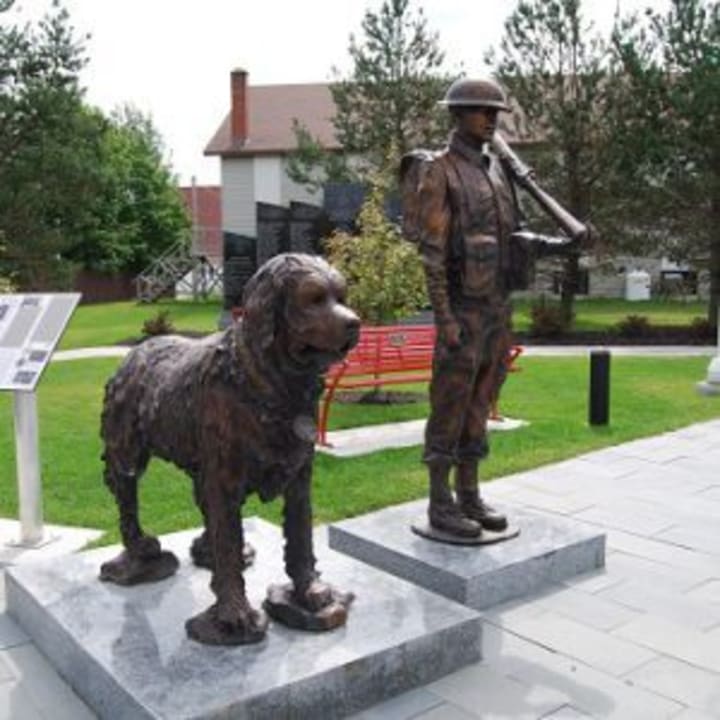
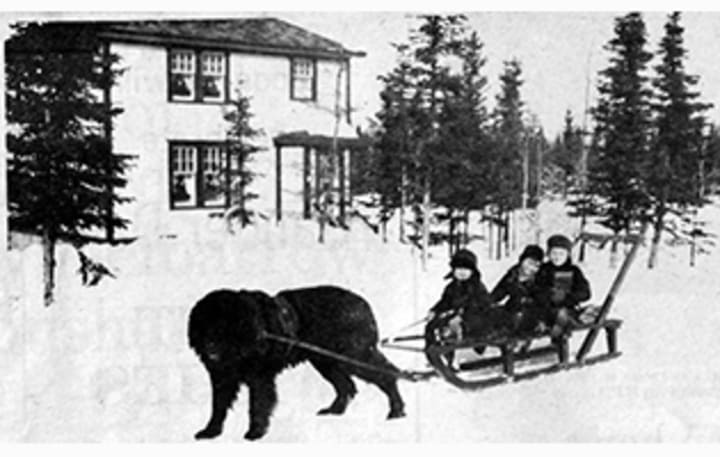
Sergeant Gander was a Newfoundland dog who became the mascot of The Royal Rifles of Canada during World War Two. Gander fought alongside the soldiers against the Japanese in Hong Kong in 1941.
Gander was noted to have protected Canadian soldiers during the fighting on at least two occasions but on the third occasion, it cost Gander his life. Sergeant Gander picked up a grenade that was thrown at the Canadian troops and ran away with it, saving the lives of the soldiers while sacrificing himself.
Gander was posthumously awarded the Dickin medal, equivalent for animals to the Victoria Cross, in 2000. Gander has since been commemorated with a statue at the Gander Heritage Memorial Park in Newfoundland.
Smoky the Yorkshire Terrier
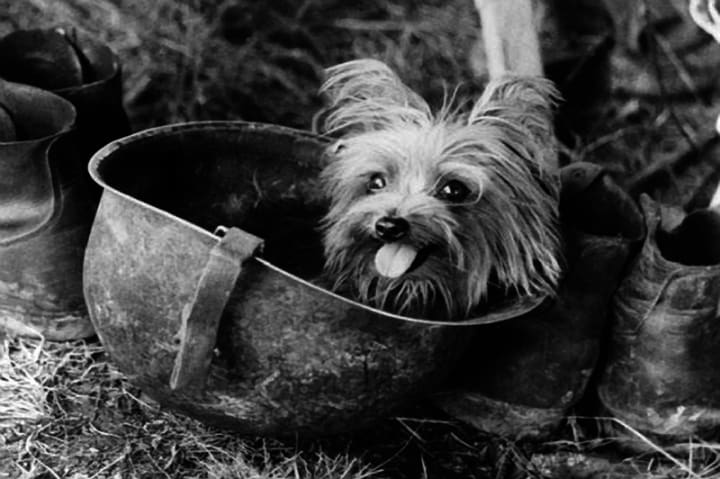
After being found in a foxhole, weighing only four pounds and standing at just seven inches tall, this Smoky the Yorkshire Terrier backpacked her way through the jungle terrain of New Guinea with the American soldier, Bill Wynne, who found her.
Smoky's very first assignment involved her helping to string communication lines at Lingayen Gulf. This three-day mission saw Smoky digging herself through culverts in order to lay telephone wires beneath an airstrip which was highly targeted by the Japanese. Smoky's efforts saved the lives of over 250 men and over 40 planes.
Bill then began teaching Smoky to perform tricks, including some more complex tricks such as 'playing dead' , walking a tightrope and even riding a handmade scooter. Unbeknownst to her owner, these tricks would be the first steps on her to becoming a therapy dog.
When Wynne developed jungle fever, the hospital's commanding officer gave the green light for Smoky to lie on Wynne's bed and even accompany the nurses on their rounds.
This immediately had a immediate effect on the sick and injured soldiers, as her presence raised their morale, lightened their mood and kept spirits high. Her healing effect was instantly recognisable and she became one of the very first therapy dogs, a method which is now commonly used to treat people today.
Word began to spread about Smoky's healing powers and whilst she and Wynne were on convalescence in Australia, hospitals been inviting them to visit, with Smoky performing tricks and spending time with the wounded.
Although Smoky's contribution as a therapy dog was historic, Bill had set his sights even higher for Smoky. He created an extreme stunt which involved the dog parachuting into the arena in order to gain the attention of the judges at the 'Best Mascot of the Southwest Pacific Area' award. This dramatic stunt didn't go unnoticed, as Smoky won first prize in this contest, beating over 400 other contestants.
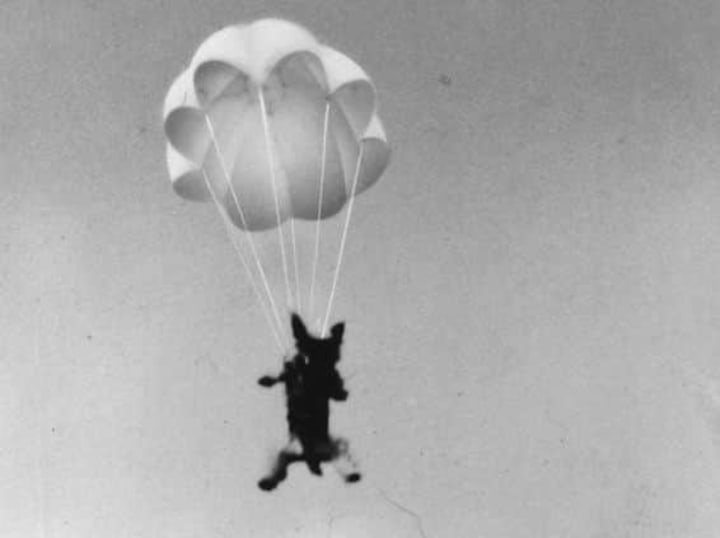
In total, Smoky served as a therapy dog for twelve years, both during and after the Second World War. Her efforts during the war also informed others about the healing nature of dogs and by 1947, there were over 700 therapy dogs.
Wynne and Smoky then branched out after the war, performing tricks for not only troops back in the US, but for civilians too. They even visited Hollywood whilst travelling the U.S. and performed on local television programmes.
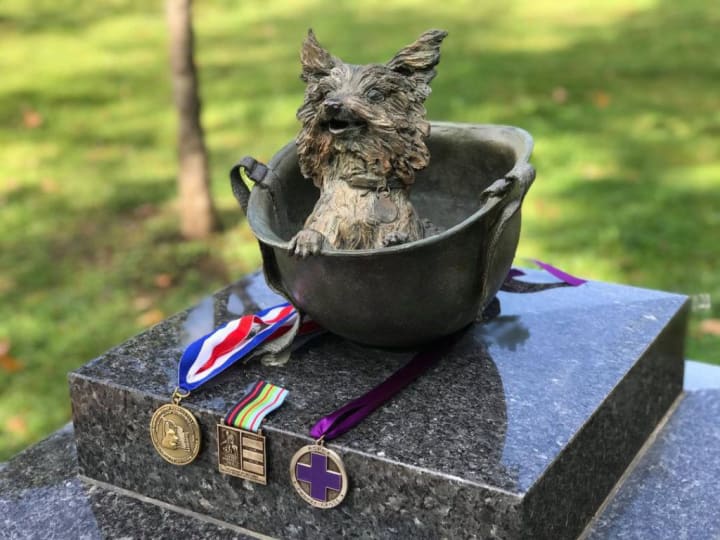
Smoky died peacefully in her sleep in 1957, two years after her retirement, and is now known around the globe. Her heroic efforts are commemorated by a statue in Cleveland, Ohio, providing a long-lasting memory of the extreme impact she had on not only the soldiers of WWII, but the war effort as a whole.
Bobbie the Wonder Dog
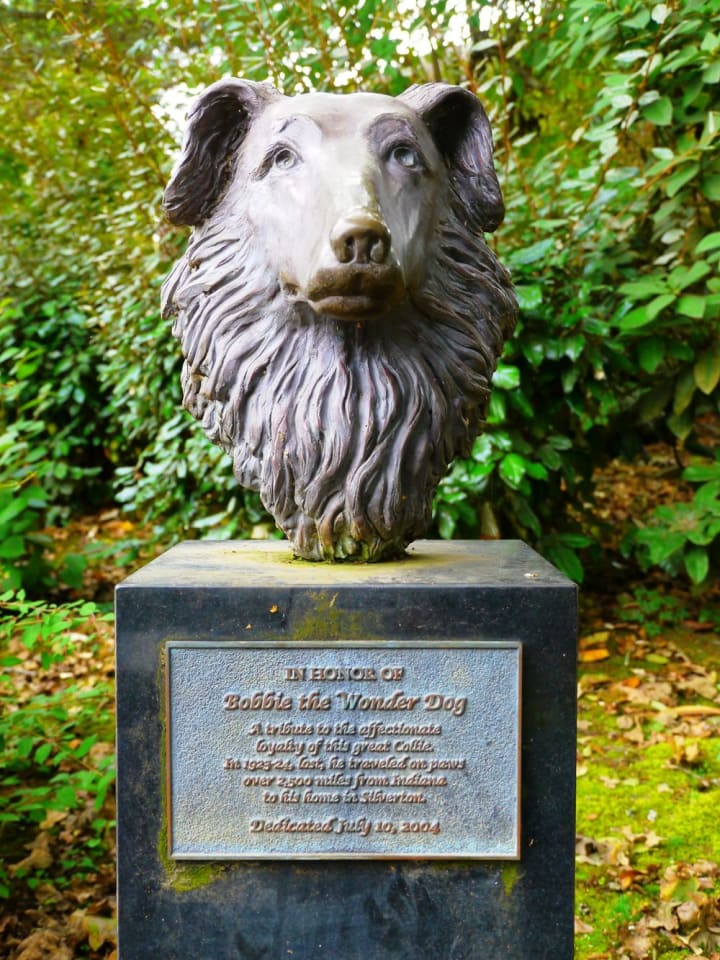
Bobbie the Wonder Dog's story is definitely the script for a Hollywood movie. It began when Bobbie was with his family on a road trip to Indiana in 1923. When Bobbie was attacked by other dogs, he ran away to protect himself. His heartbroken family searched as hard as they could but were unable to find him.
Eventually, they returned home to Silverton, Oregon (more than 2,500 miles away) without Bobbie, resigned to the fact they would never see their dog again. However, six months later, a scrawny, mangy Bobbie with his toenails almost worn to the quick, turned up in Silverton to the astonishment of all. It looked like he had walked the whole way home by himself.
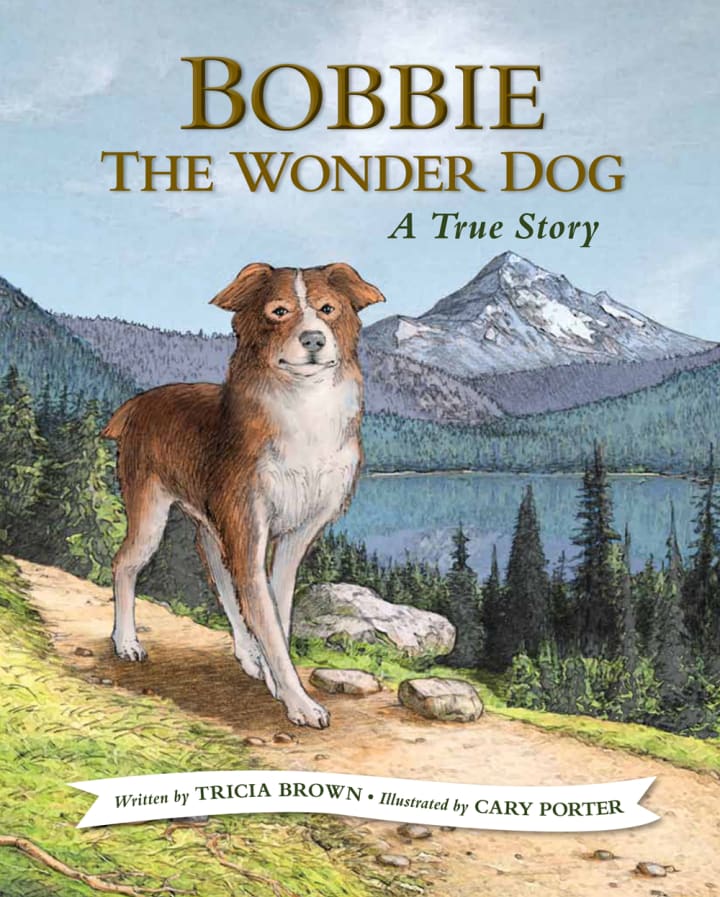
Unsurprisingly, the story became a sensation. Numerous articles were written, medals were bestowed and Bobbie even starred as himself in the 1924 silent film, The Call of the West. He died in 1927 and is remembered with a statue in Silverton and now a book.
Hachiko
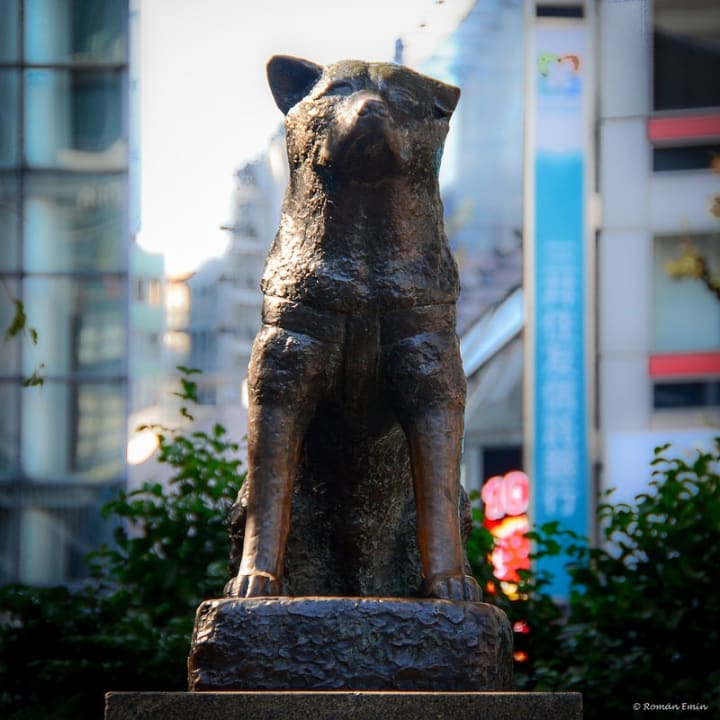
The story of Hachiko, an Akita, is another famous tale about the devotion of a dog to its human.
In the early 1920s, Hachiko was the dog of Professor Ueno, a university academic in Tokyo. Hachiko would accompany his master to Shibuya station every morning as the professor travelled to work, and then return in the afternoon to greet him as he returned on the train.
The professor died in 1925 while at work. For almost the next 10 years, until his own death, Hachiko travelled each day to the station, in the vain hope of seeing the professor on last time, but it wasn't to be.
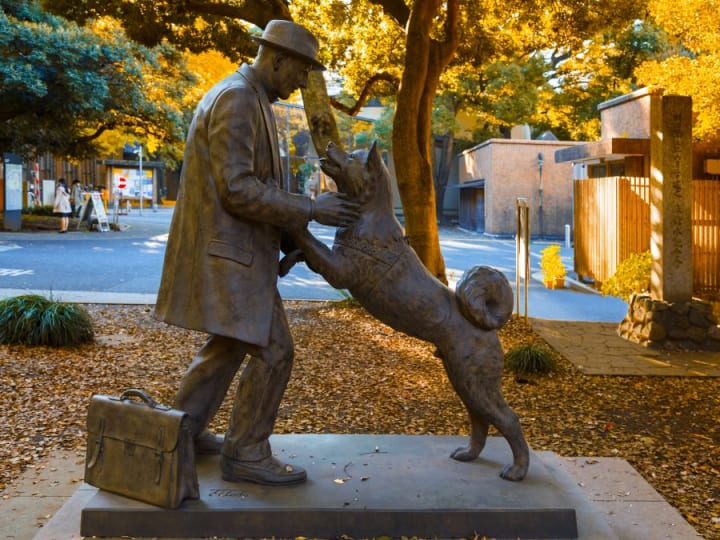
The dog was commemorated with a statue at the railway station and another memorial, depicting a reunion between the long-lost companions, was unveiled at the University of Tokyo in 2015.
The story inspired a number of films including the 1987 Japanese movie Hachiko Monogatari (also known as Hachi-ko), and the 2009 Hollywood take Hachi: A Dog's Tale, starring Richard Gere.
Balto
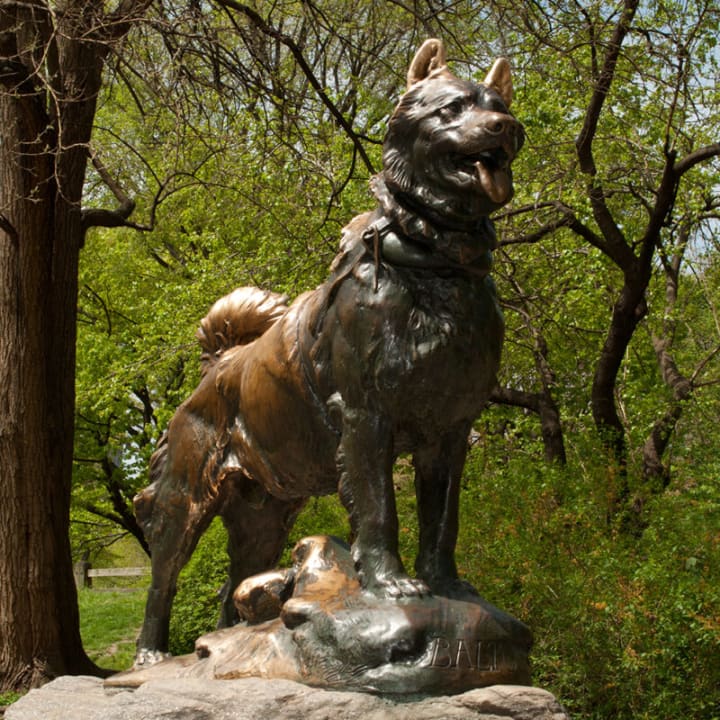
The statue of sled dog Balto has stood in New York's Central Park since 1925 and has been a very popular attraction for families ever since.
The Siberian husky, with companion Gunnar Kaasen, is famous for leading a team of sled dogs on the final part of an epic 674-mile (1,084km) trek to Nome, Alaska. This amazing feat took place across treacherous terrain in horrendous blizzards, to delivered a serum to the isolated area Alaska, which helped tackle an outbreak of diphtheria. The act is thought to have prevented the deaths of thousands of people.
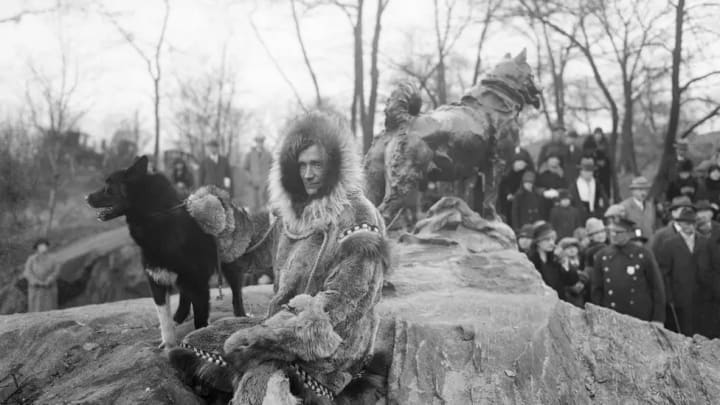
Balto was pictured at the unveiling of the bronze statue, as the contribution of all of the dogs was remembered on a nearby plaque. Like Greyfriars Bobby on the other side of the Atlantic Ocean, parts of the Balto statue have been discoloured over the years, with countless children climbing on its back for a hug and a photograph.
Fido
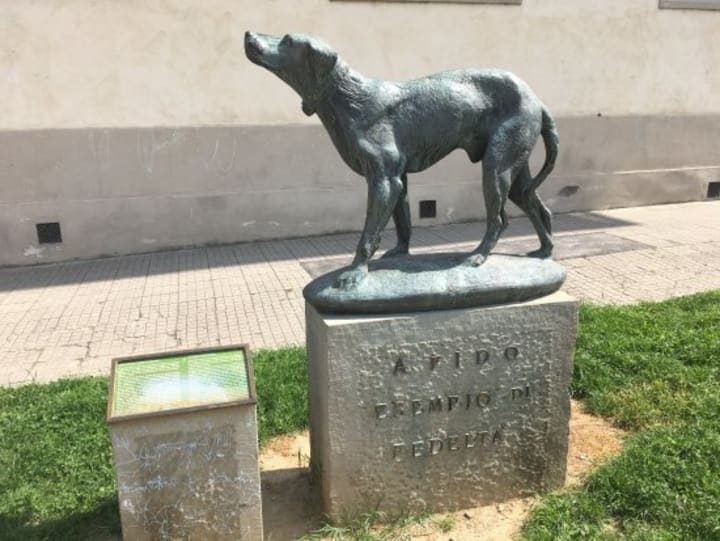
Like Greyfriars Bobby and Hachiko, the tales of devoted dogs are remembered around the world. This one comes from Italy during the Second World War.
Fido's story starts in 1941, when a labourer called Carlo Soriani found an injured dog in a ditch in Borgo San Lorenzo, near Florence. Soriani took the dog home to care for it, and called him Fido, the Latin word for trusty.
Every day, Fido accompanied his master to a bus stop as Soriani made his way to and from work. At the end of 1943, Soriani was killed during an Allied bombardment. For the next 14 years, until his own death, Fido would go to the bus stop in the hope of being reunited. He became a local celebrity and was remembered with the statue above.
Gelert
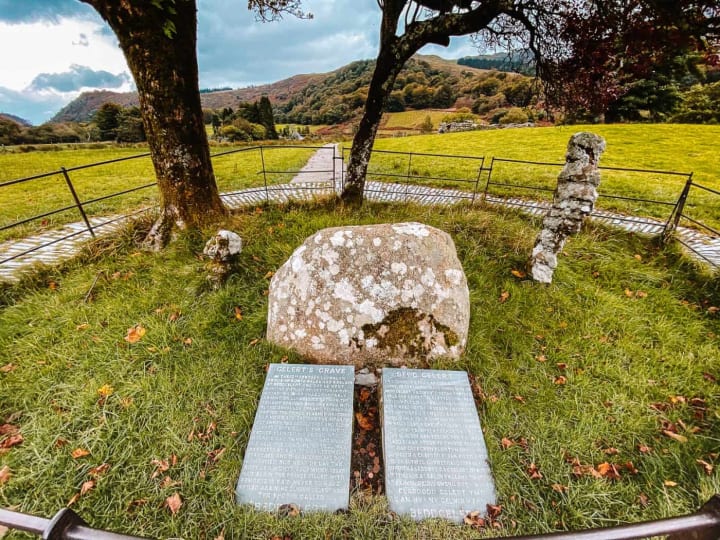
The story of Gelert, the dog of Llywelyn the Great, is a tragic Welsh tale. According to the legend, and it may just be that, Llywelyn the Great - the medieval Welsh prince, one day went out hunting, leaving his dog to guard his infant son.
The prince returned to find his baby missing and his faithful dog Gelert covered in blood. In a fury, the prince plunged his sword into the dog, thinking Gelert had killed the child. But, according to the gravestone on Gelert's Grave, "the dog's dying yell was answered by a child's cry".
The missing child was found unharmed nearby, next to the body of a wolf that Gelert had slain. The graveside transcription ends: "The prince filled with remorse is said never to have smiled again." The prince, full of remorse, buried the dog in a lavish ceremony and named the place Beddgelert or, in English, the grave of Gelert.
Ruswarp
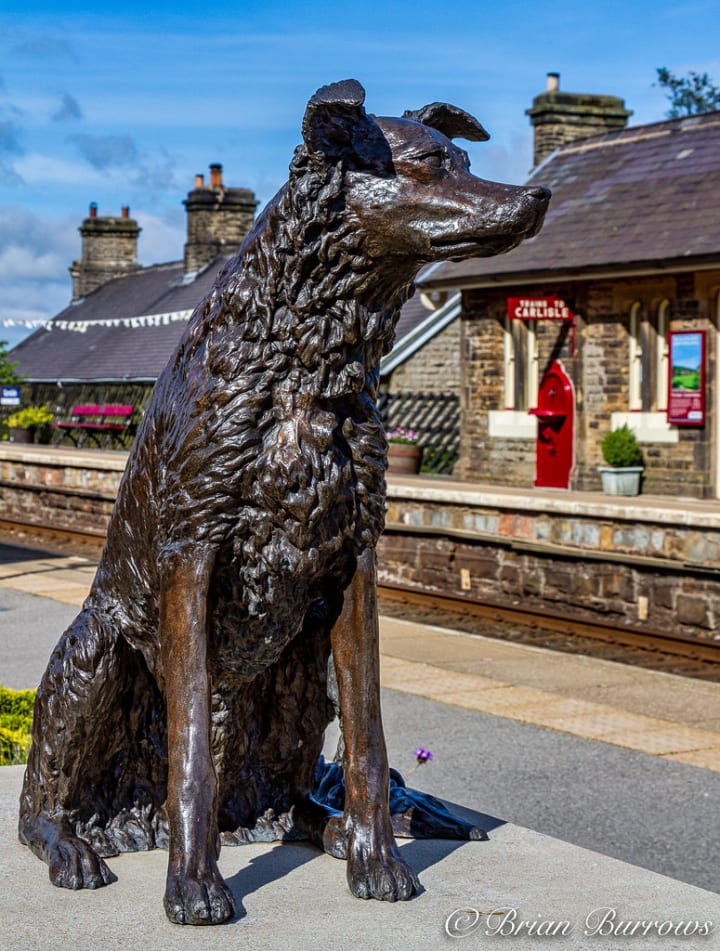
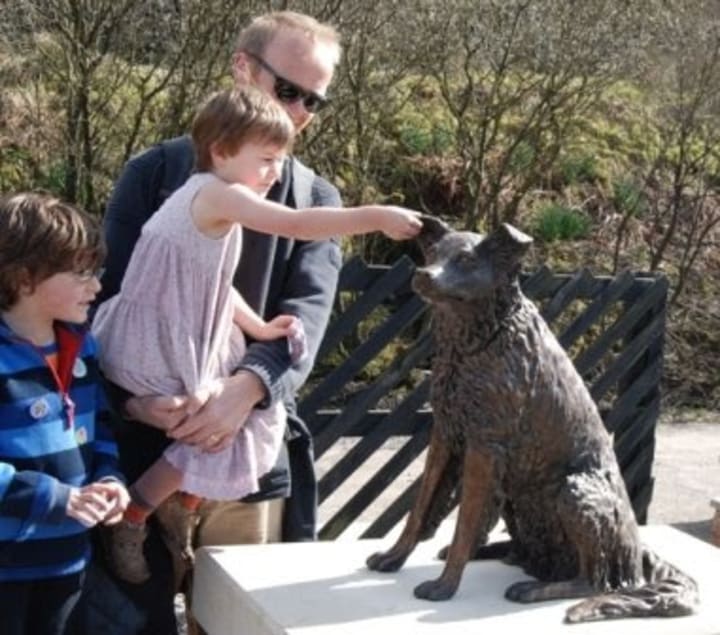
This life-size sculpture of Ruswarp, pronounced "Russup", was unveiled on 11th April 2014 at Garsdale station on the beautiful Settle to Carlisle railway line, to celebrate 20 years since the saving of the historic trainline.
Ruswarp belonged to Graham Nuttall, who was the first secretary of the Friends of the Settle-Carlisle Line. He and faithful Ruswarp were inseparable. Graham lived just long enough to see the Seattle to Carlisle line's reprieved in 1989.
On January 20th, 1990, Graham and Ruswarp went missing. He and his dog bought day return tickets from Burnley to Llandrindod Wells to go walking in the Welsh mountains. However, at the end of the day, Graham and Ruswarp didn't returned.
His body was found on 7th April by a mountain stream. Nearby was Ruswarp, so weak that the 14-year-old dog had to be carried off the mountain. He had stayed with his master's body, on an exposed mountainside, for eleven weeks in the depth of winter.
Ruswarp lived just long enough to attend Graham's funeral before passing away himself.
Thank you for reading these collected stories of canine loyalty. If there are any obvious doggy stories I have missed, please place them in the comments.
References:
[1] Greyfriars Bobby and the dogs immortalised in statues, BBC News, https://www.bbc.co.uk/news/uk-scotland-59914709
[2] The parachuting Yorkshire Terrier who helped heal soldiers in the Second World War, The Yorkshire Post, https://www.yorkshirepost.co.uk/news/the-parachuting-yorkshire-terrier-who-helped-heal-soldiers-in-the-second-world-war-327781
[3] Tribute to devoted dog unveiled, BBC Cumbria, https://www.bbc.co.uk/cumbria/content/articles/2009/04/17/ruswarp_feature.shtml?fbclid=IwY2xjawGEo3NleHRuA2FlbQIxMAABHXSgCf8f8r-SC1W1aeV633JJrx22uZSIVtgGRs-G12A9qZsdsR64FiQbuA_aem_zk3DPfttA8bEwQS5eYA9Qw
About the Creator
Niall James Bradley
I am a teacher who lives in the north west of England. I write about many subjects, but mainly I write non-fiction about things that interest me, fiction about what comes into my head and poetry about how I feel.
Keep reading
More stories from Niall James Bradley and writers in Petlife and other communities.
A Dart at Dusk
Seconds ago, the sullen sun set on the two of us… my exuberant furry companion and me. A fresh breeze embraces us, delivering welcome relief from the day’s oppressive heat. His typical stumbling and staggering along — apace with a sloth — has turned into trip-trapping, high-stepping, almost skipping along.
By Angie the Archivist 📚🪶4 days ago in Petlife
Real camouflage for people and machines is getting closer thanks to materials inspired by octopuses.
Engineers now have a closer resemblance to octopus skin thanks to a new colour-changing material that can change both its colour and surface roughness in less than 10 seconds. The soft photonic skin was created by Stanford University researchers using patterns on its surface that are tiny than a human hair.
By Francis Dami4 days ago in Petlife


Comments (1)
This was an awesome story. I have never heard the story of Galert . It was so sad. Well written!!