
Dinosaur Footprints in France: Unearthing the Past
Ancient Footprint

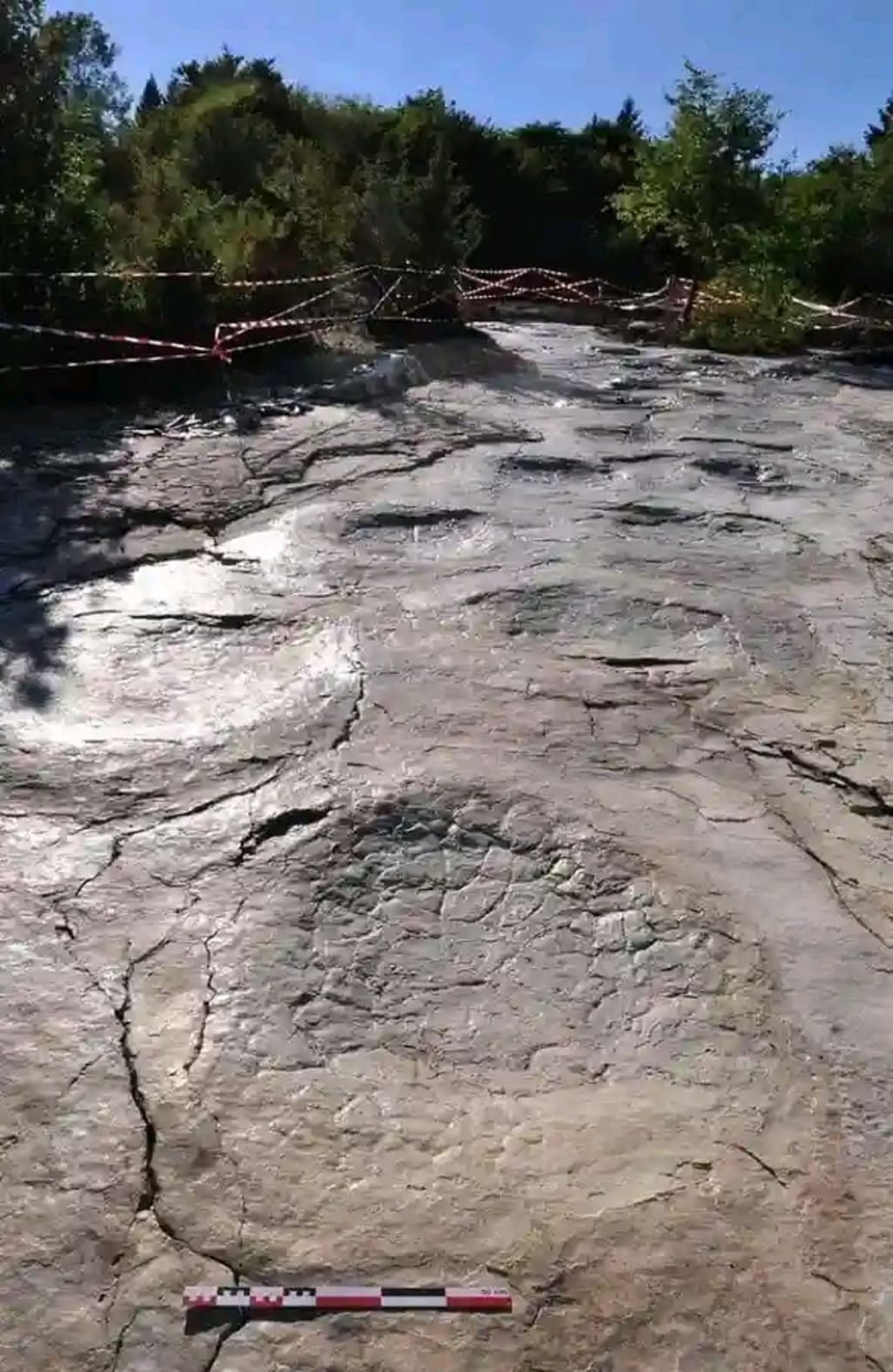
Hidden within the picturesque Jura Mountains of France lies a remarkable discovery that takes us back over 150 million years. In 2009, paleontologists uncovered an extensive trackway of dinosaur footprints in this region. These fossilized tracks, attributed to sauropods, provide a fascinating glimpse into the lives of these colossal creatures and the environment they inhabited during the Jurassic period.
In this blog post, we’ll delve into the significance of this discovery, what it tells us about sauropods, and how it sheds light on the prehistoric world.
---
The Discovery of the Dinosaur Footprints
The footprints were unearthed in the Jura Mountains, a region already renowned for its geological and paleontological significance. The name "Jurassic period" itself originates from these mountains, which hold layers of sedimentary rock from this ancient era.
What makes this find exceptional is the sheer size and extent of the trackway. The site contains multiple sets of overlapping footprints, suggesting that several sauropods—giant, long-necked herbivorous dinosaurs—traversed the area together. These tracks span a considerable distance, providing crucial information about the movement and behavior of these prehistoric giants.
---
What Are Trackways?
Trackways are sequences of fossilized footprints left behind by animals as they moved across soft sediment, such as mud or sand. Over time, these tracks were preserved through natural processes, such as drying, hardening, and being buried under additional sediment layers.
The trackway in the Jura Mountains is particularly significant because it does not represent the footprints of a single animal. Instead, it is evidence of a group of sauropods traveling together. As the animals moved, their footprints overlapped or filled the spaces between the front and back legs, creating a pattern that researchers have meticulously studied to understand their stride and gait.
---
Understanding the Sauropods
Sauropods were some of the largest land animals to ever walk the Earth. With long necks, massive bodies, and thick tails, they dominated the landscape during the Jurassic period. Famous sauropods include species like Brachiosaurus, Apatosaurus, and Diplodocus.
The footprints found in the Jura Mountains are attributed to sauropods based on their distinctive shape and size. Sauropod footprints typically consist of two types:
1. Manus (Front Footprints): Smaller, crescent-shaped impressions left by the animal’s front feet.
2. Pes (Back Footprints): Larger, oval-shaped impressions left by the hind legs.
The size of the footprints in the Jura trackway suggests these dinosaurs were enormous, with some individuals measuring up to 30 meters (98 feet) in length and weighing several tons.
---
Behavioral Insights from the Trackway
One of the most intriguing aspects of the Jura trackway is what it reveals about sauropod behavior.
Evidence of Group Movement
The overlapping footprints indicate that multiple sauropods traveled together, possibly as a herd. This suggests social behavior, as herding could provide protection against predators, improved foraging efficiency, and better care for younger individuals.
Stride Patterns and Gait
The arrangement of the footprints also provides clues about how these massive animals moved. Contrary to some early assumptions, the trackway shows that sauropods had a relatively smooth and coordinated gait. The overlapping tracks are not evidence of a single animal with a short stride, but rather of multiple animals walking closely in sync.
Environmental Clues
The sedimentary layers in which the footprints were preserved indicate that the area was a shallow, muddy plain during the Jurassic period. This type of environment would have been ideal for preserving tracks and may have been a common route for sauropods as they searched for food or migrated.
---
The Importance of the Jura Footprints
Discoveries like the Jura trackway are invaluable to science for several reasons:
1. Paleobiology: These footprints provide direct evidence of sauropod behavior, including their locomotion and potential social structures.
2. Geology: The surrounding sediment layers help reconstruct the ancient environment, shedding light on the climate and ecosystem of the Jurassic period.
3. Education and Tourism: Sites like this inspire public interest in dinosaurs and natural history, promoting conservation and scientific literacy.
---
Preservation and Study
Since their discovery, the footprints in the Jura Mountains have been carefully studied and preserved by paleontologists. Advanced techniques, such as 3D scanning and digital modeling, have allowed researchers to analyze the tracks in detail without causing damage to the site.
Efforts have also been made to protect the trackway from erosion and other natural processes that could degrade these irreplaceable fossils. Such measures ensure that the site remains a valuable resource for future generations of scientists and enthusiasts.
---
Conclusion: A Window into the Jurassic World
The discovery of the dinosaur footprints in the Jura Mountains is a testament to the enduring legacy of the prehistoric world. These fossilized tracks offer more than just a glimpse into the past—they provide a tangible connection to creatures that roamed the Earth millions of years ago.
For scientists, the Jura trackway is a treasure trove of information about sauropods, their behavior, and their environment. For the rest of us, it is a reminder of the incredible diversity of life that once thrived on our planet, sparking wonder and curiosity about the mysteries of Earth’s ancient history.
As the Jura footprints continue to be studied and preserved, they will remain a symbol of our quest to understand the distant past and the awe-inspiring creatures that shaped it.
About the Creator
Keep reading
More stories from Deji Akomolafe and writers in Petlife and other communities.
The False Eyes of Tigers: Nature’s Ingenious Defense Mechanism
In the world of big cats, the tiger stands out not only for its majestic beauty but also for its fascinating adaptations that have helped it become one of nature’s top predators. Among these adaptations, one of the most intriguing is a pair of unique markings on the backs of its ears, known as “false eyes.” These markings serve a purpose far beyond aesthetics, providing a form of defense that allows tigers to intimidate and deter potential threats. In this article, we’ll explore the science behind these “eyes,” why tigers evolved to have them, and how this adaptation plays a critical role in their survival.
By Deji Akomolafeabout a year ago in Petlife
A Dart at Dusk
Seconds ago, the sullen sun set on the two of us… my exuberant furry companion and me. A fresh breeze embraces us, delivering welcome relief from the day’s oppressive heat. His typical stumbling and staggering along — apace with a sloth — has turned into trip-trapping, high-stepping, almost skipping along.
By Angie the Archivist 📚🪶4 days ago in Petlife
A Shocking Fact: Puppies Learn Love Before Rules
Why Puppies Bond With You Emotionally First—and Obey Second --- It happens in an instant. A tiny ball of fur stumbles into your life, tripping over its own paws, eyes wide, tongue lolling. You laugh, scoop it up, and suddenly feel a rush of affection that seems almost primal. But here’s the shocking truth scientists have uncovered: before your puppy learns “sit” or “stay,” it already knows how to love you.
By Ahmed aldeabellaa day ago in Petlife


Comments
There are no comments for this story
Be the first to respond and start the conversation.