
Can cats and dogs at home be infected with the new coronavirus?
Pet lovers have a heated discussion

The outbreak caused by the novel coronavirus has worried many people.
Since the outbreak of the epidemic, pet lovers have also launched heated discussions. The main conflicts focus on two points, one is whether cats and dogs will be infected with new pneumonia, and the other is whether stray cats and dogs in the city and free-range cats and dogs should be cleaned up.
The outbreak is likely to have originated in bats, which has also made some people wary of some animals - birds sold in the market, turtles... need to be dealt with?
What about the cats and dogs at home?
Four words, manage well. Good management means not to keep pets free, not to let pets come into contact with other possible virus carriers, not to let pets play and contact with stray animals, and to wash hands after contact with pets.
Good management does not mean that you abandon your pets. This is immoral. Second, it increases the number of stray animals, which increases the risk of various diseases.
Pets that have been staying at home and have not been exposed to the epidemic will not be infected with the new coronavirus, and do not need to be discarded, let alone culled. Relevant departments should not force such pets to be culled.
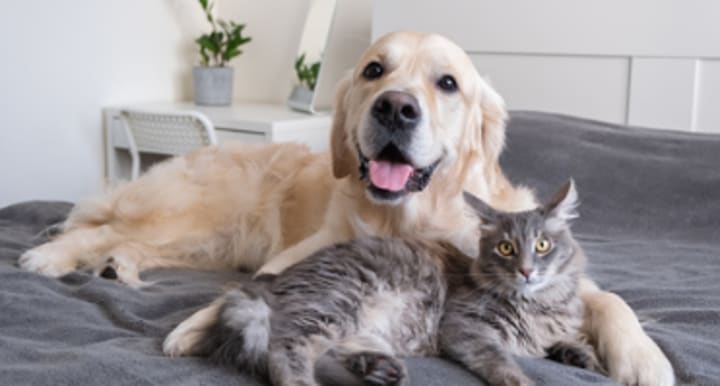
Cats are easier to isolate from the outside world. If it is a domestic cat that is normally immune and not free-range or fed randomly, there is no problem at all.
Dogs need a greater amount of exercise and must be walked frequently and in constant contact with the outside world. However, if a family-raised dog follows normal immunization, wears a muzzle on a leash when going out, strictly guards against close contact with other animals (especially wild animals and stray animals), does not pick up unknown food, and disinfects it in time at home, Not a big problem. Of course, whether this can be done depends on the owner's own sense of responsibility.
The WHO also believes that there is currently no evidence that domestic cats and dogs can be infected with the new coronavirus.
Although cats and dogs can also carry coronaviruses, they are of a different branch from the coronavirus that caused the outbreak this time. The coronavirus carried by cats and dogs is relatively common and has been stable for a long time, and there has been no mutual transmission between humans and animals.
All in all, well managed pets are safe. Poorly managed pets may infect other zoonotic diseases even if they do not infect the new coronavirus.
Someone also asked, if I might be sick, do I need to avoid pets?
There is currently no evidence that humans can transmit the new coronavirus to pets. However, if you want special insurance, you can, ①Do not let pets get close to sick people, ②If patients and pets have been in contact, you can isolate pets like quarantine people, keep them in a separate isolation area, and those responsible for feeding and cleaning should take good care of them , such as wearing masks, gloves, and washing hands frequently. Until everyone in the family recovers.
Academician Li Lanjuan also said in an interview with CCTV that pets should be immunized on weekdays, and management should be strengthened during the epidemic of infectious diseases. If there is a possibility that pets may have been exposed — such as by running around outside, or coming into contact with someone who has the virus — then monitor them.
What about stray cats and dogs outside?
Although there is currently no evidence that cats and dogs can be infected with the new coronavirus, there is also no evidence that cats and dogs "won't" be infected with the new coronavirus.
At present, there is no definite evidence or theoretical basis to prove that the coronavirus that causes new pneumonia does not use cats and dogs as intermediate hosts. Coronaviruses can infect mammals, such as camels, cats, cows, bats, etc. In 2003, a study found that cats could be infected with the SARS virus and spread it to other cats in the same cage.
Unlike domesticated pets with immunity and controllable contact range, stray animals outside are not immune and have uncontrollable contact range, so the risk is relatively high.
From the perspective of epidemic prevention, everyone should avoid contact with stray animals outside at this stage, no matter whether the animals are dead or alive.
Another question is whether stray animals need to be cleaned up in epidemic areas.
Cleaning up stray animals may sting many pet lovers. However, since the possibility that the new coronavirus uses cats and dogs as intermediate hosts cannot be ruled out, the epidemic area can consider cleaning up rats and stray and free-range cats and dogs.
Why not clean up wild animals? First, stray and free-ranging cats and dogs have more contact with humans than wild animals. Secondly, this world does not only belong to humans and domestic animals raised by humans, but also belongs to the "indigenous people" such as wild animals and plants. A healthy ecosystem composed of wild animals and plants is also very important for the long-term development of human beings. And most importantly, the virus that caused the epidemic was not spread by wild animals who actively contacted humans, but was actively infected by humans who poached, slaughtered, and ate them!
And stray cats and dogs are not a healthy part of wild ecosystems. They appear near human settlements because some irresponsible breeders have abandoned them.
Even in normal times, we should control stray animal populations for the purpose of improving overall animal welfare. The overall animal welfare mentioned here includes not only the animal welfare of stray animals, but also the animal welfare of surrounding wild animals killed by stray cats and dogs.
If we do not control the population of stray animals, but just let one group of people irresponsibly abandon them and another group of people feed them irresponsibly, the result will only be more stray animals, which will damage the already fragile ecology of the surrounding area. system to cause more damage.
The best way to rescue stray animals is to seek adoption while controlling the population of stray animals. Blind and overflowing love only pushes the already miserable stray animals and surrounding wild animals into an even more miserable situation.
No matter because of the epidemic or other reasons, when the society and the government decide to intervene in the cleanup of stray animals, it is not the executors who actually kill them, but those who abandon them, "cultivate" them, irrationally maintain them but actually harm them people.
Do other animals need to be handled?
In this epidemic, in addition to abandoning domestic animals and cleaning up stray animals, some areas have cleaned up pet markets. It is reported that managers in Tianjin confiscated baby turtles and goldfish from the pet market and threw them away.
Compared with mammals, fish, birds, and reptiles (that is, turtles, snakes) are less likely to become intermediate hosts of new pneumonia. Although a new paper a while ago suspected that snakes were the intermediate host of the new coronavirus, the proof of that paper was not sufficient, and many virus researchers were skeptical.
In addition, I don't know what kind of throwing method is this "throwing", is it harmless treatment, or throwing it into the wild environment? If it is really thrown out casually, it will cause the problem of species invasion. The so-called "little turtles" routinely sold in the market include artificially raised tortoises, flower turtles, and imported snapping turtles and red-eared turtles (commonly known as Brazilian turtles). Snapping turtles and red-eared turtles are highly adaptable and ferocious, and are well-known invasive alien species. Once artificially bred tortoises, flower tortoises, and small goldfish (mutated crucian carp) enter the natural environment and survive, they will not only rob the living resources of protozoa, but also cause genetic pollution through mating with native species.
All in all, the probability of fish, two reptiles, and birds being infected with the new coronavirus is extremely low, and those who raise and sell these animals do not need to panic.
Birds and poultry, however, also need to consider the risk of bird flu. Therefore, it is also recommended to avoid contact with live poultry as much as possible.
As for epidemic prevention measures such as confiscating and throwing away small turtles and goldfish, I am afraid it is an overkill. Now we should use our limited power to more effective epidemic prevention work, rather than use it randomly because of excessive panic.
Animals that have undergone quarantine and formal breeding are generally not at great risk. The view of the US CDC is that there is currently no evidence that animals or animal products imported from China can transmit the new coronavirus, and there is no reason to believe that any farmed animals or pets are the source of infection of the new coronavirus.
In changing circumstances. But at this moment, let's let go of those pets kept at home, as well as the goldfish and turtles in the flower and bird market.
About the Creator
Keep reading
More stories from writers in Petlife and other communities.
Cleo's First Puppy Show
"How would you feel about doing the Corsicana show in November?" Kathleen asked me last September. Dog exhibitors speak in shorthand that way. It's easier to say "the Corsicana show" than it is to say the "North East Texas American Eskimo Dog Association Show." And yes, "North East." I guess "Northeast" shortened the name too much for some people's taste . . . But I digress. In response, I asked two of the three important questions that every exhibitor thinks, first thing.
By Kimberly J Egan19 days ago in Petlife
Thoughts on Vocal and the way the world is
"Death cannot stop true love, only delay it." – Wesley in The Princess Bride. I decided to come back to Vocal on a very cold and dark night at the end of December. I had been, and still am, convalescing from a horrible staph infection that had gone misdiagnosed for months. This, paired with the increasing challenges of being healthy, making the best choices for my co-parented child, being a wife, and being a director at a new job, was a lot to manage.
By Jazzy 4 days ago in Confessions



Comments
There are no comments for this story
Be the first to respond and start the conversation.