
Buried Instincts:
Why Dogs Hide, Trade, and Guard Their Bones


I have lived with dogs most of my life as a rescue owner and foster mom in various states. Yet two of my current rescues stand out as behavioral opposites.
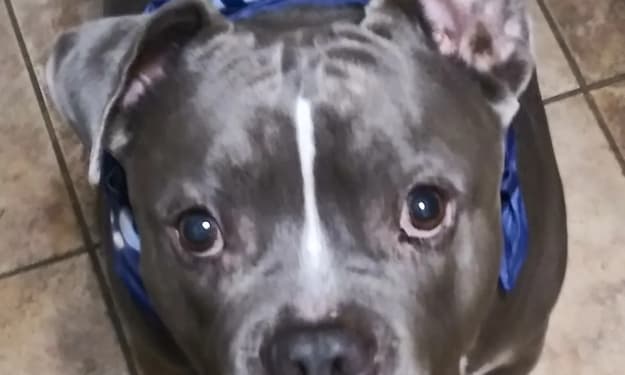
- My senior Staffordshire terrier mix, Zeus, is large, deliberate, and ritualistic. When he receives a bone, he immediately trots outside and begins to dig. With practiced precision, he buries the bone, pushes soil back over the top, and walks away as if the ritual itself mattered more than the object.
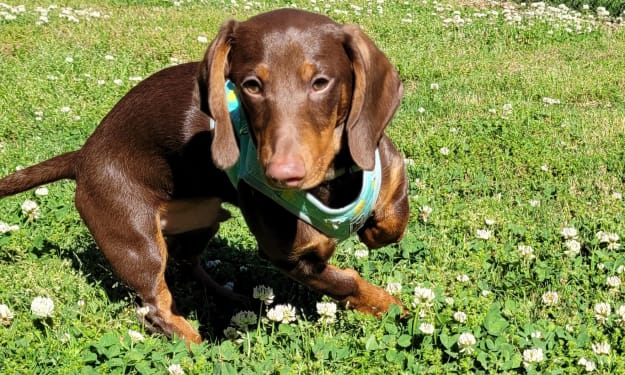
- My much younger chihuahua–miniature pinscher mix, Juno, reacts in the opposite way. She disappears under the bed with the bone locked in her jaw and begins chewing as though her survival depends on it. These differences are not quirks. They are survival strategies written long before any dog was called a pet.
- Side note: both are rescues but I had both of their DNA tests done :)
Domestication altered the relationship between dogs and humans, but it did not fully rewrite behavior. The burying ritual Zeus performs is known in research as caching. Wolves and feral dogs cached surplus meat to protect it from rivals and reduce spoilage. It was less about immediate hunger and more about survival tomorrow. When I watch Zeus scrape dirt with his nose and carefully cover the evidence, I am watching an old neurological script run inside a modern animal body. The instinct did not vanish when food started arriving in branded bags.
Small breeds often rely on another approach: hoarding. Juno does not cache outdoors. She carries her bone under the bed, converting human furniture into a den. From there she chews uninterrupted. To a casual observer, it may appear selfish or stubborn. In behavioral terms, she is performing territorial control. By reducing exposure and placing herself in a confined space, she creates safety. It is the same instinct that once kept her ancestors alive in caves and brush piles.
There is another layer. When Juno abandons her bone, Zeus often waits. He ignores his untouched bone until he can collect hers. This is not theft. It is opportunistic resource negotiation. Studies of canine social systems describe a subtle economy where patience and timing matter as much as strength. Pack survival once depended on recognizing when to hold back and when to move in.
Statistics show these behaviors are not isolated to a few dogs. Nearly 40 percent of U.S. households live with at least one dog, according to the American Veterinary Medical Association. Research from the University of Bristol and others confirms that chewing, caching, and hoarding behaviors appear across all breeds, regardless of diet stability. Even dogs in homes like mine, with secure and abundant food supplies, continue to perform behaviors shaped for scarcity.
This persistence demonstrates how deeply survival coding is embedded.
Zeus and Juno show two ends of the same spectrum. One secures the future by burial. The other defends the present through hoarding. Both remind us that instinct can outlive environment. What appears to us as a quirk is in fact a genetic survival script refined over thousands of years of canine history.
Every time a dog drags a bone under furniture or covers it with soil in the yard, it performs an unbroken behavioral memory. These rituals are not random. They are reminders that survival instincts remain etched into the species. Dogs still remember in their bodies what human culture has long forgotten: food security is never guaranteed. That memory plays out daily in backyards, under beds, and anywhere else instinct still overrides comfort.
Sources That Don’t Suck:
American Veterinary Medical Association. “U.S. Pet Ownership Statistics.” AVMA, 2024.
Bradshaw, John. Dog Sense: How the New Science of Dog Behavior Can Make You a Better Friend to Your Pet. Basic Books, 2012.
University of Bristol School of Veterinary Sciences. “Domestication and Dog Behavior Studies.” Research Report, 2021.
About the Creator
Dr. Mozelle Martin
Behavioral analyst and investigative writer examining how people, institutions, and narratives behave under pressure—and what remains when systems fail.
Keep reading
More stories from Dr. Mozelle Martin and writers in Petlife and other communities.


Comments
There are no comments for this story
Be the first to respond and start the conversation.