
10 things Service Dog Handlers wish you knew.
There's more to us than just "A person with a dog."
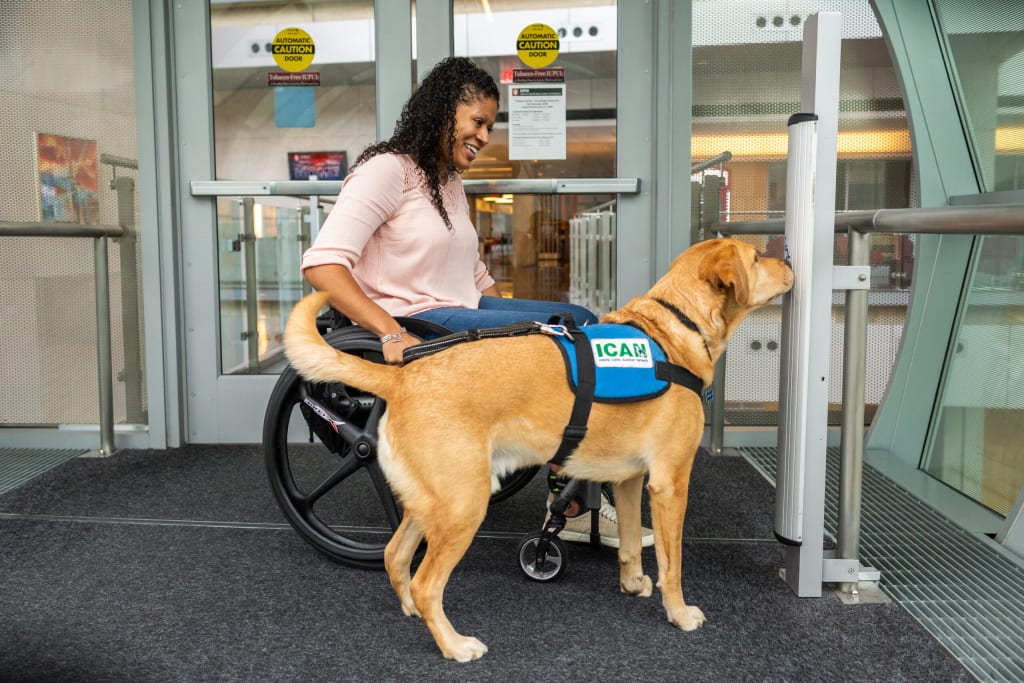
People who see service dogs with their handlers out in public often have preconceived notions about the handler, whether the disability is visible or not.
Here are ten things service dog handlers wish you knew from a service dog handler.
1. Our dogs are not public property
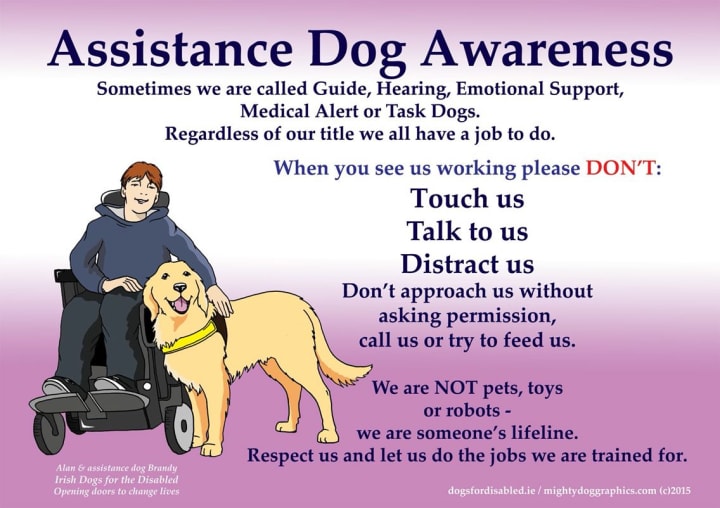
let's face it: people love dogs, and some are afraid of dogs or are allergic to them. Oftentimes, when people see a service dog, they immediately want to talk to, feed, pet, or play with the service dog. Believe it or not, this is dangerous as a service dog can miss an alert to a handler's possible oncoming medical episode, miss an important cue, etc.
Yes, our dogs are cute, and you are so excited to see a dog out in public (or wearing shoes.) and feel like you have to say something to the handler. Please, don't our dogs consider medical equipment under the law, and not all service dogs or pet dogs enjoy being pet by random people. Our dogs are not public property and should not be treated as such.
If you are a parent and your kid sees a service dog and wants to interact with it. Please teach your children to give the dog space while it's working. At the same time, a majority of handlers might be willing to teach the public about service dogs. Others just want to get on with their job or errands without needing to stop every two feet to answer a question or comment. If you want to interact with us, interact with the handler, not the dog.
It is best if you let our dogs work. We are more than our disability, and we are more than just a service dog handler. We are people first and service dog handlers second. We are not a walking zoo and just want to be independent and live like everyone else we just have to have furry medical equipment to be like everyone else.
2. Our dogs get breaks
One very common misconception is that service dogs are constantly working and have no time to be a regular dog. That is not the case. It would be like if humans never took work breaks or went on vacations, etc. Service dogs get downtime, too. These dogs get plenty of physical and mental exercise when they are off the clock. They get their meals and treats throughout the day. They get to play, eat, rest, and whatever else they want to do. Their handlers might even do dog sports with their dogs to work on their bond and give their dog an outlet other than working.
3. Our dogs aren't perfect
People aren't perfect, and working animals aren't either. Sometimes, our dogs are tired or need a day or two off from work because they are sick or the handler can't bring them to certain events, such as a Halloween event or any event where a dog would feel uncomfortable and would be unable to work reliably in a certain environment. Sometimes, a service dog might make a mistake or struggle with distractions, and that is ok! Dogs aren't robots, and you cannot expect them to always handle whatever you throw at them. Sometimes, it's something a handler is working on, or the dog is just having an off day, just like we do.
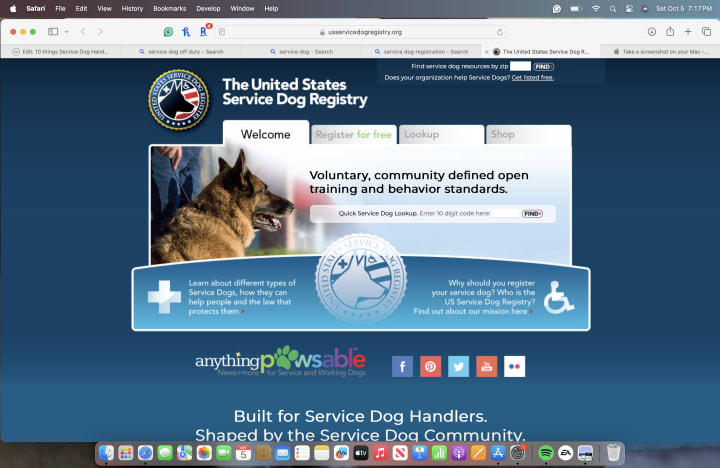
4. Any certification website you see online is fake.
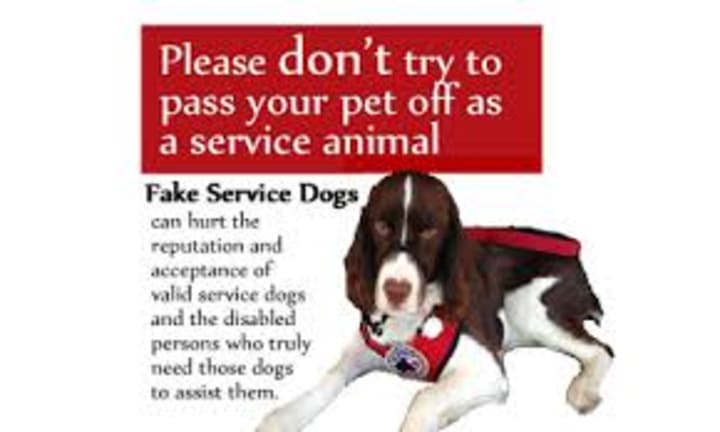
That's right, no matter what the website claims or how official it seems. There is no official certification program in the US. The only time a certification is possible is if the dog is from a program. But there is no need for such things as the training should be proof enough if the dog is a service dog or not. Please don't try to pass off your pet dog as a service dog. It doesn't matter how well-trained they are.
If you aren't disabled and you bring your pet well-behaved or not into a public place that doesn't allow pets, you are making it harder for legitimate teams to go out into public, especially if you flash a fake certificate/ID.
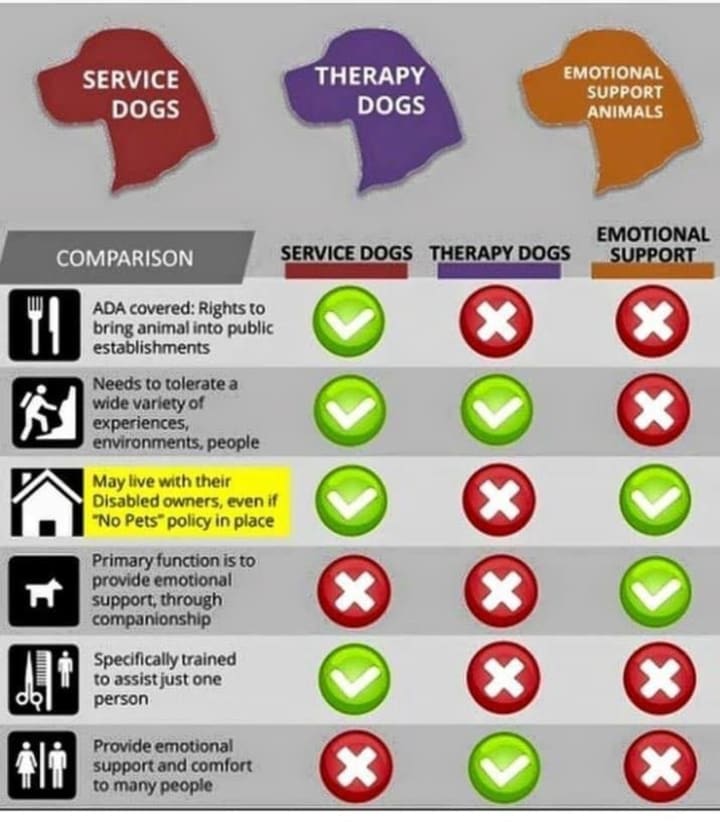
5. Service dogs, therapy dogs, and emotional support dogs are not the same thing.
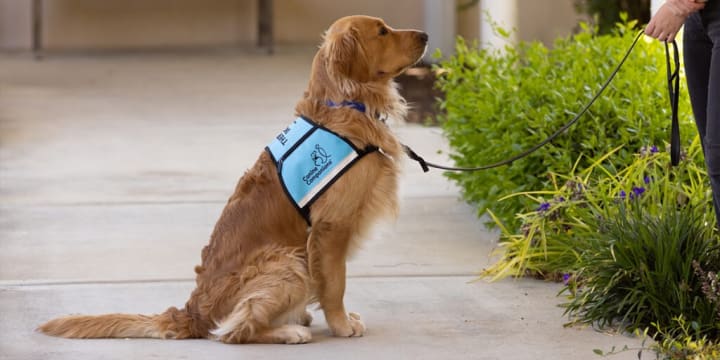
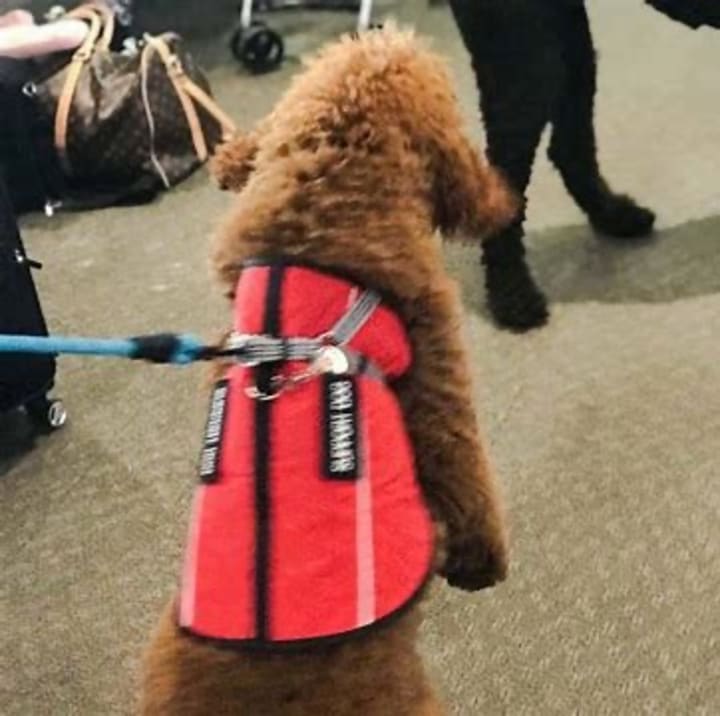
Service dogs are dogs trained for one person to help mitigate or help someone with a disability. A therapy dog is a dog trained to support multiple people in hospitals, schools, etc, and give emotional support and comfort to multiple people. An emotional support dog is none of these things and is a pet that provides companionship to someone.
People often use these terms interchangeably without realizing the difference between all three. The only one of these with full public access is a service dog. Therapy dogs are only allowed where they have been approved, and ESAs can be approved to be with their human in non-pet housing like a service dog, but that's it.
6. There are some places Service dogs can't go.
According to the ADA, the only places a service dog is not allowed by law is. Burn units and sterile areas of hospitals. Etc. A service dog cannot be removed from a business unless the dog is disruptive or would fundamentally alter the nature, programs, or goods and services provided to the public. If that's the case, the handler will leave their dog at home if they need to be somewhere the dog cannot be allowed for safety reasons for the dog, handler, and the general public.
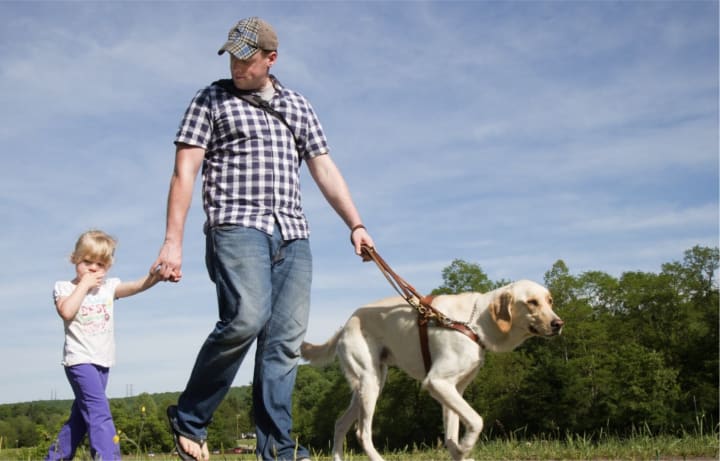
7. There are multiple kinds of service dogs, not just guide dogs.
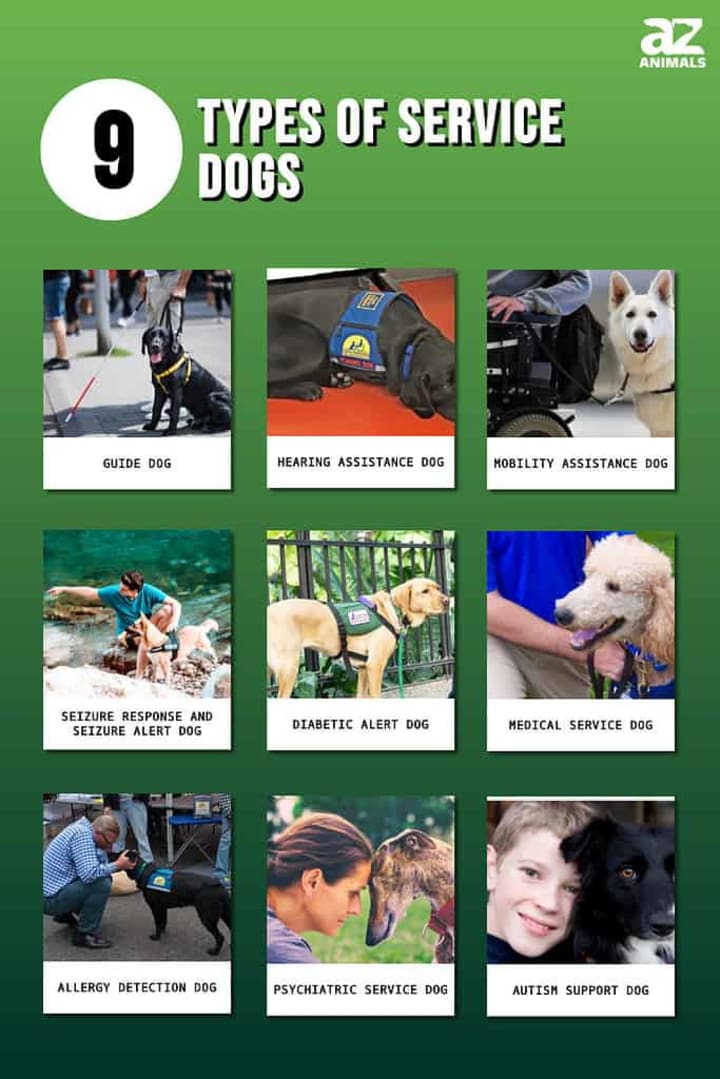
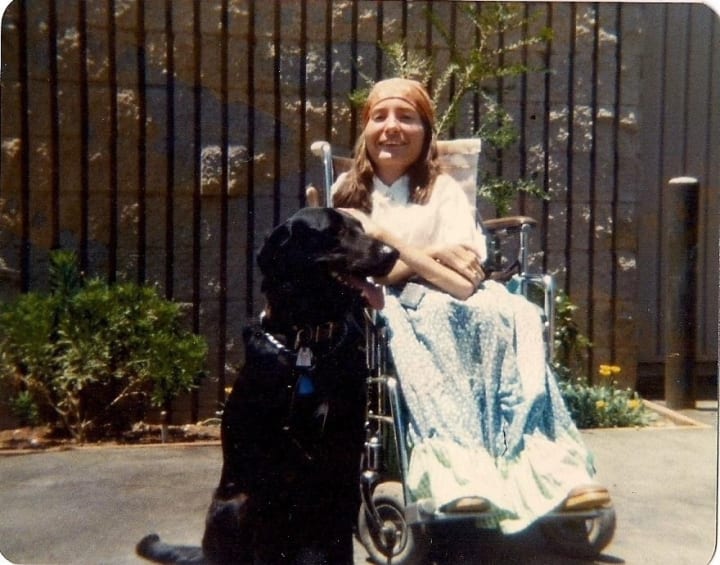
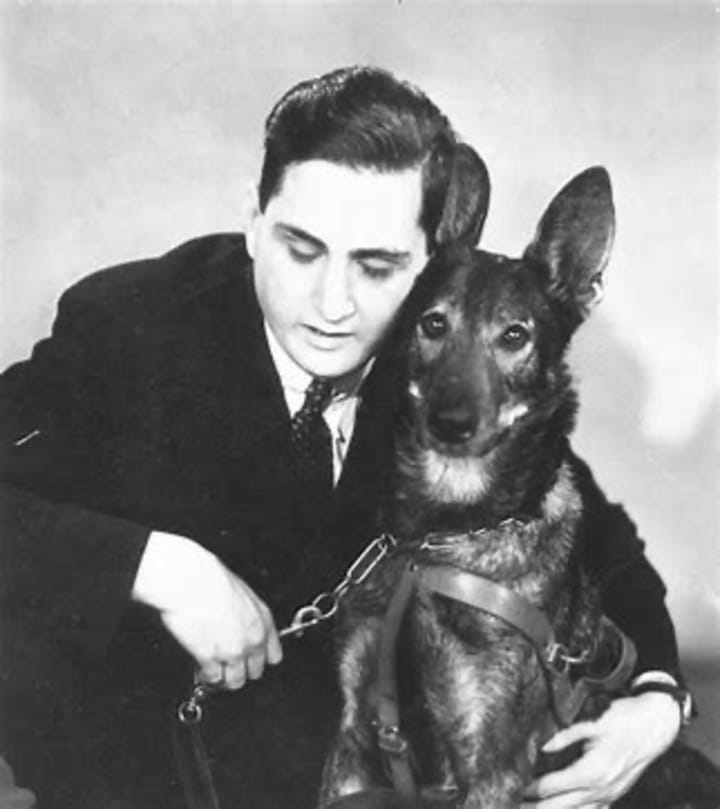
Guide dogs became a resource of independence for the blind in the 1930s. Service dogs have become much more than just guide dogs. In 1975, Canine Companions for Independence started raising and training dogs for people in wheelchairs, and as time went on, more organizations started training dogs for all sorts of disabilities. Medical alert and response, mobility service dogs, psychiatric service dogs, etc. Thanks to research and the ever-evolving world of dog training. People realized dogs could do so much more than just guide a blind person.
8. Having a service dog is not "Fun"
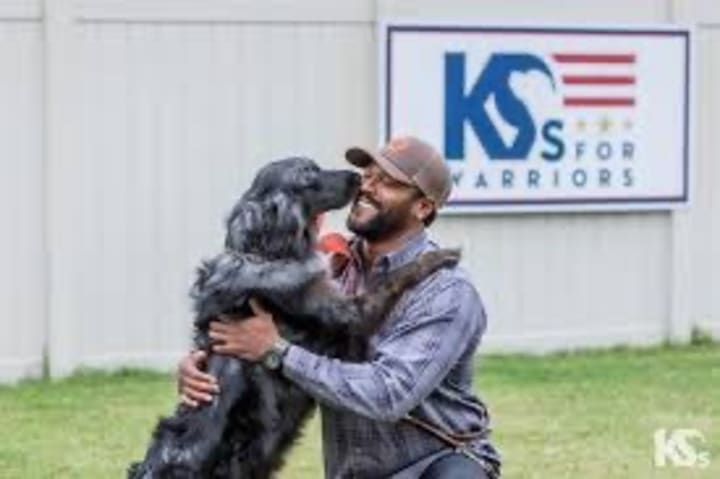
Yes, you heard that right. Being a service dog handler is a lot of work. It's way more than just getting to take our dogs everywhere. If we go somewhere and need our furry medical equipment, we have to plan around their needs. We have to make sure we have what we need to be able to have our dog work for the day. We have to keep track of how long we are out and if our dog's needs have been met if we are out all day.
We might have an access issue at a new place or even a place we've been to countless times. We have to deal with kids possibly running up to our dogs or people trying to talk, pet, feed, or play with our dogs.
We have to dodge questions about our disabilities and try to keep our dogs from getting distracted by a grown man or woman calling to our dogs or people screaming about a puppy in the grocery store.
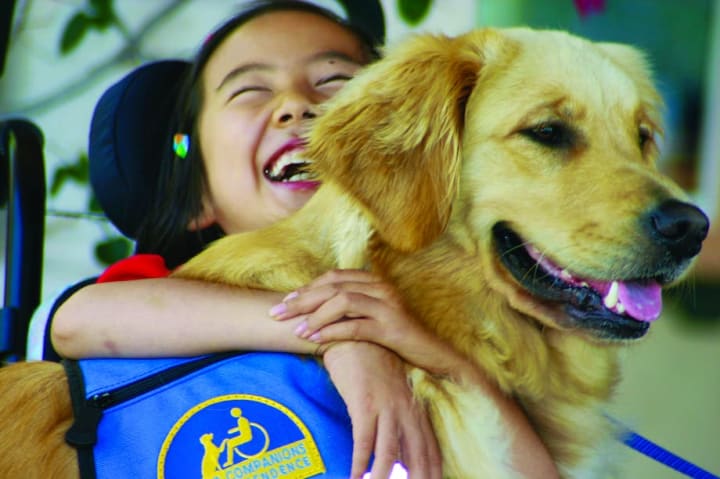
If we have an episode, medical or otherwise, and our dog is tasking, we have to try to keep people from messing with or even trying to take our dogs away while they are doing their jobs. It is exhausting and is not for everyone. A service dog is a great tool, but it's a lot of work, and since the general public is so enthralled by a dog in a public place. It is hard for handlers to get their errands done or do their jobs, which, thanks to their dog, they can have.
9. People who are disabled can owner-train a service dog
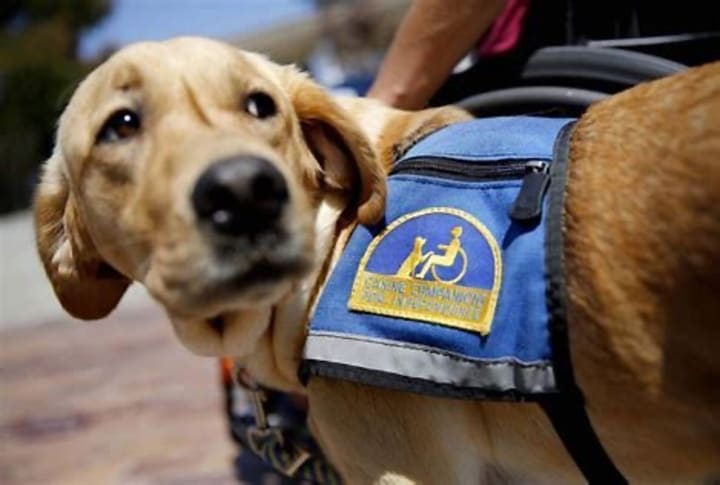
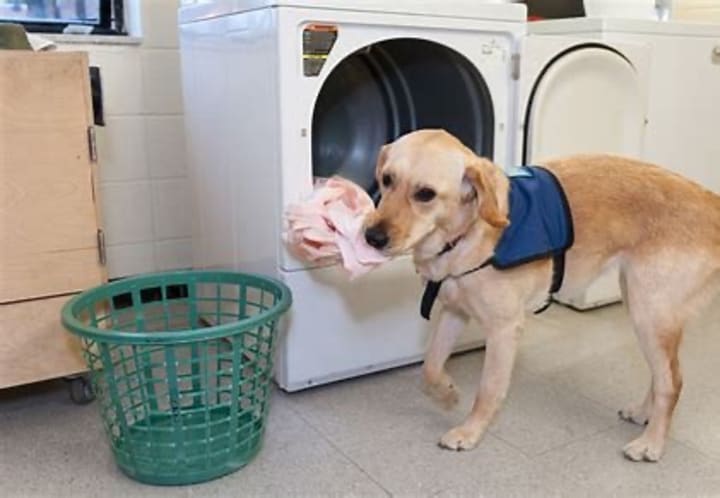
Due to the intense expenses of a program, service dogs. A lot of disabled people who benefit from a service dog have trained their service dogs for their needs. Not every service dog program is the same, and a lot of the time, fundraising is required, or depending on the needs of the specific person, a program dog wouldn't be the right fit because the program doesn't train a dog to what the person needs.
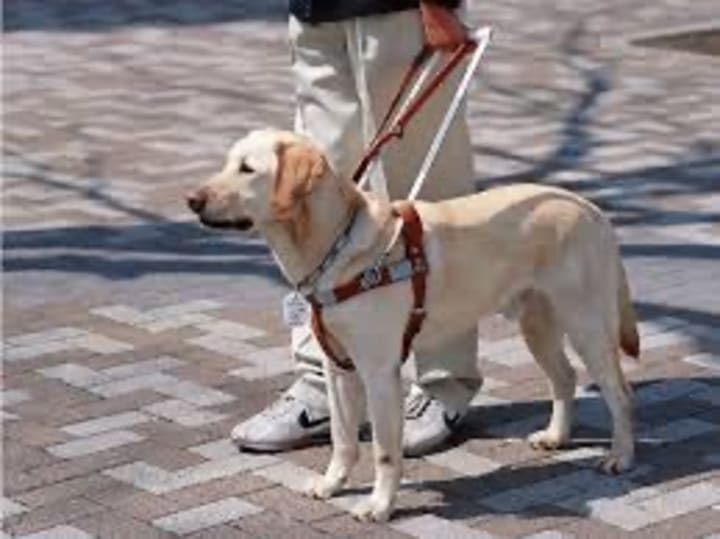
More training programs have begun to pop up to help support disabled handlers in raising and training their dogs. (The author has done this herself with her dog.) Owner-trainer handlers say they feel a closer connection to their dog because they have raised and trained the dog themselves. Both program dogs and owner-trained dogs are expensive.
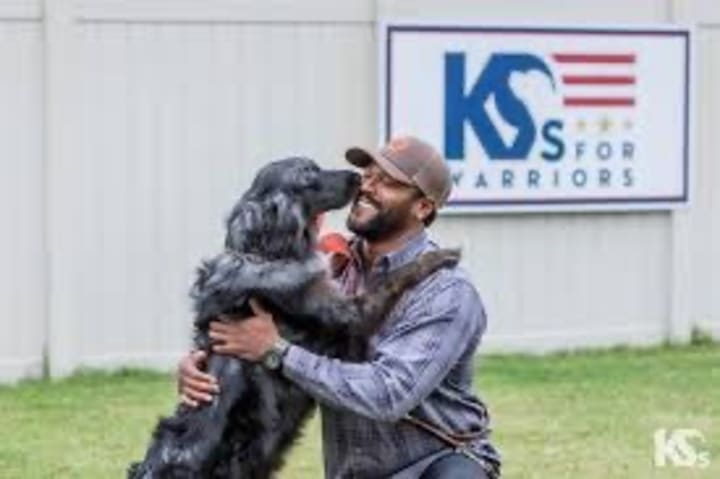
It depends on the person if they can't get accepted into a program for a dog but need one owner, training can be a way to go. People who owner-train also get a choice of gear to use, while program dog handlers have only specific gear that can be used.
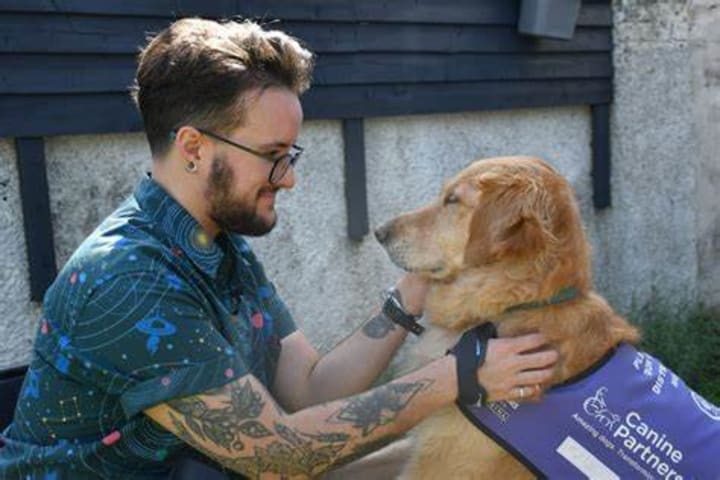
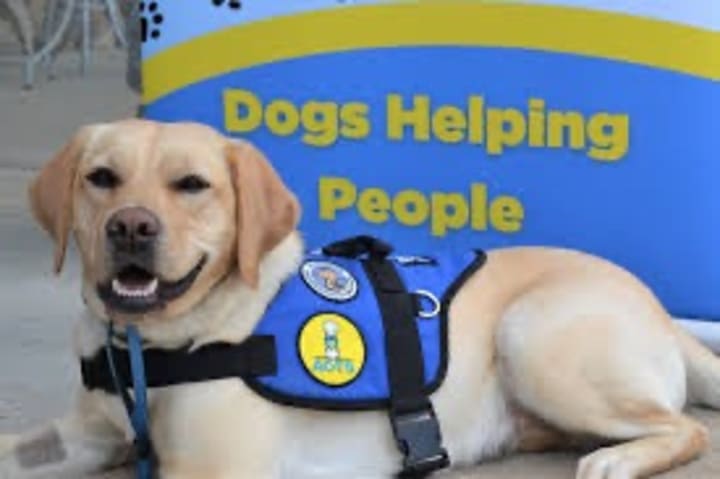
10. Service dogs can be any breed with the right temperament, health, and personality.
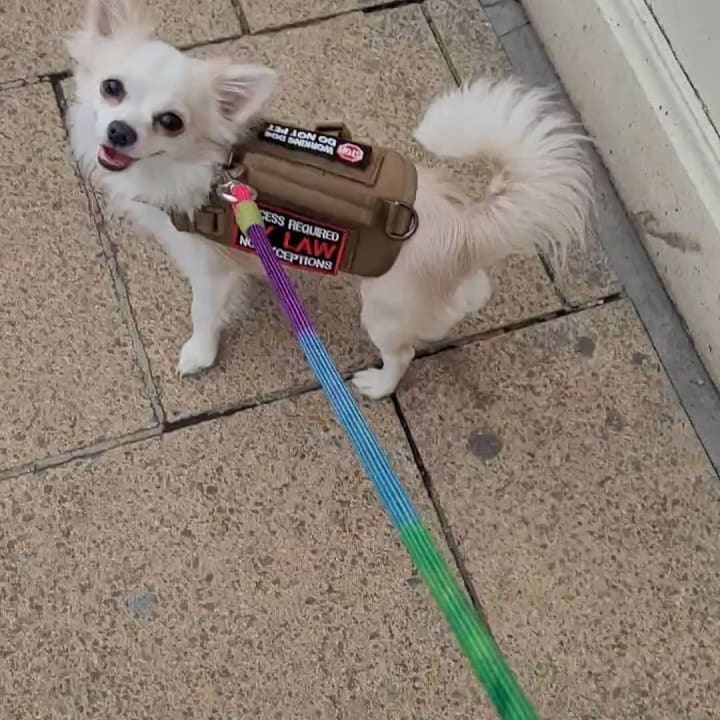
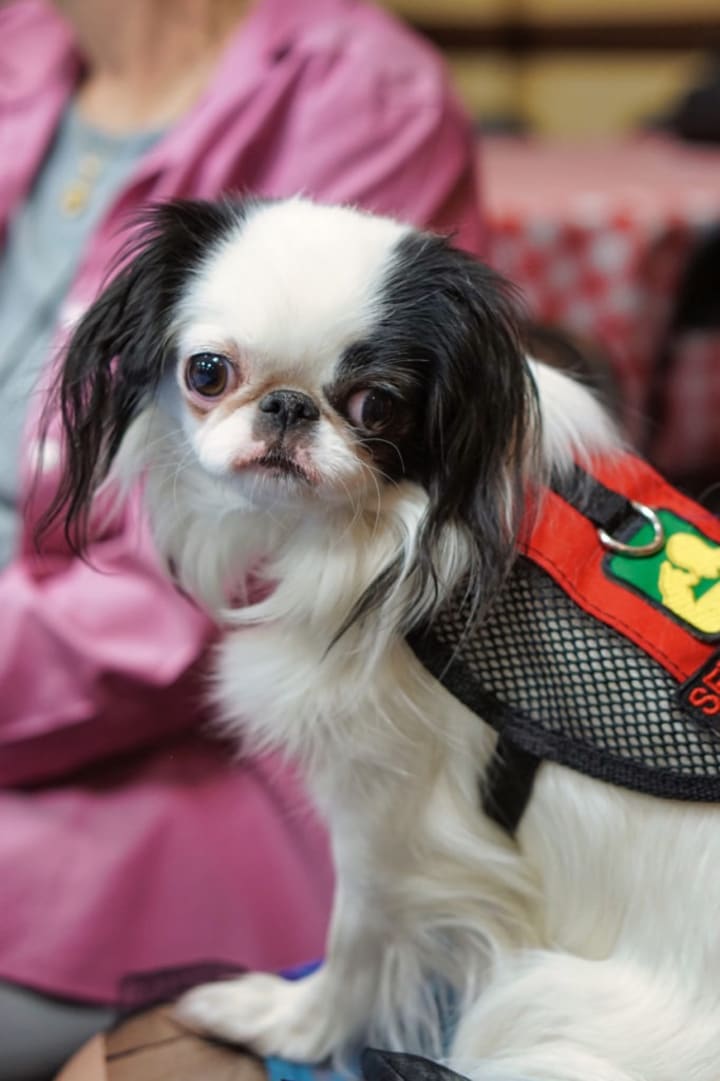
Believe it or not, service dogs can be more than just labs, goldens, collies, or German shepherds. There are smaller breeds that can be used as hearing or psychiatric service work. These dogs can be small but can do big jobs just as well as their larger counterparts.
About the Creator
Paige Krause
Hi, I'm Paige, and I love to read and write. I love music and dogs. I will mostly write about my favorite things. Autistic and service dog handler. Enjoy my writings
I also post my articles on Medium
Keep reading
More stories from Paige Krause and writers in Petlife and other communities.
A Dart at Dusk
Seconds ago, the sullen sun set on the two of us… my exuberant furry companion and me. A fresh breeze embraces us, delivering welcome relief from the day’s oppressive heat. His typical stumbling and staggering along — apace with a sloth — has turned into trip-trapping, high-stepping, almost skipping along.
By Angie the Archivist 📚🪶4 days ago in Petlife
Why Does Your Dog Ignore the Come Command and How to Fix It
You are standing at the dog park, leash in hand, already late. Your dog is twenty feet away, nose glued to the ground. You call their name. Nothing. You try again, louder this time. A few people glance over. Your dog looks up, considers you for half a second, then goes right back to sniffing. If you have ever felt your face get hot while calling your dog over and over, you are in familiar territory.
By Aleksandar Mishkov6 days ago in Petlife
Ludacris and Nelly draw backlash over bookings at MAGA-coded music festival
Ludacris and Nelly headlining a mostly right-wing event is good for them. It’s also great for the genre of hip hop. The two rap veterans have showcased their talents on other stages. Why can’t they perform for mostly MAGA folks and grab that bag?
By Skyler Saunders3 days ago in Beat


Comments (1)
Thoughtful insight… and informative!!!