
Buddy: The First Seeing Eye Dog and how service dogs evolved.
The First Guide Dog and how service dogs became what they are now
You've probably heard of the Seeing Eye, seen a guide dog or service dog out in public, and wondered how service animals came to be.
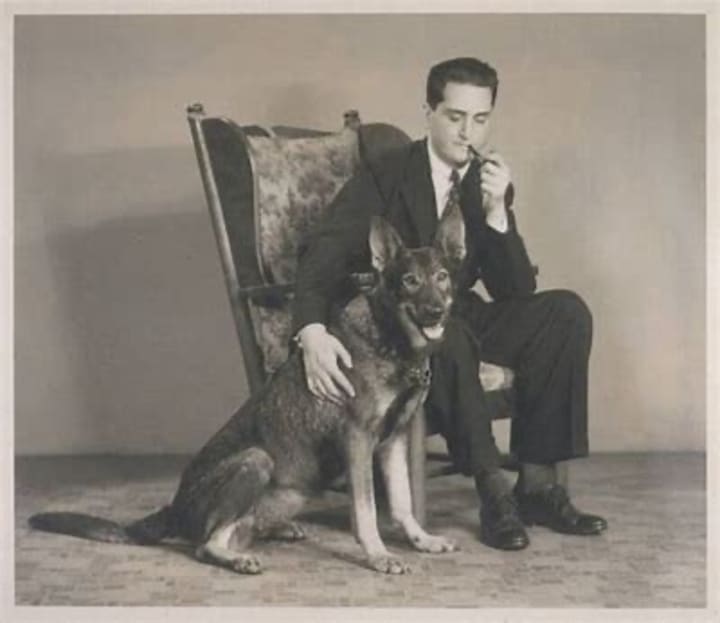
It all started in 1927 with Morris Frank, a blind young man from Nashville, Tennessee. Morris became blind from two separate incidents. He became blind in one eye from a boxing accident and lost sight in his other eye after riding a horse into a tree.
As a child, before he lost his sight. He had been the guide for his blind mother.
Morris relied on hired individuals to get him from place to place. Unfortunately, he couldn't always rely on these people. He found they weren't as reliable as he needed them to be, which was a. The problem for him was that he graduated from Vanderbilt University as an insurance salesman.
One day, his dad read him an article from The Saturday Evening Post. The article was written by Dorothy Harrison Eustis, a dog trainer from America who lived and worked in Switzerland.
The Article "The Seeing Eye" details Dorothy's learning experience at a school in Germany that trained dogs as guides for blinded WWI veterans. Morris immediately wrote to Dorothy inquiring about a dog, the school in Germany, and trainers in the U.S. In Morris's words, " I would like to forward country. This work in the" Dorothy soon called Morris and asked him to attend her school in Switzerland.
After a long ferry trip to Switzerland, Morris met Dorothy at her kennel, Fortunate Fields, to be partnered with a dog. Dorothy and her kennel assistant, Jack, partnered Morris with a young female German Shepherd named Kiss, who Morris immediately renamed Buddy. Once paired, Moriss begins training with Dorothy, Jack, and Buddy.
Morris learned how to put on and take off Buddy's harness by feeling where the harness was relative to Buddy's position. He learned how to care for her, and Buddy, in turn, learned how to guide her new companion.
Once, Morris was out alone with Buddy. She saved him from a runaway horse carriage by pulling Morris up a steep, muddy hill. Morris wouldn't have heard the horse carriage without Buddy until it was too late.
Once they completed training, Morris and Buddy returned to the US on June 11th, 1928. Morris began talking with reporters as soon as they returned. He was excited to show how much freedom and independence Buddy gave him. When Buddy could navigate and cross West Street, one of the busiest NYC streets during rush hour, Morris showed him, leading him safely across the street despite the distractions of city noise and cars.
Morris and Dorothy worked together to create the first Guide dog school in the US. They started the Seeing Eye on January twenty-ninth, 1929. A month later, they had their first two graduates: Dr. Raymond Harris with his Seeing Eye Dog, Tarter, and Dr. Howard Buchanan with his Seeing Eye dog, Gala.
Morris and Dorothy were co-founders of the organization. Dorothy was the first president, and Morris was the first managing director.
The Seeing Eye is the oldest guide dog school in the world, and this was only the beginning for blind people and guide dogs.
Morris traveled around the country with Buddy by his side, sharing the importance of The Seeing Eyes and the need for equal access laws for people who rely on guide dogs.

The Seeing Eye was located in Nashville for two years before moving its headquarters to Whippany, New Jersey. It remained there until 1965 when it moved to its permanent location in Morristown, New Jersey.


Morris worked with Buddy and constantly championed for her to travel with him in passenger areas on trains and planes and ensure hotels would allow him access to her. By 1939, Hotels that denied access to guide dogs were little to nonexistent, and by 1956, every state in the US passed laws allowing guide dogs and their handlers access to public spaces. Morris would also visit with President Harry S. Truman and Herbert Hoover.

Morris and Buddy worked as a team until Buddy's passing on May 23rd, 1938. Every Seeing Eye dog Morris got after her would be named Buddy to honor and remember the dog that gave him back his life. Morris retired from the Seeing Eye in 1956.
The Seeing Eye is still in operation today.

Thanks to Frank and Buddy, the disability rights movement went on; people with disabilities fought for their rights and ability to have access to education, housing, and employment. More service dog organizations for other types of disabilities besides blindness also started as a time to pop up. Canine Companions for Independence began in 1979 in Santa Rosa, California.
They tried to train corgis as service dogs but were unsuccessful, so they switched to breeding and training labrador retrievers, golden retrievers, and lab x golden crosses. As service dogs became more prevalent, disabled handlers continued to fight for their rights. The first act to help disabled people was passed in 1973, known as the Rehab Act, which helped disabled people avoid discrimination in the workplace.

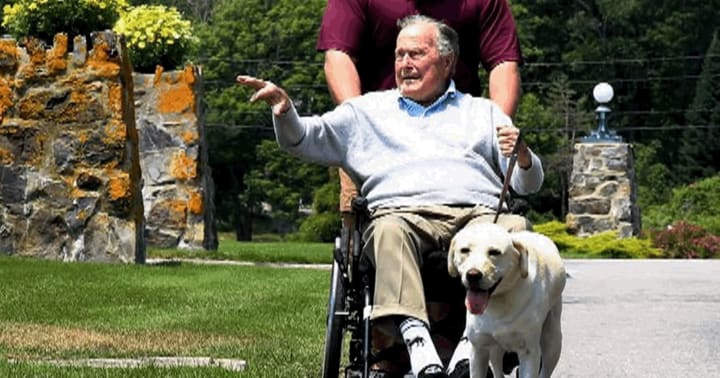
Even though he was no longer a part of the foundation he started. Morris Frank continued to fight for guide dog rights until his death on November 22nd, 1980. Despite the Rehab Act being passed, it still wasn't enough, and eventually, thanks to advocates and the Capitol Crawl, which took place on March 13th, 1990. helped propel the Americans with Disabilities Act to get passed on July 26th, 1990, by George. H.W Bush. It helped disabled people have better access to public spaces and employment, housing, etc.

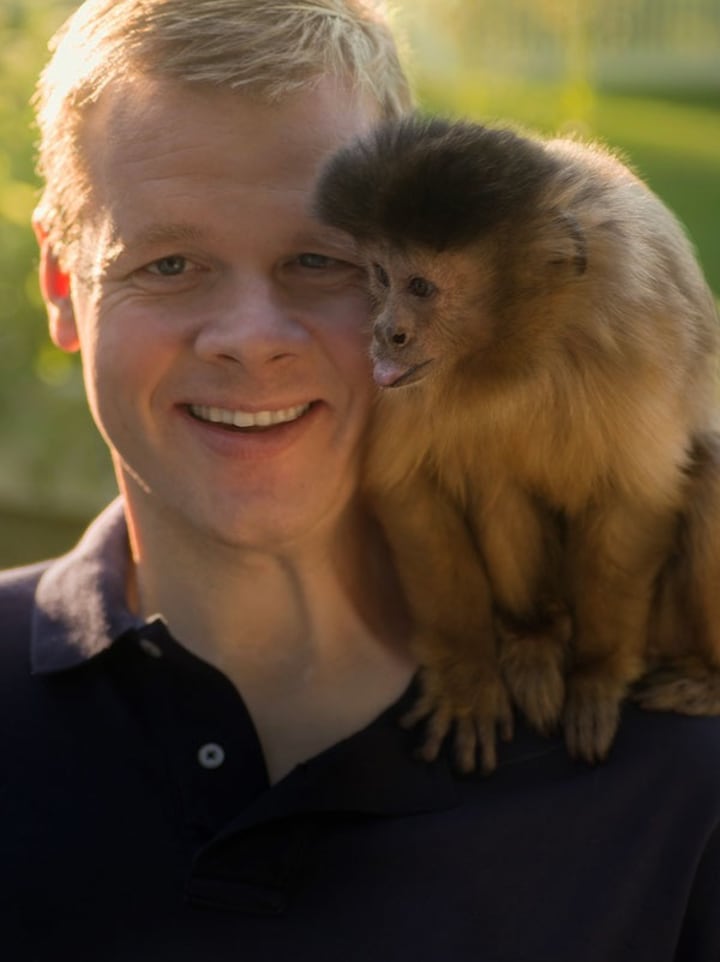
Capuchin monkeys have also been service animals at some point, although the ADA did not recognize them. Helping Hands Helper Monkeys placed teams together from 1979 until 2020.
It is now Envision Access, and retired monkeys return to the facility for care post-service. The company now focuses on tech that helps people with disabilities and caring for retired service monkeys.
Amendments to the ADA in 2008 and 2011 protected service dog handlers and granted protections for miniature horses, another type of service animal. Miniature horses became a great alternative if people are allergic to dogs or have mobility issues that a dog cannot assist with.


According to Assistance Dog International, there are 154 accredited programs as of 2022. Thanks to ever-changing information training, service animals and their handlers have evolved in more ways than one. More positive training methods are used to ensure the dogs they are training will enjoy their jobs, and specific training tools allow handlers to have better control of their dogs in public.

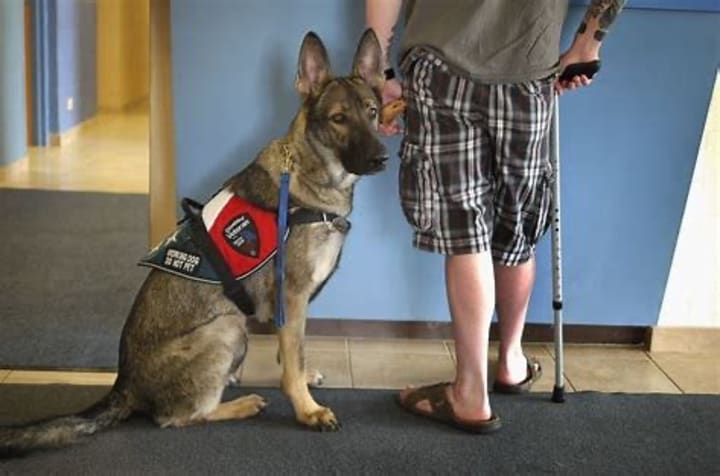
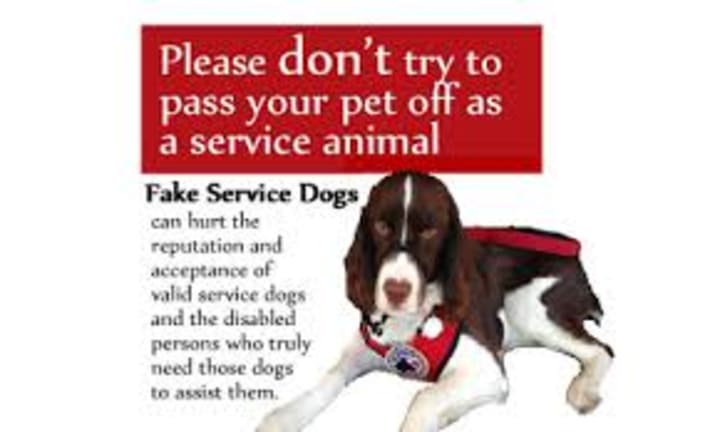
It could be better; however, people often take advantage of service dog teams by bringing their untrained and not housebroken pets in public, which causes horrific issues for legitimate service dog teams. Usually, these fake service dogs injure or frighten a natural service dog, causing the dog to need to retire early and causing the handler to lose their independence. Or if a public place has had enough fake service dogs come in. They will deny actual service dog teams.
People also find websites online that can certify their pet as a service animal. That is false. All those websites claiming such things are false have no legitimate certification system in the US, no matter how convincing the website looks.

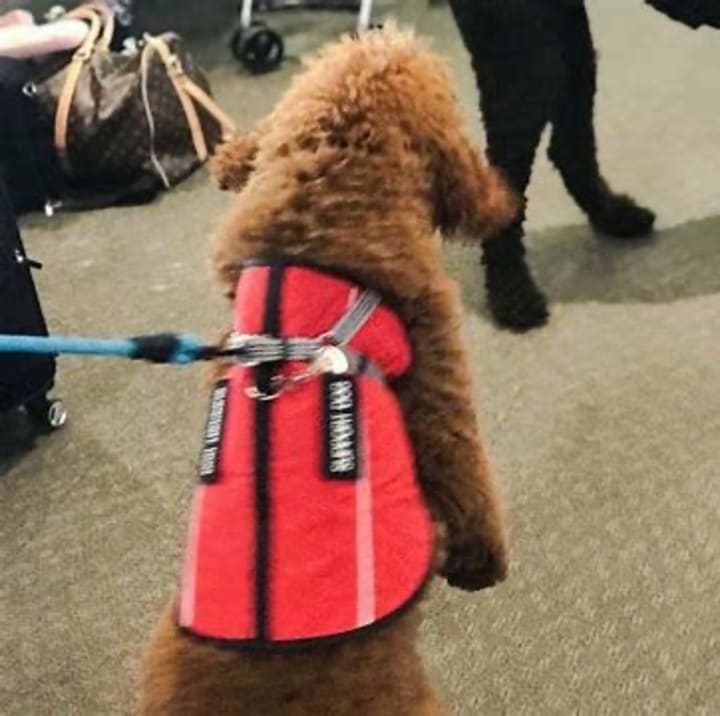

As service dogs have evolved, owner training has become a popular alternative to a program-trained service dog. Program dogs are expensive, and only some organizations train for super-specific needs. Owner training only works for some people and is, in most cases, more costly than a program dog because the handler is doing everything themselves or with the help of a mentor.
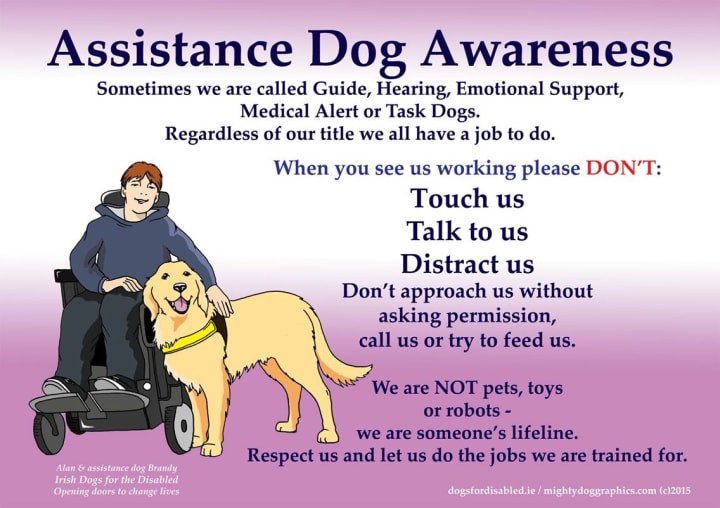

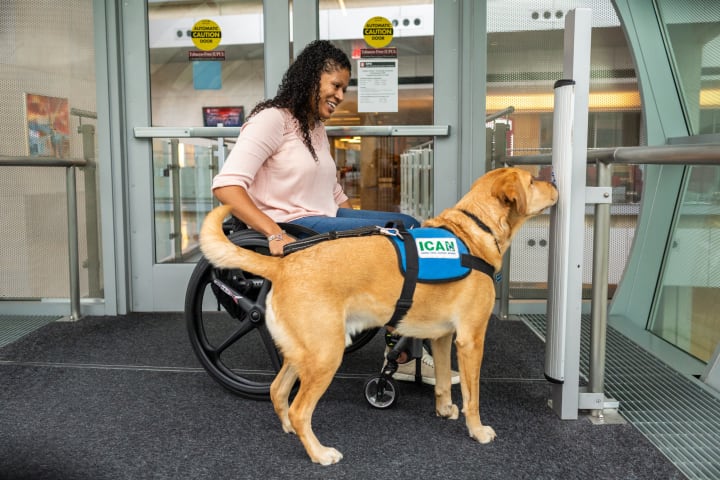
Service and guide dogs have come a long way since Morris Frank and Buddy became a team in the 1920s. There are different organizations not just for guide dogs but for all sorts of service dogs like mobility, psychiatric and hearing, Autism, etc.
Through trial and error, we have learned what a dog can and cannot learn to help a person with a dog who fails aes out of a training program or washing; it can be adapted to work as a different kind of working dog or adopted by its disability. If puppy raiser or the public.
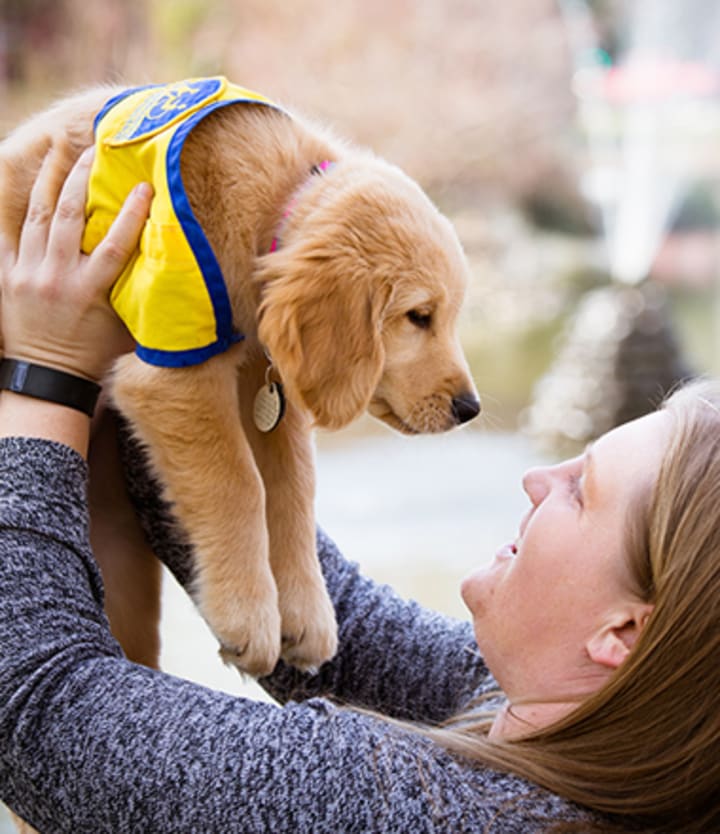
service dogs are an essential tool to help someone with a disability. They do not only provide freedom and independence. They also provide companionship and give someone hope for their future. Some people with disabilities can move out independently for the first time, have a job, or attend college or high school safely because they have a dog to help them instead of relying on human aid.
You can go here to learn more about the Seeing Eye.
To learn about Canine Companions for independence, you can go here.






About the Creator
Paige Krause
Hi, I'm Paige, and I love to read and write. I love music and dogs. I will mostly write about my favorite things. Autistic and service dog handler. Enjoy my writings
I also post my articles on Medium
Keep reading
More stories from Paige Krause and writers in Petlife and other communities.
The Controversial Adopt Don't shop
We've all heard the phrases before. Adopt, don't shop. Rescue is best. Don't breed and buy while shelter dogs die. These are just a few phrases that rescues use to convince the public that breeding animals for show, work, or pet homes is terrible and that you can find anything you need a pet for in a shelter or rescue pet. Sometimes that is true.
By Paige Krause 2 years ago in Petlife
Keeping your pets safe (and calm) this holiday season
The holiday season may be magical for some humans, but for pets it only means confusion, changed routines, overstimulation, extra noise, guests or pet sitters come and go, and sometimes the festive season means danger for pets.
By Susan Fourtané 17 days ago in Petlife
Why Cats Sit on Laptops, Books, and Phones — Science Explains
Have you ever been typing an important email, scrolling through your favorite social media feed, or trying to focus on a book — only to feel a soft, furry weight suddenly on your laptop or phone? You look down, and there it is: your cat, staring at you like you’re the intruder in their space. It’s frustrating, it’s adorable, and it’s downright mysterious. Why do cats insist on sitting on laptops, phones, and even the latest bestseller you were reading?
By Ahmed aldeabella4 days ago in Petlife
Bruce Lee and The God of War: Kuan Ti
It starts with love.. The Power to the God Of War and Wealth Walk into a Chinese restaurant (even in Oklahoma, USA), a Chinese police station, a kung fu martial arts studio or even a Chinese temple and you often see a red faced warrior holding a heavy quan-do (spear like weapon).
By WILD WAYNE : The Dragon King5 days ago in Chapters


Comments (1)
Really informative and well organized! Useful topic. Keep on working on your technique and grammar. Well done !