
Your Body Can Stand Almost Anything; It’s Your Mind That You Have to Convince
The True Battle Begins Within
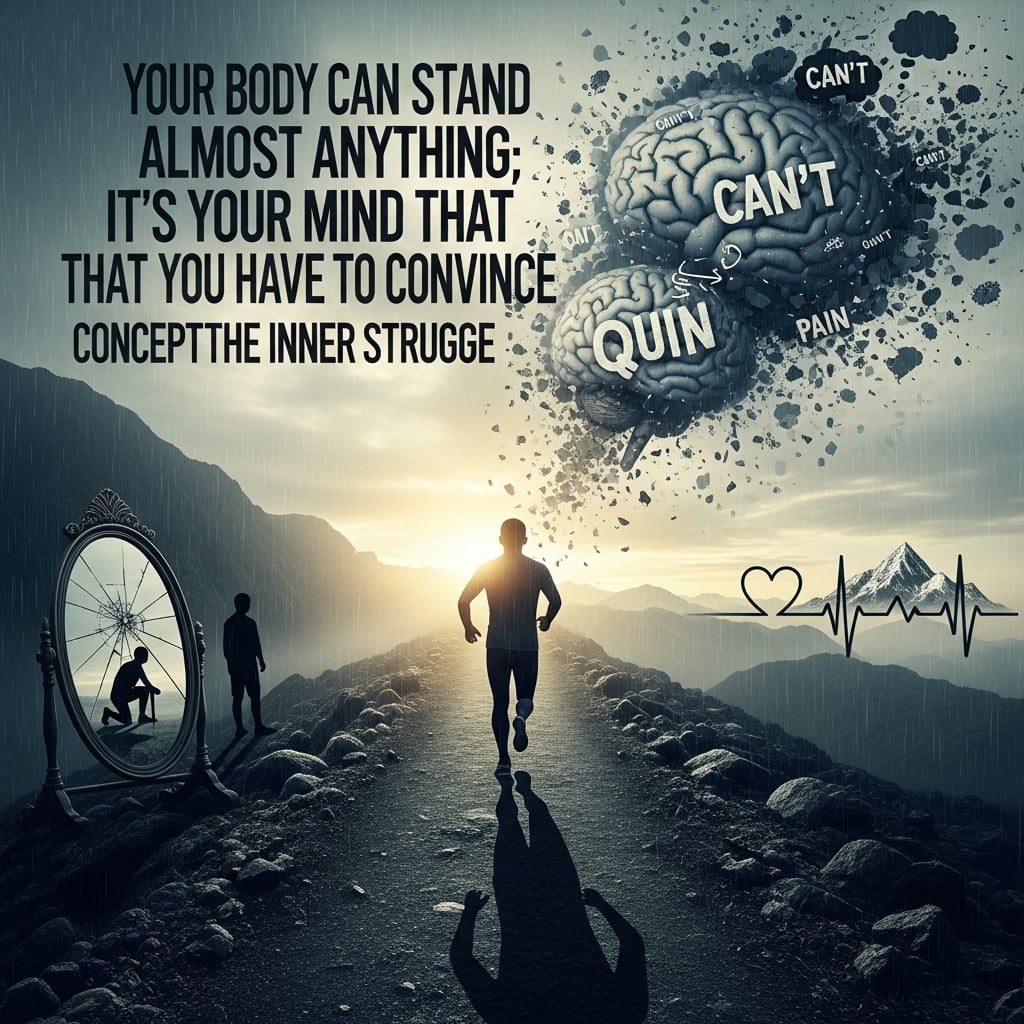
The alarm screamed at 4:30 a.m., slicing through the silence of Jonah’s apartment. His hand slammed the snooze button before he even opened his eyes. Another five minutes, he told himself. Just five.
But those five turned into fifteen, and by the time he sat up, the air was already heavy with doubt.
He stared at his running shoes sitting neatly by the door, mocking him.
This was day one of his marathon training. He had signed up six months ago after watching a documentary about people who ran 26.2 miles through pain, exhaustion, and emotional walls. Something about it stirred him. At the time, it felt like a necessary act of rebellion against his stagnant, overly cautious life.
Now, it just felt like a mistake.
Jonah had never been athletic. His idea of a workout was a slow walk to the fridge between Netflix episodes. But there was something inside him—a quiet desperation to prove that he was more than what he’d let himself become.
So, he got up. Laced the shoes. Opened the door. And started running.
Or more accurately, shuffling.
The cold air hit his face like a slap, and within minutes, his lungs burned. His knees ached. Every step screamed for him to stop. But the louder voice—the one he was learning to hear—whispered: Keep going.
By week two, Jonah was running three miles. It wasn’t pretty. His legs felt like anchors, and he cursed every step. But something had changed—he had stopped asking if he could do it and started wondering how far he could go.
That didn’t mean the doubts disappeared.
There were mornings he woke up and stared at the ceiling for thirty minutes, bargaining with himself. Days when the weather was cruel, his body was sore, and motivation was nowhere to be found.
But he showed up.
Every run became less about speed and more about discipline. Less about distance and more about defiance—of his old mindset, his fears, and the stories he’d told himself for years.
One Saturday, during a particularly grueling 10-mile run, Jonah hit the wall. Not figuratively—he hit the wall.
His legs locked up at mile 7.5. He stopped in the middle of a trail, hands on his knees, gasping like he was drowning in air. The ache in his thighs was unbearable. His heartbeat pounded in his ears. Sweat dripped into his eyes. He considered sitting down, maybe calling a friend to pick him up.
His phone buzzed.
A message from his sister:
"Proud of you. Dad would’ve been too. Keep going."
Jonah felt the sting—not from the sweat, but from something deeper. His father had passed away the year before. A former marine, his dad had always believed in discipline, in grit. Jonah remembered something he’d said once during a tough time: “Your body will lie to you. It will scream and cry. But your mind? That’s the commander. Convince it, and the rest will follow.”
Jonah looked at the trail ahead. It was uphill. Of course it was.
“I can’t,” he whispered.
And then: “Yes, you can.”
He took one step. Then another. The pain didn’t vanish, but the fear did. With every stride, he silenced the voice that told him to quit.
He finished the run.
Months passed. Winter turned to spring. Jonah’s body transformed—leaner, stronger. But it was his mind that had truly changed. He no longer questioned whether he could wake up early, or run in the rain, or push past discomfort. He just did it.
The marathon was a week away when an injury almost stopped it all.
During a training run, he landed wrong. A shooting pain ran through his ankle. A sprain. His doctor warned him to rest, maybe even skip the race.
The old Jonah would’ve taken it as a sign to quit. But this Jonah, the one who had fought through doubt and self-sabotage, refused to go down without trying.
He iced it. Wrapped it. Stretched it. Took every precaution. And on race day, he stood at the starting line with 30,000 other runners—heart pounding, ankle taped, but ready.
The marathon was brutal.
By mile 14, his ankle throbbed. By mile 20, he was running on pure willpower. People passed him. Cheered for him. Some dropped out. Others ran alongside him for a mile or two, then disappeared into the crowd.
But Jonah stayed focused.
When the finish line came into view, tears filled his eyes. It wasn’t about glory. It wasn’t about time. It was about finishing—something he’d once believed was impossible.
He crossed the line in 5 hours, 47 minutes.
Collapsing just beyond the ribbon, he looked up at the sky and whispered, “I did it, Dad.”
Now, months later, Jonah still runs.
Not every day. Not always far. But enough to remind himself of the lesson that changed everything:
Your body can stand almost anything. It’s your mind that you have to convince.
And once you do, the world opens up in ways you never imagined.
About the Creator
Keep reading
More stories from Mahayud Din and writers in Motivation and other communities.
Don't Be Afraid to Be Alone. Goals Are Personal.
When Mia moved into her new apartment in the outskirts of the city, she didn’t tell many people. Not out of secrecy, but because she didn’t think anyone would understand. For the first time in years, she had chosen solitude over connection. No roommates. No bustling group chats. No weekend plans filling her calendar. Just her, a quiet neighborhood, and a vision she could no longer ignore.
By Mahayud Din7 months ago in Motivation


Comments (1)
jjj