
Why Your Failures Are Actually Your Greatest Teachers 💡
: Failures aren’t setbacks—they’re stepping stones to success. Here’s how to embrace them as the powerful lessons they truly are. 🔑

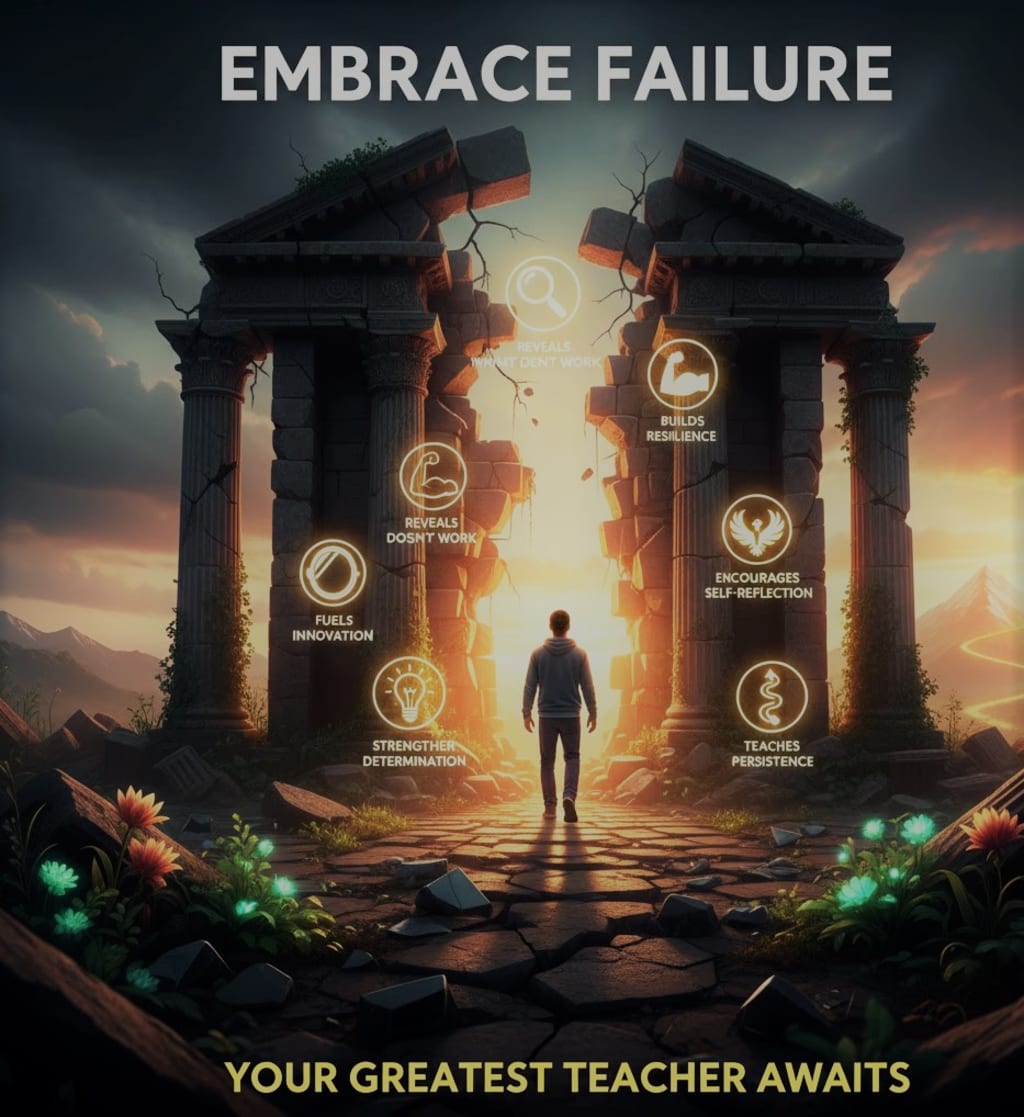
It’s easy to think of failure as something to avoid, something that reflects inadequacy or weakness. We’re often taught to fear failure, to see it as something negative or shameful. But what if we flipped that mindset and started viewing failure as one of the greatest tools for growth?
The truth is, failure is not something to be feared—it’s something to be embraced. It’s a powerful teacher that can provide lessons, insights, and personal growth that success alone could never offer. When we learn to view failure as a necessary part of our journey, we open ourselves up to real transformation.
Here’s why your failures might be the best teachers you’ll ever have:
1. Failure Reveals What Doesn’t Work 🔍
One of the most valuable aspects of failure is that it shows us what doesn’t work. Every time something doesn’t go as planned, it’s an opportunity to reevaluate your approach, your assumptions, and your strategies. You gain crucial feedback about what needs to change in order to move forward.
For example, if you’re working on a project that’s not going well, failure helps you identify the weaknesses in your plan. It forces you to rethink your methods and find better, more effective solutions. Success doesn’t provide this kind of insight. It’s only through failure that we learn what needs to be adjusted.
2. Failure Builds Resilience 💪
Failure teaches you how to bounce back. Each time you face failure, you’re forced to dig deep and find the strength to keep going. This is how resilience is built. You learn that failure is not the end—it’s simply a part of the process.
Think about the most resilient people you know. They’ve likely faced many failures, but instead of being defeated by them, they’ve used those experiences to build stronger, more determined versions of themselves. Failure shows us that we can keep going, even when things don’t turn out the way we want them to.
3. Failure Encourages Self-Reflection 🪞
When you fail, it forces you to pause and reflect. You start to ask yourself important questions like: “What went wrong?” “What can I learn from this?” “How can I improve next time?” These moments of self-reflection allow you to gain deeper insights into your own behavior, beliefs, and motivations.
Self-reflection is one of the most powerful ways to grow because it helps you understand your strengths and weaknesses. It teaches you to take responsibility for your actions and decisions, rather than blaming others or external circumstances. Failure provides a mirror that reflects the areas in which you need to grow and evolve.
4. Failure Fuels Innovation and Creativity 💡
Sometimes, failure can force us to think outside the box. When one path is blocked, it pushes us to try something new, to get creative and innovative. Many of the world’s most successful entrepreneurs, inventors, and creators have failed multiple times before finding the right solution. But instead of giving up, they used failure as a tool to fuel their creativity and come up with new ideas.
For example, Thomas Edison famously said, “I have not failed. I’ve just found 10,000 ways that won’t work.” Each of his failures was a step toward a new discovery, a new way of thinking, and ultimately a new invention. Failure often forces us to reimagine our approach and see things from a different perspective, which can lead to breakthroughs.
5. Failure Strengthens Your Determination 🔥
When you experience failure, it can either break you or motivate you to work harder. The people who succeed in life are those who use failure as fuel for determination. Instead of giving up after a setback, they double down on their efforts and keep moving forward.
Every time you pick yourself up after a failure, you build a stronger sense of determination. You prove to yourself that you are capable of overcoming obstacles and that nothing can stop you unless you let it. Success is not about avoiding failure—it’s about learning from it and using it to keep pushing forward.
6. Failure Teaches Humility 🙏
Failure also teaches humility. When things don’t go as planned, it reminds us that we are not invincible and that we don’t have control over everything. It helps us understand that setbacks are a part of life and that we are constantly learning and growing.
Humility allows us to stay open to feedback, to listen to others, and to accept that there’s always room for improvement. Without failure, we might never develop the humility that makes us better leaders, collaborators, and individuals.
7. Failure Reinforces the Importance of Persistence 🏃♀️
Persistence is one of the most important qualities for success. Without failure, we may never learn the value of keeping going even when things are tough. Failure teaches us that success doesn’t come easily or quickly—it requires hard work, dedication, and the ability to get up and try again after each setback.
The more you fail and keep going, the stronger your persistence becomes. It becomes part of who you are—someone who doesn’t give up, no matter how many times they fall. The lesson of persistence is one that only failure can teach.
Conclusion: Embrace Your Failures as Stepping Stones 🌱
The truth is, failure is not something to fear or avoid. It is a necessary part of the journey to success. Your failures are not signs of inadequacy—they are opportunities for growth, learning, and self-discovery. They are the experiences that shape you, build your resilience, and guide you toward the success you seek.
So, the next time you face a failure, instead of seeing it as a setback, see it as an opportunity to learn and grow. Your failures are your greatest teachers, and with each lesson you learn, you move one step closer to your ultimate success.
About the Creator
Daily Motivation
Hi | Assalam Ulaikum | Wellcome to my profile | This is a Motivation Page | You can tell me your Problem so i can help you... my whatsapp number +92 336 7762 162
Keep reading
More stories from Daily Motivation and writers in Motivation and other communities.
Stop Waiting for Permission: You’re Already Ready for Success 🚀
So many of us spend our lives waiting for the right circumstances, the perfect opportunity, or permission from others to pursue our dreams. We tell ourselves, “I’ll start when I’m more experienced,” or “I need someone’s approval before I can go for it.” But here’s the truth: you are already ready. You don’t need anyone’s permission to go after your dreams. The time to act is now.
By Daily Motivation2 months ago in Motivation


Comments
There are no comments for this story
Be the first to respond and start the conversation.