
Why 'Work-Life Balance' is Holding You Back From Greatness
The Myth of Work-Life Balance


For years, we've been told that work-life balance is the key to happiness and success. The idea sounds great: allocate equal time to work and personal life, and you’ll live stress-free while achieving your goals. But what if this concept is actually limiting your potential?
The harsh reality? True greatness doesn’t come from balance, it comes from obsession, focus, and sacrifice. Every high achiever in history, whether in business, sports, or the arts—has prioritized their craft over balance at crucial moments.
Let’s break down why the pursuit of work-life balance might be holding you back and what you should aim for instead.
1. Greatness Requires Obsession, Not Balance

Think about the most successful people in the world; Elon Musk, Jeff Bezos, Kobe Bryant, Serena Williams. Do you think they achieved their success by working only 40 hours a week and ensuring they had equal amounts of “downtime”?
Greatness demands an obsession with mastery. It’s about going all in, sometimes at the cost of a so-called balanced lifestyle. When you're deeply committed to achieving something extraordinary, work and life become integrated rather than separated.
2. Balance Breeds Mediocrity

Most people seeking work-life balance are unknowingly settling for mediocrity. They want a little bit of everything but never excel at any one thing. The most successful individuals go through seasons of imbalance to achieve greatness.
- Athletes spend years training for a single moment of glory.
- Entrepreneurs grind through sleepless nights to build their empire.
- Artists immerse themselves completely in their craft to produce masterpieces.
If you're constantly worrying about “equal distribution of time,” you're limiting your ability to push through the necessary grind that leads to success.
3. Work-Life Integration is the Real Answer
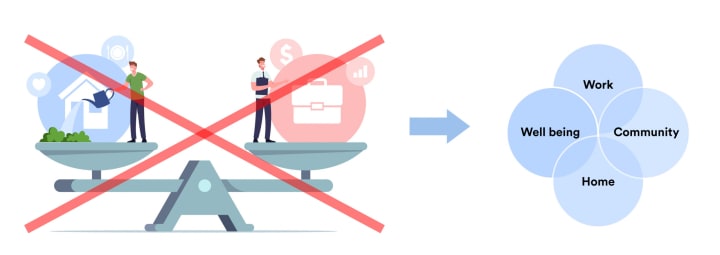
Instead of striving for balance, aim for work-life integration. This means structuring your life in a way where your work and personal life complement each other rather than compete for attention.
- If you love what you do, work won’t feel like “work.”
- You can involve your family or friends in your goals rather than keeping them separate.
- You can structure your schedule in a way that aligns with your priorities rather than artificial time blocks.
Work-life integration allows you to make space for personal well-being without capping your ambition.
4. Rest Should Be Strategic, Not Mandatory

High performers don’t avoid rest, they optimize it. They take intentional recovery breaks instead of enforcing rigid time-offs.
- Active recovery: Instead of mindless relaxation, do something that refreshes and recharges you (e.g., meditation, creative hobbies, exercise).
- Time-blocking for peak performance: Instead of aiming for equal parts work and leisure, structure your day based on when you’re most productive.
- Eliminate distractions, not work: Focus on removing time-wasting activities rather than limiting your work hours.
5. The ‘Seasons of Hustle’ Mindset

Success is not about working yourself to exhaustion forever, it’s about embracing seasons of intense work followed by periods of strategic recovery.
- There will be seasons of grind where you push yourself to the limit.
- There will be seasons of maintenance where you sustain what you’ve built.
- There will be seasons of rejuvenation where you intentionally take a step back before the next big push.
This approach allows you to make real progress without burnout.
Final Thoughts: Choose Growth Over Comfort
The pursuit of work-life balance often prioritizes comfort over growth. But if you truly want to achieve greatness, you need to redefine what balance means to you.
Instead of asking, How can I achieve work-life balance? ask:
- How can I align my life with my biggest goals?
- How can I integrate work and personal life in a way that energizes me?
- What am I willing to sacrifice in the short term for long-term success?
The world’s top performers don’t chase balance, they chase purpose, impact, and mastery. And that’s what separates the extraordinary from the average.
So, which one will you choose?
About the Creator
Keep reading
More stories from Liam Osuos and writers in Motivation and other communities.
The 1% Rule: How Small Daily Improvements Create Massive Success
Success is often portrayed as a sudden breakthrough—a single moment of genius, a life-changing decision, or an overnight transformation. But in reality, the most successful people in the world don’t rely on grand gestures. Instead, they follow a simple yet powerful principle: The 1% Rule.
By Liam Osuos10 months ago in Motivation


Comments
There are no comments for this story
Be the first to respond and start the conversation.