
Veerapandiya Kattabomman
The conversation covers various aspects of the life and legacy of Veerapandiya Kattabomman, including his military battles against the British, his leadership and administrative skills, his role in resisting colonialism, and his impact on Tamil Nadu's history and culture.

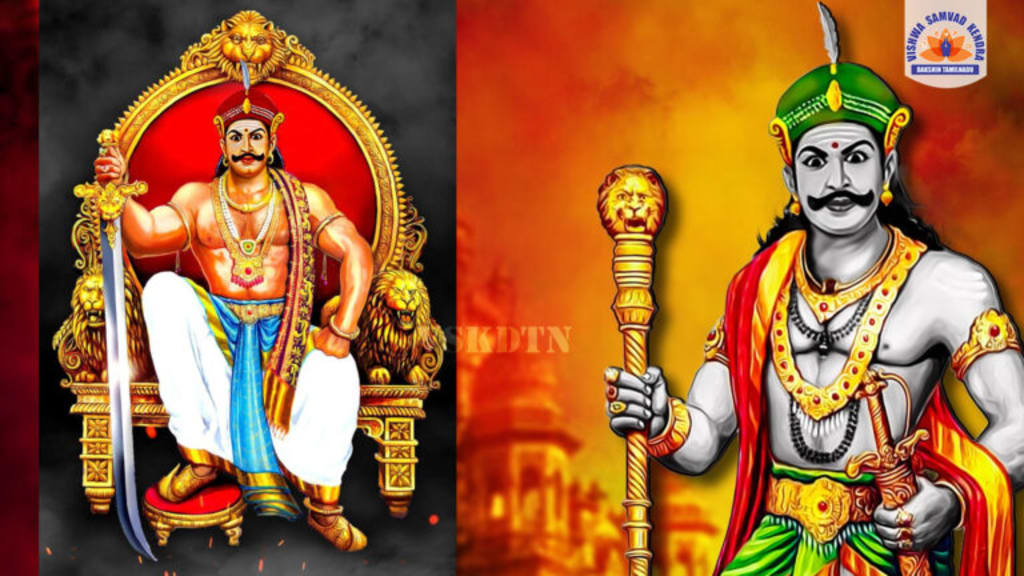
Veerapandiya Kattabomman was an Indian warrior and chieftain who lived in the late 18th century. He was born in Panchalankurichi in Tamil Nadu and was the ruler of the kingdom of Panchalankurichi. Kattabomman is remembered as a valiant fighter who fought against the British East India Company's expansionist policies.
Kattabomman's confrontation with the British began in 1799 when he refused to pay taxes to the Company. He challenged the British authority and declared himself as an independent ruler. This led to a series of battles between Kattabomman's army and the British forces. In one such battle, Kattabomman defeated the British army led by Colonel Agnew. However, the British were able to capture Kattabomman by deceit and he was subsequently hanged in 1799.
Kattabomman is remembered as a symbol of resistance against colonial rule and his bravery and courage have become legendary in Tamil Nadu. His life and struggle have been portrayed in many books, plays, and movies. The Indian government has also honored Kattabomman by issuing postage stamps in his honor and erecting a statue in his memory.
Veerapandiya Kattabomman was born in 1760 to Jagaveera Kattabommu and Aarumugathammal in Panchalankurichi, a small village in present-day Tamil Nadu, India. His father was a chieftain of the region and Kattabomman inherited the title after his father's death. He was well-educated and well-versed in Tamil, Telugu, and Sanskrit.
Kattabomman was known for his bravery and valor in battles. He had a large army and was able to defend his kingdom against the Marathas and other neighboring powers. However, his most famous battles were fought against the British East India Company, which was expanding its territories in India.
Kattabomman refused to pay taxes to the British and challenged their authority in the region. This led to a series of battles between his army and the British forces. In 1799, Kattabomman and his army defeated the British army led by Colonel Agnew in a battle near the Kattabomman fort. However, the British were able to capture Kattabomman through deceit and he was subsequently hanged in Kayattar in 1799.
Kattabomman's legacy lives on in Tamil Nadu. He is celebrated as a hero who fought against colonial oppression and stood up for the rights of his people. His life and struggle have been portrayed in many works of literature, including the famous Tamil play "Veerapandiya Kattabomman" by Tamil playwright Pavalareru Perumal.
The Indian government has also honored Kattabomman by issuing postage stamps in his honor and erecting a statue in his memory. Today, his fort in Panchalankurichi is a popular tourist attraction and a monument to his bravery and courage.
In addition to his military prowess, Kattabomman was also known for his leadership skills and administrative abilities. He was popular among his people, who saw him as a just and fair ruler. Kattabomman introduced several reforms to improve the lives of his subjects, including the abolition of the Devadasi system, which forced young girls to become temple prostitutes.
Kattabomman's resistance against the British was not just limited to his military battles. He also used diplomacy and negotiation to resist British control. He formed alliances with other local rulers and sought the support of the Marathas to challenge the British.
After Kattabomman's capture and execution, his kingdom was annexed by the British East India Company. However, his legacy continued to inspire the people of Tamil Nadu to fight against colonialism and oppression. In the 20th century, Tamil nationalists saw Kattabomman as a symbol of resistance against British imperialism and invoked his name in their struggle for independence.
Today, Kattabomman is remembered as a hero who fought for the rights of his people and stood up against colonial rule. His bravery and courage continue to inspire generations of people in Tamil Nadu and beyond.
About the Creator
Keep reading
More stories from NATARAJAN and writers in Motivation and other communities.
The Barefoot Boy Who Built Hyundai
In 1915, in a small poor village in what is now North Korea, a boy named **Chung Ju-yung** was born into hardship. His family were rice farmers. They lived in a straw-roof house, ate simple meals, and often went to bed hungry. Shoes were a luxury. Education was a dream. Survival was the goal.
By nawab sagar5 days ago in Motivation


Comments
There are no comments for this story
Be the first to respond and start the conversation.