
Tornado
Tornado Warnings: Preparation, Adaptability, and Survival


Tornadoes are one of nature’s most unpredictable and destructive forces. They can form in mere minutes, shift direction without warning, and leave behind a trail of devastation. Have you ever wondered what it’s like to be in the path of a tornado? The sheer power and unpredictability can be terrifying, but knowing what to do can give you a fighting chance. This article explores what a tornado warning means, how to respond, and how principles from Law 48 of "The 48 Laws of Power" and Sun Tzu’s "The Art of War" apply to surviving these natural disasters. We’ll also dive into a recent tornado event to ground this in reality, all while keeping it human, relatable, and packed with effort and imagination.
Understanding Tornado Warnings
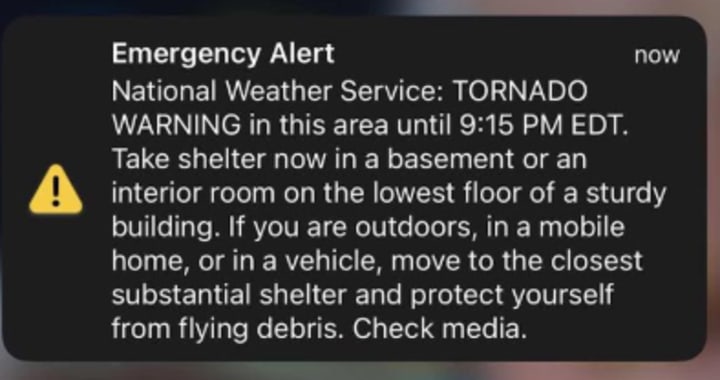
A tornado warning is a critical alert issued by the National Weather Service (NWS) when a tornado has been sighted or detected on weather radar. It’s not the same as a tornado watch, which signals that conditions are ripe for a tornado to form, but one hasn’t been confirmed yet. A warning means danger is imminent—act now.
In the U.S., the NWS relies on a network of Doppler radars to spot tornadoes. These advanced tools detect rotation within storms, a telltale sign of tornado formation. When meteorologists confirm a threat, they issue a warning, broadcast through weather apps, emergency smartphone alerts, and local news. Here’s what you should do when a warning hits:
Seek shelter immediately in a sturdy building. The safest spot is a basement or an interior room on the lowest floor (like a bathroom or closet), far from windows.
If you’re in a vehicle, find a solid structure to take cover in. If that’s not an option, abandon the car and lie flat in a low area, protecting your head with your hands.
Stay informed via a weather radio, app, or news updates to know when it’s safe to emerge.
The difference is key: a watch says "be ready," a warning says "move now." Knowledge of these rules can save lives.
A Personal Perspective
Imagine it’s a warm spring afternoon. You’re at home, maybe cooking dinner, when the sky turns an eerie shade of gray. The wind howls, and your phone buzzes—a tornado warning. Your pulse quickens as you grab your emergency kit: water (a gallon per person per day), non-perishable snacks, a flashlight with spare batteries, a first-aid kit, medications, and vital documents. You’ve drilled this before, so you head to the basement, urging your family to follow.
But what if there’s no basement? Then it’s the smallest, most interior room on the ground floor—a bathroom or closet—where you pile mattresses or blankets over yourself to shield against debris. If you’re driving when the alert comes, it’s trickier. Cars are no match for tornadoes; they can be flung like toys. If the twister’s distant, drive at a right angle to its path. If it’s close, ditch the car for a ditch or a sturdy building, covering your head. These moments test your preparation and nerve.

Law 48: Assume Formlessness
In Robert Greene’s "The 48 Laws of Power," Law 48: Assume Formlessness teaches adaptability—don’t lock into one rigid plan. Tornadoes embody chaos, shifting unpredictably, so this principle fits perfectly. You might plan to hunker down in your basement, but what if you’re at work or school when a warning strikes? Having backup options—like a friend’s house, a public shelter, or a community storm bunker—keeps you flexible.
Being "formless" also means adjusting on the fly. If you’re driving and a warning interrupts your route, you might need to reroute or find shelter fast. Mentally, it’s about staying open to the possibility of danger, even if you’ve never faced a tornado before. This adaptability—having multiple plans and the willingness to pivot—can be your lifeline when nature throws a curveball.
"The Art of War": Know Your Enemy
Sun Tzu’s "The Art of War" offers timeless wisdom, and the principle of "Know your enemy and know yourself" applies here, even if the enemy isn’t human. Tornadoes are the foe—wild, powerful, and relentless. Understanding their behavior is crucial. They often spawn from severe thunderstorms with rotating updrafts (mesocyclones). Spotting signs like a dark, greenish sky, large hail, or a roar like a freight train can buy you precious seconds to act.
Knowing yourself matters too. Live in a mobile home? You’re more vulnerable—those structures crumble under tornado winds. Plan to reach a sturdier shelter fast. History reinforces this: the 1925 Tri-State Tornado killed 695 people, a grim reminder of their potential. Studying past events and your own risks sharpens your defense against this natural adversary.
Recent Tornado Event
News brings this home. Recently, a tornado outbreak ravaged the Midwest, with one EF-3 twister—winds hitting 140 mph—tearing through Springfield. It demolished over 100 homes, injured dozens, and left a scar 10 miles long and half a mile wide. Homes were flattened, businesses obliterated, and recovery is still underway, with local and federal aid pouring in.
Despite warnings, some were caught off guard, highlighting a truth: technology (like Doppler radar) has improved, but survival hinges on human action. This event drives home why preparation and vigilance matter—tornadoes don’t wait for you to catch up.
Tornadoes are unpredictable, but you’re not powerless. A tornado warning demands instant action—shelter, protect, adapt. Law 48’s call for formlessness urges flexibility in plans and mindset, while "The Art of War" insists you understand the beast you’re facing. The Springfield disaster proves these aren’t just theories; they’re survival tools. So, next time that alert buzzes, stay calm, take cover, and be ready to shift gears. Your effort today could save your life tomorrow.
About the Creator
The King
I am a king with no emotions, only truth and sharp psychology. Feelings don’t guide me—facts and reality do.
Believe in the strength of your willpower and let it lead you forward.
Keep reading
More stories from The King and writers in Motivation and other communities.
Law 11: Learn to Keep People Dependent on You
Introduction: A Builder's Legacy In a small town surrounded by green hills, a humble builder named Kavi was known for constructing the strongest, most beautiful homes. His work was unmatched, and people often sought him out for advice. However, Kavi didn’t just build homes—he built relationships where people depended on him. 🏡✨
By The King12 months ago in Motivation
Corrosion Resistance That Endures: The Strength of Hot-Dip Galvanized Steel
Steel remains essential to infrastructure, manufacturing, and development across the nation. However, corrosion constantly threatens its durability and performance. When steel comes into contact with moisture and oxygen, rust begins to form and slowly spreads. Over time, this process weakens structures and increases safety risks. Therefore, engineers and asset owners seek protection methods that deliver long-term reliability. Hot-dip galvanizing provides a proven answer to this ongoing challenge.
By Frontier Galvanizing7 days ago in Motivation



Comments
There are no comments for this story
Be the first to respond and start the conversation.