
Timothée Chalamet: A Portrait of Resilience, Talent, and Stardom
New Generation Star


Timothée Chalamet is a name that echoes through modern Hollywood with a rare kind of reverence. In an era where young actors are often manufactured by studios or propelled to fame through sudden viral moments, Chalamet’s rise has been different. His journey has been filled with passion, struggle, failure, and unwavering dedication to craft. What makes his biography not just a story of success, but also one of resilience, is how his vulnerabilities and setbacks became steppingstones toward greatness. This is the story of a boy from New York City who grew up with dreams, chased them relentlessly, and now stands as one of the most compelling actors of his generation.
Early Life and Roots
Timothée Hal Chalamet was born on December 27, 1995, in Hell’s Kitchen, Manhattan. His name itself carried dual heritages: his mother, Nicole Flender, was of Jewish background, while his father, Marc Chalamet, came from a French lineage. This mix of American and European roots shaped his identity early on. Growing up in New York, Chalamet was surrounded by the vibrant energy of the city, but his family provided grounding.
Nicole, his mother, was a former Broadway dancer and later a real estate agent, while Marc worked as an editor for UNICEF. Creativity and discipline were part of the household. Yet Timothée wasn’t born into a world of luxury; his path was far from a ready-made Hollywood story. He grew up in a modest apartment, often gazing at the city skyline with big dreams in his heart.
As a child, he was restless and energetic. He would often put on mini-performances for family, showcasing his ability to mimic voices, create skits, and bring characters to life. His teachers described him as imaginative but sometimes distracted—someone who needed a stage to truly thrive.
Education and the Birth of a Dream
Timothée attended the prestigious Fiorello H. LaGuardia High School of Music & Art and Performing Arts, often dubbed the “Fame” school, where notable alumni included Jennifer Aniston, Adrien Brody, and Nicki Minaj. For a teenager passionate about acting, this environment was both inspiring and intimidating.
At LaGuardia, he was surrounded by talented peers, many of whom were competing for the same roles in school plays and external auditions. Chalamet had to prove himself constantly, learning discipline, stagecraft, and the art of auditioning. It was here that his dream of becoming an actor crystallized.
Still, this dream was not without struggle. Audition after audition brought rejection. For many young actors, these moments are crushing, but Timothée found motivation in them. He once admitted that being turned down was painful, but it only made him hungrier. He understood early that rejection wasn’t a reflection of his worth, but a rite of passage in the brutal world of acting.
First Steps into Acting
Timothée’s first credited roles came in television. He appeared in small roles in Law & Order and later in Homeland, where he played the role of Finn Walden, the son of the Vice President. While these were small roles, they gave him the much-needed experience in front of the camera and built his confidence.
Still, the big screen felt like a faraway dream. His first film role came in Men, Women & Children (2014), directed by Jason Reitman. The film didn’t make waves at the box office, but it gave Chalamet his first taste of Hollywood. Around the same time, he also appeared in Interstellar (2014), directed by Christopher Nolan. Playing the young Tom Cooper, the son of Matthew McConaughey’s character, was both thrilling and intimidating. Though his role was small, acting in a film of such magnitude was an early validation of his potential.
However, Chalamet later confessed that he struggled with self-doubt after Interstellar. He felt overshadowed by the film’s larger narrative and questioned whether he was truly cut out for the industry. Those doubts lingered, but they also fueled his determination to prove himself.
Struggles and Setbacks
The period after Interstellar was not smooth. Despite appearing in a big movie, roles did not flood in. He auditioned for numerous parts but was often rejected. The instability of his early career weighed heavily on him. Unlike some young stars who shot to fame overnight, Timothée’s journey was slow, filled with obstacles that forced him to reflect on whether he should continue.
At one point, he even considered quitting acting altogether. The thought of choosing a more traditional career path crossed his mind, but his love for performing always pulled him back. He had invested too much of his heart and soul to give up.
This phase was also marked by financial struggles. Without consistent acting income, Chalamet worked small jobs to keep himself afloat. Friends recalled that he wasn’t afraid to take on odd work just to sustain his dream. It was humility and perseverance that defined him during these testing years.
The Breakthrough: Call Me by Your Name
Everything changed in 2017 when Luca Guadagnino cast Timothée in Call Me by Your Name. Playing Elio Perlman, a 17-year-old who experiences a life-altering romance with an older student, was not just another role—it was a transformation.
To prepare, Chalamet immersed himself deeply. He learned Italian, practiced piano and guitar, and studied the nuances of the character. The role demanded vulnerability, sensitivity, and raw honesty. On-screen, he delivered a performance so natural and layered that it mesmerized critics and audiences alike.
Call Me by Your Name became a cultural phenomenon. Chalamet received widespread acclaim, earning nominations for the Academy Award for Best Actor at just 22 years old, making him one of the youngest nominees in history. Suddenly, the young man who once doubted his place in Hollywood had become the face of a new generation of actors.
The Pressure of Fame
With success came pressure. Being labeled a prodigy and a “once-in-a-generation talent” was flattering, but it also created immense expectations. Every project that followed was scrutinized. Timothée was not just acting anymore; he was carrying the burden of being Hollywood’s new golden boy.
The sudden fame also affected his personal life. Paparazzi followed him, rumors circulated endlessly, and every relationship he had became tabloid material. For a young man who valued privacy, this intrusion was overwhelming. Yet, instead of retreating, he channeled his emotions into his craft.
Expanding Horizons
Chalamet carefully chose roles that challenged him. He starred in Beautiful Boy (2018), opposite Steve Carell, portraying a young man struggling with drug addiction. The film was emotionally exhausting, but it showcased his depth as an actor. Critics praised his ability to bring empathy and realism to such a difficult subject.
He followed with The King (2019), where he played King Henry V of England, and Little Women (2019), portraying Laurie. Each role expanded his versatility, proving he was not confined to one type of character.
In 2021, he took on his most ambitious role yet—Paul Atreides in Denis Villeneuve’s Dune. The film, based on Frank Herbert’s epic novel, was a massive undertaking. Chalamet embraced the challenge, carrying the weight of a blockbuster franchise on his shoulders. The success of Dune cemented his status as a leading man in both independent films and major studio projects.
Lessons from Struggle
Timothée Chalamet’s story is not one of overnight success. It is about persistence, rejection, and resilience. His struggles remind us that talent alone is not enough; perseverance, humility, and authenticity matter just as much.
What makes his journey inspiring is how he embraced vulnerability. Instead of hiding his doubts and failures, he spoke about them openly in interviews. He admitted to feeling lost, to battling self-doubt, and to questioning his worth. By sharing these truths, he connected with fans not just as a star, but as a human being.
A Symbol for a Generation
Today, Chalamet represents more than just an actor. He has become a cultural symbol for authenticity and emotional intelligence. In an industry often criticized for artificiality, he stands out by being unapologetically himself—awkward at times, deeply passionate, and fiercely committed to his art.
Young people see him as proof that dreams can be pursued without conforming. His unique fashion choices, his openness about emotions, and his willingness to take risks make him a role model not just for aspiring actors, but for anyone chasing a dream.
Conclusion: The Story Continues
Timothée Chalamet’s biography is far from over. At just 28, he has already achieved milestones that many actors spend a lifetime chasing. Yet what makes his story compelling is not the fame or awards, but the humanity behind it all.
From the restless boy in Hell’s Kitchen to the young man standing on global stages, his journey is a testament to perseverance. He reminds us that every rejection, every doubt, every setback can be turned into strength. His life proves that authenticity is powerful, and that staying true to yourself is the greatest success of all.
The world will continue to watch Timothée Chalamet with awe. But for those who seek inspiration, his legacy already shines: a story of a dreamer who dared, struggled, and triumphed—one role, one heartbreak, one breakthrough at a time.
About the Creator
Frank Massey
Tech, AI, and social media writer with a passion for storytelling. I turn complex trends into engaging, relatable content. Exploring the future, one story at a time
Keep reading
More stories from Frank Massey and writers in Motivation and other communities.
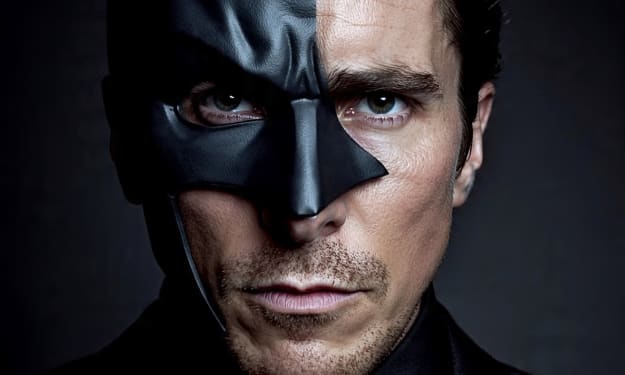
Christian Bale: From Dark Knight to Hollywood’s Chameleon
Christian Bale’s name today carries weight not just because of his movies, but because of his reputation as one of the most fearless, dedicated, and mysterious actors of his generation. Known for transforming his body, his voice, and even his soul for roles, Bale has become the definition of commitment. But behind the awards and iconic performances lies a story of resilience, sacrifice, and a relentless pursuit of perfection.
By Frank Massey 5 months ago in Motivation
What I wish I knew in my 20s as a Muslim
Assulamu Alaykum, I wish I had reminded myself that I’m not meant to be perfect all the time. I just have to try. Same with my daily prayers. They don't have to be perfect right now; I just have to try and work towards what Allah expects of me, little by little.
By Jakayla Toney2 days ago in Motivation



Comments
There are no comments for this story
Be the first to respond and start the conversation.