
three big myths about women`s weightlifting
shattering those myths and learning about power

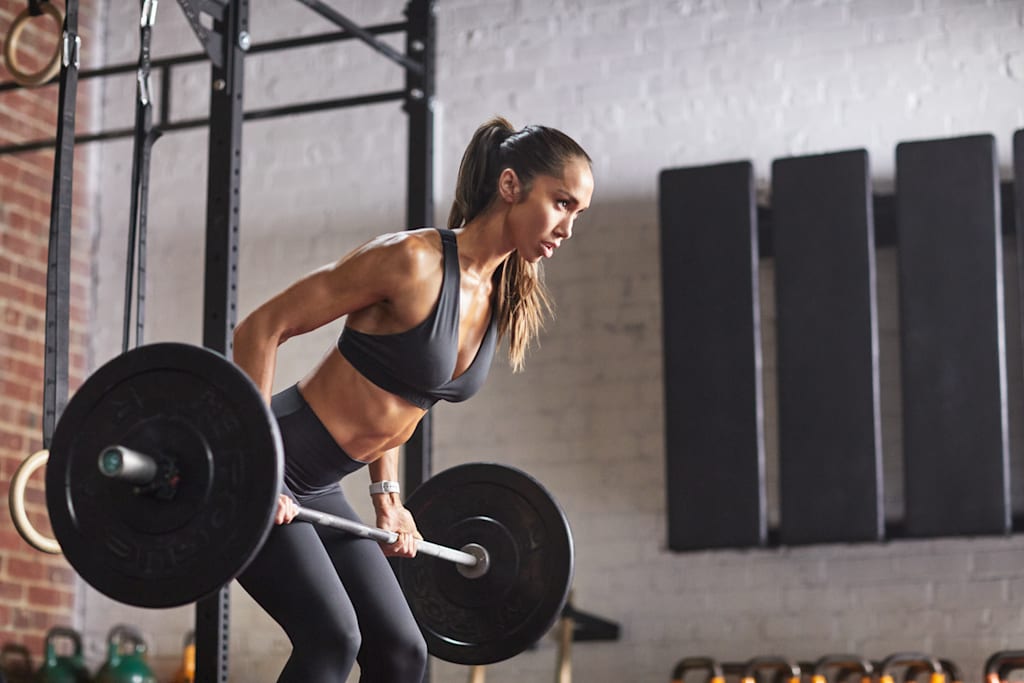
As a little girl, I loved playing sports. I also loved painting my fingernails and parading around my mother's house in her high-heeled shoes. From the beginning of time, I have lived in contrasting worlds. Contrasting and often conflicting ideas about what women should and shouldn't do, or maybe how we should and shouldn't look.
Even though something like weightlifting has a multitude of proven health benefits, there continues to be a stigma for women based on cultural and societal myths about what women should and shouldn't do.
I believe that if we can create a new culture that shifts the focus from aesthetics to health, that women's health and frankly, everybody's health, could be transformed forever.
Now, according to the CDC, the top three killers of women are heart disease, cancer, and stroke. The major contributing factor to these causes of death is what I call metabolic disease. And even though our modern, high-fat, high-carbohydrate, highly processed diets play a major role, there's one thing that women are not doing across their lifespan that could tremendously reduce their risk of death, and that is building muscle.
The data is actually very clear when it comes to resistance training. So why aren't more women doing it? The answer lies in three primary myths that continue to exert a powerful force and prevent women from doing just that.
Myth number one is that if we lift weights, we're going to get big and bulky. Women think that if they pick up a 20-pound dumbbell, they will somehow look like Arnold Schwarzenegger. (Laughter) Now, I can tell you that it takes years of very serious training -- and steroids -- to accumulate that kind of look. And if you take a look around the gym, you can see that achieving the physique of somebody like the Hulk is actually difficult, even for most men.
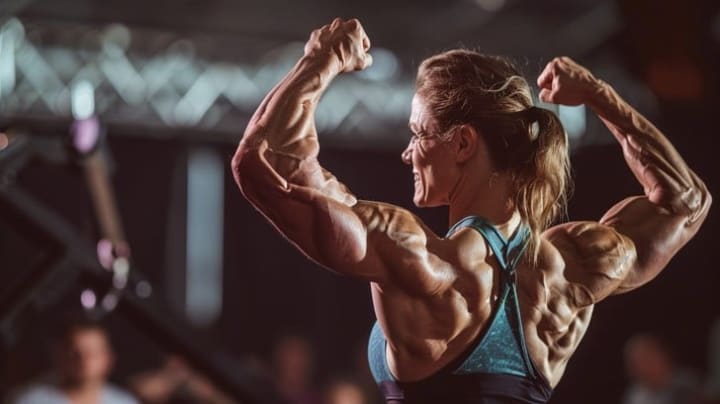
Now we're all born with a certain genetic potential when it comes to our muscle size and distribution. But beyond that, it takes years of very serious training and a concerted effort to build and maintain that lean tissue. Although women have a similar relative natural muscular potential to men, we're also prone to the same age-related muscle loss. And the medical term for that is called sarcopenia. On average, after age 40, we lose about one percent of our muscle size. With these age-related declines, we become weak, we become frail, and the risk of all chronic diseases starts to go up. In a study, they found the more days, time, and effort that women devote to strength training, the better their body composition is.
Myth number two is that weightlifting is hard or maybe too hard on our bodies. You see, even as women, if we make a decision to go work out, we're more likely to choose the cardio equipment. But let me dispel this myth. Strength training meets you where you're at. The first day you're in the gym, you're not going to be doing a 500-pound back squat. It's about being stronger today than you were yesterday.
But we don't have the same role models when we walk into the gym because when we walk in and we see this man with multiple plates on the bar and he's making crazy faces -- (Laughter) And even crazier sounds -- Arrgh! It's not very inviting to most women. But you see, women actually have an advantage over men in certain parts of our life. We make more estrogen than men, and estrogen means that we don't fatigue as fast and we actually recover faster. Which means that we can handle more volume in weight training without overtraining.
Myth number three is that weightlifting is for the boys and aerobics is for the girls. You've seen it when you walk into the gym, this big room of treadmills, ellipticals, and stair climbers filled with women. But in the “Journal of Exercise Science,” they found for every woman that was using the free-weight section of the gym, there were 27 men. This disparity continues to make it difficult to foster health for women across their lifespan.
Resistance training happens to be the only non-pharmacological intervention that has been consistently shown to offset these age-related declines in skeletal muscle mass, strength, and power. This cannot be achieved on a treadmill. The male bias in gym culture is literally everywhere, and it's time for us to counter it.
All humans have muscles. Muscles make us healthy. Muscles combat the top three killers of women. Resistance training meets you where you're at.
We think that we need these fancy machines and free weights to build muscle. But in a 2021 study, they examined a population of women 65 and older. They put these women through bodyweight and resistance band training three times per week for 16 weeks. And do you know what they found? In the treatment group, these women improved their strength, improved their functional fitness, improved their grip strength, and even improved their gait speed. The amount of work required to see benefit is actually quite small. You can lift weights, you can lift your groceries, you can lift your children, or when you're first starting, you can even just lift your own body weight.
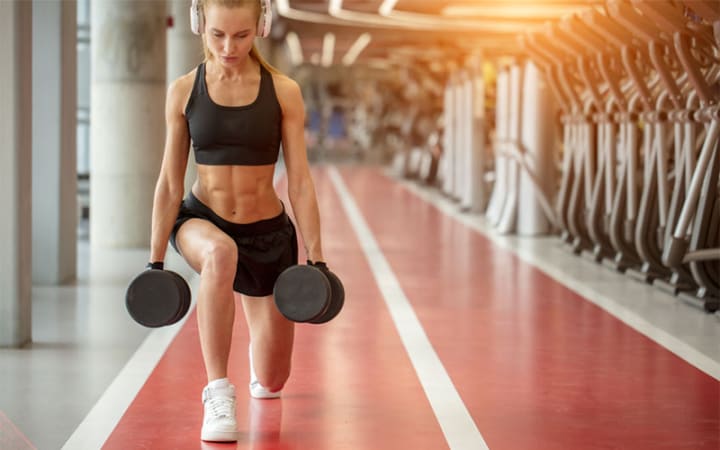
It's my mission to make sure that women live a long and healthy life, and that means building and maintaining their muscle.
So let me leave you with a very clear call to action. Start lifting heavy things now. Nobody can do it for you. Literally. Your older self will thank you. Or if you are your older self, it's never too late. This is not about aesthetics. This is about health. And physically strong women are healthy women.
About the Creator
Reader insights
Outstanding
Excellent work. Looking forward to reading more!
Top insights
Compelling and original writing
Creative use of language & vocab
Easy to read and follow
Well-structured & engaging content
Excellent storytelling
Original narrative & well developed characters
Expert insights and opinions
Arguments were carefully researched and presented
Eye opening
Niche topic & fresh perspectives
Heartfelt and relatable
The story invoked strong personal emotions
Masterful proofreading
Zero grammar & spelling mistakes
On-point and relevant
Writing reflected the title & theme
Keep reading
More stories from Mahboubeh Fallahi and writers in Motivation and other communities.
The Work No One Sees
Failure doesn’t always announce itself. Sometimes it settles in quietly, almost politely, until one day you realize it has been living with you for a long time. Marcus didn’t remember when work stopped feeling meaningful. There wasn’t a dramatic moment. No argument, no mistake big enough to point at. Just a slow accumulation of small disappointments. Ideas that were acknowledged and then forgotten. Meetings where he prepared carefully, spoke calmly, and watched attention drift elsewhere. Promotions that went to people who were louder, faster, or simply better at being seen. By the time Daniel was promoted again, Marcus felt something worse than anger. He felt numb. He drove home that evening without turning on the radio. The silence wasn’t peaceful. It pressed against him, forcing him to think. He sat in his car long after parking, staring at the dashboard, wondering how he had ended up feeling so invisible in a place where he spent most of his waking hours. Inside, his wife Priya asked how work had gone. “Fine,” he said. She looked at him for a second longer than usual, then nodded. They both understood that “fine” often meant “I don’t know how to talk about this.” That night, sleep didn’t come easily. Marcus lay awake, replaying old conversations, missed chances, moments where he could have spoken more confidently but didn’t. Somewhere between frustration and exhaustion, a question surfaced that he had been avoiding for years. Was he actually being overlooked, or had he learned to overlook himself? The question was uncomfortable because it didn’t blame anyone else. It didn’t allow him to stay passive. It asked something of him. Nothing changed the next day. Or the day after that. There was no sudden burst of motivation. No dramatic decision to reinvent his life. Just a quiet awareness that something needed to shift, even if he didn’t yet know how. He started small. Almost embarrassingly small. He began waking up earlier. Not to be productive in some impressive way, but because the early morning was the only time he felt free from expectations. No emails. No meetings. No need to perform. At first, he just sat there, drinking coffee and staring out the window. Then he started writing. Not essays. Not plans. Just thoughts. Frustrations he never said out loud. Fears he didn’t admit during the day. The writing wasn’t good, but it was honest. And honesty felt rare. Slowly, patterns emerged. He noticed how often he held back. How frequently he waited to be invited instead of stepping forward. How much energy he spent hoping to be noticed instead of becoming undeniable. He began learning things his job never required him to learn. Skills that made him uncomfortable. Concepts that confused him at first. He studied after work, tired but focused, reminding himself that this wasn’t about impressing anyone. It was about no longer feeling powerless. Some mornings were harder than others. There were days when staying in bed felt reasonable, even necessary. On those days, he didn’t try to feel inspired. He simply chose not to break the habit he was building. Not out of discipline, exactly, but out of respect for himself. Weeks passed. Then months. Nothing outside of him changed. But something inside did. The voice that had once criticized him relentlessly began to lose its edge. It didn’t disappear, but it softened. In its place grew a steadier voice, one that didn’t shout or praise, but quietly insisted that he keep going. Six months later, Marcus found himself working on a proposal without asking for approval first. Not out of rebellion, but out of confidence. The idea had taken shape over countless quiet hours. It wasn’t flashy. It was thoughtful, practical, and grounded in understanding he had earned the slow way. When he presented it, his hands were steady. Not because he felt fearless, but because he knew the work behind it was solid. He wasn’t guessing. He wasn’t hoping. When the room fell silent afterward, Marcus didn’t rush to fill it. He waited. His manager asked him to explain part of the idea again. That was the moment he recognized the change. Not because of the response, but because of how he felt while standing there. Calm. Rooted. Present. He wasn’t searching faces for approval. He already trusted himself. The promotion came months later. It mattered less than he thought it would. What mattered was the understanding that settled in long before: confidence isn’t granted. It’s built. Quietly. Slowly. Often without witnesses. It grows when you show up for yourself on ordinary days. When you stop waiting for perfect conditions. When you do the work before anyone promises you a reward. Priya noticed the change before he did. She said he seemed lighter. Not happier exactly, but more grounded. Like he wasn’t waiting for something to start. She was right. Marcus hadn’t become someone else. He hadn’t transformed into a louder or more aggressive version of himself. He had simply stopped shrinking. There’s a version of strength that demands attention. It’s loud, visible, and constantly seeking validation. Most people chase it, believing it will make them feel whole. Then there’s the other kind. The kind that grows in early mornings, in uncomfortable honesty, in repeated effort that no one applauds. It doesn’t announce itself. It doesn’t need to. Over time, it becomes impossible to ignore. If you’re reading this and feeling stuck, tired, or quietly frustrated, understand this: nothing is wrong with you. But staying where you are out of fear, habit, or comfort is still a choice. You don’t need permission to take yourself seriously. You don’t need recognition to begin. You need the patience to do the quiet work long enough for it to change you. Because real transformation doesn’t arrive with noise. It arrives when you stop waiting — and start building.
By Ihtisham Ulhaq5 days ago in Motivation


Comments (2)
you are right
very helpful I will start weightlifting asap