
The Translator of Death: How a Statistician Saved Millions by Simplifying the Math
In 1970, a cyclone killed 500,000 people in Bangladesh. The problem wasn't that they didn't see it coming. It was that the warning didn't make sense. One man realized that to save lives, he had to stop speaking like a scientist and start speaking like a neighbor

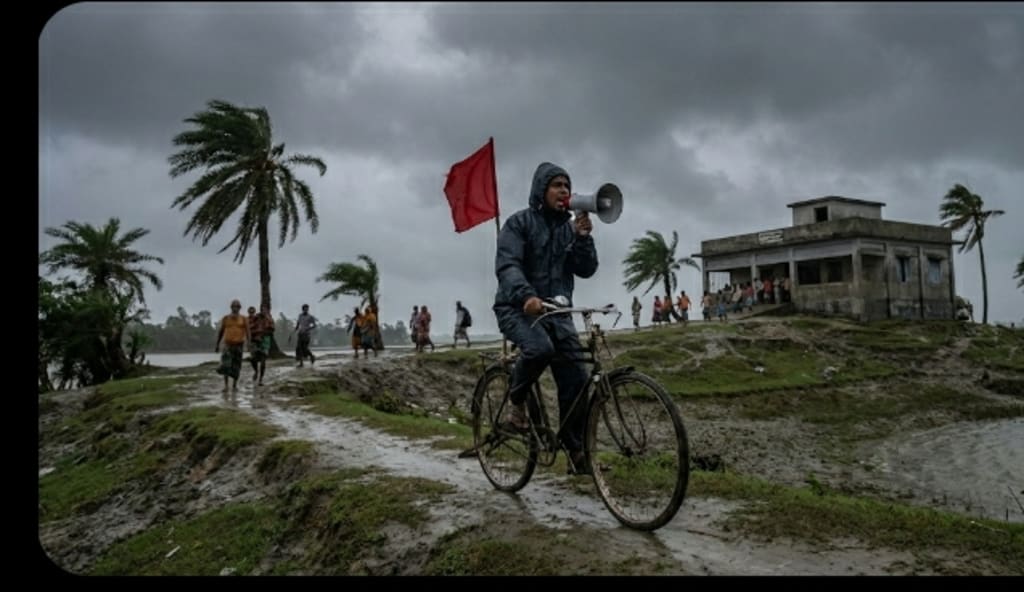
The untold story of how Bangladesh revolutionized disaster preparedness, turning complex weather data into simple, actionable warnings that reduced cyclone death tolls by over 99%.
In November 1970, the world witnessed the deadliest tropical cyclone in recorded history.
The Bhola cyclone smashed into the coast of East Pakistan (now Bangladesh) with the energy of a thermonuclear weapon. It wasn't just wind; it was water. A storm surge 20 feet high erased entire islands.
When the sun rose, the geography had changed. Where villages had stood, there was only mud and silence. The death toll was unimaginable: estimates range from 300,000 to 500,000 people. Half a million lives, gone in a single night.
The tragedy wasn't just the scale of the death; it was the preventability of it.
Meteorologists knew the storm was coming. Radar stations had tracked it. The government in Islamabad had received the data. But on the ground, in the rice paddies and fishing boats of the delta, the people heard nothing. Or, if they heard something, it was a radio bulletin in high Urdu or English discussing "barometric pressure drops" and "depression signals."
To a farmer protecting his only cow, "Signal Number 4" meant nothing.
The data existed. But it was trapped in a tower of ivory and bureaucracy.
In the aftermath of that horror, as a new nation was being born, a quiet revolution began. It wasn't led by generals or politicians. It was led by data scientists, statisticians, and volunteers who looked at the number "500,000" and swore: Never again.
One of the key figures in this movement was a statistician named Anisuzzaman Chowdhury. He wasn't a man of action in the traditional sense. He was a man of numbers. But he realized that in the context of a cyclone, math was a matter of life and death.
Part I: The Fatal Gap
Chowdhury and his colleagues analyzed the failure of 1970. They found a fatal gap in the system.
The science was getting better. Satellites could now see storms forming days in advance. The forecasting models were accurate.
But the "Last Mile"—the distance between the meteorological office and the ear of the villager—was broken.
The warning system was designed by educated men for educated men. It relied on radios (which few poor people owned). It relied on literacy (which was low). It relied on complex, graded warning levels (Signal 1 through 10) that were confusing even to experts.
Chowdhury realized that the problem wasn't forecasting accuracy. It was translation.
He asked a simple, radical question: “How many hours does a family actually need to walk to a shelter?”
He didn't want to know the wind speed. He wanted to know the "human speed."
Part II: The Architecture of Simplicity
The solution they developed was the Cyclone Preparedness Programme (CPP). It is one of the greatest feats of social engineering in history.
They threw out the jargon. They stopped talking about millibars and hectopascals.
They boiled the math down to a binary decision: Stay or Go.
They created a system that didn't rely on technology that could fail. They relied on the only infrastructure that was present in every single village:
* Mosques: Every village had one. Every mosque had a loudspeaker for the call to prayer. They enlisted the Imams. The warning wouldn't come from a distant radio announcer; it would come from the trusted voice of the local religious leader.
* Bicycles: They recruited thousands of volunteers—local boys and young men. Their job was simple. When the signal came, they got on their bikes. They rode through the mud tracks where cars couldn't go.
* Flags: They developed a brilliantly simple visual language. One flag meant "Warning." Two flags meant "Danger." Three flags meant "Great Danger—Evacuate." You didn't need to be able to read. You just needed to count to three.
* Megaphones: The volunteers were given hand-cranked sirens and megaphones. They rode through the rain screaming a standardized, simplified message: "The water is coming. Go to the shelter. Now."
It was a low-tech solution to a high-tech problem. It was built on the understanding that trust travels faster than radio waves.
Part III: The Test of Time
The system was built slowly, village by village. Volunteers were trained. Shelters were built on high stilts (doubling as schools during peacetime).
Then came the tests.
Bangladesh is the playground of the gods of wind. The storms kept coming.
In 1991, another massive cyclone hit. It was catastrophic, killing 138,000 people. It was a tragedy, but the numbers were shifting. The warning system had worked for many, but the shelters were insufficient.
The statisticians went back to work. They modeled the capacity. They realized women were refusing to go to shelters because of cultural taboos about sharing space with men. So, they redesigned the shelters with separate spaces. They realized people wouldn't leave their livestock (their life savings) behind to die. So, they built "killas"—earthen mounds raised above the flood level—specifically for cows and goats.
They kept refining the math of survival.
Then came Cyclone Sidr in 2007.
It was a monster storm, chemically identical to the 1970 cyclone. Same wind speed. Same surge. Same path.
In 1970, 500,000 died.
In 2007, the death toll was around 3,500.
It was still a tragedy. But 496,500 people were alive who, by historical averages, should have been dead.
They were alive because hours before the storm hit, a boy on a bicycle had ridden past their house waving three flags. They were alive because the Imam had turned on the loudspeaker. They were alive because the math had been translated into a language they understood.
Part IV: The Modern Miracle
Today, Bangladesh is a global leader in disaster preparedness. The death tolls from major cyclones have dropped by over 99% compared to the 1970s.
When Cyclone Mora hit in 2017, the death toll was less than ten.
Think about that. A storm that can tear roofs off buildings killed fewer people than a traffic accident.
It is a miracle achieved not by stopping the wind, but by moving the people.
Conclusion: The Dignity of Information
Anisuzzaman Chowdhury and the architects of the CPP proved something profound about the nature of expertise.
We often think that "smart" means complex. We think that solving big problems requires Big Data, AI, and expensive hardware.
But the Bangladesh model proves that the smartest solution is often the one that respects the reality of the user.
The scientists didn't try to force the villagers to become meteorologists. They accepted the burden of translation. They realized that their job wasn't finished when they printed the chart. Their job was finished when the family was in the shelter.
They saved millions of lives by realizing that a warning isn't real until it is heard, understood, and trusted.
In a world drowning in data, where we are constantly bombarded with information we don't know how to use, this is a lesson we desperately need.
The most valuable algorithm in the world isn't code. It's a neighbor on a bicycle, shouting the truth through a megaphone, just in time.
About the Creator
Frank Massey
Tech, AI, and social media writer with a passion for storytelling. I turn complex trends into engaging, relatable content. Exploring the future, one story at a time
Keep reading
More stories from Frank Massey and writers in Motivation and other communities.
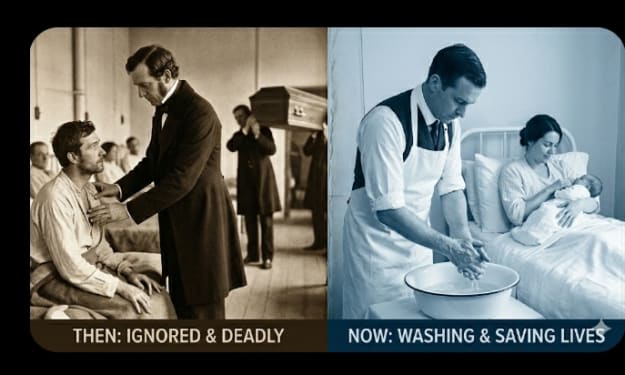
The Savior of Mothers: The Doctor Who Was Destroyed for Washing His Hands
The tragic true story of Dr. Ignaz Semmelweis, who discovered the cause of childbed fever and the importance of handwashing, only to be rejected by the medical community and die in an asylum.
By Frank Massey 3 months ago in Motivation
Our knowledge of cancer and mental illness may be altered by a new atlas of foetal brain cell development.
Thousands of foetal brain starting cells have been linked by scientists to the precise neurones and support cells that these cells subsequently generated. As a result, brain development becomes a timed sequence that determines when tumor-like growth programs and risk-linked genes can become active.
By Francis Dami7 days ago in Motivation
Delivering Service That Customers Remember Long After the Purchase
Customer service plays a critical role in shaping how people view a brand. Products and prices may attract customers at first, but the quality of service often determines whether they return. In a competitive market where customers have endless options, businesses must go further than simply solving problems. They must create experiences that customers remember and appreciate.
By Apex Service Partners4 days ago in Motivation
The First Rainbow Baby
Pitter-patter, pitter-patter. The rain fell in rhythmic splatters, slowly slowing, but still constant. Mira rolled onto her side pulling the blanket tight against her ears, but still she could hear chitter-chatter and scurrying feet of the creatures that refused to sleep in the lower decks.
By A. J. Schoenfelda day ago in Fiction


Comments
There are no comments for this story
Be the first to respond and start the conversation.