
The Stranger Who Sat Next to Me on the Bus Changed My Life Forever
A true story of mystery, memory, and the messenger I never saw again.
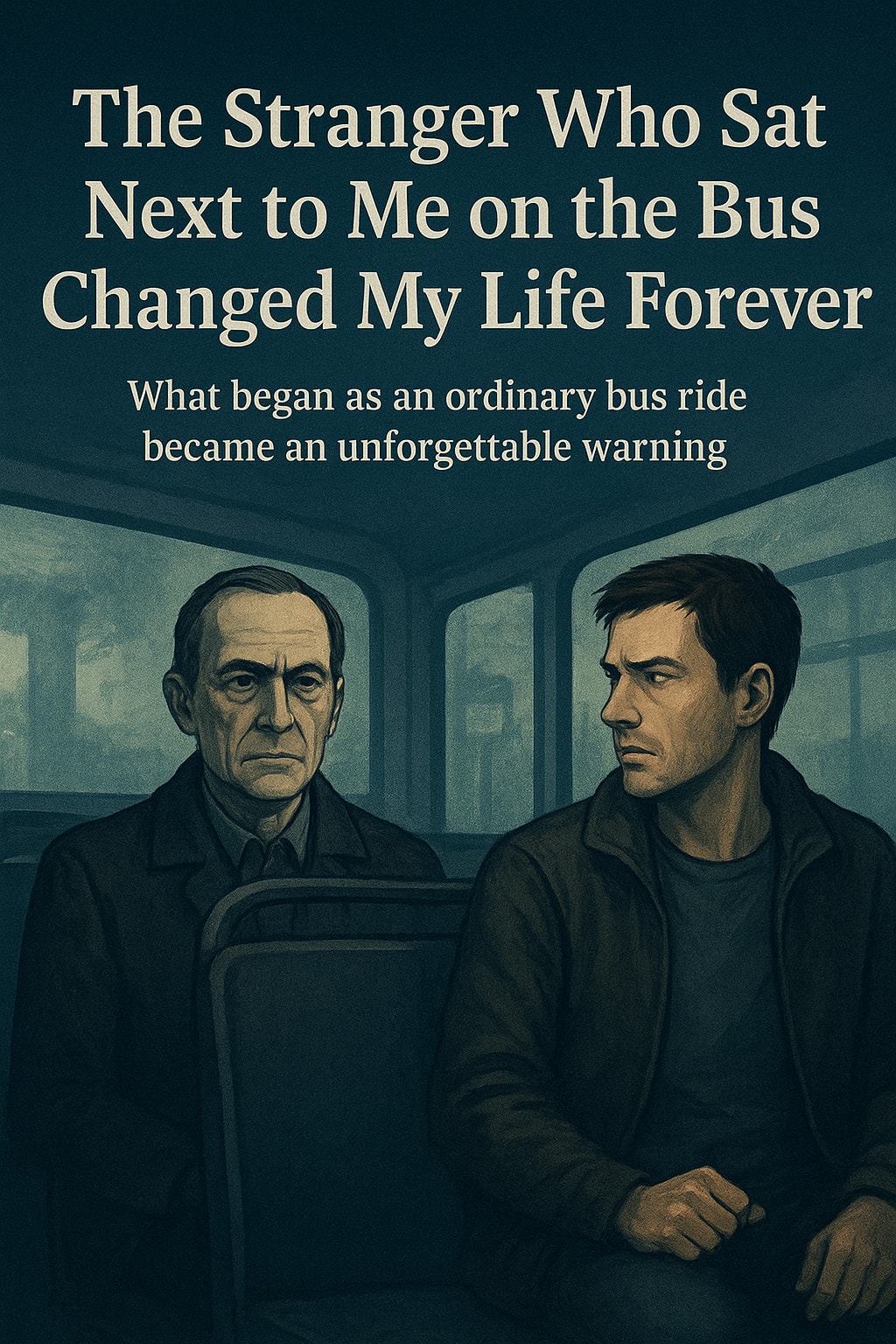
The Stranger Who Sat Next to Me on the Bus Changed My Life Forever
I almost didn’t take that bus.
The day was heavy with rain, and so was I—with debt, disappointment, and a dull ache in my chest that no doctor could name. The world had begun to feel like a crowded corridor with no doors, no windows, and no exit. I boarded simply because standing in the downpour seemed even more humiliating than moving forward without direction.
The bus smelled faintly of rust and old wool. Passengers sat scattered, absorbed in their devices or in their silence. I slid into the last empty seat, pressed against the window, hoping invisibility might shield me from the collapse of my life.
And then he sat beside me.
He was unremarkable at first glance—an older man, perhaps sixty, with eyes the shade of stormwater and hands that bore the tremors of time. Yet there was something unsettling about his stillness. He did not fidget and did not glance at his phone. He simply looked ahead, as though he had been waiting for this very bus, for this very seat, and for me.
“Your chest hurts because you haven’t spoken to your father,” he said softly, without introduction.
My breath stopped. I had not told a soul about the sharp pangs that seized me at night, nor about the silence that had hardened like ice between my father and me.
I turned sharply toward him. “Excuse me?”
He smiled, not with warmth, but with the eerie calm of someone who knows the ending of a story you are still struggling to read.
“You are carrying too much weight,” he continued. “But it isn’t money, nor failure. It’s memory. Memory corrodes the body when it is never released.”
I wanted to move, to press the buzzer, to escape, but something anchored me to that seat. My rational mind searched for explanations—perhaps a clever scam artist, perhaps a lucky guess. Yet his voice carried no greed, no demand. Only inevitability.
He leaned closer. “If you continue as you are, your body will fail before the year ends. Six months, maybe less. But you have a choice. Walk away from everything you cling to—the debts, the ambition, the anger—and you will live. Not merely survive. Live.”
The bus jolted to a stop. People shifted, grumbled, and adjusted their bags. When I turned back, he was gone. No sound of footsteps, no rustle of fabric. The seat beside me was empty, as though he had dissolved into the air itself.
I sat frozen, staring at the indentation his weight had left on the worn leather cushion.
That night, I dreamed of doors opening in walls where none had existed before.
The next morning, for reasons I still cannot articulate, I quit the job that was devouring me. I called my father for the first time in years. The chest pain, curiously, began to loosen its grip.
I have not seen that stranger again. Yet his words echo whenever I am tempted to return to the prison of old habits.
Was he real? A hallucination born of exhaustion? A ghost of someone I might have been?
Or was he, perhaps, the last warning before the body’s quiet collapse?
All I know is this: sometimes life sends us messengers disguised as ordinary passengers. Ignore them, and you may never see the exit. Listen, and the corridor suddenly fills with doors.
About the Creator
Keep reading
More stories from writers in Motivation and other communities.
Affection and Healing for Yourself
During the night of the last quarter moon, I gathered my ritual supplies. I carefully handled the chunk of black tourmaline that would protect me from your overall negative and narcissistic energy. I carefully walked the house with my stick of selenite in hand, asking the universe to cleanse our working space.
By Alisha Wilkins ✒️🦋🖋️4 days ago in Fiction
🅼🅸🅳🅽🅸🅶🅷🆃 🆂🅽🅰🅲🅺🆂
"It's 10 in Tuscon! We all know what that means... It's Time for Midnight Snacks with your man, Gerald Gee! Ready to spend the night together? Me too! I'm full of snacks and can't wait to regurgitate them all back into your hungry ears. Crack a brew! Pop some corn! Anything to get ready for one hell of a show where the talk maybe cheap but the words cut deep...
By Lamar Wigginsa day ago in Fiction




Comments
There are no comments for this story
Be the first to respond and start the conversation.