
The Silent King of Smiles
The story of an artist who made the world laugh, cry, and reflect without saying a single word
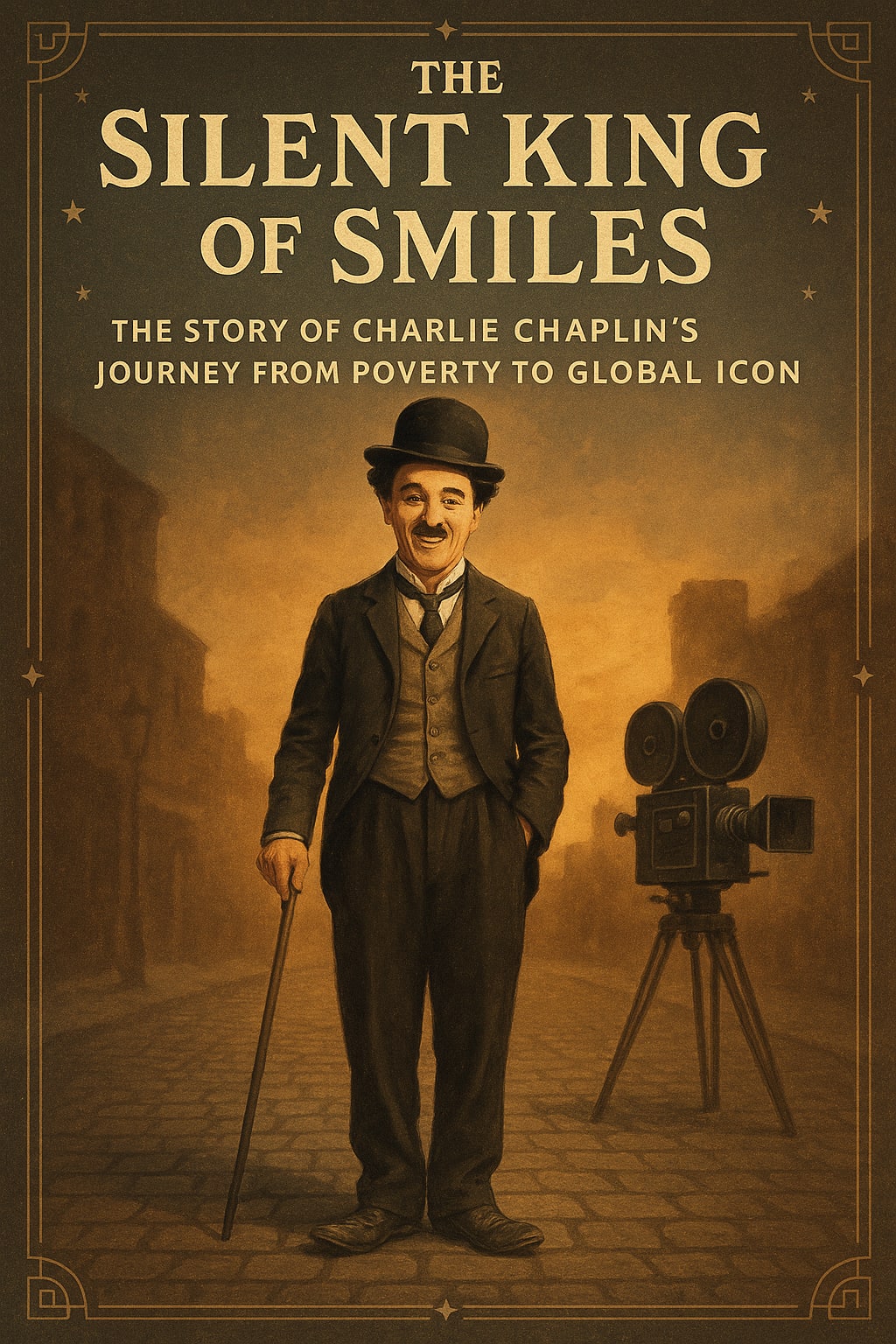
In 1889, in a poor district of London, a boy named Charles Spencer Chaplin was born into a life filled more with hardship than joy. His father was an alcoholic and passed away early. His mother suffered from mental illness and was admitted to an asylum. Young Charlie and his brother were sent to orphanages and charity homes, where hunger, strict rules, and sadness became their daily reality.
Yet, within this child burned a spark — a dream, a fire, and a hidden talent the world had not yet seen.
---
The Light of Art: From Theater to Film
At just 5 years old, Charlie had his first unexpected break. One evening, while his mother was performing on stage, she suddenly lost her voice. The manager hurriedly sent little Charlie on stage. With tiny steps, he walked up and began mimicking and entertaining the audience, making them laugh until tears rolled down their cheeks.
It was his first stage performance — perhaps also fate's first sign.
As time passed, Charlie continued working in theater groups. In 1913, he traveled to America and stepped into the world of film. From there, a new journey began — the golden era of silent films.
---
“The Tramp” — A Character That Won the World
Chaplin’s most iconic role was “The Tramp” — a poor man beaten down by the world, yet always smiling. Wearing a tiny hat, baggy pants, a cane in hand, and a soft heart, The Tramp touched millions of hearts. In every film, he either helped someone, stood up for justice, or brought joy.
The character represented the everyday man — someone who, despite having little, could bring laughter to a troubled world.
---
Silent Films, Deep Impact
Chaplin’s silent films weren’t just entertaining — they were emotional, meaningful, and full of lessons.
🎬 The Kid (1921):
The heartwarming bond between a poor man and an orphaned child — stronger than a father’s love.
🎬 City Lights (1931):
A beautiful tale of selfless love and sacrifice for a blind girl.
🎬 Modern Times (1936):
A bold commentary on the dehumanizing effect of industrialization and machines.
🎬 The Great Dictator (1940):
A fearless stand against tyranny and fascism — a message of peace, freedom, and equality.
---
Betrayal, Exile, and Silent Resistance
Although Chaplin brought joy to the world, some political powers disliked his views. He was labeled a communist sympathizer during the Cold War era, and the U.S. government banned him from re-entering the country.
A man who gave happiness to the world was forced into exile. But Chaplin did not give up — he moved to Switzerland and continued to make films, write, and express himself through his art.
---
The Return of Honor: Delayed, But Glorious
In 1972, decades later, the United States invited him back and honored him with a Lifetime Achievement Oscar. When Chaplin stepped on stage, the entire audience rose to its feet. Applause echoed for 12 straight minutes — the longest standing ovation in film history.
In 1977, at the age of 88, Charlie Chaplin passed away — but his smile, his message, and his films live on.
---
Charlie Chaplin’s Message:
> “Life is a tragedy when seen in close-up, but a comedy in long-shot.”
To him:
Laughter wasn’t just fun — it was healing
Silence could speak louder than words
Small gestures could carry deep meanings
Humanity was the greatest strength
---
Conclusion:
Charlie Chaplin’s life isn’t just the story of an actor — it’s the story of every person who falls and rises, who hides tears behind a smile, and who dares to dream in the darkest times.
His life teaches us:
> The dreams that are born in darkness… shine brightest when pursued with faith.
This story was Thoughtfully created with the assistance of AI (ChatGPT) and ansure originality ,clarity , and emotion
About the Creator
Keep reading
More stories from Mukhles hassan and writers in Motivation and other communities.
From Darkness to Light
There are moments in life when everything seems to collapse — when you feel like the world has turned its back on you, and even the mirror no longer reflects someone you recognize. This is a story about one such journey — a fall into darkness, and the courageous rise back into light. A journey from despair to rediscovery, from being lost to becoming the reason someone else finds hope.
By Mukhles hassan 7 months ago in Motivation
The Real Difference Between People Who Make It and People Who Don't
From the outside, success can look like magic. We see the finished version of people, the career, the confidence, the achievements, and assume they must have been born different. More talented. More disciplined. More certain. More lucky. More everything.
By Stacy Valentine8 days ago in Motivation



Comments
There are no comments for this story
Be the first to respond and start the conversation.