
The Silent Cry of the Earth: Reflections on Afghanistan’s Recent Earthquake
How a Natural Disaster Unveiled Human Strength, Suffering, and the Need for Global Solidarity
By []
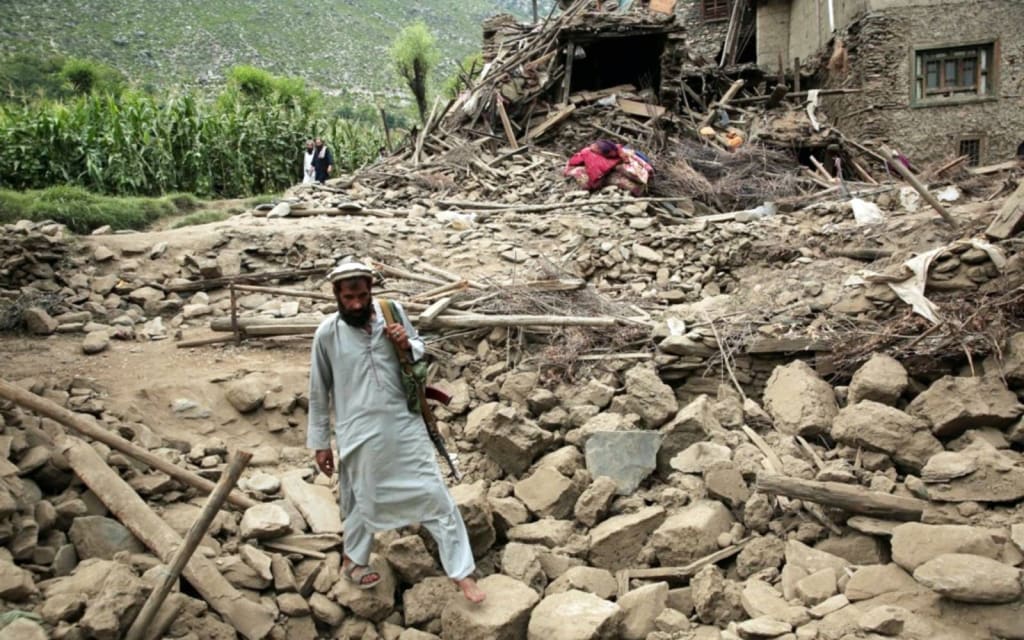
Natural disasters have always reminded humanity of its fragility. In August 2025, Afghanistan once again found itself shaken by the unforgiving force of nature when a powerful earthquake struck, leaving behind a trail of destruction, grief, and uncertainty. For a country already struggling with economic challenges, political instability, and humanitarian crises, the tremors of this earthquake were not just geological—they were deeply emotional and societal as well.
The Earthquake and Its Immediate Impact
The earthquake struck with unexpected intensity, devastating villages, damaging infrastructure, and displacing thousands of families. Entire communities, many of them already living in fragile mud-brick houses, were reduced to rubble in a matter of seconds. The quake left families searching for missing loved ones and forced survivors to sleep under the open sky, fearing aftershocks.
Reports indicated that hundreds lost their lives, while many more were injured. Hospitals—already lacking resources—became overcrowded with the wounded. Aid workers, doctors, and volunteers rushed to provide help, but the sheer scale of the disaster made it difficult to reach all affected areas. Remote villages remained cut off for days, highlighting the challenges of Afghanistan’s mountainous geography.
A Country Already in Crisis
What makes this tragedy even more heartbreaking is Afghanistan’s vulnerable condition before the quake. Years of conflict, economic sanctions, and political isolation had already weakened infrastructure and healthcare systems. Poverty forced many families to live in poorly constructed houses that could not withstand the force of an earthquake.
For many Afghans, this disaster was not just an act of nature but a reminder of their longstanding struggles—lack of international support, limited resources, and a continuous fight for survival. Unlike wealthier nations, Afghanistan does not have the luxury of strong disaster management systems or rapid emergency response units. Thus, every calamity becomes a magnified humanitarian crisis.
Stories of Survival and Humanity
Amid the devastation, stories of courage emerged. Rescue workers pulled children from the rubble, mothers shielded their infants with their own bodies, and neighbors dug with bare hands to save lives. These acts of selflessness showed that even in the darkest hours, the spirit of humanity shines brightest.
In one village, a young boy spent two nights trapped under debris before being rescued. His survival became a symbol of hope for the entire community. Another story told of women forming human chains to pass stones and clear rubble, refusing to wait for outside help. These accounts illustrate the resilience of Afghan people—broken, yet unbowed.
The Call for Global Solidarity
Natural disasters do not recognize borders, politics, or ideologies. While Afghanistan may feel isolated from the world due to its political climate, its people are human beings who deserve compassion and aid. Global solidarity in times of crisis is not charity—it is a moral responsibility.
International organizations, NGOs, and neighboring countries did send relief, but the scale of destruction requires long-term commitment. Beyond immediate aid like tents, food, and medical supplies, Afghanistan needs rebuilding efforts: stronger housing, improved healthcare infrastructure, and disaster preparedness systems. These measures will ensure that future earthquakes do not claim as many lives.
Lessons for the Future
This earthquake serves as a wake-up call for both Afghanistan and the global community. For Afghanistan, investing in safer housing and earthquake-resistant structures is crucial. Local awareness campaigns about safety measures during quakes can also save lives.
For the international community, this tragedy is a reminder that humanitarian aid should not be limited by politics. People in need should never be punished for the decisions of governments. When the earth shakes, it shakes us all—and when lives are lost, humanity itself suffers.
Conclusion: From Rubble to Resilience
The recent earthquake in Afghanistan has left behind broken homes and grieving families, but it has also revealed resilience, unity, and the undying human will to survive. While we cannot stop earthquakes, we can control how we respond to them. We can choose to stand with the suffering, extend our hands across borders, and ensure that tragedies lead not only to sorrow but also to solidarity.
The silent cry of the Afghan people must not fade away after the headlines disappear. It should echo in the hearts of those who can make a difference. Because when one nation falls, it is not just their burden—it is a shared responsibility of humanity.
About the Creator
Keep reading
More stories from جاوید علی and writers in Motivation and other communities.
The Power of Exercise: A Journey to a Healthier Life
By [] Introduction Exercise is more than just a way to look fit. It is a lifestyle choice that can completely transform the body, mind, and spirit. In today’s world, where stress, unhealthy food, and a busy routine often dominate our lives, exercise acts like a medicine that keeps us strong, energetic, and mentally balanced. Whether it is walking, running, swimming, yoga, or even light stretching, regular physical activity has countless benefits.
By جاوید علی5 months ago in Motivation
Where Is God When Bad Things Happen?
Bad things continue to happen in the world. People are aware of the mass shootings, terrorism, fires, hurricanes, tornadoes, earthquakes, wars, parents killing their children, and children killing their parents. Those acts have left loved ones in pain, suffering, and grief.
By Margaret Minnicks4 days ago in Motivation




Comments
There are no comments for this story
Be the first to respond and start the conversation.