

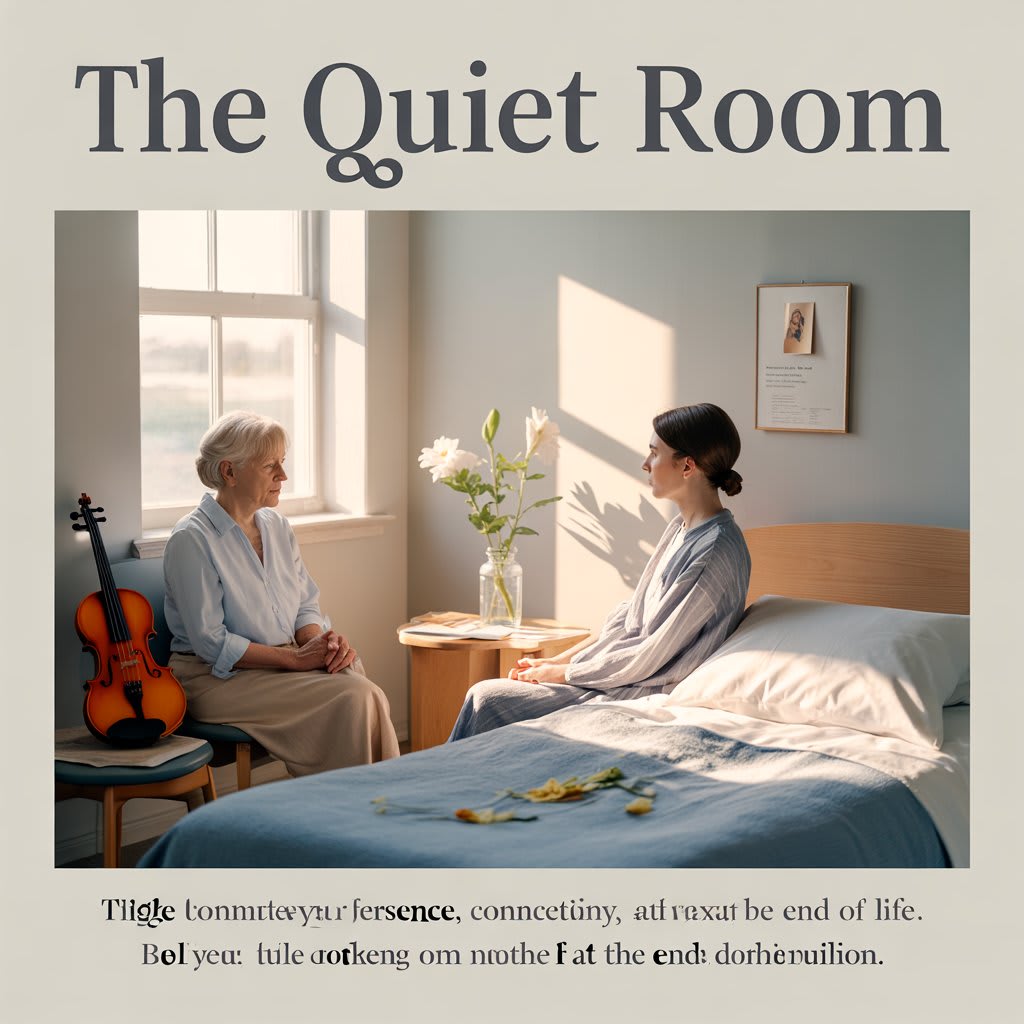
I used to think healing was loud.
That it looked like breakthroughs and confessions, like shouting in the rain or writing letters you never send. But I was wrong.
Healing, for me, came quietly—on a Thursday afternoon in a hospital’s palliative care wing, in a room that smelled like lemon disinfectant and fading time.
Her name was Mrs. Emery.
Eighty-two years old. Liver failure. No family.
I was there as part of a college volunteer program, reading books to patients who didn’t have visitors. Most just wanted company. Some asked for poetry. Others wanted the Bible. A few just wanted to sleep while someone sat nearby.
But Mrs. Emery was different.
She didn’t speak.
Not in the way people usually don’t speak—out of pain or confusion—but by choice. The nurses told me she hadn’t said a word in three weeks. She refused food unless it was placed quietly in front of her. She watched the world through the window, as if waiting for something to return.
The first time I sat with her, I brought a book. She didn’t look at me. I read a few pages anyway. My voice echoed awkwardly in the still room.
I came back the next day. And the next.
On the fourth visit, I stopped reading.
Instead, I just sat.
At first, it felt pointless—like I was doing nothing. But slowly, something changed. In the silence, I noticed things I hadn’t before: the way her fingers twitched when a bird flew by the window, how her eyes lingered on the tree outside with a look that was almost… longing.
Eventually, I began bringing small things: a soft scarf for her lap, music on low volume, flowers from the hospital garden. She never reacted. But she never asked me to stop.
And still, she said nothing.
One afternoon, I found an old photo on her bedside table. It was bent at the edges, worn soft by time. A young woman stood in the sunlight holding a violin. Her smile was wide, but her eyes carried the same softness I now saw in Mrs. Emery.
“Is this you?” I asked quietly.
For the first time, she looked at me directly. Then slowly—so slowly—she nodded.
A surge of connection flooded me. She hadn’t spoken, but in that small gesture, she’d finally answered.
I smiled. “You look happy.”
She blinked, long and slow. Then looked back out the window.
The next week, I brought my violin.
I wasn’t amazing—just a few years of practice—but I knew enough. I played one of my favorite pieces, soft and warm. The moment the bow touched the strings, her eyes closed.
Tears rolled down her cheeks.
Still, she didn’t speak. But the silence between us was no longer empty. It was full of meaning, of memory, of something sacred.
Music became our language.
One afternoon, I walked in to find her bed empty.
For a moment, panic hit. Then a nurse touched my arm gently.
“She passed peacefully last night,” she said. “No pain. Just… drifted off.”
I stood there, unsure what to do.
“She left something for you,” the nurse added, handing me a small envelope.
Inside was a folded note. In delicate handwriting, it read:
You reminded me that silence isn't loneliness.
It's space for beauty to return.
Thank you for listening when no one else knew how.
— Eleanor Emery*
I sat in that room one last time.
No music. No reading.
Just the quiet.
And in that quiet, I realized: sometimes the most powerful connection doesn’t come from words—but from presence. From sitting with someone in their pain, without trying to fix it. From letting silence speak when language falls short.
Moral of the Story:
We often rush to fill silence with noise—thinking healing must be loud, expressive, or dramatic. But some of the most meaningful transformations happen in the quietest moments. True empathy isn’t about saying the right thing, but being willing to sit in someone else’s silence without flinching.
Because sometimes, the quiet room is where the heart begins to speak.
Sometimes, the most important conversations happen in silence.
About the Creator
Muhammad Saqib
Don't believe anyone, accept Allah and yourself.
Keep reading
More stories from Muhammad Saqib and writers in Motivation and other communities.
A Story of Forgiveness and Growth
I hadn’t spoken to my father in seven years. The silence between us had become its own language—a language of pain, pride, and unspoken hurt. To others, we looked like strangers. But beneath that distance was a deep bond that had cracked and splintered long ago.
By Muhammad Saqib7 months ago in Motivation
Michael Ocean on Belief, Fatherhood, and the Season That Changed His Acting Career
Written by Kathryn Monroe Edited with the assistance of AI for grammar and clarity There are moments in a life that arrive quietly and yet divide time forever. Before and after. Then and now. They do not announce themselves. They do not demand attention. But once recognized, they cannot be unseen.
By Kathryn Monroe6 days ago in Motivation




Comments (1)
Perfect