
The Quiet Power of Happiness: Why Joy Is More Accessible Than We Think
A science-backed exploration of how everyday habits and mindset shifts can unlock lasting joy—no perfection required.
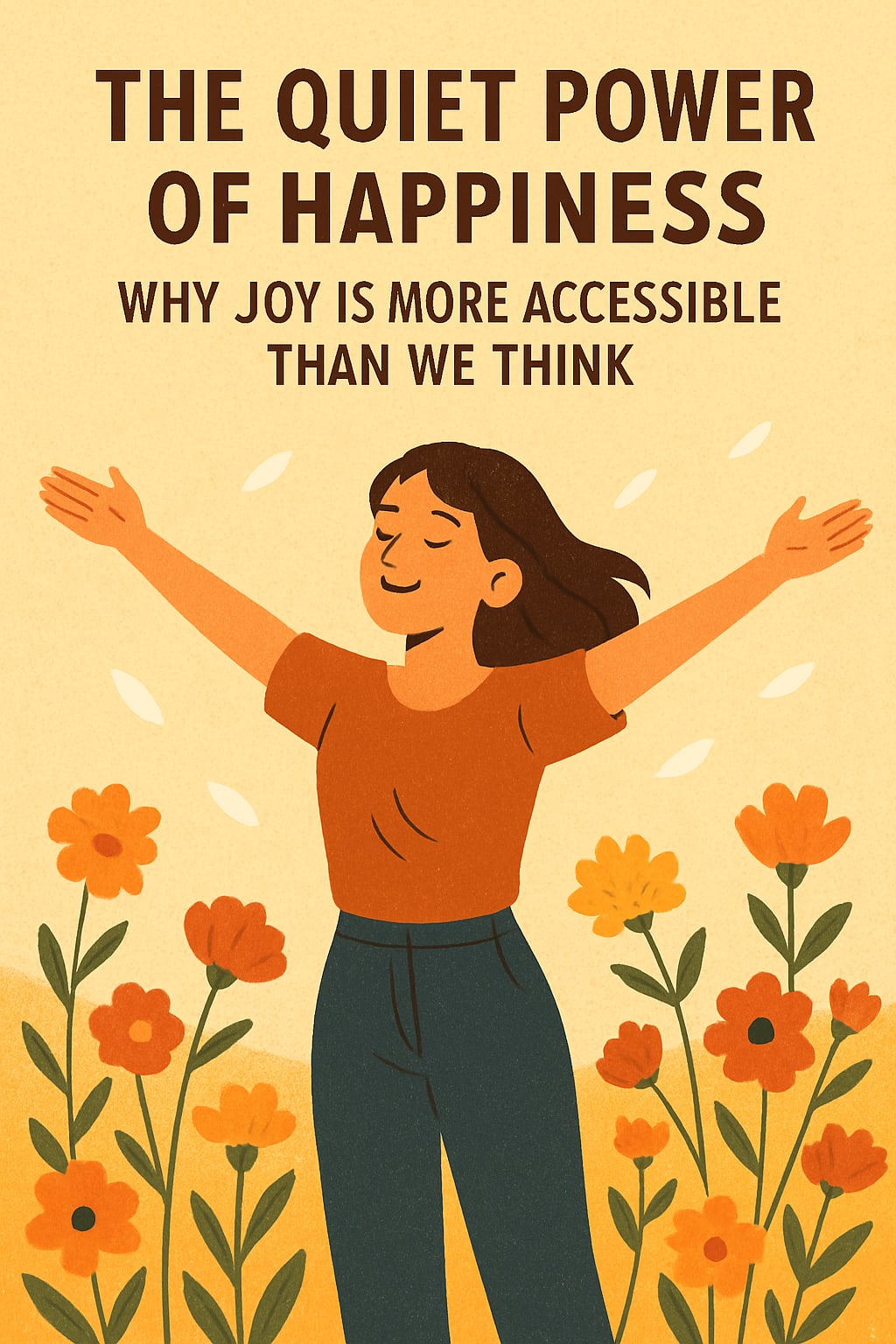
In a world obsessed with productivity, comparison, and success, happiness often feels like a distant reward—something we’ll finally reach when we land the job, buy the house, meet the right partner, or check off every item on a long list of achievements. But what if happiness isn’t a prize to be earned at the finish line, but rather a quiet, everyday companion we’ve simply forgotten how to notice?
Despite how elusive it may seem at times, happiness is not a mysterious emotion reserved for the lucky few. It is, in fact, rooted in ordinary moments and simple practices. Grounded in both psychological research and everyday observation, happiness is more accessible than we often assume.
Redefining Happiness: Beyond the Smile
When we think of happiness, we often imagine laughter, excitement, or blissful satisfaction. But psychologists distinguish between two main types of happiness: hedonic happiness, which is pleasure-based and short-term, and eudaimonic happiness, which comes from living a life of meaning, purpose, and connection.
While hedonic happiness may come from eating your favorite dessert or watching a funny movie, eudaimonic happiness is more enduring. It comes from fulfilling relationships, pursuing meaningful work, and feeling that your life matters. The problem? Our culture often encourages the former while neglecting the latter.
The key is not to reject pleasure but to balance it with meaning. True happiness, as research repeatedly shows, lies at the intersection of joy and purpose.
The Science of Sustainable Joy
Studies in positive psychology have uncovered consistent habits that contribute to long-term happiness. These include:
Gratitude: Regularly reflecting on what you’re thankful for rewires the brain to focus on positivity and abundance, rather than scarcity.
Connection: Meaningful social relationships are one of the strongest predictors of well-being. It’s not the number of friends that matters, but the depth of connection.
Mindfulness: Being present in the moment—without judgment—helps reduce anxiety and fosters contentment.
Acts of Kindness: Giving to others, whether through time, attention, or resources, stimulates feelings of fulfillment and strengthens our sense of belonging.
Flow: Immersing yourself in activities where time seems to disappear (like painting, writing, or playing music) leads to a deeply satisfying form of happiness.
None of these require vast wealth, status, or perfection—just awareness and intention.
The Happiness Trap: Chasing Instead of Creating
One of the most common obstacles to happiness is the belief that it lies somewhere in the future. We say, “I’ll be happy when…” and fill in the blank with conditions that often move further away as we approach them.
This mindset creates a cycle of postponement. We chase outcomes instead of cultivating states of being. Worse, we compare our behind-the-scenes to other people’s highlight reels on social media, which can distort our expectations of what happiness should look like.
The truth? Happiness doesn’t always look like laughter or sunshine. Sometimes, it’s the quiet contentment of a slow morning. The peace that follows a difficult decision. The joy of doing something kind without recognition.
Why Small Moments Matter Most
Happiness isn’t always about dramatic highs. In fact, research suggests that frequent small positive experiences have a greater impact on overall well-being than occasional big events. A single cup of coffee enjoyed mindfully can spark more joy than a fancy vacation remembered through blurry photos and stress.
The people who report the highest levels of happiness aren’t those who avoid pain or discomfort—but those who learn to find joy in spite of it. They build inner resilience and seek beauty in the mundane.
Choosing Joy Every Day
Happiness is not a permanent state. It comes and goes, just like sadness or anger. But while we can’t control every emotion that arises, we can create the conditions that make happiness more likely to flourish.
This doesn’t mean ignoring hardship or pretending everything is fine. Instead, it’s about holding space for both gratitude and grief, joy and challenge, light and shadow. In doing so, we become more emotionally whole—and more open to moments of true happiness.
Final Thought: Happiness Is a Practice, Not a Destination
At its core, happiness isn’t something we achieve, but something we practice. It’s not a fixed trait, but a muscle we strengthen every day through small choices, habits, and mindset shifts.
You don’t need to wait for your life to be perfect to feel happy. You just need to pause long enough to notice what’s already here.
About the Creator
kritsanaphon
"A storyteller who dives deep into news, technology, and global cultures, sharing fresh perspectives you might never have seen before. Enjoy easy-to-read, insightful content with me in every article!"
Keep reading
More stories from kritsanaphon and writers in Motivation and other communities.
The Power of Showing Up: Why 80% of Success Is Just Being There
The Power of Showing Up: Why 80% of Success Is Just Being There In a world obsessed with performance, productivity, and perfection, it’s easy to underestimate the simple power of showing up. Yet time and time again, those who make the effort to be present—physically, emotionally, or mentally—end up achieving far more than those who hesitate, overthink, or wait for perfect conditions. This is the essence of the idea made famous by Woody Allen: “Eighty percent of success is showing up.” While it might sound simplistic, the science and psychology behind this idea run deep.
By kritsanaphon7 months ago in Motivation
People Come and Go Out of Your Life for a Reason
Whether you realize it or not, everyone in your life is there for a reason. They come into your life, and they stay there until their purpose is fulfilled. Then they are moved out of your life. At first, you might think you did something to cause them to leave, but it is really a way of life. Not everyone who comes into your life is there to stay.
By Margaret Minnicks6 days ago in Motivation


Comments (1)
You make a great point about happiness not being a distant goal. I've noticed that small acts of gratitude and connecting with others daily bring more lasting joy than chasing big achievements.