
🚀 The Obsession with Symmetry: Why Our Brains Crave Perfect Balance
The Psychology and Science Behind Symmetry Fixation

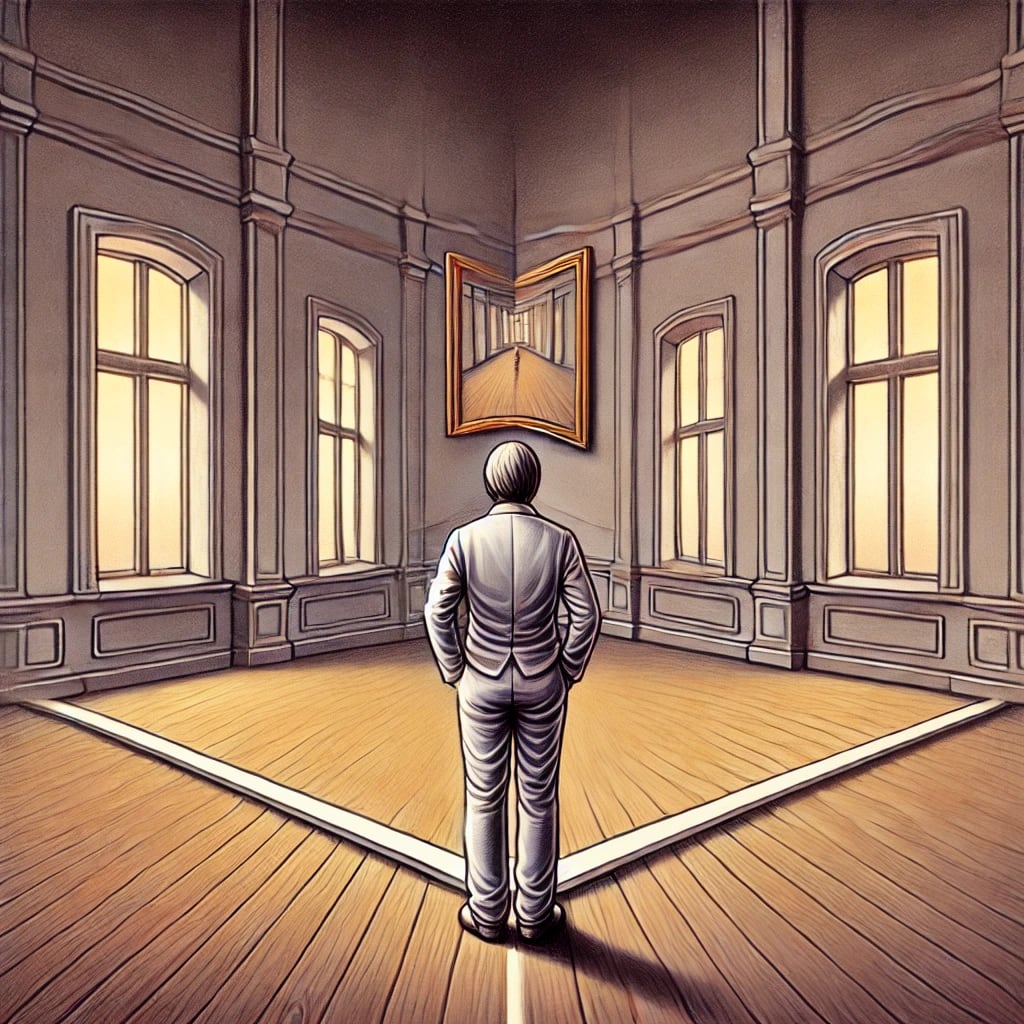
📌 The Strange Comfort of Symmetry
Have you ever adjusted a crooked picture frame?
Do you feel uncomfortable when things aren’t perfectly aligned?
Does an uneven haircut or mismatched objects bother you more than it should?
🔥 The truth? You’re not alone—your brain is wired to love symmetry.
📌 From nature to architecture, beauty to personal habits, humans have an instinctive attraction to perfect balance.
📌 But why? And when does a preference for symmetry turn into an obsession?
This article will explore:
✔ Why the human brain craves symmetry.
✔ How symmetry affects beauty, art, and daily life.
✔ When symmetry fixation becomes a disorder.
1️⃣ Why Does the Brain Love Symmetry?
📌 Symmetry is deeply ingrained in human evolution and perception.
🔹 1. A Survival Mechanism
In nature, symmetrical objects often signal health and safety.
Our ancestors relied on symmetry to identify healthy mates, avoid toxic food, and recognize predators.
🚀 Example:
A symmetrical face is often perceived as more attractive—because it signals good genetics and health.
Asymmetry in food (like a deformed fruit) may trigger caution, as it could indicate disease or toxicity.
🔥 The truth? Our love for symmetry started as a survival instinct.
🔹 2. The Brain Processes Symmetry Faster
Studies show that the brain recognizes and processes symmetrical patterns more easily than chaotic ones.
This is why logos, architecture, and art often use symmetry to create a pleasing effect.
🚀 Example:
Famous landmarks like the Eiffel Tower or Taj Mahal are designed with perfect balance—making them naturally satisfying to look at.
🔥 The truth? Symmetry is easy on the eyes—and the brain.
2️⃣ Symmetry in Beauty, Art, and Everyday Life
📌 Symmetry influences how we judge beauty, design, and order in the world.
🔹 1. The "Golden Ratio" in Faces and Bodies
The most "beautiful" faces tend to have near-perfect symmetry.
Scientists found that Leonardo da Vinci’s Vitruvian Man is based on ideal proportions and symmetry.
🚀 Example:
Celebrities like Angelina Jolie and David Beckham have highly symmetrical features, which is why they are often rated as attractive.
🔥 The truth? We instinctively associate symmetry with beauty.
🔹 2. Why We Hate Crooked Objects
A slightly tilted painting or an uneven haircut can make people feel anxious.
The brain automatically tries to correct the imbalance—even if it’s minor.
🚀 Example:
Interior designers use symmetrical layouts because they make rooms feel organized and harmonious.
🔥 The truth? Your brain prefers order over chaos.
3️⃣ When Symmetry Becomes an Obsession: OCD and Perfectionism
📌 For some, a love for symmetry goes beyond preference—it becomes a necessity.
🔹 1. Symmetry-Related OCD
Some people experience Obsessive-Compulsive Disorder (OCD) linked to symmetry.
They feel extreme distress if objects aren’t perfectly aligned.
🚀 Signs of Symmetry OCD:
✔ Feeling anxious when things aren’t even
✔ Repeatedly adjusting items until they feel "right"
✔ Counting or organizing objects to achieve perfect balance
🔥 The truth? When symmetry causes stress, it’s no longer a preference—it’s a compulsion.
🔹 2. Perfectionism and the Fear of Imperfection
Many perfectionists feel pressure to create perfect balance in everything they do.
This can lead to procrastination, stress, and even burnout.
🚀 Example:
Someone rewriting the same sentence over and over because it doesn’t feel “perfect.”
A designer redoing an entire project because of one small mistake.
🔥 The truth? Chasing perfection can lead to exhaustion, not excellence.
📌 Final Thoughts: Balance is Good—But So is Letting Go
✔ Symmetry makes the world beautiful, structured, and easy to understand.
✔ But life itself isn’t perfectly symmetrical—and that’s okay.
✔ Finding peace in imperfection can be just as powerful as finding beauty in balance.
💡 Final Thought:
🚀 The next time you feel uneasy about something slightly off-center, ask yourself—does it really matter?
About the Creator
Ahmet Kıvanç Demirkıran
As a technology and innovation enthusiast, I aim to bring fresh perspectives to my readers, drawing from my experience.
Keep reading
More stories from Ahmet Kıvanç Demirkıran and writers in Motivation and other communities.
I Learned the Hard Way How Success Really Works
I thought success was simple. Work hard, check all the boxes, and it would come to me. That was the story I told myself—and the one everyone else seemed to believe. But life, as I quickly learned, had other plans.
By Fazal Hadiabout 17 hours ago in Motivation




Comments (1)
Great story✍️🏆💙💙💙💙