
The Meaninglessness of Wars Happening all Around the World
A Call for a War-Free World
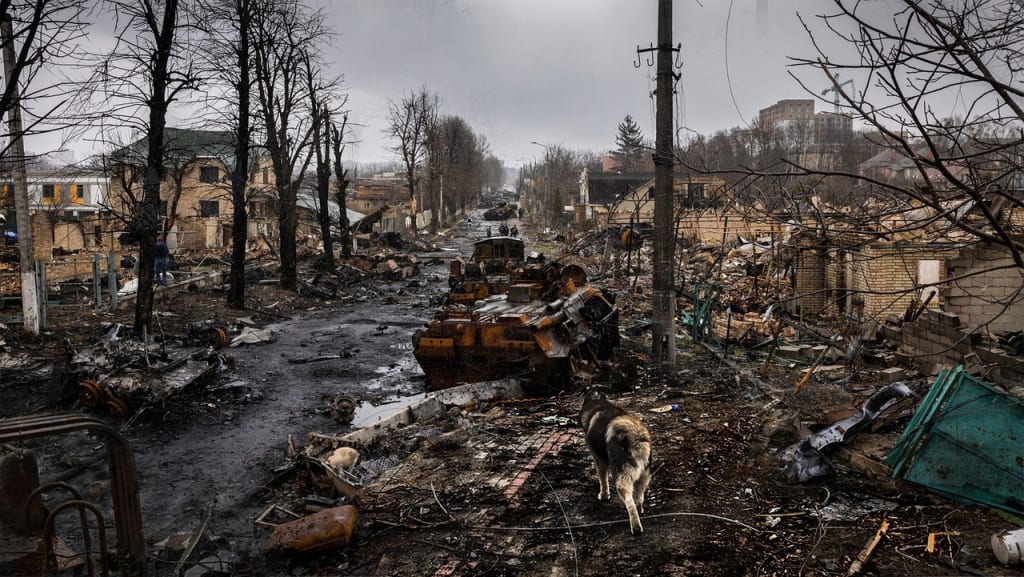
Wars have historically been portrayed as heroic or necessary endeavors, waged in the name of national pride, security, or territorial expansion. However, beneath the surface of the propaganda and political rhetoric, wars often devolve into senseless conflicts that inflict immense suffering on ordinary people. The ongoing conflicts like the Russia-Ukraine war, Israel-Lebanon tensions, and many such wars across the globe bring to light the tragic consequences of warfare, with innocent civilians paying the heaviest price.
The majority of ordinary citizens, those who bear the brunt of war, never desire conflict. Wars are often fueled by political leaders and higher-ups who have their own strategic ambitions.
Shall we now explore the tragic consequences of modern wars?
The Russia-Ukraine War: A Modern Tragedy
The conflict between Russia and Ukraine, ignited in 2014 and intensified with the full-scale invasion in 2022, is a glaring example of the meaninglessness of war. Initially framed as a strategic endeavor by Russia to secure its geopolitical interests and safeguard its sphere of influence, the war quickly spiraled into a humanitarian disaster.
As of now, tens of thousands of civilians have lost their lives, with millions displaced, their homes turned into battlegrounds. Hospitals, schools, and essential infrastructure have been destroyed, leaving citizens without access to basic needs such as healthcare, electricity, and water. The psychological toll of war on children, families, and communities is immeasurable. Countless individuals experience trauma that will last for generations.
The war in Ukraine underscores the tragic truth that civilians, who often have little or no involvement in political decision-making, are the primary victims of these conflicts. Ordinary Ukrainians did not seek war. All they wanted was peace, prosperity, and stability for their families.
However, they now find themselves at the mercy of artillery strikes, missile barrages, and displacement. It is a heart-wrenching reality, that the desires of everyday people for peace are often disregarded by those in power who push for military action. While politicians and military leaders may argue over strategic advantages, the citizens trapped in the conflict face the harsh reality of survival amidst the chaos.
The Israel-Lebanon Conflict: Innocents in the Crossfire
Similarly, the Israel-Lebanon conflict, with periodic escalations of violence, reveals the deep pain and futility of war. The 2006 war between Israel and Hezbollah, the militant group based in Lebanon, is an example where civilians on both sides suffered immensely. Israeli airstrikes and Hezbollah rocket attacks led to the deaths of hundreds of civilians and the destruction of homes, schools, and infrastructure. Many people in both Israel and Lebanon had no desire for this conflict, yet they were victims of political and military decisions beyond their control.
In southern Lebanon, entire villages were decimated, and thousands of innocent people fled their homes, seeking refuge in makeshift shelters. The same was true for Israelis living in northern cities who faced daily rocket fire, leaving families shattered and communities devastated.
Again, the question arises: Why must ordinary people suffer for the political ambitions of a few?
The situation is further complicated by deep-rooted historical tensions, but one thing remains clear—ordinary Lebanese and Israelis overwhelmingly desire peace. Both populations wish for a future where their children can grow up in safety, where their livelihoods are not disrupted by war, and where dialogue, not violence, prevails.
Innocent Lives: The Collateral Damage of War
In both of these examples, and in numerous other conflicts around the world, innocent civilians are often referred to as “collateral damage.” This term coldly obscures the human suffering involved. Mothers lose children, families are torn apart, and communities are destroyed. For those who survive, the trauma lingers for years, if not for lifetimes.
This suffering is not limited to physical destruction; the emotional and psychological toll is profound. Children growing up in war zones often develop mental health issues, including anxiety, depression, and post-traumatic stress disorder (PTSD). Families are forced to flee their homes, becoming refugees, often with nowhere to go and no hope of returning to their former lives. In many cases, the economic impact of war pushes entire regions into poverty, with the effects lasting for decades.
What is more tragic is that these innocent people have little say in the decisions that lead to war. They are ordinary men, women, and children who simply wish to live peaceful lives. They do not seek power, territorial gain, or political dominance. They want the same things we all do: security, happiness, and a future free of fear. Yet, it is they who are often caught in the crossfire of wars instigated by those in positions of power.
Higher-Ups and the Lust for Power
There is a critical question that arises from examining the nature of war.
If ordinary people do not want war, why does it happen?
The answer often lies in the ambitions of political leaders and those in positions of power. Wars are rarely, if ever, started by the masses. Instead, they are instigated by individuals or groups with political, economic, or ideological goals.
In the case of Russia and Ukraine, for example, the war was framed as a necessary move by the Russian leadership to preserve their strategic interests. Similarly, the tensions between Israel and Lebanon often stem from the actions of political and military leaders who prioritize territorial control or ideological dominance over the well-being of their citizens. These leaders may claim to act in the national interest, but the reality is that the majority of ordinary people do not benefit from these conflicts.
In many cases, wars are also fueled by economic interests. The arms industry profits immensely from prolonged conflicts, as do certain political factions that stand to gain power or influence through the outcome of war. These motivations are far removed from the desires of ordinary citizens, who are left to suffer the consequences of decisions made by those in power.
A War-Free World is all we need
Given the overwhelming evidence of the devastation caused by wars, there is a crucial question that must be asked.
Is a war-free world possible?
The answer to this question lies not only in disarmament and diplomacy but also in changing the way we view conflict and the value of human life. A world without war would prioritize dialogue over violence, negotiation over aggression, and the well-being of ordinary people over the ambitions of political elites.
To achieve a war-free world, we must address the root causes of conflict, which often include economic inequality, political corruption, and the manipulation of public opinion. Leaders must be held accountable for their actions, and the voices of ordinary people {those who suffer most from war} must be heard in decisions about peace and security.
Moreover, the international community has a role to play in preventing wars before they start. This includes strengthening institutions like the United Nations and encouraging countries to abide by international law. Diplomacy and conflict resolution must be prioritized over military solutions, and the arms race that fuels global tensions must be halted.
Conclusion: Why We Need a War-Free World?
Wars, at their core, represent the failure of humanity to resolve its differences peacefully. They are a testament to the worst aspects of human nature—greed, fear, and the lust for power. But they are also a reminder of the immense suffering that ordinary people endure when leaders choose violence over diplomacy.
The Russia-Ukraine war, the Israel-Lebanon conflict, and countless other wars around the world demonstrate that innocent people, who want nothing more than to live their lives in peace, are the ones who suffer the most. It is time for the world to recognize that war is not the answer. A war-free world may seem like an idealistic dream, but it is one worth striving for. If not for ourselves, then for future generations who deserve to live in a world where their lives are not defined by violence.
Disclaimer: The views expressed in this article are intended to provide an informative perspective on the devastating effects of war and are not meant to undermine any specific government or leadership. The content is based on publicly available information and aims to promote peace and awareness.
This article was generated with the assistance of AI.
About the Creator
Mathi Surendran
I will be talking about the ways to earn money, mental and physical health, weight loss tips, and many more. I hope to throw light into your life so that you can make a new beginning. Travel along with me to visualize the dawn of your life.
Keep reading
More stories from Mathi Surendran and writers in Motivation and other communities.
How Your Brain Power Makes or Breaks Your Life
Your Mind is the Architect of Your Life Your brain power defines how you interpret, respond to, and shape your experiences. Your brain power plays a pivotal role in your life journey, be it striving for success in your career, nurturing meaningful relationships, or pursuing personal growth. In many ways, your brain power is the impregnable force that can either elevate or limit your potential.
By Mathi Surendranabout a year ago in Motivation
Hey Friend, Let's Make Mondays Your Secret Superpower (No Fancy Tricks Needed!)
Hey there! If you're anything like me, Mondays used to hit like a ton of bricks- that foggy feeling where the weekend's glow fades, and suddenly everything feels a bit overwhelming. But what if I told you there's a super simple way to flip the script? No apps, no complicated planners, just you, a quiet moment on Sunday evening, and one honest question: "What's the one thing my best energy should go into this week?"
By Arjun. S. Gaikwad3 days ago in Motivation
Smart phones, Humans and Aliens.
WARNING. I will be tapping into one of your favorite creative tensions: The absurdity of humans worshipping their glowing rectangles as if they were tiny oracles. There’s something deliciously poetic about that contradiction, and it lends itself beautifully to an instructive proviso.
By Novel Allen4 days ago in Poets


Comments
There are no comments for this story
Be the first to respond and start the conversation.