
It is just like you to set up this kind of mischief five years after you die.
I got your letter this morning. And the notebook. See, I'm already using it.
So. There is $20,000 squirreled away for me you say. How did you manage to save that kind of money? You always did say you were getting far more in benefits than you could possibly spend. What a shame you didn’t have it when you needed it. What other life would you have had?
There is a catch though. I only get the money, if I write a book, and publish it, within the next two years. Otherwise, you’ve instructed the lawyer to put it all to the pet fostering charity.
I can see your wry smile now, winking challenge at me through a swarm of floral print and borrowed cats you’ve basically stolen from across the neighbourhood. I can see you thinking, “Now, that’s got her going.”
What you could never have guessed is that I would receive your package while getting two kids ready for school in Orkney. Orkney of all places! Wind ravaged, ancient and stinging with memory. And two kids!
In my letters I always tried to share the smallest moments with you. I wanted to give you an escape from the armchair you sat, or slept in, day and night. I wanted to document all the nuances and fleeting moments I knew I’d forget. If I have any aim in life, it has been to collect rocking chair moments. Things I can look back on when I become you, unable to move from my chair. My notebooks are like your thousand trinkets and ornaments crammed around your tiny council house. Each carries a person loved, a place visited, a joy experienced, a sadness felt.
You say in your letter, that, now I am 40, I need to think harder about my rocking chair moments. I need to imagine having a conversation with myself, as if I really were the old lady in the rocking chair, day and night, with nowhere to be except inside my own thoughts and memories. What would I tell my younger self? Would I be content with my choices? Would I wish I’d been braver, sooner?
I wish you had kept a diary I could read. Every Friday I would sneak a Dictaphone into my bag and drink tea with you. You wouldn’t give me the best stories when you knew I was recording you. Twenty years after you left Orkney, you still didn’t want to be seen as a gossip. I love that I can still hear your voice, and the cats mewing, but I wish I could have read your uninhibited words. I wish I could have known how you were really thinking and feeling, at 40. I wish I had your notebooks to read.
You once told me about your first job after leaving school at 14. You were a cleaner for the local vicar. He was a Grass Widower.
“A what? I asked, laughing.
“That means, he’s not a widower, he’s a grass widower. His wife’s left him.”
Funny thing is that is exactly what you turned Grandad into. Not that he was ever a Grandad to me. I only met him twice. You told me all about your useless husband with the same mix of admiration and sadness I feel about mine. He was talented, but too often drunk. He was a sought after musician with a wandering eye. He was an absent father much in demand in other people’s houses because of his fine company. He left you lonely and worn out with four kids. When, at 60, you got your national pension and had secure, independent means for the first time in your life, you left, and never went back.
Did you have an inkling that one day I’d be wondering how strong I am? What choice I should make? Is that why you waited to send me this until you were long gone? Like a kind of inspiration and insurance that you never had.
Sorry to report we hit rough times in Newfoundland. I do love my outports don’t I. Must be my Orkney blood. One morning in Tickle Cove the heat had raised a greyness in the sky, wiping out the sun. The kids were sat right in the middle of the slip, his curly blonde head tipped in toward her wispy one, almost meeting. They were far enough from the water to give me a head start to catch them.
After a while two older ladies emerged from the pond trail and wandered by.
“Oh my, look at those curls!”
I smiled with indulgence, for them and myself. I knew the exchange to come. Am I visiting? Are they twins? Where are you from? How long have you been here? But then they ask,
“Is your man working?”
My world was peeling as quickly as the slipway.
“He was.”
Can they tell? I wondered. My relationship with John still functioned, but somehow, like the day, the colour and noise and gone out of it. I was left with a muted, tired, cracked reality. Our two incredible kids played on, knowing and caring nothing about the state of finances, or love, so long as there were sticks in the world and crevices to poke them in.
The women smiled to each other and one replied simply,
“That’s Newfoundland”.
In a land which has talking at its heart, where questions are asked in Tim Horton queues, and on the beach, in bank lines and over shopping tills, somehow I had a conversation of eight words that said everything there needed to be said about my life, with women who didn’t need to know any more to understand it all. It was exuding from me. The fear and frustration of unemployment and debt. The burdens and drudgery of motherhood. The loneliness of living with a husband whose mind is always apart from the family.
We had no choice but to try somewhere new but it took two years of visas and paperwork and house selling to set it up, by which time, John was working again. Azerbaijan this time. I know. He’s the most well-travelled person for someone not at all interested in seeing anything, or meeting anyone.
I travelled alone with the kids back to the UK. They were asleep when we landed and taxied across Heathrow, so I turned my phone on and watched the messages of good luck and goodbye come pinging in. There was a message request from someone I didn’t know. I opened it without thinking.
“Dear Joanna,
My name is Brenda and I worked with John in Baku. I am writing to tell you that while John was working in Baku, he and I were in a relationship in every sense of that word.”
There was more. Mainly excuses of ignorance from her. I sat very still. I was breathing very deliberately. Through my nose. Like a lioness calculating her prey.
Lockdown was chasing our heels too as we got back to Scotland. Turns out the virus was serious after all. Turns out I won’t be able to stay at home with my parents while we work out where to live. Turns out I had four days to find a furnished house that we could afford, available immediately, willing to do month to month rent for an undefined period. Turns out I was leaving at 6am in my Mother’s car, with two kids, three suitcases, a box of books and toys and moving to Orkney before the island pulled up its drawbridge. Turns out our move back from Canada isn’t as a family.
I think you loved my letters from Alaska best of all. Because of the dogs mainly, and because you loved Russian literature and Doctor Zhivago made you fall in love with winter. Because you knew all about the Gold rush because so much of Orkney is bound up with great arctic exploration. But mainly I think you loved those letters because you could feel my contentment and it reminded you of how it feels to be free in a landscape.
I think my letters from Alaska reminded you of cycling over the hills of Orkney on the post office bike, delivering letters and picking up news, while the lapwings soared and sang all around. I get that now. The fields around us are full of nests: lapwings, oyster catchers, ducks, and curlews. I stand and everything whirls in a song of life. The light is stretching until, like Alaska, it will never set, only fade to orange and return.
Ah, here is a letter I sent you tucked into this page. Your favourite one you write. Is this where you want me to start, or to remember?
Feb 24 2007
Homer, Alaska
Yesterday was again perfect; as if the whole day had been captured in the slow slide of a glacier and we were all frozen inside its blue stillness. My society here is mainly canine because I am learning to mush, as well as to live in winter. The pleasure of my Alaskan experience is expressed by light. The mingling expirations of the dogs, shine with angel like intensity in the back light of winter sun. It is as if all my hopes and struggles and wishes are there too, in among the breath and snow and sunlight. That is what this landscape is for me. Not even Alaska. It just happens to be packaged in this place called Alaska, but this terrain: things revealed by the cold that normally are invisible. What I am indulging in is an expression of the essence of life; dogs breathing out, and running in sunlight.
You always wanted me to run in sunlight.
There is a moment in dog sledding, at take-off, as the dogs are yanking hard against their traces and whining and howling to be let free to run. Everything is hyped and noisy and chaos, but the musher has control. It is up to me when I release the brake and head away.
Our family can be traced at least 800 years on this same soil. You never fled it. You fled him. You rewrote your life at 60 and left your island behind, never to go back until ashes in an urn.
It took a long time to decide what to do with you. You never really said. You aren’t with your husband now. You are with your parents. It took as long to organise that Hamish was already learning to walk when we scattered you. He thought you were the best sand pit. You would have loved watching your great-grandson throw your ashes up into the constant Orkney wind, setting you free across your favourite hills, while the birds you never forgot sang. It makes my heart happy that you had a chance to meet. To touch. Maybe you were watching.
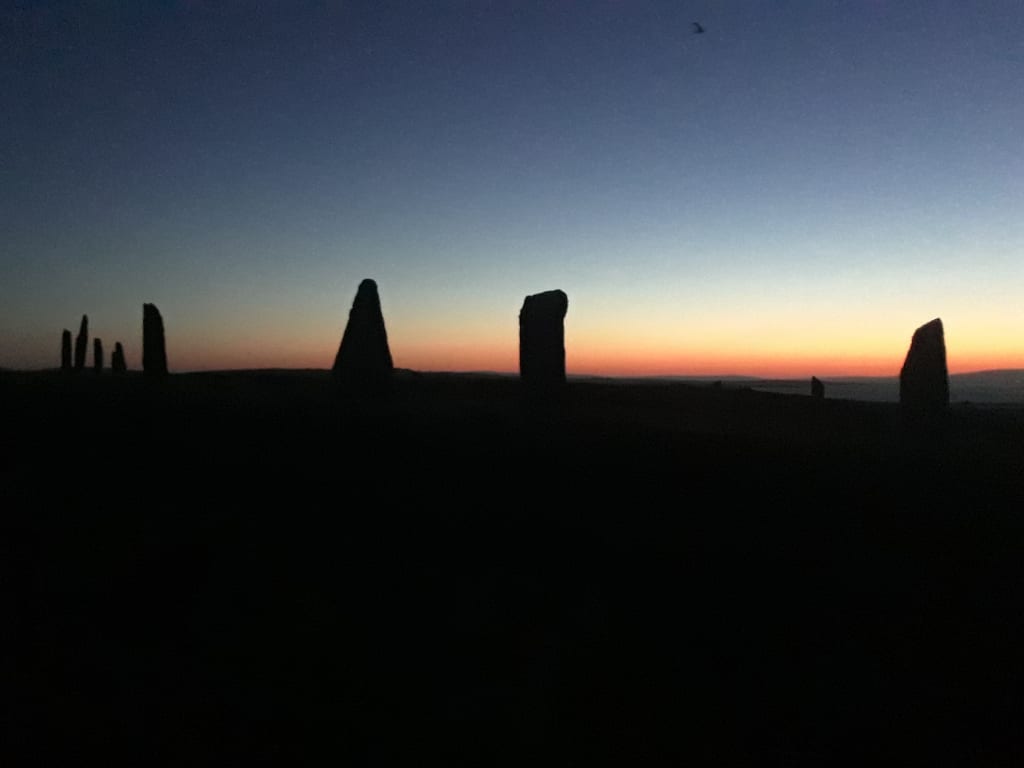
Orkney is a place of circles; stone circles, Neolithic burial tombs and villages, tidal whirlpools, birds wheeling, farming cycles. The sun talks so loudly here in its sunset and sunrise, and has done for so many human generations, you can’t help but know that everything passes and becomes irrelevant, even our own pain. It is a good place to meet yourself, stand still, and evolve. I took the kids to Ring of Brodgar, at midnight on midsummer. We watched the sky turn North Sea blue and quickly warm again to pink. The world was in lockdown. We were free.
I stand pegging washing, kids running between the daffodils just bursting into yellow, hearing all life around me. It is up to me when I let go, let the dogs run and let myself be pulled across the landscape. I hear you saying, ‘don’t settle for easy or comfortable’. Think of the story you want to leave your kids. Open the notebook. Live it. Write it.
About the Creator
Keep reading
More stories from writers in Motivation and other communities.
Building a Self-Running System
Managing money doesn’t have to feel overwhelming, exhausting, or emotionally taxing. For most people, financial stress doesn’t come from a lack of self-control- it comes from not having a reliable system in place. When your finances depend on memory, motivation, and constant choices, errors are almost guaranteed.
By Emma Ade5 days ago in Motivation
TUS NUA - ch 49
TUS NUA – ch 49 New Beginnings – Mia and Midnight (*)(*)(*) As Mia spoke on the phone to Ali’s sister, Ellen, Finola slipped quietly away and walked to the stream behind Tus Nua. Carefully, she put a block on her family so no one could know what she was about to do.
By Margaret Brennanabout 11 hours ago in Fiction



Comments
There are no comments for this story
Be the first to respond and start the conversation.