
The Girl Who Walked Through Fire: How Charlize Theron Burned Down the Box Hollywood Built
She was too poor for food, too broken for ballet, and "too pretty" to be taken seriously. This is the brutal, untold truth of how Charlize Theron turned trauma into an empire.

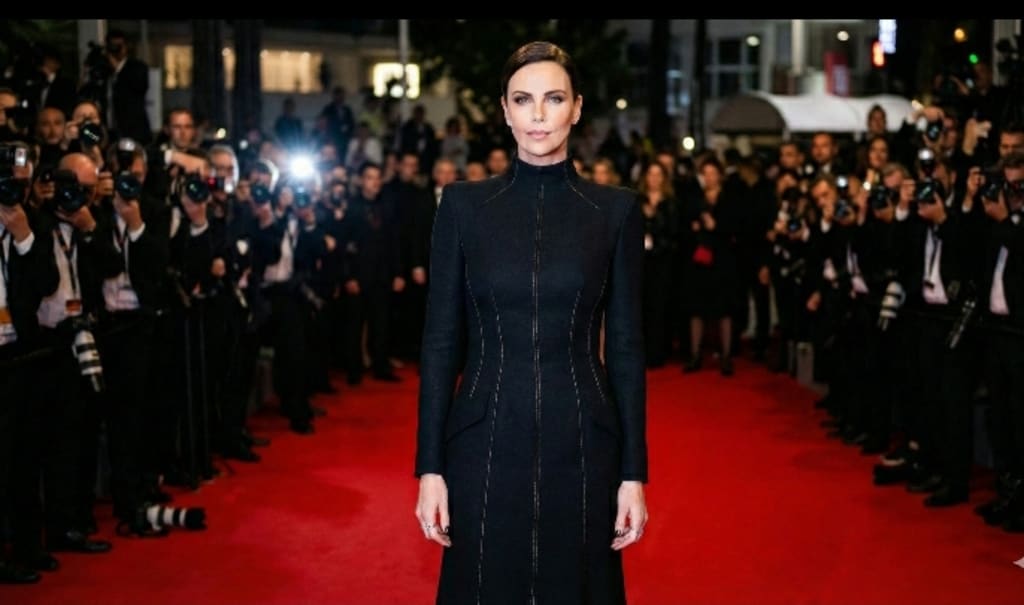
If you look at Charlize Theron today, you see the epitome of gold-plated Hollywood success. You see the Dior campaigns, the Academy Award, the net worth estimated in the hundreds of millions, and the action-star physicality that rivals any man in the industry. You see a woman who commands a room simply by walking into it.
But if you look closer, past the airbrushing and the red carpet glare, you will see something else. You will see a survivor.
Most celebrity success stories follow a comfortable script: a dream, a struggle, a big break, and a happy ending. Charlize Theron’s story is not that script. Her story is a jagged line cut through violence, poverty, and a refusal to let the world tell her who she was.
Before she was Furiosa, before she was Aileen Wuornos, and before she was the face of J'adore, she was a teenage girl on a farm in South Africa, watching her mother pick up a handgun to save their lives.
This is not just a story about acting. This is a blueprint for how to survive when life tries to kill you, and how to thrive when the world tries to ignore you.
Part I: The Night Everything Changed
To understand the ferocity of Charlize Theron, you have to understand the soil she grew up on. She was raised in Benoni, near Johannesburg, South Africa. It was the 1980s. The country was in turmoil, but inside the Theron farmhouse, a different kind of war was waging.
Her father, Charles, was a charismatic man when sober, but a monster when drunk. Alcoholism is a thief; it steals personalities and replaces them with violence. Charlize grew up navigating the eggshells of his temper. She learned early on that safety was a luxury, not a guarantee.
Then came the night of June 21, 1991.
Charlize was 15 years old. Her father returned home after a night of heavy drinking, accompanied by his brother. He was agitated, aggressive, and armed. He fired shots through the locked gate. As Charlize and her mother, Gerda, barricaded themselves in a bedroom, he fired three bullets through the door.
Miraculously, none of the bullets hit them. But the intent was clear.
In a moment of terrifying clarity—the kind that splits your life into "before" and "after"—Gerda Theron reached for her own handgun. To protect her daughter, she fired back. Charles Theron was killed.
There were no charges. The authorities ruled it clearly as self-defense. But the trauma of that night didn't end with the gunshot.
The Refusal to Be a Victim
Most people would be crushed by this. It is the kind of baggage that leads to a lifetime of therapy, addiction, or retreat. But Gerda Theron raised Charlize with a specific, ironclad philosophy: You do not wallow.
There was no time for self-pity. They were left with a farm that was drowning in debt and a mountain of cleanup. Charlize watched her mother take over the construction business, running sites in a male-dominated industry, fighting tooth and nail to keep food on the table.
Charlize didn't just inherit her mother's eyes; she inherited her spine. She learned that when the worst thing imaginable happens, you don't lay down and die. You get up, you dust off, and you keep moving.
"I survived that, so I can survive anything."
This became the silent mantra that would carry her to America.
Part II: The Death of the First Dream
Charlize didn’t want to be an actress. She wanted to be a dancer.
Ballet was her escape. It was rigorous, disciplined, and silent—a stark contrast to the chaos of her childhood home. At 16, shortly after her father’s death, she won a modeling contract that took her to Europe. She hated modeling ("I felt like a mannequin," she later said), but it was a ticket out.
Eventually, she landed in New York City, accepted into the prestigious Joffrey Ballet School. This was it. The plan. The escape velocity.
She lived in a windowless basement apartment. She was freezing cold in the New York winter. She had no money. But she danced until her feet bled because dancing meant she wasn't just "the girl whose dad died." She was an artist.
And then, the snap.
A knee injury. Not a minor sprain, but a career-ending devastation. The doctors were blunt: You will never dance professionally again.
At 19 years old, Charlize Theron was retired.
The "Go Home" Ultimatum
She fell into a deep depression. She was living on a diet of stolen bread baskets from restaurants because she couldn't afford groceries. She called her mother in South Africa, weeping, ready to give up and come home.
Gerda Theron, the woman who had stared down a gunman, wasn't about to let her daughter quit. She told Charlize:
"Either you figure it out, or you come home and you can sulk in South Africa."
She bought Charlize a one-way ticket to Los Angeles. Not because Charlize had an acting plan, but because Los Angeles was warm, and at least she wouldn't freeze to death while she was broke.
Part III: The Bank Incident and the "Talent" of Rage
Hollywood is full of stories about actresses discovered in malt shops or walking down the street. Charlize Theron was discovered screaming at a bank teller.
It was 1994. She was living in a cheap motel on Hollywood Boulevard. She had exactly zero dollars to her name, save for a check her mother had sent her from South Africa to help pay rent.
She walked into a bank on Hollywood Boulevard to cash it. The teller refused. It was an out-of-state, international check, and the bank wouldn't clear it.
For the teller, it was policy. For Charlize, it was survival. If she didn't cash that check, she didn't eat. She didn't sleep under a roof.
The desperation triggered something primal in her. She didn't cry; she exploded. She unleashed a verbal tirade, screaming, pleading, and arguing with a ferocity that stopped the entire lobby.
Standing in line behind her was John Crosby, a talent agent.
He wasn't looking for a "pretty face." He was looking for presence. He watched this young woman command the attention of everyone in the room with raw, unfiltered emotion. He stepped in, helped resolve the issue, and handed her his card.
He signed her not because she was beautiful, but because she was ferocious.
Part IV: The Golden Cage
Getting an agent was the easy part. Getting respect was the war.
Hollywood in the late 90s had a specific box for women who looked like Charlize Theron. The box was labeled: The Hot Wife, The Girlfriend, or The Femme Fatale.
She was tall, blonde, and statuesque. Directors looked at her and saw a prop. They didn't care that she had witnessed death or survived poverty. They just wanted her to walk in slow motion and look good in a dress.
She was cast in movies like 2 Days in the Valley, where her role was essentially to be sexy. She booked The Devil’s Advocate and Mighty Joe Young. She was famous, yes. She was making money, finally.
But she was miserable.
She realized that being "the pretty girl" was a trap. It was a golden cage that would limit her career to five years before the industry replaced her with the next young blonde. She wanted to do real work. She wanted to play messy, broken, complicated human beings.
She fired her agent. She started turning down the "girlfriend" roles. Her team told her she was crazy. They told her she was sabotaging her own momentum.
Charlize didn't care. She was looking for a match.
Part V: The Monster
In 2003, the script for Monster crossed her desk.
It was the true story of Aileen Wuornos, a Daytona Beach prostitute who murdered seven men and was executed in Florida. It was a dark, gritty, low-budget independent film.
Nobody wanted Charlize for the part. The financiers laughed. "Charlize Theron? The girl from the Dior ads? You want her to play a homeless serial killer?"
Patty Jenkins, the director, saw something else. She saw the grit beneath the polish.
Charlize knew this was her moment to burn the box. She didn't just "act" the part; she physically destroyed the image Hollywood had built for her.
* She gained 30 pounds, eating donuts and potato chips until she felt sick.
* She shaved off her eyebrows.
* She wore prosthetic teeth.
* She fried her hair until it was brittle and dead.
* She studied Wuornos's mannerisms until she walked, talked, and breathed like a woman on the edge of sanity.
On the first day of shooting, the crew didn't recognize her. She wasn't Charlize anymore. She was Aileen.
The Risk That Paid Off
The performance was terrifying. It wasn't just an impersonation; it was a channeling of rage, abuse, and tragedy—emotions Charlize knew intimately from her own childhood, albeit in a different context. She humanized a monster without excusing her.
When the movie premiered, the industry was stunned into silence. The critics who had dismissed her as "eye candy" were forced to write apologies.
Roger Ebert called it "one of the greatest performances in the history of the cinema."
Charlize swept the awards season. Golden Globe, SAG Award, and finally, the Academy Award for Best Actress.
She stood on the stage, gold statue in hand, and thanked her mother. The woman who taught her to survive.
She had proven the quiet truth: If you rely on your looks, you have an expiration date. If you rely on your talent, you are timeless.
Part VI: Furiosa and the Action Icon
Charlize could have gone back to the "pretty roles" after Monster. She had her Oscar; she had nothing left to prove.
Instead, she pivoted again. She decided to invade the one genre that was even more hostile to women than drama: Action.
In Mad Max: Fury Road, she wasn't the damsel. She was the Imperator. She shaved her head buzz-cut bald. She got into the dirt. She fought Tom Hardy toe-to-toe.
Filming Fury Road was a nightmare. It was months in the Namibian desert. It was grueling physical labor. But Charlize thrived in the chaos. When the movie was released, it wasn't Max's movie. It was Furiosa's. She became an instant icon of feminist power.
She followed this with Atomic Blonde, where she did 98% of her own stunts. She trained with the guys who trained Keanu Reeves for John Wick. She cracked teeth. She bruised ribs. She showed the world that a 40-year-old woman could be just as lethal, just as brutal, and just as captivating as any male action star.
She wasn't just acting in action movies; she was producing them. She took control of the narrative behind the camera, ensuring that women were portrayed not as victims, but as warriors.
Part VII: The Circle of Impact
Perhaps the most poignant part of Charlize Theron’s story is that she never severed the root. She is physically in Hollywood, but her heart remains in South Africa.
She founded the Charlize Theron Africa Outreach Project (CTAOP). This isn't a vanity charity where she shows up once a year for a photo op. She is deeply invested in the fight against HIV/AIDS and gender-based violence in her home country.
She uses her platform to speak for the girls who are currently living the life she escaped. She speaks for the teenagers living in fear of domestic violence. She puts her money where her mouth is.
When the world went into lockdown and domestic violence rates spiked, Charlize launched a global campaign to fund shelters. She remembered the nights barricaded in her bedroom. She knew that for many women, "stay home" didn't mean "stay safe."
The Takeaway: Your Past is Your Training Ground
Why does Charlize Theron’s story matter to you?
Because we all have a "Benoni." We all have a "knee injury" that killed our first dream. We all have a "bank teller" moment where we feel unheard and desperate.
Charlize Theron teaches us three critical lessons:
1. Trauma is Fuel, Not an Anchor.
Charlize didn't let the shooting of her father define her as a victim. She used the survival instincts forged in that fire to navigate a ruthless industry. She took her pain and sublimated it into art.
2. Reject the Labels.
The world will try to categorize you. They will say you are "just" a mom, "just" an employee, "too old," or "too inexperienced." If Charlize had listened to Hollywood, she would have played the "hot girlfriend" until she aged out at 35. Instead, she burned the box. She forced them to see her differently.
3. Resilience is a Muscle.
You don't just "have" resilience. You build it. You build it when you eat bread from a basket because you’re broke. You build it when you scream at a bank teller because you refuse to be ignored. You build it when you shave your head and drive a war rig through the desert.
Charlize Theron isn't lucky. She is prepared.
She looked at the hardest moments of her life and decided that they would not be her tombstone—they would be her stepping stones.
So, the next time you feel like the world is closing in, or that your past is too heavy to carry, remember the girl from the farm in South Africa. Remember the one-way ticket. Remember the Oscar.
And remember that the only person who gets to decide how your story ends is you.
Ready to rewrite your own narrative?
The difference between a victim and a protagonist is action. Charlize Theron didn't wait for permission to be great; she took it.
What is the "box" that people have put you in? And more importantly—do you have the matches to burn it down?
If you found this story inspiring, share it with someone who needs a reminder of their own strength.
About the Creator
Frank Massey
Tech, AI, and social media writer with a passion for storytelling. I turn complex trends into engaging, relatable content. Exploring the future, one story at a time
Keep reading
More stories from Frank Massey and writers in Motivation and other communities.
The Monk in the Matrix: How Keanu Reeves Outlived His Own Ghosts
The harrowing and inspiring true story of Keanu Reeves, who endured the loss of his best friend, his child, and his partner, only to channel his grief into a discipline that redefined action cinema.
By Frank Massey 2 days ago in Motivation
One Hard Thing
Stop me if you’ve heard this one before: You have the number, you know your schedule- you’ve even picked out the perfect day and time to make this appointment. Shoot, you’ve even picked out alternative days and times just in case their schedules can’t accommodate you!
By Taylor Rigsby13 days ago in Motivation
How Golf Shapes Elite Decision-Makers
Golf offers far more than leisure and competition. For many executives and emerging leaders, the game provides a powerful training ground for strategic thinking, emotional control, and disciplined decision-making. Unlike fast-paced sports, golf demands patience, focus, and mental clarity. Therefore, leaders who embrace the game often discover valuable lessons that translate directly into professional success. Through thoughtful play and steady reflection, golf shapes habits and mindsets that strengthen leadership performance and personal growth.
By Paul Wiedmaier3 days ago in Motivation
Feelings Never Die
It is Valentine's Day again, and it bought back memories that were over fifty years old. It bought me back to 1971, and I woke up and I knew my baby was due today. I was big and pregnant, and I felt like I was about to burst wide open. Imagine my surprise when the doctor told my I had a due date of February 14. I couldn't believe it, and since my baby was due today, I felt I could indulge myself a bit. I had gained a lot of weight, and chocolate was on the no-no list, but I had came to the end of this pregnancy, and I hoped it would be okay, after all I would deliver this baby today. So I walked across the street to the grocery story, and bought myself, a peppermint patty, covered in chocolate, my favorite. Me and my Valentine's baby would enjoy it together.
By Susan Payton2 days ago in Fiction




Comments
There are no comments for this story
Be the first to respond and start the conversation.