
The Generational Obsession with Body Image
Gen X, Millennials, and Gen Z may all seem very different, but one thing bridges the gap: body image.

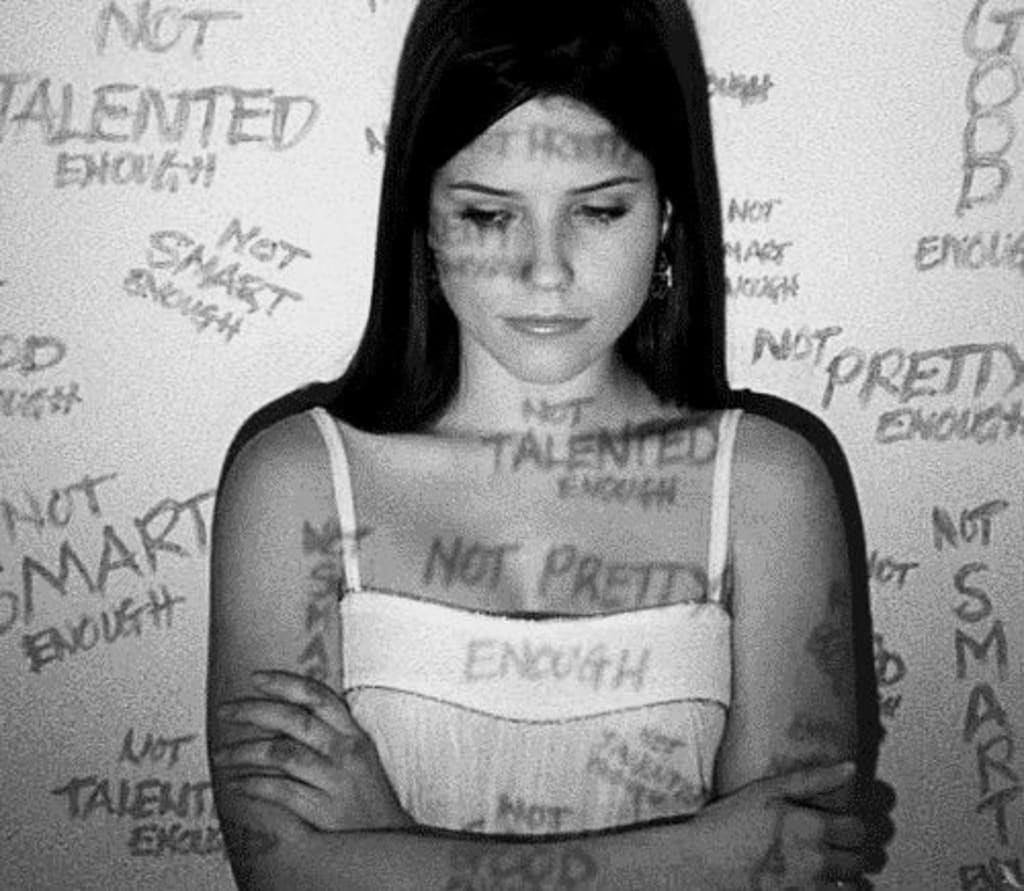
I believe that body image has never been a more prevalent issue in our society than it is right now.
We can’t even go to the grocery store without seeing a plethora of magazines promising us a new “healthy” body by enticing us with flashy language such as “melting,” “watching,” and “shedding” the weight off. We can’t stand with our delicious food moving up the line without seeing at least one “hard hitting” photograph of a healthy celebrity with some kind of caption stating how they are gaining weight, or are too “fat”. Let’s not forget the “calorie counting” captions that captivate us and then catapult us into math figuring frenzy (I mean if we didn’t hate math as it was already…)
Sometimes, however, there’s the reverse: a healthy slim celebrity deemed “anorexic” or possibly “bulimic” all because of their body type. Unfortunately, there are even some cases where the media and participants shame an individual for losing weight. Such as the case for “plus-size” model Ashley Graham or even when hip-hop icon Missy Elliot lost weight due to Grave’s Disease.
Graham came on the scene as a model for Lane Bryant as a size 18 model and eventually she skyrocketed herself into superstardom shortly thereafter. Garnering millions of followers across the globe for being what society considers, “plus-size”, Graham effortlessly embraced her sexuality on covers such as Sports Illustrated, showing the world that terms such as “sexy” and “hot” didn’t have to be exclusively correlated to the thinner looking women that we usually see or think of when we hear the word "model".
Graham was praised by Millennials for her weight because of the confidence she exuded on and off the runway, inspiring many young females that they were beautiful just as they were.
Missy Elliott is renowned for her style just as much as she is for her eclectic talent in the rap world. Bursting on the scene in the 90’s with her album “Supa Dupa Fly”, Elliott possessed a style all of her own that became a trademark image. One of the facets of her image: her body type. The public couldn’t get enough of the fact there was a new, innovative, groundbreaking rapper that didn’t look like the next Foxy Brown or Lil’ Kim. For the first time, there was a prominent female rapper who could inspire confidence in a new way for Gen X women who felt they didn't "fit the mold" enough to be a confident woman.
Unfortunately, Graham and Elliott have been wrongly shamed for seemingly losing weight. Graham, after posting pictures on her Instagram and Elliott because of pictures posted online after her battle with Grave’s Disease. They have received numerous accusations of “betraying fans”, “conforming to society’s standards”, and “not being comfortable in their own skin”. they have been badgered and harassed in online magazines, papers, blogs, etc. Graham looked slimmer in a few pictures that she was proud of and Elliott looked thinner due to her disease.
It appears that it doesn't matter the reason, it just matters the result.
Generation Z is no exception. For the generation that is supposedly home to the “woke” class, they are currently giving Ariana Grande the same grading rubric as the generations before. Cultural pop icon Ariana Grande is facing backlash for pictures she happily posted after her rehearsals of the production “Wicked”. With Gen Z fans imploring her to “please eat something!” after looking slightly more gaunt than her usual petit frame showcases.
These stories are written in the name of “real” photojournalism. As we sit there waiting in the checkout line for our food, we subconsciously move our hands across our waistline as we read those bright yellow captions. We see the opinions people have dancing in the bright yellow lights of the page and with each selling issue we see those opinions more and more solidified into facts. We see those unflattering pictures broadcasted to the entire public and the more we stare at those pictures of what we thought were healthy celebrities the more they begin to morph into something disgusting and too vile for anyone to like.
All while the food that now doesn’t even look that good anyway is being totaled up, we flip through these magazines because we are interested in what else is highlighted “terrible” in the glow of those capital letters yelling cautionary tales at us on the front page. Tales that become ingrained into our minds and projected through our eyes...becoming the only things we see.
The other article next to the actress who you thought was beautiful before is talking about how she should really should count her calories the correct way and have portion control. That article a few pages ahead shows how the new thing is having surgery to morph your natural body type into something more appealing and desired. In today’s world, it’s the “hourglass”, women by the masses are paying thousands for enlarged breasts and butts now. The next one is how men can get bigger muscles, what women want in men, how they can be seen as “The Boss”, and become more appealing by using these tips and tricks…because everyone has the ability to be “perfect”.
Once the objects that we have regrettably paid for are at home in our kitchens we stare at them with one hand moving consciously across our stomachs and in the other, an app, to count all of those calories that we hesitate to put into our bodies. Unfortunately that hesitation turns into permanent abstaining from eating over the course of what was supposed to be only a few days, but, those days have turned into a few weeks and for some of us those days go on for months.
For months individuals starve themselves. For months individuals avoid mirrors because they can’t stand looking at themselves. For months individuals avoid going out in public or being seen by their friends all because they are afraid they aren’t society’s idea of “beautiful”.
These individuals could have been or can be the happiest, most kind, genuine people in your community. These individuals could be your friends who, to you, are the most beautiful souls you have ever come across. Yet, they could be hurting so much inside because they don’t think they fit what “beautiful” is.
Beauty is not a number. Beauty is not dictated by what those flashy and bright yellow captions say. Beauty is not how you look. Beauty is what you bless the world with everyday you wake up. Never deprive the world of such a genuinely beautiful gift as being who you are because there is a calling inside of you that no one else can answer. A calling that rejects the generational spotlight of body image.
As you answer the call, you find that the next time you look in the mirror you begin to smile no matter your shape or size because you know you are doing beautiful work in this life given to you.
About the Creator
Remington Layne
I've a passion for communication with a mission to help people understand key concepts in body language and speech using your favorite shows/movies to illustrate how you can better understand and be understood! Grab a snack and let's go!
Keep reading
More stories from Remington Layne and writers in Motivation and other communities.
7 Things You'll Learn When Starting Over
1. Stop Expecting, Just Enjoy And Be Your Honest Self. Everything Will Be Alright as Long as These Two Things Are Done. This may sound like some hippy shit at first but I promise you this is the one rule of life that has remained consistent for me.
By Remington Layne3 years ago in Motivation
If Tears Could Speak
If Tears Could Speak Subtitle: The Language We Never Learned to Hear There are some pains in this world that never learn how to scream. They sit quietly behind brave smiles, hiding in the corners of restless eyes. And sometimes, when silence becomes too heavy, they escape—not as words, but as tears.
By Samaan Ahmad6 days ago in Motivation
The Bridge of Tomorrow
In a small European town tucked between green hills and a quiet river, there lived a young man named Elias. The town was famous for its old stone bridge, built centuries ago. People said the bridge connected not just two sides of the river, but two different futures. One side led toward comfort and routine; the other toward uncertainty and change.
By Iazaz hussain4 days ago in Motivation




Comments
There are no comments for this story
Be the first to respond and start the conversation.