
The Fake Face Era: When Beauty Becomes a Digital Illusion
Behind the Mask: The Truth About Fake Faces in the Digital World
The Fake Face Era: When Beauty Becomes a Digital Illusion
By Muhammad Ibrahim
---
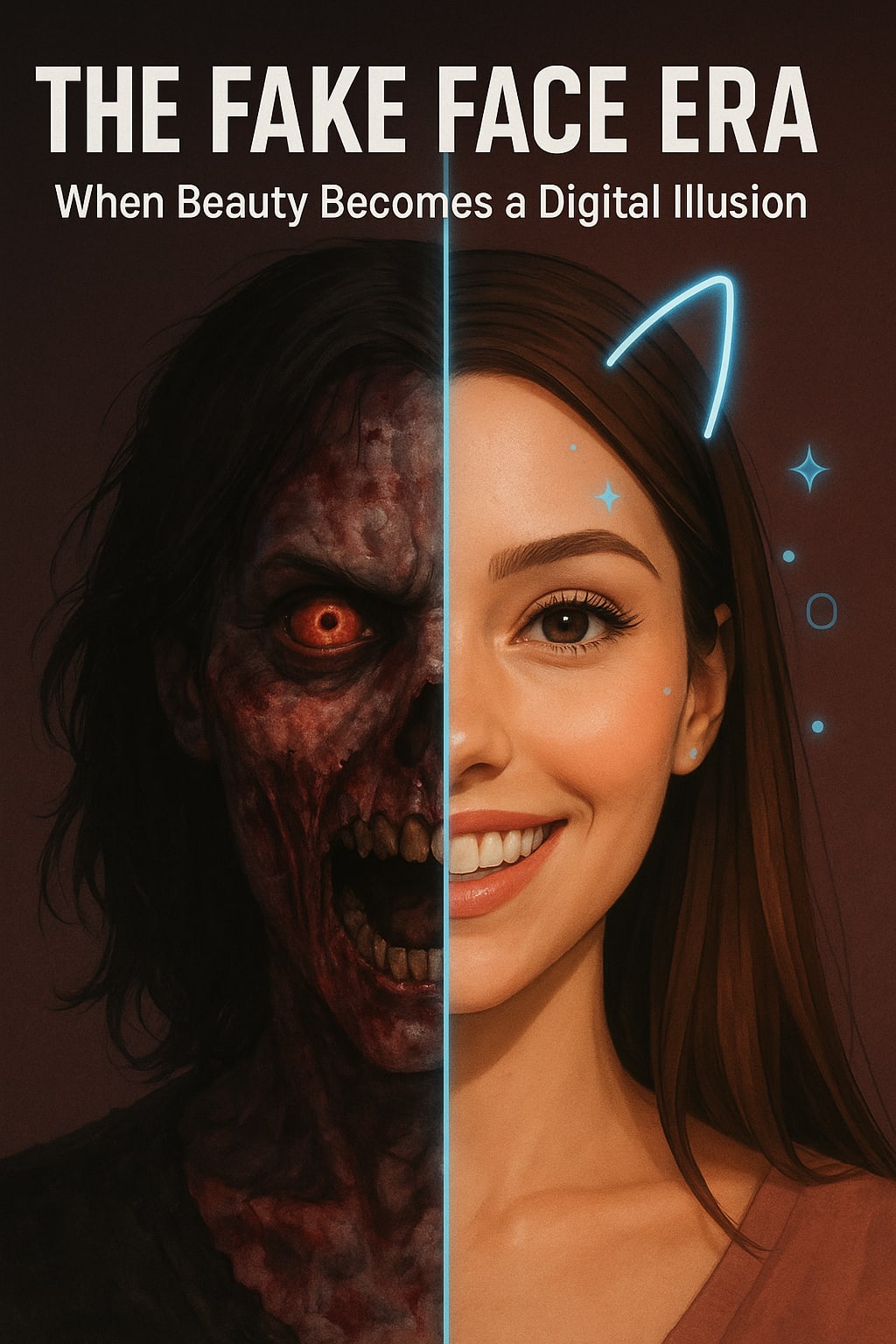
In today’s hyper-connected world, where photos and videos dominate every platform, appearance has become a digital currency. But the faces we see online – flawless, symmetrical, glowing – are rarely real. Welcome to the Fake Face Era, where beauty is often just an illusion, crafted by filters, editing apps, and artificial intelligence.
From Instagram selfies to TikTok filters and deepfake videos, the line between real and fake has become dangerously blurred. What started as simple enhancements has transformed into a cultural crisis that affects self-esteem, relationships, and our perception of truth.
---
The Rise of the Fake Face
In the early days of social media, beauty filters were just a fun gimmick. A dog face on Snapchat, glitter eyes on Instagram – harmless entertainment. But as these technologies advanced, they became more powerful and more deceptive. Today, apps like Facetune, Photoshop, and TikTok’s “beauty mode” can alter your facial features in seconds:
Skin becomes smooth like porcelain
Eyes grow larger and brighter
Lips plump, cheekbones sharpen
Blemishes vanish, and wrinkles disappear
People now look at their filtered faces more than their real ones. Over time, this creates a disconnection between who we are and who we pretend to be.
---
The Psychological Impact
The fake face phenomenon is not just cosmetic – it’s deeply psychological. Psychologists have reported a sharp rise in “Snapchat dysmorphia” – a condition where individuals desire plastic surgery to look like their filtered selfies.
Common mental health effects include:
Body dysmorphic disorder (BDD)
Anxiety and social withdrawal
Depression and low self-worth
Obsession with likes, comments, and validation
When you constantly compare yourself to fake perfection, your real self never feels “good enough.” Teenagers, in particular, are the most vulnerable. Growing up in a world where fake is the norm, they begin to hate their natural faces.
---
The Illusion of Perfection
Social media has created a global beauty standard that is nearly impossible to achieve without digital help. The message is clear:
> If you want to be beautiful, you must be flawless.
This idea is dangerous. It tells people that pores, scars, uneven skin tones, or signs of aging are ugly. It makes us ashamed of being human. The irony? Even celebrities and influencers with access to the best skincare, makeup, and trainers still edit their photos – proving that no one truly looks like the images we admire.
---
AI and Deepfake Technology: A New Threat
The danger doesn’t stop at filters. Artificial Intelligence has entered the picture, and with it, a new breed of fake faces: deepfakes. These are hyper-realistic videos and images created using AI, where someone’s face is swapped or altered to say or do things they never actually did.
Imagine:
A fake video of a politician giving a speech
A celebrity “leaked” in a scandal
Someone creating a fake identity to scam or manipulate
Deepfakes make it harder to trust what we see, eroding truth and authenticity in media. In the Fake Face Era, seeing is no longer believing.
---
Social Media’s Role
Platforms like Instagram, TikTok, and Snapchat are at the heart of this problem. Their algorithms reward appearances. Posts with more beauty, more perfection, and more “wow factor” get pushed to the top.
This creates a cycle:
1. Users feel pressure to look perfect.
2. They use filters and edits.
3. They get more likes and validation.
4. Others copy the same methods.
Before long, everyone is posting a version of themselves that doesn’t exist.
---
The Fake Face in Relationships
Romantic relationships are also suffering. When people fall for someone based on their filtered photos, reality often brings disappointment. In dating apps, fake faces dominate profiles. Once you meet in person, the illusion fades – and so does the attraction.
This trend also breeds insecurity. If your partner is always online with a “perfect face,” it can make you question your own value. Trust, intimacy, and real connection are replaced by shallow aesthetics.
---
The Business of Beauty
Let’s not ignore the profit motive. The fake face industry is worth billions:
Beauty apps generate millions in downloads and subscriptions.
Skincare and makeup companies market products to “fix” flaws that filters have made unacceptable.
Cosmetic surgery clinics promise to make you look like your edited selfie.
Big Tech, beauty brands, and even influencers benefit from our insecurities. The more we hate our natural face, the more we spend to change it.
---
How to Fight Back
Escaping the Fake Face Era won’t be easy, but it’s possible. It starts with awareness and a return to authenticity.
Here’s how you can resist:
1. Limit filter usage – Post unedited photos sometimes. Let people see the real you.
2. Curate your feed – Follow creators who show real skin, real flaws, and real lives.
3. Practice self-compassion – You don’t need to be perfect to be beautiful.
4. Educate others – Talk about fake face culture. Teach younger siblings, friends, and students to value authenticity.
5. Support honest media – Engage with brands and platforms that promote body positivity and real representation.
---
A New Definition of Beauty
Beauty should not be defined by pixels and algorithms. It should be about expression, uniqueness, and character. True beauty is in the laugh lines, the imperfect smiles, the scars that tell stories, and the diversity of human faces.
In the end, the fake face is just a mask. And the more we rely on it, the more we lose touch with our real selves. It’s time to reclaim our identities, one real face at a time.
---
Final Thoughts
We are living in an era where fake is fashionable and illusion is admired. But deep inside, people crave honesty, connection, and truth. The Fake Face Era may be now, but it doesn’t have to be forever. Let’s bring back authenticity — not just in how we look, but in how we live.
Because no filter can replicate the power of a real, confident, unedited face.
About the Creator
Keep reading
More stories from Muhammad ibrahim and writers in Motivation and other communities.
"The One Habit That Changed My Life in Just 30 Days"
Introduction Most people believe life-changing transformations require massive effort, money, or time. We assume we need to overhaul everything—our job, diet, or environment—to see real results. I thought the same… until one simple habit, done daily for just 10 minutes, changed everything for me.
By Muhammad ibrahim 7 months ago in Motivation
Influential Women Magazine: Where Power, Purpose, and Legacy Align
In a world where visibility is often mistaken for influence, Influential Women Magazine stands apart. It is more than a publication - it is a purpose-driven platform that celebrates women whose leadership is rooted in substance, values, and long-term impact. Rather than focusing on fleeting trends or surface-level recognition, the magazine amplifies stories that matter stories of women shaping industries, communities, and future generations through intentional leadership.
By influentialwomenmagazinea day ago in Motivation



Comments
There are no comments for this story
Be the first to respond and start the conversation.