
The Chain of Justice: When Emperor Jahangir Judged His Own Queen
A timeless Mughal legend that proves no one — not even a queen — stands above the law.

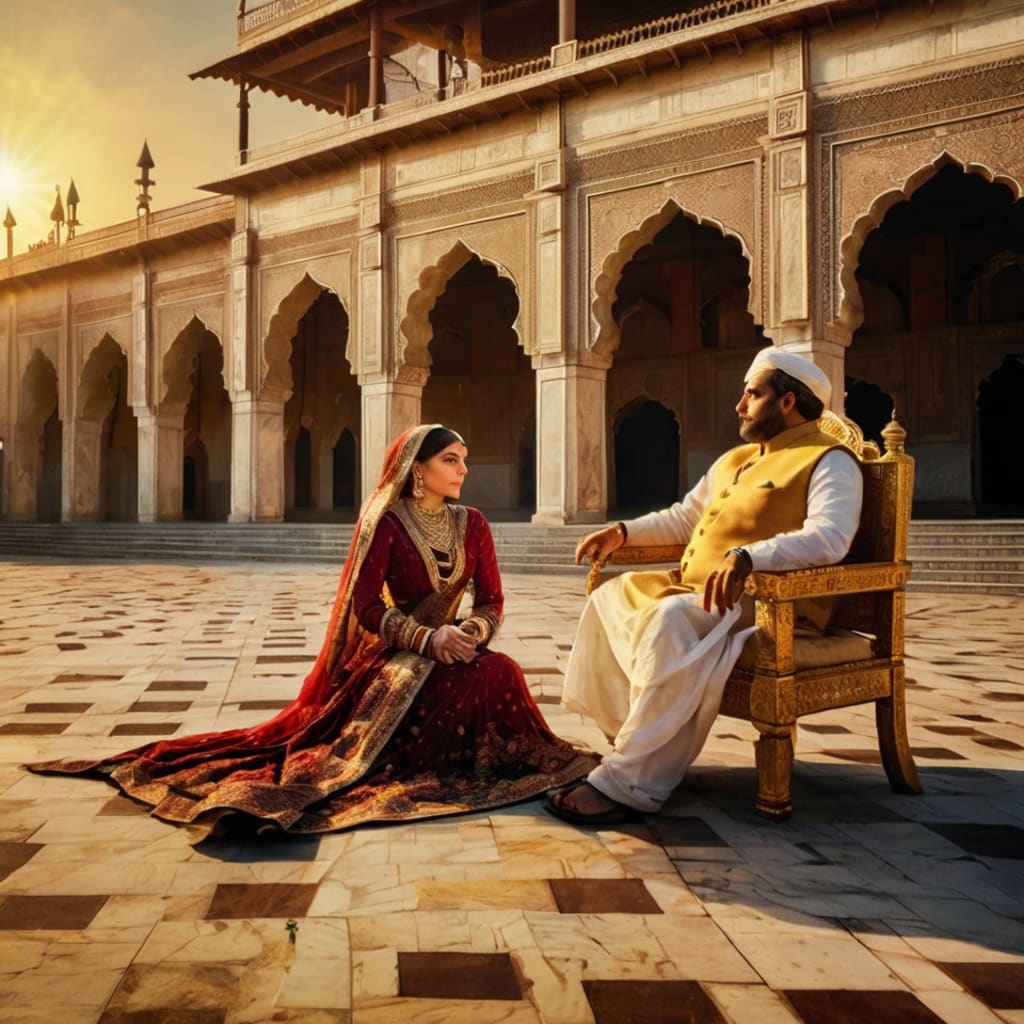
The Chain of Justice
By Javed Jamal
In the vast Indian subcontinent, the Mughal era is remembered as the “Golden Age” — a time of grandeur, art, and justice. Among the emperors who ruled during this period, Emperor Nuruddin Salim Jahangir stands out not only for his power but also for his deep commitment to justice. Legends tell of the Chain of Justice he hung outside his royal palace — a symbol of equality, meant for any subject, rich or poor, to pull whenever they sought redress from the emperor himself.
No distinction of rank or class was ever made before that chain. It was the emperor’s way of assuring his people that justice would never sleep under his rule.
Among the jewels of his court was his beloved queen, Empress Nur Jahan — a woman of grace, intelligence, and authority. She was not merely a royal consort; she was a ruler in her own right. Such was her influence that she could issue royal decrees, command armies, and participate in governance — a privilege seldom granted to women of her time.
One bright afternoon, Empress Nur Jahan sat in her balcony, gazing upon the royal gardens below. The gentle breeze carried the fragrance of roses, and for a moment, the empress allowed herself to relax, admiring the serenity of her empire.
Just then, fate played a cruel trick. A traveler, weary and dust-covered, was passing by the palace. His eyes, perhaps drawn by the glitter of jewels or the regal beauty of the empress, rose toward the balcony. Overwhelmed by what he saw, he stopped in his tracks and stood there, staring — mesmerized and unthinking.
To the empress, this act seemed like an unforgivable insolence. No one was allowed to gaze upon the royal women of the court, especially not with such audacity. Her pride wounded, Nur Jahan, in a fit of royal fury, seized a bow and shot an arrow straight at the man. The traveler collapsed instantly — struck dead on the spot.
The man was no courtier or spy; he was merely a washerman, a humble worker on his way home.
When news of his death reached his wife, the poor woman’s world collapsed. Her husband was her only support — his death meant hunger and ruin. She wept bitterly, but through her tears, one thought burned clear: the emperor had promised justice for all.
She dried her tears, gathered her courage, and made her way to the royal palace. There, trembling but determined, she reached for the Chain of Justice — the very chain that promised equality before the law — and pulled it with all her strength.
The clang of metal echoed through the palace halls. Emperor Jahangir, startled by the sound, knew that someone was seeking justice. He immediately summoned the guards and ordered that the petitioner be brought before him.
The widow appeared, veiled and grief-stricken. She told her story — how her innocent husband had been slain without reason. Jahangir listened in silence, his face grave. When she finished, he promised her, “You shall have justice, even if the guilty stands before me as my own blood.”
True to his word, Jahangir summoned Empress Nur Jahan to the royal court. She arrived not as a queen that day, but as an accused — without the luxury of her throne, standing before the emperor and his court like any other subject.
When questioned, Nur Jahan did not deny her act. Her voice was steady as she said, “Yes, I killed the man. He gazed upon me with disrespect. I considered it an insult to my honor.”
Jahangir turned to the chief Qazi (Islamic judge) and asked, “What does the law of Islam decree in this matter?”
The Qazi replied solemnly, “In the eyes of Sharia, the punishment for murder is death. Life for life.”
A hush fell over the court. The emperor’s expression did not change. He stood, and in a voice firm as steel, proclaimed, “Then let justice be served. The guilty shall be punished, no matter who they are. The law must stand above all.”
Gasps rippled through the court. Even the guards hesitated. To see the mighty Empress condemned was unthinkable. Yet Jahangir had spoken — and his word was law.
As the guards stepped forward to escort her away, Nur Jahan raised her head and said quietly, “Your Majesty, the law also permits blood money, does it not? If the family of the slain forgives and accepts compensation, then life may be spared.”
Jahangir again turned to the Qazi, who nodded. “Indeed, that is true — if and only if the family of the victim agrees to pardon.”
All eyes turned to the widow. The poor woman, overwhelmed by the sight of justice itself unfolding before her, felt her anger melt away. She had expected denial, deceit, or delay — but here stood an emperor willing to punish his own queen. Tears filled her eyes.
She bowed deeply and said, “Your Majesty, I have seen the justice of God today. I forgive the empress. I do not wish her death.”
The court erupted in murmurs of astonishment.
Jahangir looked at her with respect. “You have chosen mercy over vengeance. May peace follow you all your life.”
Nur Jahan, deeply moved, removed her golden necklace and handed it to the widow, saying, “Take this, good woman. May it provide for you and your children.” She later ordered that the widow’s family be granted a lifelong pension from the royal treasury.
Thus, the story of the Chain of Justice became legend — a tale retold across centuries.
Its lesson was simple yet eternal: Before the law, all are equal — king or commoner, queen or washerman. Justice must never bow before power.
---
Moral:
True justice recognizes no crown, no gender, no rank — only truth.
About the Creator
Keep reading
More stories from Ubaid and writers in Motivation and other communities.
The Frog in the Well and the Fish from the River
The Frog in the Well and the Fish from the River by Umairai Anwari Once upon a time, the summer sun blazed mercilessly over the land. The rainy season had passed without a single drop of rain. The ponds and lakes that once shimmered with water began to dry up, their beds cracking under the heat. Fish gasped and struggled helplessly in the shrinking puddles until, one by one, they died.
By Ubaid 3 months ago in Motivation



Comments
There are no comments for this story
Be the first to respond and start the conversation.