
The Burnout of Fun: Why Leisure Feels Like Work Now
From binge-watching to weekend getaways, even our escapes are turning into obligations.

Introduction: The Paradox of Modern Leisure
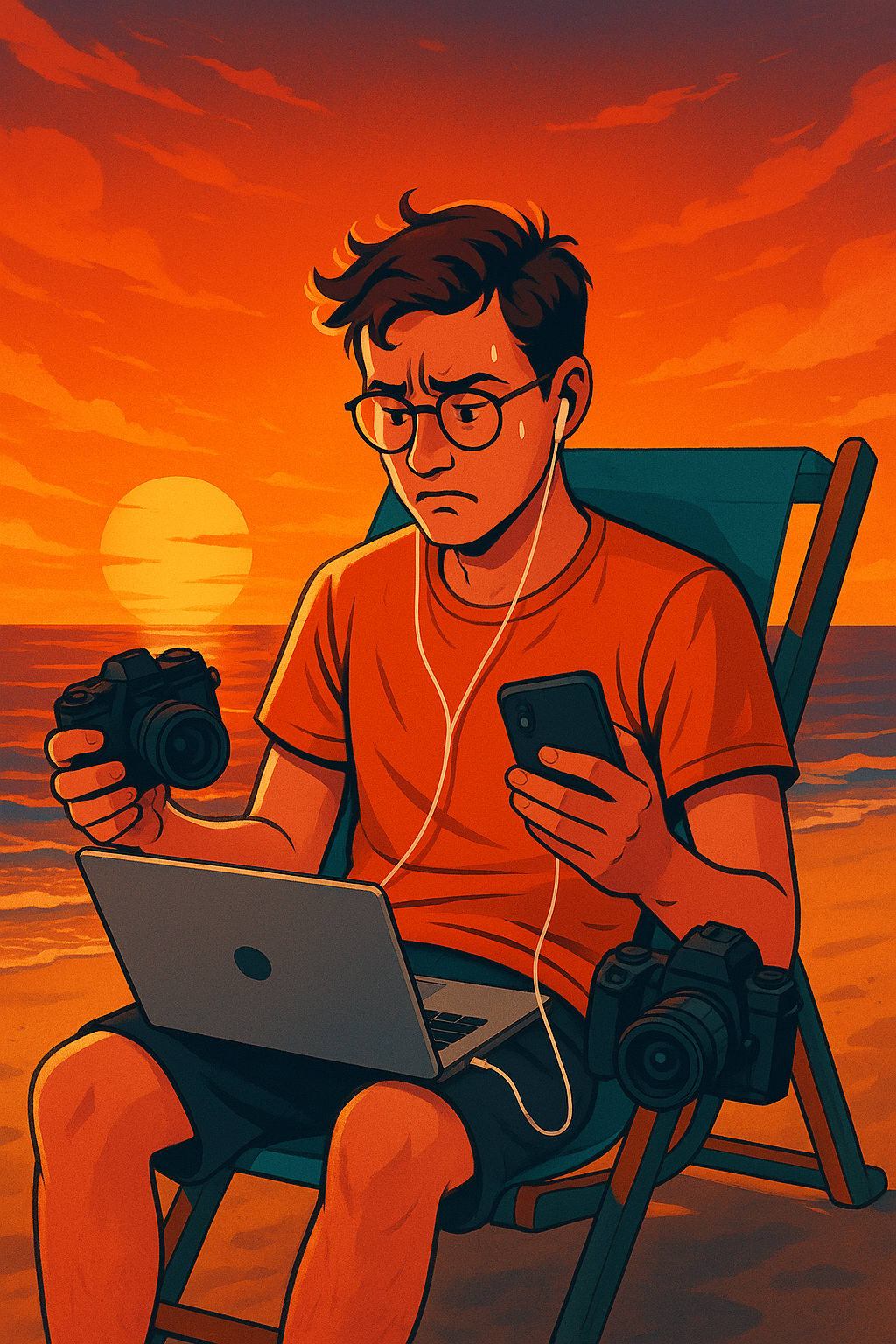
Once upon a time, leisure was the antidote to work. You clocked out, shut the door, and entered a realm where rest, play, and recovery lived. But in today’s culture of constant optimization, even leisure has been rebranded into something that demands discipline, strategy, and—ironically—effort.
Weekend plans feel like deadlines. Vacations are content-creation projects. Even our hobbies have been transformed into performance-based side hustles. Fun, once spontaneous and guilt-free, now resembles a second job.
Why does enjoyment feel exhausting?
The Rise of "Structured Relaxation"
Think about the last time you binge-watched a new series. Did you watch it because you wanted to? Or did you watch it because everyone at work or online was talking about it, and you didn’t want to fall behind?
Streaming services release shows like product drops. Instead of wandering into entertainment, we “keep up” with it. The marathon becomes a checklist: finish the season, avoid spoilers, form an opinion.
Our leisure is no longer free-flowing—it’s scheduled, curated, and consumed like homework. Relaxation, ironically, requires commitment.
Vacations as Projects
Scroll through Instagram and you’ll notice something: vacations aren’t vacations anymore—they’re exhibitions. People spend more time framing the perfect shot of their cappuccino than actually drinking it.
We pack itineraries to the brim: must-see spots, must-try foods, must-document experiences. Instead of returning refreshed, we come back needing another vacation to recover from the first.
Leisure morphs into labor when the joy of being somewhere is replaced by the stress of proving you were there.
Hobbies in the Age of Monetization
It’s not enough to knit for the sake of knitting, paint for the sake of painting, or game for the sake of gaming. The question arises almost immediately: Could I monetize this?
YouTube channels, Etsy shops, Twitch streams—the pressure to transform hobbies into productivity tools has reshaped how we approach fun. The modern mind struggles to do something purely for pleasure without turning it into a potential income stream or personal brand extension.
When hobbies become obligations, they lose their restorative power.
The Social Performance of Fun
Another culprit: the subtle competition of joy. We’re not just enjoying experiences—we’re curating them for others. That brunch, that hike, that concert—it all needs to be documented, posted, and validated.
Our downtime is staged. And in the act of staging, the raw intimacy of enjoyment slips away.
Even in private, many of us measure our fun against cultural standards. Did we go out enough this weekend? Did we stay in too much? Did we spend it “wisely”?
Fun has become a mirror, and too often, we’re only looking at the reflection.
Why This Exhausts Us
Leisure was supposed to replenish energy, not drain it. Yet the way we now experience fun taps into the same psychological circuits as work: competition, productivity, comparison, deadlines.
Dopamine fatigue: Our brains burn out from chasing novelty and validation.
Decision overload: Choosing from infinite leisure options creates the same stress as picking between jobs or investments.
Identity pressure: Hobbies and vacations become identity markers, not just activities.
What results is the peculiar feeling of being tired after fun.
The Forgotten Art of Useless Joy
What’s missing is leisure that is useless, unproductive, and unapologetically pointless. The kind of fun you can’t post, track, or monetize.
Reading a random book without sharing it online.
Playing a game that never makes it to Twitch.
Taking a walk without counting the steps.
Laughing with friends without needing photographic evidence.
Useless joy is essential. Without it, life becomes an endless performance review—even outside of work.
Reclaiming Fun as Fun
So how do we take back leisure?
Redefine relaxation: Rest is not wasted time. It’s the foundation for energy and creativity.
Detach from outcomes: Do things for the doing, not for the documentation.
Resist monetization: Not everything has to “pay off.” Pleasure is payoff enough.
Create space for boredom: Letting yourself be idle is how true leisure sneaks in.
The burnout of fun is not inevitable. But it does require us to unlearn the cultural script that everything must be optimized.
Conclusion: When Fun Stops Being Work
If work has invaded leisure, then leisure must push back. Fun should be messy, unstructured, and gloriously inefficient. It should be the one corner of life that resists checklists and metrics.
Otherwise, we risk living in a paradox where we’re constantly busy—even when we’re “relaxing.” And in that world, the true luxury won’t be money, vacations, or hobbies—it will be the rare, radical act of doing something simply because it feels good.
About the Creator
Ahmet Kıvanç Demirkıran
As a technology and innovation enthusiast, I aim to bring fresh perspectives to my readers, drawing from my experience.
Keep reading
More stories from Ahmet Kıvanç Demirkıran and writers in Motivation and other communities.
Noise
We live in a world louder than ever—yet it’s not the kind of noise you can plug your ears against. It’s the buzzing of notifications, the pressure of endless choices, the silent tug of comparison, and the overwhelming hum of always on culture.
By Ahmet Kıvanç Demirkıran5 months ago in Motivation
My Daily Win
I used to end every day feeling like a failure. It didn't matter what I accomplished. I could cross off ten items from my to-do list, and all I'd see were the fifteen I didn't finish. I could have a productive work day, cook a healthy dinner, and call my mom—and still go to bed thinking about the email I forgot to send or the closet I didn't organize.
By Fazal Hadi5 days ago in Motivation



Comments
There are no comments for this story
Be the first to respond and start the conversation.