
The Boy Who Believed in AI
He didn’t just learn artificial intelligence—he used it to engineer his future.

In a dusty neighborhood on the edge of a small town in Pakistan, lived a 17-year-old boy named Hamza. He didn’t have much—no fancy school, no tutors, no high-end computer. Just a hand-me-down laptop with missing keys, a second-hand phone, and a deep, relentless curiosity.
While most of his classmates spent time scrolling through social media or worrying about grades, Hamza was busy exploring something else—AI. One day, while watching a YouTube video at a local internet café, he stumbled across a documentary on Artificial Intelligence. The narrator said, "AI is the future."
That one line stayed with him.
From that moment, he became obsessed. “If AI is the future,” he thought, “maybe it can change my future too.” With no mentor and limited internet, he started teaching himself Python programming, then moved on to machine learning, and later learned how to use tools like TensorFlow, ChatGPT APIs, and free AI platforms.
It was far from easy.
His internet was slow. Sometimes he would download tutorials overnight at the local tea shop that offered free Wi-Fi. Often, he’d sit in the corner with a cup of chai and a notebook, copying down code snippets from online articles because he couldn’t afford to be online for too long. He failed many times. His laptop crashed more times than he could count.
But what never crashed—was his belief.
After six months of self-study, he built his first real project: a simple AI chatbot that could answer basic customer service questions in both English and Urdu. He presented it to a local grocery store, explaining that it could help automate replies to customers on WhatsApp and Facebook. The shopkeeper, skeptical at first, agreed to try it.
A week later, that same shopkeeper told Hamza:
“You saved me hours of work. I had no idea a kid like you could build something like this.”
That moment was all the validation Hamza needed.
He began helping more local businesses—pharmacies, clothing shops, even a tuition center—by offering AI-based solutions: from simple chatbots to sales prediction models using Excel and Python.
His first client paid him just ₨1,500. It wasn’t much—but for Hamza, it was everything. Proof that someone would pay for his brain, not just his time.
Soon, he created a freelancer profile on platforms like Fiverr and Upwork. At first, no one hired him. His proposals went unnoticed, drowned under thousands of others. But instead of quitting, he improved. He rewrote his proposals, refined his portfolio, and kept learning.
Then one night, a message popped up:
“Can you build a customer support chatbot for a startup in Malaysia?”
Hamza didn’t hesitate. Within 5 days, he built a customized AI chatbot that could answer customer queries and direct people to specific products. The client was impressed and paid him $120. That was more than Hamza’s father earned in a week.
From that point on, his journey accelerated.
By the time he turned 19, Hamza had completed AI projects for over 30 clients in more than 8 countries. He built tools for customer service, sales forecasting, Instagram automation, and more—using free open-source AI platforms and sheer determination.
He used his earnings to buy a new laptop, upgrade his internet, and enroll in advanced online AI courses. But he didn’t stop there.
He started a YouTube channel in Urdu called “AI Seekho Pakistan”, where he shared beginner-friendly tutorials on how to use AI for freelancing, business, and automation. One of his videos, titled “How I Escaped Poverty with AI”, went viral—earning over 1 million views in just two weeks.
Suddenly, Hamza was no longer just a small-town boy. He became a symbol of self-made success.
When asked in a live podcast what made him believe in himself when everyone else doubted him, Hamza replied:
“I didn’t have access to the best tools. But I had access to belief—and belief is what makes AI powerful in the hands of the right person.”
Moral of the Story:
Artificial Intelligence is powerful—but the most powerful thing is the human belief behind it.
You don’t need perfect resources. You need purpose, persistence, and self-belief. AI may be the future—but belief is what gets you there.
About the Creator
Keep reading
More stories from Zaid Ktk and writers in Motivation and other communities.
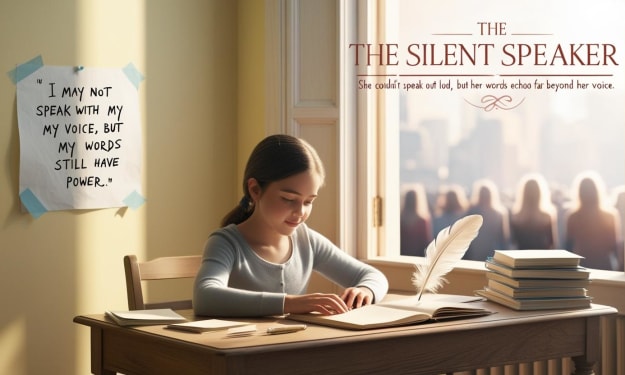
The Silent Speaker
In a small, quiet town nestled between green hills and narrow streets, a little girl named Areeba was born. From the moment she came into the world, her parents noticed something unusual. While she giggled, cried, and laughed like every other child, she never said a single word.
By Zaid Ktk8 months ago in Motivation
How Traders Can Use Market Data to Think Like Institutions
Disclaimer This article is for educational and informational purposes only and does not constitute financial, trading, or investment advice. Financial markets involve risk, and readers should conduct their own research or consult qualified professionals before making financial decisions.
By BizElevate7 days ago in Motivation


Comments
There are no comments for this story
Be the first to respond and start the conversation.