
The Billionaire Who Walked Alone: The Untold Price of Jack Ma's Empire
The Crucible of Failure (Before the Dawn)**

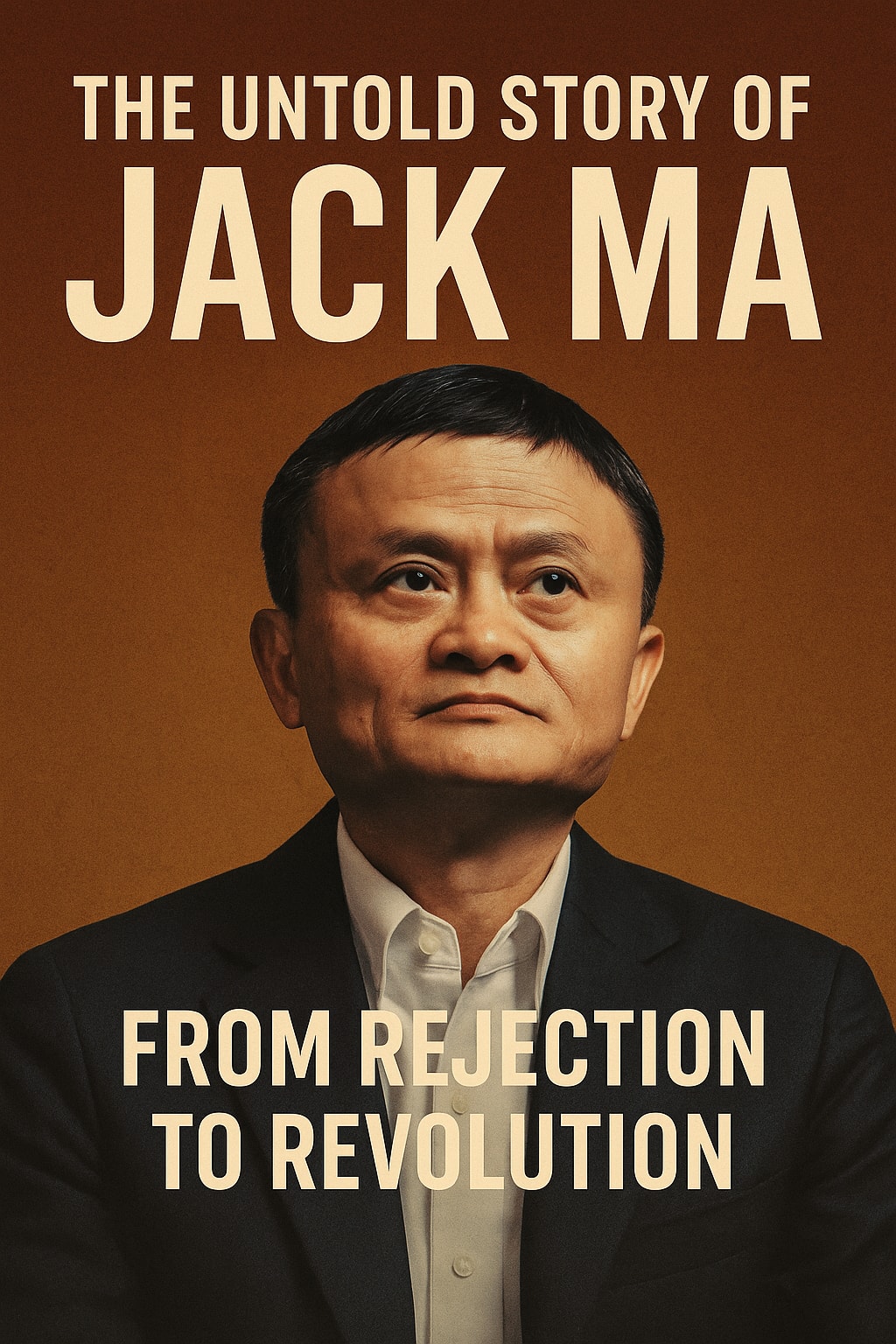
The Billionaire Who Walked Alone: The Untold Price of Jack Ma's Empire
We know the legend. Jack Ma, the diminutive former English teacher from Hangzhou, rejected from countless jobs (even KFC!), who stumbled upon the internet, defied impossible odds, and built Alibaba – a colossus that reshaped Chinese commerce and made him one of the world's richest men. His quotes on perseverance ("Today is hard, tomorrow is worse, but the day after tomorrow is beautiful") are entrepreneurial gospel. His presentations are dissected for wisdom. He’s the ultimate underdog-billionaire icon.
But behind the dazzling IPO lights, the global accolades, and the carefully curated narrative of relentless optimism, lies a different story. A story rarely told in its raw entirety. This is the untold chronicle of Jack Ma, not just of his triumphs, but of the profound, often crushing, human cost paid for building an empire. This is the story of the man who, despite being surrounded by millions, walked a path of profound solitude.
**Part 1: The Crucible of Failure (Before the Dawn)**
Long before "Alibaba" was a whisper, Jack Ma was a man intimately acquainted with rejection. We know about KFC hiring 23 people and rejecting him. We know about Harvard rejecting him ten times. But the untold part isn't the number; it's the corrosive, daily grind of being told "no." Imagine the young Ma, intelligent, energetic, brimming with ideas that seemed ludicrous to a China still cautiously opening its doors. The constant dismissal wasn't just professional; it was personal. It seeped into his sense of self-worth.
His early ventures weren't just failures; they were public humiliations. China Pages, an early attempt at an online directory, was essentially wrestled away from him by state-backed partners. He felt cheated, powerless. The untold story here is the nights spent wrestling with doubt, the arguments with his unwaveringly supportive wife, Cathy Zhang, who bore the brunt of his frustration and fear. How many times did he stare at their meager savings, wondering if his stubborn vision was simply delusion? The loneliness wasn't physical; it was the isolation of believing in something no one else could see, a terrifying chasm between his conviction and the world's indifference.
**Part 2: The Birth of Alibaba & The Weight of Belief (1999-2003)**
The iconic founding of Alibaba in his apartment is well-documented. Eighteen believers, crammed together, fueled by Ma’s electrifying vision of connecting Chinese manufacturers to the world via the nascent internet. The untold story lies in the terrifying responsibility Ma felt the moment those first 18 entrusted their careers, their futures, to *his* dream.
He wasn’t just building a company; he was shouldering the hopes of 18 families. The pressure was immense, internal, and relentless. While he projected infectious enthusiasm publicly, privately, the fear of letting them down was a constant companion. He worked punishing hours, not just out of ambition, but out of a desperate sense of obligation. The loneliness manifested as the burden of leadership – the knowledge that ultimate decisions, and their consequences, rested solely on him.
The near-collapse in 2001-2002 is part of the lore. The "Winter Memo" where Ma warned of an impending ice age for internet companies. The painful layoffs. The untold agony? Ma, the eternal optimist, forcing himself to deliver the bad news. Watching valued colleagues, friends he’d convinced to join this crazy venture, walk out the door. He described feeling like a general who had failed his troops. The loneliness wasn't just about making tough calls; it was about bearing the guilt and sorrow of those calls alone, even as he had to project strength to rally those who remained.
**Part 3: Scaling the Summit & The Gilded Cage (2003-2014)**
Success, when it finally roared in with Taobao’s victory over eBay and Alibaba’s explosive growth, brought a different kind of isolation. The stakes were exponentially higher. Every decision impacted tens of thousands of employees, millions of merchants, and eventually, China’s entire digital economy. The pressure wasn't just commercial; it became geopolitical.
The untold story here is the erosion of privacy and the constant scrutiny. Ma became a national symbol. His every word was parsed, his every move watched – by the media, by competitors, by investors, and crucially, by the Chinese state. The freewheeling, outspoken teacher found himself navigating a minefield. Public candor became a luxury he could rarely afford. The loneliness was the cage of his own celebrity and influence.
He spoke often about missing the early days – the camaraderie of the apartment, the shared struggle. Now, even within Alibaba, hierarchy and scale created distance. Could he truly confide his deepest fears and doubts to subordinates? To the board? To investors demanding relentless growth? The burden of being "Jack Ma," the icon, became a mask he had to wear, separating him from the authentic, sometimes irreverent, Ma Yun (his real name). The untold hours were spent wrestling with compromises, balancing his vision with political realities, investor expectations, and the sheer complexity of a global behemoth. The loneliness was the solitude at the very top, where the air is thin and few truly understand the view, or the vertigo.
**Part 4: The Peak & The Precipice (2014-2019)**
The record-shattering $25 billion IPO in 2014 was the apotheosis. Jack Ma stood on the world stage, a symbol of China's rise and entrepreneurial possibility. Yet, the untold story of that day isn't just the triumph; it's the profound loneliness it might have masked. Reaching the summit often reveals how far you are from everything else. Did he feel exhilaration, or a strange emptiness? The goal achieved, what now?
The following years saw Ma increasingly speak about life beyond Alibaba – philanthropy, education, environmental causes. He stepped down as Executive Chairman in 2019. This wasn't just a succession plan; it felt like a man actively seeking an escape route from the gilded cage. The untold motivation was likely a deep yearning for authenticity, for a life less scrutinized, less burdened by the crushing weight of the empire he built.
He famously said, "I don't want to die in my office. I want to die on the beach." It was a quip, but it revealed a profound truth. He craved a return to a simpler humanity, away from the isolating stratosphere of global business and politics. His ventures into movies (his cameo in *Gong Shou Dao*), music (singing at company events), and flamboyant stage performances weren't just vanity; they were glimpses of the unburdened self struggling to break free.
**Part 5: The Silence & The Solitary Walk (2020-Present)**
Then came October 2020. Ma delivered a speech criticizing Chinese financial regulators for stifling innovation. Shortly after, the much-anticipated $37 billion IPO of Ant Group (Alibaba's fintech arm, Ma's brainchild) was abruptly suspended by Chinese authorities. Jack Ma vanished from public view.
The months of silence were deafening. The untold story is the nature of that silence. Was it enforced? Was it strategic retreat? Was it exhaustion? Regardless, it starkly revealed the ultimate loneliness: even the most successful, the most iconic, are not immune to the overwhelming power of the state. The empire he built, the source of his global influence, also made him uniquely vulnerable.
His eventual re-emergence was subdued. The flamboyant performer was replaced by a quieter, more cautious figure. He retreated further, focusing on agricultural technology and philanthropy, largely outside of China. The iconic photo that perhaps best encapsulates the untold story emerged: Jack Ma, reportedly in Tokyo, sitting alone at a small table in a modest restaurant, engrossed in his phone. The billionaire, untouchable yet seemingly untouched by companionship in that moment. The solitary walk.
**The Untold Core: The Cost of the Dream**
Jack Ma's story is the ultimate entrepreneurial saga. But the untold narrative woven through its fabric is one of profound human cost:
1. **The Loneliness of Vision:** Carrying a conviction that others cannot see, for years, is an isolating burden.
2. **The Loneliness of Responsibility. The weight of decisions affecting millions rests solely on the leader's shoulders, creating an unshareable burden.
3. **The Loneliness of Success:** Fame and scale create barriers to authentic connection and trap the individual within their own iconography.
4. The Loneliness of Scrutiny:** Constant observation forces self-censorship and erodes privacy, isolating the individual from their true self.
5. The Loneliness of Vulnerability:** Even at the pinnacle of success, forces exist (like state power) that can instantly remind one of their fundamental isolation and fragility.
Jack Ma didn't just build Alibaba; he sacrificed a fundamental aspect of his own connection – to simplicity, to unfettered expression, to the anonymity that allows for genuine human interaction. His journey to the stars was undertaken largely alone, and the view, while breathtaking, came with a chilling solitude.
He gave China and the world a new way to connect, to buy, to sell. Yet, the untold story whispers that the price of forging those connections for millions was a deep, enduring loneliness for the man who dared to imagine it. The legend is the empire; the untold truth is the solitary figure walking away from its glittering towers, forever marked by the cost of building them. He achieved the "beautiful day after tomorrow," but the journey there left him walking, often, in the isolating shadows of his own monumental creation.
About the Creator
Frank Massey
Tech, AI, and social media writer with a passion for storytelling. I turn complex trends into engaging, relatable content. Exploring the future, one story at a time
Reader insights
Outstanding
Excellent work. Looking forward to reading more!
Top insights
Compelling and original writing
Creative use of language & vocab
Easy to read and follow
Well-structured & engaging content
Excellent storytelling
Original narrative & well developed characters
Expert insights and opinions
Arguments were carefully researched and presented
Eye opening
Niche topic & fresh perspectives
Heartfelt and relatable
The story invoked strong personal emotions
Masterful proofreading
Zero grammar & spelling mistakes
On-point and relevant
Writing reflected the title & theme
Keep reading
More stories from Frank Massey and writers in Motivation and other communities.
IShowSpeed: The Meteoric Rise of a Social Media Sensation
I was mindlessly scrolling through Instagram one lazy afternoon, my thumb flicking past food pics, travel vlogs, and cat memes, when a reel stopped me dead in my tracks. It was this young guy, all energy and chaos, screaming into his camera with a wild grin, playing a video game like his life depended on it. His antics were over-the-top, his reactions unhinged, and yet, I couldn’t look away. He was like a human rollercoaster, unpredictable and electrifying. Intrigued, I tapped on his profile, and my jaw dropped—millions of followers. Millions! Who was this kid? His username, IShowSpeed, was everywhere. I dove into his timeline, and what I found was a story so gripping, so thrilling, it felt like something out of a Hollywood blockbuster. This is the tale of Darren Jason Watkins Jr., aka IShowSpeed, a 20-year-old from Ohio who turned a $1.79 donation into a global empire.
By Frank Massey 6 months ago in Motivation


Comments
There are no comments for this story
Be the first to respond and start the conversation.