
The Bee Came to the Garden to Talk to the Flowers
Understanding Nature’s Balance
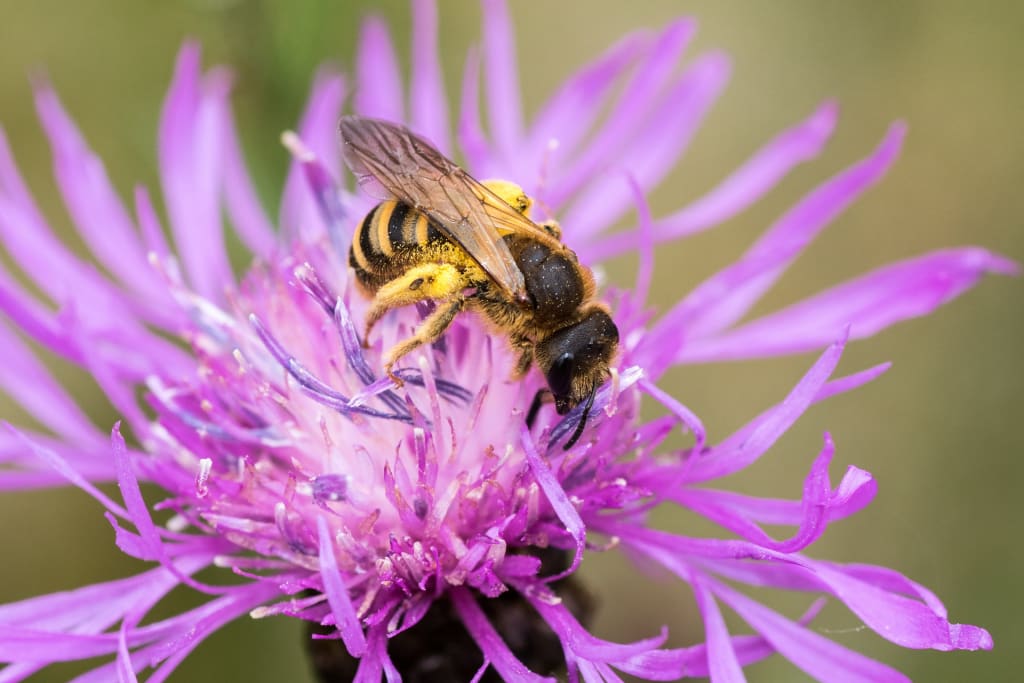
The Bee Came to the Garden to Talk to the Flowers;
Nature often tells the most profound stories through its quiet moments. One such tale unfolds in a simple garden where a bee becomes a hero, a flower finds hope, and a girl learns an unforgettable lesson.
The Bee's Mission;
In the heart of a blooming garden, a bee buzzed from flower to flower. With every visit, it carried not just pollen but also whispers of nature's wisdom. One day, the bee landed on a solitary flower. “Hello, Miss Flower, how are you today?” asked the bee with genuine concern.
The Flower’s Fear;
The flower sighed, swaying gently in the breeze. “Mr. Bee, I’m worried. A girl comes every day and picks us. My cousins and sisters are gone. I’m the last one standing. She’s sure to pick me today.” Her petals trembled as she shared her plight.
Bee to the Rescue;
The bee, moved by the flower’s sorrow, made a promise. “Don’t worry, dear friend. I’ll teach her a lesson she won’t forget.” The bee’s tiny wings carried determination as it prepared to stand up for its delicate companion.
The Girl’s Intentions ;
The girl in the house loved the garden's beauty. She believed picking flowers would bring that beauty indoors. She didn’t realize that every flower she plucked disrupted a delicate ecosystem.
The Lesson ;
When the girl approached with scissors in hand, the bee acted swiftly. A quick sting on her hand sent her running back inside, crying in surprise and pain. The sting wasn’t malicious; it was nature’s way of saying, “Stop and think.”
The Outcome ;
The girl, nursing her hand, hesitated the next day. She began to see the flowers not as decorations but as living beings. She decided to enjoy their beauty in the garden, leaving them untouched.
Understanding Nature’s Balance ;
Every flower is a vital part of the garden’s ecosystem. Bees rely on flowers for nectar, while flowers depend on bees for pollination. The cycle is delicate and interdependent, a reminder of the balance we must preserve.
What is a Drabble?
A Drabble is a micro-fiction masterpiece crafted in exactly 100 words. It’s a complete story—beginning, middle, and end—condensed into a precise format that demands brevity and creativity.
Origins of the Drabble
The Drabble originated in the 1980s among science fiction enthusiasts in the U.K. Its name and concept came from a playful challenge to write a novel on the spot—a task later refined to 100 words.
The Science Fiction Connection
Drabbles gained popularity through sci-fi pioneers like Terry Pratchett and Neil Gaiman. These authors embraced the challenge of telling rich, imaginative stories in just a few sentences.
Famous Drabble Publications
"The Drabble Project" and its sequels showcased the format's potential. Featuring celebrated authors, these collections proved that brevity doesn’t limit creativity—it amplifies it.
The Power of Brevity
In a world filled with lengthy narratives, Drabbles stand out. They deliver a punch of meaning in a few carefully chosen words, much like a bee’s sting leaves a lasting impression.
Writing Your Own Drabble
Crafting a Drabble requires discipline and imagination. Start with a strong concept, focus on essential details, and ruthlessly edit until every word counts.
Conclusion
The story of the bee and the flower reminds us of the interconnectedness of all life. Just as a Drabble uses every word wisely, nature thrives when every element plays its part. Let this tale inspire you to protect our fragile ecosystems—and perhaps, to try your hand at writing a Drabble.
FAQs
1. What makes a Drabble unique?
Its strict 100-word limit challenges writers to convey complete stories concisely.
2. How can I improve my micro-fiction skills?
Practice regularly, edit ruthlessly, and study successful examples.
3. Are Drabbles only for sci-fi?
Not at all! Drabbles span all genres, from romance to mystery.
4. How does brevity enhance storytelling?
It forces writers to focus, ensuring every word serves a purpose.
5. Can Drabbles teach us lessons about life?
Absolutely. They reveal the beauty of simplicity and the power of thoughtful choices.
About the Creator
Keep reading
More stories from Muhammad irshad and writers in Motivation and other communities.
Why Continuity and Consistency Lead to Success
Why Continuity and Consistency Lead to Success Introduction Success is rarely the result of one grand gesture. Instead, it’s the outcome of small, consistent efforts over time. Think of it like filling a jar with drops of water—each drop might seem insignificant, but eventually, the jar overflows. That’s the power of continuity and consistency. Why do some people achieve their goals while others give up halfway? The secret lies not in momentary bursts of motivation but in the steady, ongoing actions that build momentum. In this article, we’ll uncover why staying consistent is the cornerstone of long-term success and how you can make it your superpower. Understanding Continuity and Consistency.
By Muhammad irshadabout a year ago in Motivation


Comments
There are no comments for this story
Be the first to respond and start the conversation.