
The Armor I Didn’t Know I Was Wearing
Why Being the “Strong Friend” Isn’t a Compliment—It’s a Warning Sign

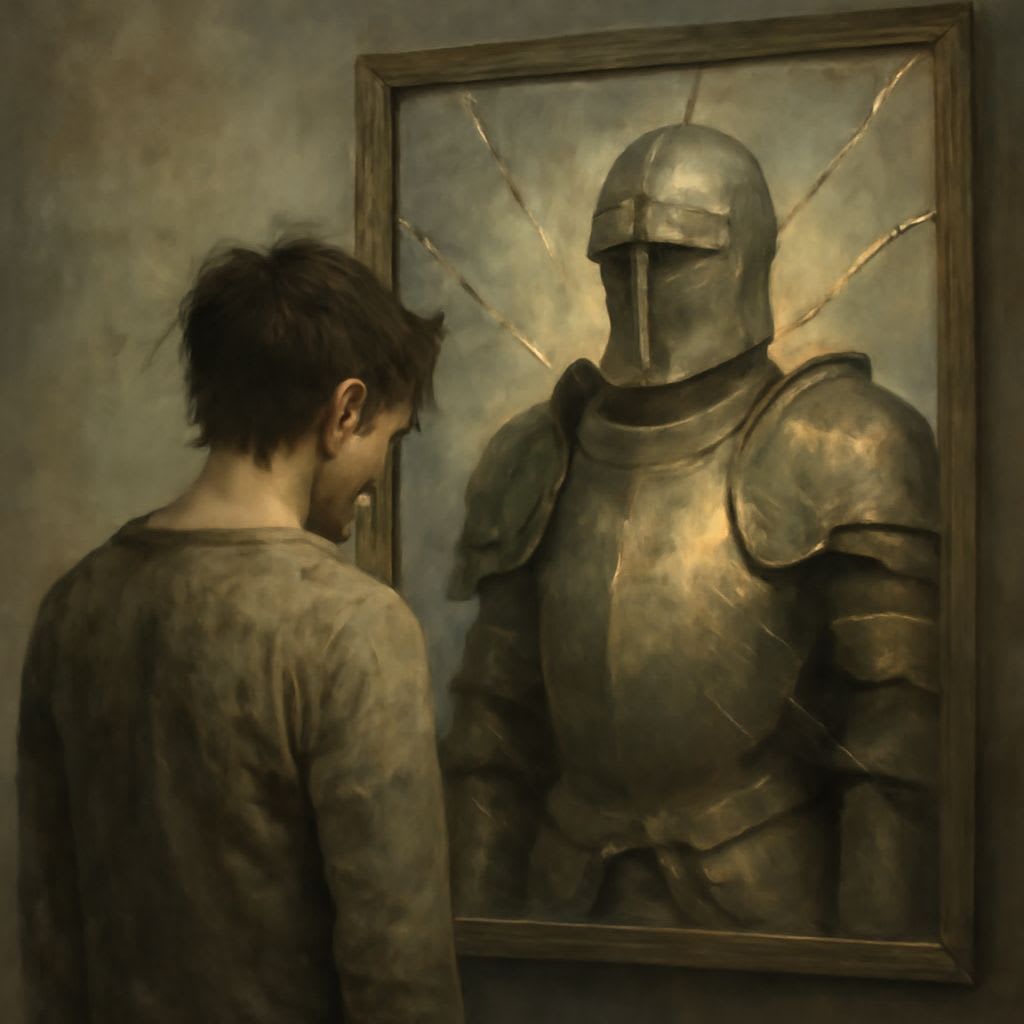
You never notice the armor at first.
It starts as little things—learning how to swallow your emotions so others don’t feel uncomfortable. Cracking jokes when you’d rather cry. Offering support at 3 a.m. even though no one has texted you first in months. Telling yourself, “I’m fine,” because you’re supposed to be the strong one.
I didn’t set out to become anyone’s rock. I just… became it. Bit by bit, piece by piece. People leaned on me, and I didn’t flinch. I held them together when their worlds fell apart. And in the process, I stopped realizing mine was slowly crumbling.
It took years for me to see it. And by then, the armor had fused into my skin.
When people call you the “strong friend,” they say it like a compliment. Like it’s some badge of honor. And for a while, I wore it proudly.
But no one tells you what being the strong friend really means.
It means being the one who listens, not the one who’s listened to.
It means being the emergency contact but never the emergency.
It means people assume you’ll always be okay—so they never ask if you are.
For me, it started in childhood. I was the oldest. The helper. The fixer. I learned early that my feelings came second to everyone else’s needs. If someone cried, I comforted them. If someone was angry, I calmed them. If someone needed space, I disappeared.
I grew into adulthood carrying that same role into every relationship, every friendship, every interaction.
They told me I was wise. Selfless. Grounded. “You’re so good in a crisis,” they'd say. “You always know what to say.”
But eventually, I realized something painful.
People loved me for what I could do, not for who I was. They loved the version of me that kept things easy. The one who never needed too much. Who never broke. Who never became the burden.
And so, I never let myself be one.
I remember the exact moment I realized the armor was killing me.
It wasn’t some dramatic breakdown. It was a Wednesday.
I was driving home after helping a friend through her latest relationship crisis. She’d cried in my arms, thanked me for always being there, and then left—relieved, lighter. I sat in my car, hands gripping the wheel, and suddenly, I couldn’t breathe.
It hit me all at once: no one knew I wasn’t okay.
No one knew I’d been crying in the shower for weeks. That I hadn’t slept through the night in months. That I felt like a ghost in my own life—present, but not real.
I had become so good at being strong that no one noticed I was falling apart. Not even me.
That’s the danger of the armor. It protects you so well, people forget you bleed underneath it. You forget it, too.
You become everyone’s shelter in the storm but have nowhere to go when your own sky falls. You become fluent in other people’s pain and illiterate in your own.
Eventually, I started therapy. I remember telling the therapist, “I don’t know how to ask for help. I don’t think I ever learned.”
She nodded, as if she'd heard it a hundred times before. Maybe she had.
She asked me to picture myself standing in front of a mirror, stripping the armor off, piece by piece. I told her I didn’t know where to begin.
“It’s okay,” she said. “We’ll do it slowly. One layer at a time.”
Healing wasn’t easy.
At first, I felt naked without my emotional armor. I had to relearn how to be vulnerable without feeling like I was failing. I had to sit in silence and let people see me—messy, hurting, uncertain.
I had to stop being the hero in everyone’s story and finally become the main character in my own.
Some people didn’t like that. They were used to the old version of me—the one who never said “no,” who never asked for anything. When I started setting boundaries, some walked away.
But others stayed.
They learned to check in on me. To hold space for me. To love me, not just the service I provided.
I found a different kind of strength—one that wasn’t rooted in self-denial or endless giving. One that said, “I deserve care, too.”
If you’re the strong friend, the helper, the rock—this is for you.
Being strong doesn’t mean being silent. It doesn’t mean being invulnerable. And it doesn’t mean giving yourself away until there’s nothing left.
The next time someone calls you strong, pause. Ask yourself: Am I really okay? Or am I just holding it together because that’s what they expect?
The armor may have helped you survive, but you don’t have to live in it forever.
You are allowed to fall apart. You are allowed to ask for help. You are allowed to take up space—not just as a support system, but as a full, feeling human being.
I’m still learning this. Every day. But for the first time in my life, I’m not carrying everyone else.
I’m carrying myself.
And for now, that’s more than enough.
To anyone who’s ever been the strong one: Your strength doesn’t mean you have to carry the world alone. You deserve to be seen, heard, and cared for—just as much as you care for others.
— Nadeem Shah
About the Creator
Nadeem Shah
Storyteller of real emotions. I write about love, heartbreak, healing, and everything in between. My words come from lived moments and quiet reflections. Welcome to the world behind my smile — where every line holds a truth.
— Nadeem Shah
Keep reading
More stories from Nadeem Shah and writers in Motivation and other communities.
When the Strong One Breaks
I was the “strong one.” The dependable sibling, the reliable friend, the go-to coworker. If there was a crisis, I handled it. If someone was falling apart, I held them up. I gave advice. I sent late-night “you’ve got this” texts. I made people laugh when they were crying and carried weight that wasn’t mine because that’s what strong people do, right?
By Nadeem Shah 8 months ago in Motivation
“A Poor Man Helped a Stranger… The Next Day His Life Changed Forever”
In a small dusty village surrounded by dry fields and broken roads, there lived a poor man named Rahim. Rahim owned nothing but a tiny mud house, a worn-out bicycle, and a heart full of kindness.
By Maavia tahirabout 7 hours ago in Motivation


Comments
There are no comments for this story
Be the first to respond and start the conversation.