
Rich Dad Poor Dad
Rich Dad, Poor Dad is a personal finance book by Robert Kiyosaki.

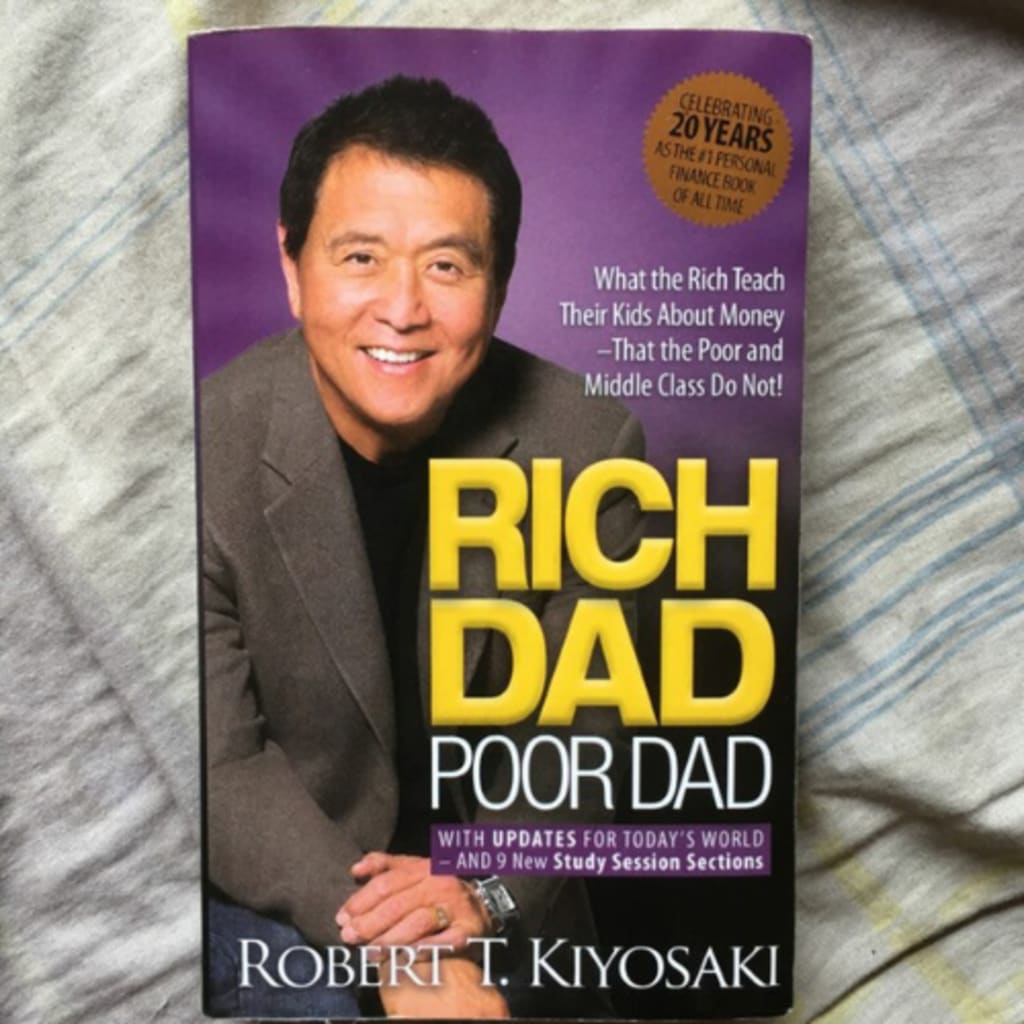
Rich Dad, Poor Dad is a personal finance book by Robert Kiyosaki. The book advocates for financial literacy and advises readers to take control of their financial lives by building passive income streams, increasing their financial knowledge, and investing in assets that will appreciate in value.
The book is structured as a series of anecdotes from Kiyosaki's life, in which he compares and contrasts the financial philosophies of his "rich dad" (the father of a childhood friend) with those of his "poor dad" (his own father).
Some key takeaways from the book include:
It is important to focus on building wealth, rather than simply trying to earn a high income.
Passive income streams, such as rental properties or businesses that generate income without requiring active management, can be a powerful way to build wealth.
Financial education is essential for building wealth.
It is important to continuously learn and adapt to changes in the financial landscape.
Owning assets that appreciate in value, such as real estate or stocks, can be a good way to build wealth over time.
It is important to have a long-term perspective and to be willing to take calculated risks in order to achieve financial success.
Overall, Rich Dad, Poor Dad encourages readers to take an active role in managing their financial lives and to continuously educate themselves in order to build and maintain wealth.
The book argues that traditional financial advice, such as getting a good education and saving money in a high-interest savings account, is often misguided and does not lead to true financial success.
Instead of relying on traditional financial instruments, Kiyosaki advises readers to invest in "real" assets, such as businesses, real estate, and stocks, which have the potential to generate significant returns over time.
The book also emphasizes the importance of financial independence and being able to generate income without relying on a traditional job. Kiyosaki argues that this can be achieved through building passive income streams and investing in assets that generate income.
Rich Dad, Poor Dad also emphasizes the need to think and act differently in order to achieve financial success. This includes being willing to take risks, being open to learning new things, and challenging traditional financial beliefs.
Throughout the book, Kiyosaki stresses the importance of financial literacy and advocates for continuous learning and personal development in order to achieve financial success .
The book introduces the concept of "financial intelligence," which Kiyosaki defines as the ability to understand and manage one's financial life. He argues that financial intelligence is just as important as traditional forms of intelligence, such as IQ or EQ, and can be developed through learning and practice.
Kiyosaki emphasizes the importance of taking control of one's financial life and making informed decisions about how to manage and invest money. He advises readers to be proactive in seeking out financial education and to take the time to understand the inner workings of the financial world.
Rich Dad, Poor Dad also discusses the role of debt in personal finance. Kiyosaki argues that not all debt is bad, and that the key is to understand how to use debt to one's advantage. For example, he advocates for using leverage, or borrowing money, to invest in assets that have the potential to generate a high return.
In addition to investing in assets, Kiyosaki also advises readers to focus on increasing their income in order to build wealth. He suggests exploring ways to increase earning potential, such as starting a business or investing in personal development.
Overall, Rich Dad, Poor Dad encourages readers to take a proactive and informed approach to managing their financial lives, and to continuously educate themselves in order to achieve financial success.
About the Creator
Keep reading
More stories from Vishal Dhaker and writers in Motivation and other communities.
“He Kept Going When No One Was Watching — And That Changed Everything”
No one ever noticed the days he almost gave up. There were no messages asking if he was okay. No one wondered why he became quieter. No one asked how much effort it took just to keep going. To the world, he was just another ordinary man. His name was Ayaan. Ayaan’s life didn’t collapse in one dramatic moment. It slowly faded. Missed opportunities. Rejected ideas. Silent disappointments. Every failure was small, but together they became heavy. He had dreams once. Big ones. Dreams that kept him awake at night, imagining a future where his hard work would finally matter. But over time, those dreams began to feel unrealistic—almost embarrassing. People around him seemed to move forward effortlessly. They celebrated promotions, achievements, and milestones. Ayaan watched from the side, smiling politely while feeling invisible. At work, his efforts were ignored. Among friends, his voice faded. At home, expectations weighed heavily on him. Slowly, a dangerous thought settled into his mind: “Maybe I’m not good enough.” That thought followed him everywhere. It followed him on crowded buses. It followed him into sleepless nights. It followed him every time he tried again and failed. One night, after scrolling through endless success stories online, Ayaan closed his phone and stared at the dark ceiling. His chest felt tight, not because of pain—but because of exhaustion. He whispered quietly, “How long do I keep trying?” There was no answer. But that night, Ayaan made a decision—not a loud one, not a confident one. A tired decision. He decided to keep going, even if nothing changed. The next morning felt the same. The same routine. The same doubts. The same fear of wasting his life. But Ayaan showed up anyway. He worked when no one praised him. He studied when no one guided him. He practiced when no one believed in him. Some days, motivation disappeared completely. On those days, discipline took over. He reminded himself: “I don’t need applause. I need progress.” Weeks passed. Nothing dramatic happened. No sudden success. No recognition. No miracle. But something subtle began to shift. Ayaan became calmer under pressure. He learned to sit with discomfort instead of running from it. He stopped comparing his journey to others. The silence that once scared him now became his training ground. Months later, a serious problem appeared at his workplace. It was complicated, risky, and easy to blame on someone else. Most people avoided it. Some pretended it wasn’t their responsibility. Ayaan didn’t announce himself. He didn’t seek attention. He simply started working. Late nights. Mistakes. Corrections. Learning. There were moments he wanted to quit. Moments when fear whispered, “You’re not ready.” But he answered back, “I’ll learn.” Slowly, the problem began to disappear. Not perfectly—but steadily. People noticed, quietly. One afternoon, his manager called him into the office. Ayaan expected criticism. Instead, he heard a question that stunned him: “Where did you learn all this?” Ayaan paused. How could he explain years of silent effort? How could he explain working when no one cared? He simply replied, “I kept going.” That moment didn’t change his life overnight. He didn’t become famous. He didn’t suddenly become successful. But it changed something far more important. His belief in himself. For the first time, Ayaan understood that life doesn’t always reward effort immediately. Sometimes, it watches. It watches who continues without praise. Who improves without recognition. Who grows in silence. Years later, Ayaan looked back at the version of himself who almost quit. The man who felt invisible. The man who thought no one was watching. And he smiled. Because he finally understood the truth: Life was always watching. Not to judge. Not to rush. But to see if he would keep going when it was hardest. The world doesn’t reward those who only work when they’re seen. It rewards those who build strength in silence. And sometimes, the moment that changes everything doesn’t come with applause. It comes quietly. After patience. After effort. After consistency. That is when everything finally begins to change. Final Message Keep going—even when no one is watching. Especially then.
By Inayat khan4 days ago in Motivation




Comments
There are no comments for this story
Be the first to respond and start the conversation.