
Rich Dad Poor Dad by Robert T Kiyosaki
Financial Guide
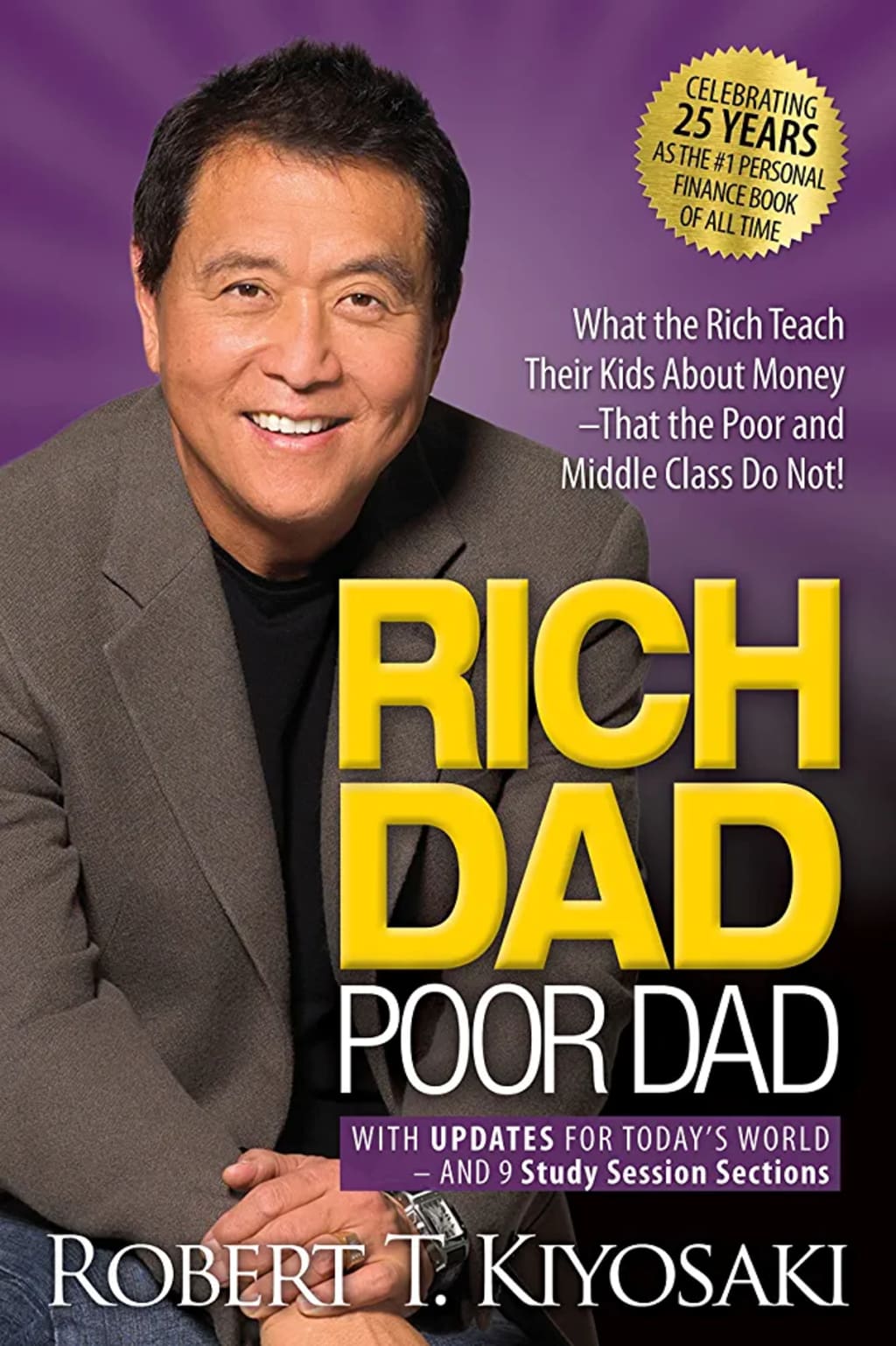
"Rich Dad Poor Dad" by Robert T. Kiyosaki is a personal finance book that has gained significant popularity since its release in 1997. The book presents Kiyosaki's personal experiences and lessons learned from his two fathers—one being his own biological father (poor dad) and the other being his best friend's father (rich dad). Through these two contrasting figures, Kiyosaki imparts valuable insights on how to achieve financial success and build wealth.
The central theme of "Rich Dad Poor Dad" revolves around the idea of financial literacy and the importance of acquiring financial education. Kiyosaki argues that traditional schooling does not adequately prepare individuals for the realities of the financial world, and he emphasizes the need for self-education to achieve financial independence.
One of the key concepts introduced in the book is the distinction between assets and liabilities. Kiyosaki defines assets as things that generate income and put money in one's pocket, while liabilities are things that take money out of one's pocket. He encourages readers to focus on acquiring assets that generate passive income, such as real estate, stocks, and businesses, instead of accumulating liabilities like cars or expensive houses that require ongoing expenses.
Kiyosaki also stresses the importance of developing a mindset of an investor rather than an employee. He challenges the conventional belief that job security and a high salary lead to financial prosperity. Instead, he encourages readers to seek financial freedom by taking calculated risks, investing in income-generating assets, and developing their own businesses.
Throughout the book, Kiyosaki shares personal anecdotes and stories to illustrate his points. He emphasizes the importance of financial discipline, goal setting, and the power of perseverance. Kiyosaki also provides practical advice on how to get started with investing, managing cash flow, and building a solid financial foundation.
Critics of "Rich Dad Poor Dad" argue that some of Kiyosaki's teachings oversimplify complex financial concepts and that his advice may not be applicable to everyone's circumstances. Additionally, Kiyosaki has faced scrutiny for not providing specific investment strategies or detailed step-by-step guidance.
However, supporters of the book appreciate its ability to inspire individuals to take control of their financial future and think differently about money. "Rich Dad Poor Dad" serves as a motivational tool, encouraging readers to challenge traditional norms and seek financial freedom through financial literacy, entrepreneurship, and investing.
In conclusion, "Rich Dad Poor Dad" by Robert T. Kiyosaki presents a unique perspective on personal finance, highlighting the importance of financial education, investing in income-generating assets, and adopting an entrepreneurial mindset. While some critics argue that the book oversimplifies complex financial concepts, its motivational and thought-provoking nature has resonated with millions of readers worldwide, making it a popular choice for those seeking to improve their financial literacy and pursue wealth creation.
Certainly! Here are some more detailed aspects of "Rich Dad Poor Dad":
1. The Cash Flow Quadrant: Kiyosaki introduces the concept of the Cash Flow Quadrant, which categorizes individuals into four quadrants based on their source of income: Employee (E), Self-Employed (S), Business Owner (B), and Investor (I). He emphasizes the importance of moving from the left side of the quadrant (E and S) to the right side (B and I) to achieve financial independence.
2. The Rat Race: Kiyosaki describes the "rat race" as a cycle where individuals work hard, earn money, spend it on liabilities, and remain trapped in a never-ending loop of financial dependency. He encourages readers to break free from this cycle by focusing on building assets and generating passive income.
3. The Power of Assets: The book emphasizes the significance of acquiring income-generating assets, such as rental properties, stocks, and businesses. Kiyosaki suggests that assets create a positive cash flow that can be reinvested to acquire more assets, leading to financial growth and wealth accumulation.
4. The Importance of Financial Education: Kiyosaki criticizes the traditional education system for its lack of emphasis on financial education. He argues that people should take responsibility for their financial knowledge and actively seek out opportunities to learn about money management, investing, and building businesses.
5. Mindset and Risk-Taking: "Rich Dad Poor Dad" explores the mindset required to succeed financially. Kiyosaki encourages readers to overcome fear, embrace failure as a learning opportunity, and take calculated risks to pursue financial independence. He highlights the importance of developing resilience, perseverance, and a positive attitude towards setbacks.
6. Real Estate Investing: Kiyosaki is a strong advocate of real estate investing as a means to build wealth. He shares his personal experiences and insights on how to identify profitable real estate opportunities, negotiate deals, and leverage financing options.
7. Critique of Conventional Wisdom: The book challenges conventional beliefs about money, such as the notion of homeownership as a path to wealth or the security of a stable job. Kiyosaki urges readers to question societal norms and adopt a more entrepreneurial and investment-oriented mindset.
8. Cash Flow Management: Kiyosaki emphasizes the importance of managing cash flow effectively by reducing expenses, avoiding unnecessary liabilities, and consistently investing in income-generating assets. He introduces the concept of "pay yourself first" to emphasize the priority of saving and investing before covering expenses.
It's important to note that while "Rich Dad Poor Dad" has inspired and motivated many individuals, it is always advisable to supplement the book's teachings with further research and seek professional advice before making any financial decisions.
About the Creator
Keep reading
More stories from writers in Motivation and other communities.
🅼🅸🅳🅽🅸🅶🅷🆃 🆂🅽🅰🅲🅺🆂
"It's 10 in Tuscon! We all know what that means... It's Time for Midnight Snacks with your man, Gerald Gee! Ready to spend the night together? Me too! I'm full of snacks and can't wait to regurgitate them all back into your hungry ears. Crack a brew! Pop some corn! Anything to get ready for one hell of a show where the talk maybe cheap but the words cut deep...
By Lamar Wiggins3 days ago in Fiction




Comments