
My Reflections on "The Art of the Deal" by Donald Trump
The book "The Art of the Deal," written by Donald Trump with Tony Schwartz, serves as a guide to business and deal-making from one of America's most well-known entrepreneurs.

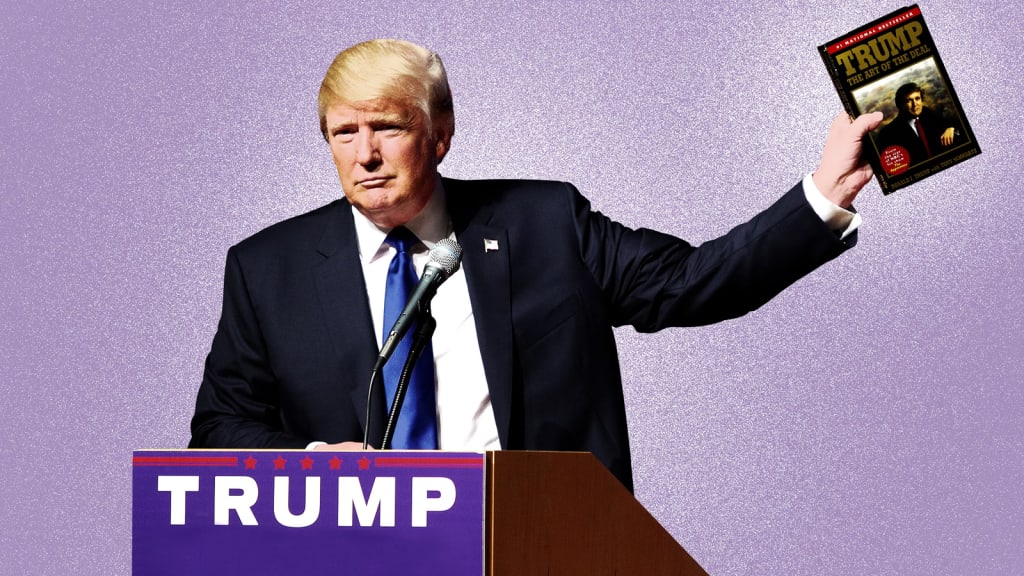
I recently finished reading "The Art of the Deal" by Donald Trump, co-authored with Tony Schwartz, and I wanted to share some of the key insights that resonated with me. This book offers a unique perspective on business and deal-making from one of America's most talked-about entrepreneurs. Here are the main ideas that stuck with me:
1. Think Big
One of the most famous principles outlined in The Art of the Deal is the idea of thinking big. Trump emphasizes that in order to achieve great things, you must first have great ambitions. According to Trump, mediocrity results from limiting yourself and not aiming for big goals. He writes, “I like thinking big. If you’re going to be thinking anything, you might as well think big.” This philosophy reflects Trump’s approach to business and life in general.
In the book, Trump shares various stories where thinking big paid off. For instance, when he purchased the Commodore Hotel in New York City, Trump envisioned transforming it into the Grand Hyatt, a major luxury hotel. His audacity in thinking big, combined with his willingness to take calculated risks, helped him realize this vision and others.
This lesson is particularly useful for entrepreneurs, businesspeople, or anyone with ambitions. Thinking big encourages you to go beyond your comfort zone, explore new possibilities, and pursue goals that seem intimidating.
2. Maximizing Your Options
Trump emphasizes the importance of having multiple options in any business deal. The more options you have, the more leverage you possess when negotiating. This allows you to walk away from bad deals without fear, while also giving you more power to secure favorable terms.
In one of the stories, Trump shares how he negotiated with bankers when trying to finance his first real estate project. By lining up several financial institutions as potential lenders, Trump was able to negotiate better terms with his final choice. The competition among the banks gave him leverage to secure a favorable interest rate and financing terms.
For businesspeople, this strategy is essential when negotiating contracts, securing funding, or entering partnerships. Having multiple options ensures that you won’t be backed into a corner with no way out. It also positions you as a confident negotiator who can hold out for better opportunities.
3. Know Your Market
Understanding the dynamics of the market in which you operate is critical, according to Trump. Whether in real estate, stock markets, or any other industry, having a clear understanding of market trends, values, and future directions allows you to make informed decisions.
In the book, Trump recalls how he studied the New York real estate market closely before making his move to purchase certain properties. He knew when prices were low, when demand was high, and when there were opportunities for value creation. By staying informed and up-to-date on market conditions, Trump was able to spot opportunities before others did and capitalize on them.
This lesson applies to virtually any industry. Whether you’re in tech, retail, or finance, knowing your market allows you to make decisions based on facts rather than assumptions. It’s this in-depth market knowledge that often separates successful businesspeople from those who fail.
4. The Importance of Focus
One of Trump’s most important strategies is focus. He stresses that in order to succeed, you must concentrate on your priorities and avoid distractions. Trump often cites his ability to immerse himself completely in a project and see it through to completion.
In one instance, he talks about the meticulous attention he gave to building the Trump Tower, ensuring that every detail was perfect. He focused on not only the design and construction but also the branding and marketing of the property. His single-minded focus on making Trump Tower a success paid off, as it became an iconic landmark in New York City and a testament to his success.
In today’s fast-paced world, the ability to focus is more important than ever. Multitasking and distractions are common, but Trump’s example highlights the benefits of dedicating your full attention to the task at hand.
5. Play Tough, But Fair
Trump is known for his aggressive style, and in The Art of the Deal, he discusses how playing tough—without crossing the line—has benefited him in business. He suggests that being overly soft or accommodating can make you vulnerable to being taken advantage of, but playing too tough can harm your reputation and future deals.
In one notable example, Trump negotiated with contractors during the construction of Trump Tower. He pushed for the best possible deals, often driving a hard bargain, but always paid fairly and on time. This earned him a reputation for being tough but fair—a key attribute for any businessperson.
The takeaway here is that in business, you need to be assertive in defending your interests, but you should also maintain ethical standards and fairness. This balance helps build lasting relationships and fosters trust, while also ensuring that you’re not easily taken advantage of.
6. Protect Your Brand
Trump’s name has become synonymous with wealth, power, and success, and he is acutely aware of the value of his personal brand. In The Art of the Deal, Trump talks about the importance of maintaining and protecting your brand identity. He views his name as a product, one that represents luxury, success, and high quality.
Whether it’s a company brand or personal reputation, Trump emphasizes that your brand must always be consistent with the values and image you want to project. He discusses how branding played a key role in the success of Trump Tower, where the name alone attracted high-profile buyers.
For entrepreneurs and business owners, branding is crucial. It’s not just about a logo or a name; it’s about the image you convey to your customers. Trump’s approach to branding highlights the importance of consistency, quality, and protecting your image at all costs.
7. Timing is Everything
In business, timing can make or break a deal. Trump highlights how critical timing is in his ventures, from buying properties at the right moment to selling assets when market conditions are favorable.
One of Trump’s most famous deals was his acquisition of the Commodore Hotel (which later became the Grand Hyatt). Trump purchased it at a time when the New York City real estate market was in decline, allowing him to negotiate favorable terms. As the market rebounded, the value of the property skyrocketed, and Trump reaped enormous financial rewards.
This lesson serves as a reminder that patience and careful planning are essential in business. Rushing into deals or making decisions based on short-term emotions can lead to mistakes, whereas strategic timing can create huge advantages.
8. Persistence Pays Off
Perhaps one of the most important themes in The Art of the Deal is persistence. Trump repeatedly emphasizes that success in business is rarely easy or instantaneous. It often requires hard work, perseverance, and the ability to overcome setbacks.
Trump talks about how he dealt with numerous challenges throughout his career, from legal battles to market downturns. In each case, his persistence and refusal to give up were key factors in his eventual success. Whether it’s securing a difficult deal or turning around a struggling project, persistence often separates those who succeed from those who fail.
This message resonates with anyone striving to achieve long-term goals. Setbacks are inevitable, but success is often just around the corner for those who keep pushing forward.
Conclusion
The Art of the Deal offers much more than just a glimpse into Donald Trump’s life as a businessman. It’s a book filled with practical advice for anyone looking to improve their negotiation skills, build a successful brand, or achieve big dreams. The lessons of thinking big, maximizing your options, knowing your market, focusing on priorities, playing tough but fair, protecting your brand, timing your actions, and persisting through difficulties are timeless principles that apply to business and life alike.
For those interested in entrepreneurship, negotiations, or personal success, Trump’s book remains a valuable resource, offering timeless wisdom with insights from the mind of one of America’s most controversial and successful businessmen.
About the Creator
Keep reading
More stories from Sirak Ghroyan and writers in Motivation and other communities.
Working Tips to Disguise Your Voice with a Voice Changer for Live Streaming!
Disguising your voice when streaming can be a fun and easy way to keep your identity hidden from the audience. By altering the sound of your voice you can maintain anonymity and prevent others from identifying you. While there are many ways to change your voice, using a voice changer for streaming is one of the most popular methods. Today, we're going to talk about how voice modulators work. We will also discover how Podcastle's brand-new digital voices can help you stay disguised while streaming to your audience.
By Sirak Ghroyan3 years ago in Education
Corrosion Resistance That Endures: The Strength of Hot-Dip Galvanized Steel
Steel remains essential to infrastructure, manufacturing, and development across the nation. However, corrosion constantly threatens its durability and performance. When steel comes into contact with moisture and oxygen, rust begins to form and slowly spreads. Over time, this process weakens structures and increases safety risks. Therefore, engineers and asset owners seek protection methods that deliver long-term reliability. Hot-dip galvanizing provides a proven answer to this ongoing challenge.
By Frontier Galvanizing4 days ago in Motivation


Comments
There are no comments for this story
Be the first to respond and start the conversation.