
My Journal Was My Therapist
How Blank Pages Became the Safest Place to Fall Apart — and Rise Again

By[Hazrat ali]
My Journal Was My Therapist
A Blueprint of Healing, One Page at a Time
I didn’t buy my first journal to heal. I bought it to shut my thoughts up.
It was a cheap spiral-bound notebook from a grocery store shelf—one of those impulse purchases you toss in the cart between frozen meals and toilet paper. I remember the cover had a soft floral design, almost embarrassingly delicate for the storm I was carrying inside. But I was desperate. I didn’t know how to talk to anyone. I only knew I needed to release something before I drowned in the silence of my own mind.
I was twenty-two, freshly heartbroken, jobless, and living in a city where I knew no one. I had come here to chase something—maybe a dream, maybe a version of myself I hadn’t met yet—but it all fell apart faster than I could catch it. And there I was, one cold November morning, sitting on a mattress on the floor with nothing but a mug of instant coffee and that blank notebook.
I didn’t know how to begin, so I wrote the first thing that came to me:
“I’m tired of pretending I’m okay.”
That was the first truth I had admitted out loud in weeks.
Something cracked open.
In the weeks that followed, the pages soaked up everything I couldn’t tell people. My fears. My rage. My guilt. The nights I cried quietly into my pillow so no one would hear through the paper-thin apartment walls. I wrote when my hands were shaking. I wrote when my chest felt like it was caving in. I wrote when I couldn’t trust my own thoughts enough to speak them.
My journal didn’t interrupt me. It didn’t offer advice I wasn’t ready to hear. It didn’t flinch when I got ugly.
It let me bleed safely.
Over time, writing became more than a way to vent. It became a way to understand. The more I wrote, the more I uncovered the patterns I was stuck in—the toxic relationships I clung to out of fear, the self-sabotage I labeled as “being realistic,” the way I minimized my needs to be liked by people who never even asked me to.
I began to ask myself questions: Why did I say yes when I meant no? Why was I afraid of being alone? Why did I let myself be treated like a second option?
And somewhere between those scribbled questions and tear-streaked answers, I began to meet a version of myself I hadn’t heard from in years. A softer voice. A kinder one.
The voice that didn’t just want me to survive—but to grow.
Months passed. The heartbreak dulled. I found part-time work. I made a friend or two. I began sleeping better. But more than anything, I learned how to carry myself through pain instead of waiting to be rescued from it.
That journal filled up fast. Then came a second. And a third.
Each one was different.
The first one was grief.
The second, rage.
The third was forgiveness.
By the fourth, I was writing dreams again. Not regrets.
I used to think journaling was for kids. For poets. For people who had nothing better to do than write about their feelings.
Now I know better.
Journaling is a lifeline. It’s a therapist you can reach at 2 a.m. when the world is quiet and your head is loud. It’s a mirror that doesn’t lie. It’s a map of where you’ve been—and sometimes, a compass pointing where you need to go.
No, it doesn’t solve everything. It didn’t cure my depression. It didn’t magically make people understand me. But it helped me understand me. And that was more powerful than I ever imagined.
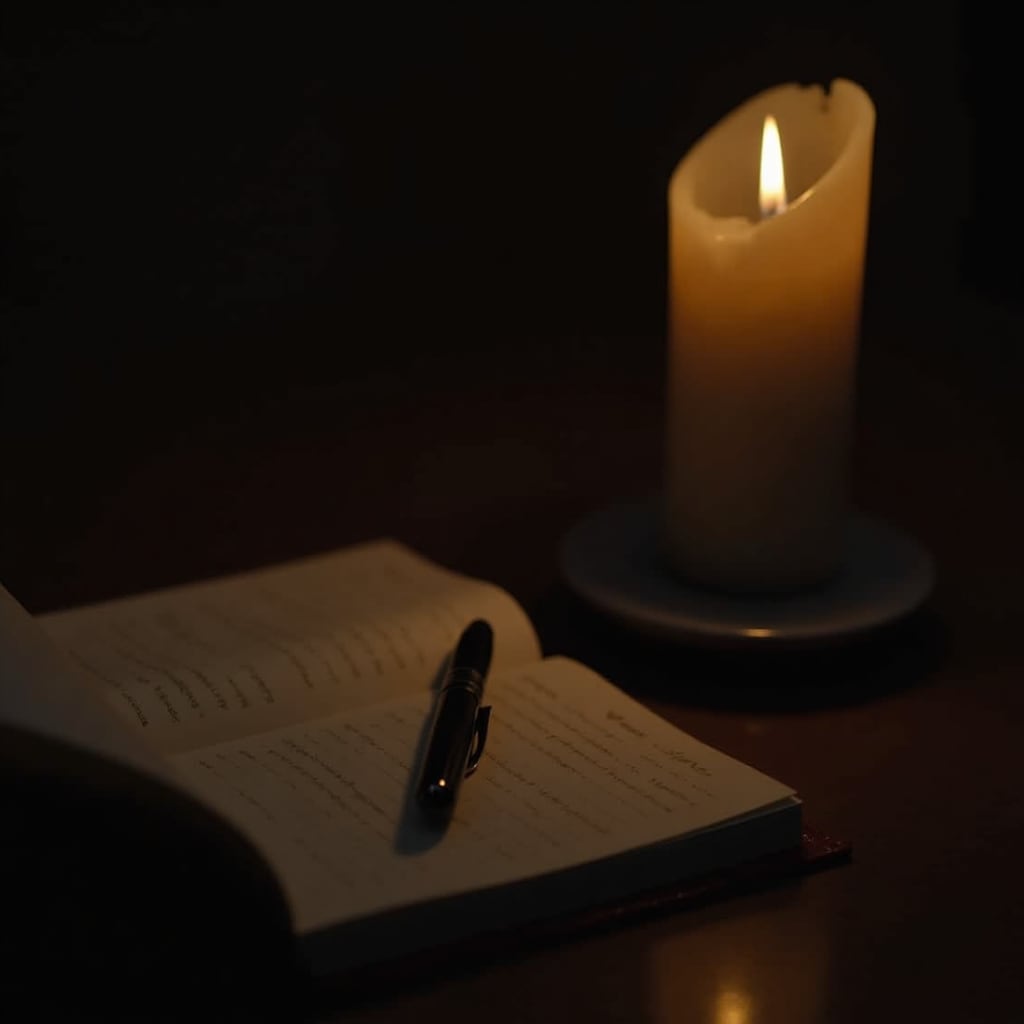
These days, my journal sits by my bed, a worn leather-bound notebook with a ribbon for a bookmark. The pages are no longer soaked in desperation. They hold reflections. Hopes. Gratitude. The occasional venting session, sure—but mostly, they’re a record of how far I’ve come.
And sometimes, when I reread an old entry, I want to reach back in time and hold the hand of the girl who wrote it. I want to tell her she was never weak for feeling deeply. She was never broken—just buried. And every word she wrote brought her closer to the surface.
So no, I’ve never had a traditional therapist. Maybe one day I will. But in the moments I needed it most, when I couldn’t afford help or didn’t know how to ask for it, I found something that held space for me.
My journal.
And it saved me, one honest page at a time.
About the Creator
Keep reading
More stories from hazrat ali and writers in Motivation and other communities.
Breaking Chains: My Journey to Strength Through Struggle
For years, I lived under the weight of invisible chains — burdens forged by fear, doubt, and circumstances beyond my control. These chains weren’t physical, but they held me captive nonetheless. Every step I took felt heavy, as if the very air around me was thick with uncertainty and pain. I often wondered if I would ever be free.
By hazrat ali6 months ago in Motivation


Comments
There are no comments for this story
Be the first to respond and start the conversation.