
Morgan Freeman: A Life Story of Struggles, Perseverance, and Timeless Success
Success Story

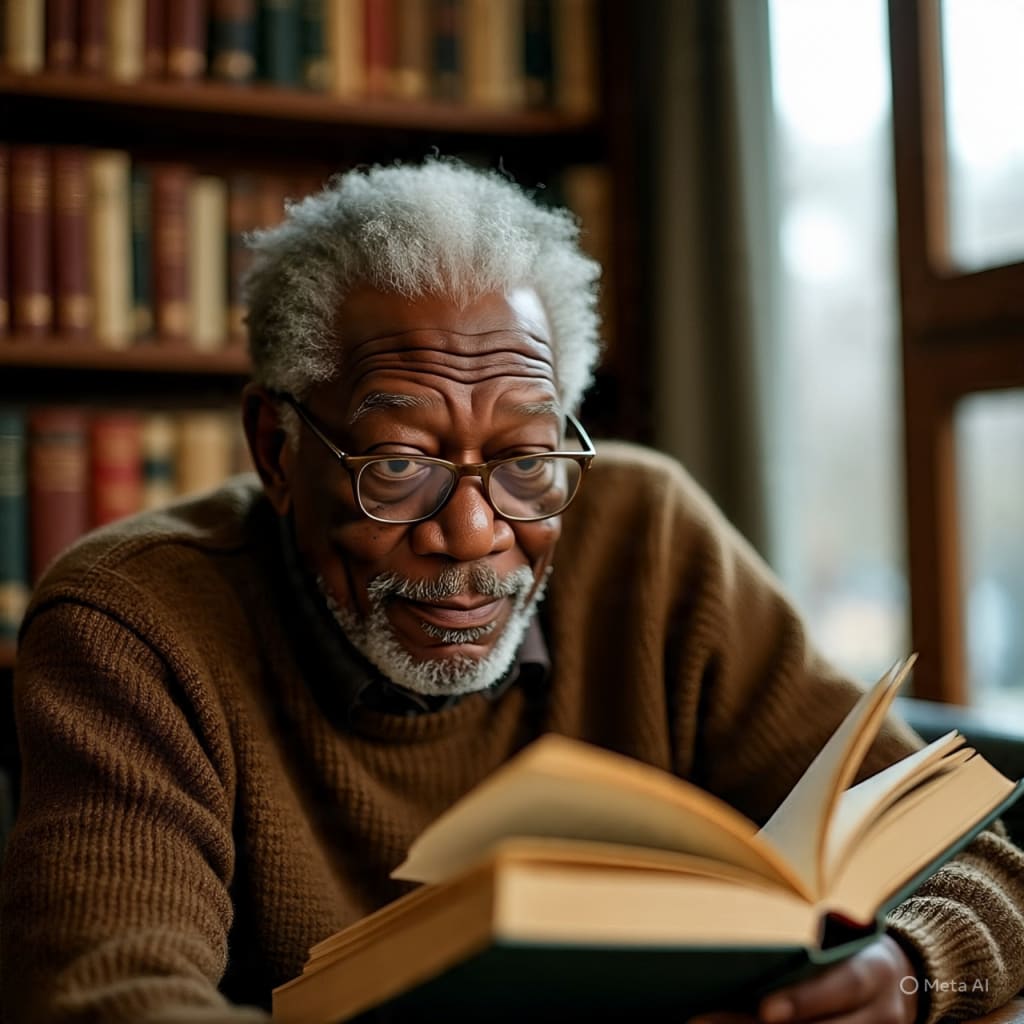
Few actors embody wisdom, resilience, and humanity quite like Morgan Freeman. With his unforgettable deep voice, calm demeanor, and unmatched ability to bring characters to life, he has become a living legend in Hollywood. But behind his success lies a story of poverty, rejection, late blooming, and relentless determination. This is not just the biography of Morgan Freeman—it is a powerful testament to patience, perseverance, and the belief that dreams have no expiration date.
Early Life: Growing Up in Struggle
Morgan Freeman’s life story begins on June 1, 1937, in Memphis, Tennessee. He was the youngest of five children born to Mayme Edna, a teacher, and Morgan Porterfield Freeman, a barber. His early years were far from glamorous—his family lived in poverty, moving frequently between Mississippi and Indiana in search of better opportunities.
The America he grew up in was still deeply segregated. Freeman himself has spoken about how limited opportunities were for African Americans in the 1940s and 1950s. But what he lacked in privilege, he made up for in imagination.
At just nine years old, Freeman performed in a school play. His natural talent for acting was evident even then, but the road ahead was uncertain. He loved the stage, yet the realities of poverty often pulled him in other directions.
A Dream Interrupted: Air Force and Early Struggles
After graduating from high school in 1955, Freeman had a choice: pursue acting or find stability. Fascinated by airplanes, he joined the U.S. Air Force and trained as a radar technician. Like many young men, he thought wearing the uniform and serving his country would give his life meaning.
But the Air Force wasn’t what he had imagined. Freeman wanted to fly planes, but his role kept him grounded—literally. Eventually, he realized his true calling was storytelling, not flying. Leaving the Air Force was a bold step; it meant returning to uncertainty. Yet Freeman had rediscovered his passion for acting, and he was ready to pursue it, even if success seemed impossible.
The Struggling Actor: Years of Rejection
The 1960s and 1970s were not easy decades for Freeman. He studied acting in Los Angeles, took classes in New York, and worked odd jobs to make ends meet. He performed in theater productions, including Shakespeare plays, and slowly built a reputation as a talented stage actor.
But Hollywood was not kind to Black actors during that time. Roles were scarce, and stereotypes were common. Freeman often played small parts on stage and in television shows. His most notable break came with The Electric Company, a children’s educational TV program, where he played fun characters like Easy Reader. While the show paid his bills, it wasn’t the kind of career-defining role he had dreamed of.
It wasn’t until he was in his late 40s that Freeman’s career finally began to shift. For most actors, success comes—or doesn’t—by their 20s or 30s. But Freeman’s life story proves that talent and persistence can defy timelines.
Breakthrough Roles: The Late Bloomer’s Triumph
In 1987, at age 50, Morgan Freeman delivered a breakthrough performance in the film Street Smart, playing a volatile pimp named Fast Black. His performance was so powerful that it earned him an Academy Award nomination for Best Supporting Actor. Suddenly, Hollywood could no longer ignore him.
Two years later, Freeman starred in Driving Miss Daisy (1989), a role that would change his life. Playing Hoke Colburn, a chauffeur to an elderly Southern woman, Freeman showcased his ability to bring dignity and nuance to complex roles. The film became a cultural phenomenon, and Freeman earned another Oscar nomination.
By the 1990s, Freeman had become one of Hollywood’s most respected actors. Films like Glory (1989), Lean on Me (1989), and Robin Hood: Prince of Thieves (1991) showed his versatility. But his most iconic role came in 1994 with The Shawshank Redemption, where he played Ellis “Red” Redding.
Though the film was not a box office hit at first, it went on to become one of the most beloved movies of all time. Freeman’s voiceover narration and grounded performance gave the film its soul. Today, many fans still consider it the best example of Freeman’s storytelling gift.
The Voice of God: Iconic Roles in the 2000s
By the early 2000s, Freeman’s reputation as a master actor was sealed. His deep, soothing voice became instantly recognizable, often described as the “voice of God.” Hollywood leaned into this persona—he literally played God in Bruce Almighty (2003) and its sequel Evan Almighty (2007).
In 2005, Freeman won his first Academy Award for Best Supporting Actor for his role in Million Dollar Baby, directed by Clint Eastwood. The performance was raw, emotional, and unforgettable, cementing his place among cinema’s greats.
He continued to shine in roles across genres:
Se7en (1995): A gritty detective film with Brad Pitt.
Deep Impact (1998): As the U.S. President facing a global crisis.
Batman Begins (2005) & The Dark Knight Trilogy: As Lucius Fox, providing wisdom and calm in Gotham’s chaos.
With each role, Freeman proved that age is no barrier to success. He was not just a late bloomer; he became timeless.
Personal Struggles: The Man Behind the Legend
While Freeman’s career soared, his personal life was marked by struggles. He married twice and went through divorces, which he admitted were painful. He also faced family tragedies, including the loss of his step-granddaughter.
In 2008, Freeman was in a near-fatal car accident in Mississippi that left him with long-term nerve damage. He continued to work despite his injuries, refusing to let physical pain stop him.
Controversies, too, tested his reputation. In 2018, Freeman faced allegations of inappropriate behavior, which he denied. While the accusations complicated his image, many in Hollywood continued to respect his work and legacy.
Through it all, Freeman has remained resilient, echoing the very roles he plays on screen—calm, wise, and unbreakable.
Legacy: A Symbol of Perseverance
What makes Morgan Freeman’s biography so inspiring is not just his talent but his journey. He is living proof that success can come at any age. While many actors peak early, Freeman’s career only truly blossomed after 50.
His story resonates with millions who feel it’s “too late” to chase their dreams. Freeman is a reminder that patience, resilience, and belief in one’s craft can eventually lead to greatness.
Today, Freeman is not only a Hollywood icon but also a humanitarian, supporting causes related to education, the environment, and racial equality. His voice narrates documentaries, commercials, and films that shape how we see the world.
Conclusion: Lessons from Morgan Freeman’s Life
Morgan Freeman’s journey is not just the story of an actor—it is the story of resilience, patience, and unwavering belief in oneself. From a poor boy in segregated America to an Oscar-winning legend, his life story shows that dreams don’t have deadlines.
He once said: “Learning how to be still, to really be still and let life happen—that stillness becomes a radiance.”
For anyone chasing a dream, no matter how impossible it feels, Freeman’s story is proof that it’s never too late to shine.
About the Creator
Frank Massey
Tech, AI, and social media writer with a passion for storytelling. I turn complex trends into engaging, relatable content. Exploring the future, one story at a time
Keep reading
More stories from Frank Massey and writers in Motivation and other communities.
Rihanna: From Island Girl to Global Icon, Billionaire, and Symbol of Resilience
When we hear the name Rihanna, we think of dazzling red carpets, chart-topping songs, powerful business ventures, and unapologetic confidence. But behind the fame and glamour lies a story of resilience, pain, hard work, and relentless determination. Rihanna is more than a pop star—she is a visionary who transformed her struggles into global influence.
By Frank Massey 4 months ago in Motivation
Influential Women Magazine: Where Power, Purpose, and Legacy Align
In a world where visibility is often mistaken for influence, Influential Women Magazine stands apart. It is more than a publication - it is a purpose-driven platform that celebrates women whose leadership is rooted in substance, values, and long-term impact. Rather than focusing on fleeting trends or surface-level recognition, the magazine amplifies stories that matter stories of women shaping industries, communities, and future generations through intentional leadership.
By influentialwomenmagazine3 days ago in Motivation
So You Decided To Become a Nurse Practitioner:
So you decided to become an "Advanced Practice" nurse. Congratulations!... is what I would say if this was a good idea. Grad school? In this economy? What were you thinking? Likely it was something along the lines of either 1) “I've seen these other chucklefucks do it— Why can't I?” or even 2) “I've got a nice career, I should shake it up. I miss feeling like I have no clue what I'm doing.”
By Sandor Szaboa day ago in Fiction


Comments
There are no comments for this story
Be the first to respond and start the conversation.