
Lack Of Healthy Communication Skills
Lack Of Communication Skills

Lack Of Healthy Communication Skills
Healthy communication is fundamental to building strong relationships, resolving conflicts, and fostering understanding between individuals. When there is a lack of healthy communication skills, interactions can become strained, leading to misunderstandings, frustration, and emotional distance.
Healthy communication is the cornerstone of effective relationships and successful interaction in all areas of life. It involves not only the ability to clearly express ideas and emotions but also the skill of actively listening and responding thoughtfully. When healthy communication skills are lacking, it creates barriers that can damage relationships, hinder problem-solving, and create emotional distress.
What Does a Lack of Healthy Communication Look Like?
Ineffective Listening:
People with poor communication skills often fail to listen attentively. Instead of focusing on understanding the speaker’s message, they may be distracted, interrupt frequently, or think about their response while the other person is still talking. This leads to misinterpretations and feelings of being undervalued or ignored.
Inability to Express Thoughts and Feelings Clearly:
Some individuals struggle to articulate their ideas, needs, or emotions. This can result in vague or confusing messages, which may be misunderstood or overlooked. Without clear expression, it’s difficult for others to respond appropriately or offer support.
Avoidance or Suppression of Difficult Topics:
Healthy communication requires addressing uncomfortable issues openly and honestly. However, a lack of these skills often leads people to avoid conflict or suppress their true feelings. This avoidance can cause unresolved problems to fester, leading to resentment and further breakdowns in communication.
Use of Negative Communication Patterns:
Instead of respectful dialogue, poor communication often includes blame, criticism, sarcasm, defensiveness, or passive-aggressive behavior. These patterns create an environment of hostility and mistrust, where individuals feel attacked rather than understood.
Lack of Empathy and Emotional Awareness:
Without empathy, communication becomes one-sided. People may fail to recognize or validate the emotions of others, making conversations feel cold or dismissive. Emotional awareness is critical for responding in ways that foster connection rather than conflict.
Consequences of Lacking Healthy Communication Skills
Increased Conflicts: Misunderstandings and misinterpretations become more frequent, leading to arguments and strained relationships.
Emotional Distance: When communication breaks down, people often feel isolated, lonely, or disconnected from others.
Reduced Collaboration: In workplaces or teams, poor communication hampers cooperation and productivity.
Stress and Anxiety: Both parties may experience increased stress due to unresolved issues or negative interactions.
Erosion of Trust: Consistent poor communication can damage trust, making it difficult to rebuild relationships.
Why Do People Lack Healthy Communication Skills?
Lack of Awareness or Education: Many people are never taught effective communication strategies.
Fear of Vulnerability: Opening up emotionally can be intimidating, leading to guarded or defensive communication.
Cultural or Personality Differences: Variations in communication styles can cause misunderstandings if not managed thoughtfully.
Past Negative Experiences: Previous conflicts or trauma can make people wary of honest communication.
How to Improve Communication Skills
Practice Active Listening: Focus fully on the speaker, avoid interrupting, and reflect back what you’ve heard.
Express Yourself Clearly and Calmly: Use “I” statements to share feelings without blaming.
Address Issues Promptly: Tackle difficult conversations with openness rather than avoidance.
Develop Empathy: Try to understand and validate others’ perspectives and emotions.
Be Mindful of Nonverbal Cues: Body language, tone, and facial expressions are critical parts of communication.
Seek Feedback: Encourage honest feedback to improve mutual understanding.
Consequences of poor communication skills can include frequent conflicts, weakened relationships, increased stress, and reduced collaboration in both personal and professional settings. Developing healthy communication requires patience, active listening, openness, and emotional intelligence to express oneself honestly and respectfully while understanding others.
Consequences of poor communication skills can include frequent conflicts, weakened relationships, increased stress, and reduced collaboration in both personal and professional settings. Developing healthy communication requires patience, active listening, openness, and emotional intelligence to express oneself honestly and respectfully while understanding others.
About the Creator
Keep reading
More stories from Oluwatosin Adesoba and writers in Motivation and other communities.
Why Do People Manipulate?
Why Do People Manipulate? Why Do People Manipulate? Manipulation is a complex behavior where someone influences or controls others, often in a deceptive or unfair way, to achieve a specific goal. People manipulate for many reasons, and understanding these reasons can help us recognize manipulation and respond to it effectively.
By Oluwatosin Adesoba8 months ago in Motivation
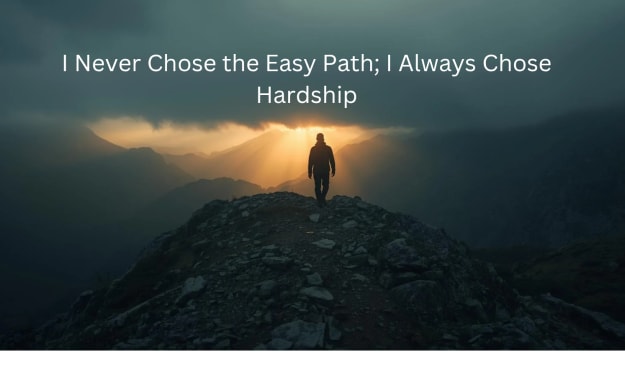
I Never Chose the Easy Path; I Always Chose Hardship
From the earliest memories I can recall, life presented me with two roads. One was smooth, inviting, and well-trodden—a path that promised comfort, approval, and ease. The other was rough, rocky, and uncertain—a path of struggle, obstacles, and lessons that demanded effort, patience, and resilience. I never chose the smooth road. I never took shortcuts. Not because I was fearless, but because something deep inside refused to let me live a life that wasn’t earned. The easy path whispered promises of fleeting satisfaction, fleeting success, and fleeting recognition. It was tempting. Many around me chose it, and I often wondered if I was foolish for ignoring it. But I learned early that true growth is rarely convenient. The easiest choice often leads to emptiness, to regret, to a quiet knowing that you could have been more than you allowed yourself to be. Hardship became my teacher long before success ever noticed me. The lessons it offered were harsh, uncompromising, and often lonely. There were days when choosing the hard path felt like choosing isolation. While others were celebrated for small accomplishments, supported by friends and family, I walked in silence, with doubt as my companion. Progress was invisible to the world. Failures were frequent and relentless. Many nights, I returned home tired, my heart heavy, my mind questioning why I even bothered. Yet even in that silence, I was being shaped. I was learning the value of persistence, of dedication, and of refusing to give up on myself. The hard path forced honesty. It refused to allow excuses. It stripped away illusions and pretenses. I was left face-to-face with my limits, my fears, and my own humanity. On this path, I discovered strengths I never knew I had: patience I had never cultivated, resilience I had doubted, and self-respect that grew every time I stood up instead of walking away. These were not lessons that could be taught in comfort. They were only learned in struggle, in challenge, and in the quiet persistence of refusing to quit when no one was watching. I remember one time vividly. I had a goal that seemed impossible—one that required me to sacrifice comfort, leisure, and social approval. The easy path was right there: a way to avoid the challenge, to be “okay,” to follow what others had done before me. Many advised me to take it. “It’s safer,” they said. “It’s simpler,” they said. But I could feel, deep inside, that taking the easy way would leave me empty. I chose the hard path. The journey was grueling. Every step felt like pushing against gravity. But with each challenge, I gained more than I ever would have on the easy road. I gained endurance, confidence, and an understanding that real achievement is never handed—it is earned. Strength, I realized, isn’t loud. It doesn’t announce itself. It grows quietly, in the moments no one sees—the early mornings, the long nights, the repeated failures, the times you push forward when giving up would be understandable. Resilience is not simply surviving; it is deliberately choosing to continue, to stand again, to pursue the path that tests you the most. It is knowing that walking away is easier but will never lead to the person you are capable of becoming. I have walked many hard roads in life. Each one was different, yet the lessons were the same: comfort cannot teach endurance, shortcuts cannot teach discipline, and fleeting success cannot teach respect. Every struggle, no matter how small, adds to your character. Every failure is a mirror that shows you who you really are. And every choice to face hardship instead of fleeing builds a foundation that lasts long after temporary victories fade. There were times when I felt truly alone. People around me often misunderstood my choices. Friends, family, colleagues—they all questioned why I refused the easy way, why I worked harder, why I pushed myself beyond what seemed necessary. They didn’t see the growth happening quietly inside me. They didn’t see the small victories, the lessons learned, the resilience being forged. But eventually, the results spoke for themselves—not in a loud announcement, but in the quiet confidence and self-respect that I had built from the inside out. Life, I have learned, rewards those who endure hardship. Not always immediately. Not always visibly. But it rewards those who persist, who face struggle head-on, and who refuse to settle for anything less than becoming their fullest selves. Success that comes without effort is temporary; strength and self-respect are eternal. Hardship tests us, but it also teaches us. It shows us the depth of our own courage, the strength of our will, and the power of refusing to surrender. The lessons of the hard path are subtle, often invisible, and always lasting. I learned that failing is not shameful; failing is a necessary step toward mastery. I learned that enduring pain, even when no one notices, builds a type of strength that comfort never can. I learned that the more difficult the path, the deeper the reward—not measured in wealth or fame, but in character, wisdom, and self-respect. Every choice to embrace struggle instead of avoiding it shaped me. Every sacrifice, every extra hour, every moment of doubt faced instead of ignored, added to the foundation of the person I am today. My life was not easy. It was messy, unpredictable, and often overwhelming. But it was authentic. It was mine. And through hardship, I became resilient. I became someone who can face challenges without fear because I have faced them before. I became someone who respects themselves because I have honored my own effort. I became someone capable of growth because I refused to choose comfort over character. I often reflect on the people around me who chose the easy path. Many of them achieved quick victories, immediate recognition, and temporary peace. But over time, I noticed something important: the victories were shallow, the peace fleeting, and the growth minimal. They lacked the depth of resilience, the quiet power of self-respect, and the profound satisfaction that comes from knowing you endured, you learned, and you became someone stronger. Choosing hardship is not glamorous. It is not celebrated in real-time. It is often lonely, exhausting, and demanding. But it is transformative. It shapes your mind, your heart, and your spirit in ways comfort never can. It teaches discipline, patience, humility, and courage. It makes failure meaningful, effort valuable, and success earned. The hard path is where true people are made—people who understand that life’s challenges are not punishments, but opportunities. Opportunities to become better, stronger, wiser, and more capable. I never chose the easy path. I always chose the harder road, the one that tested me, the one that demanded effort, and the one that required me to face myself honestly. I walked through fear, doubt, exhaustion, and setbacks. I fell, and I got up. I failed, and I tried again. I cried, I questioned, I endured. And through it all, I became someone I could respect, someone who knew the value of persistence, someone who understood that hardship is not the enemy—it is the greatest teacher. Today, I measure success differently. I do not measure it by comfort, convenience, or ease. I measure it by growth, resilience, and the depth of self-respect I have cultivated. I measure it by how I faced challenges I could not ignore, how I embraced struggles that seemed unbearable, and how I refused to take shortcuts at the cost of my own becoming. I never chose the easy path. I chose the one that made me resilient. I chose the one that taught me self-respect. I chose the one that allowed me to become the person I am today. And if I had the choice again, I would choose the hard path every single time. Because the road of struggle is not only a journey—it is the making of a human being.writing...
By Ihtisham Ulhaq5 days ago in Motivation



Comments
There are no comments for this story
Be the first to respond and start the conversation.