
In the City, your first brother is money
The city respects money — not names

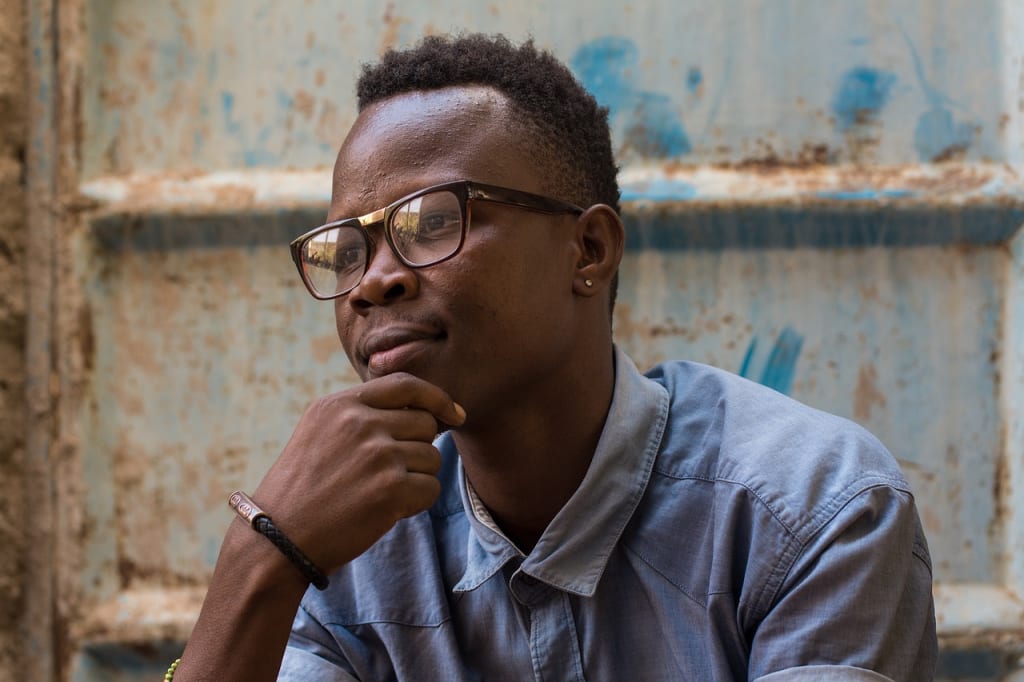
Marc Reflects
"Once you get there, your own brother will be called money."
I heard that phrase from old Karisa the day I packed my bag to leave the village. It was dusty and hot, and I remember the way he stood near the footpath that led to the main road — bent slightly with age, but his eyes sharper than ever.
“Young man,” he called out, “do not go thinking the city has space for people like you. You think people there care about your father’s name or your clan? Once you get there, your brother will be money.”
I laughed it off then. I thought he was just being cynical, as elders often are when they see youth walking toward what they once tried and failed. But deep down, I believed I would be different. I believed the city would welcome me, that my hard work would be seen, that I would rise, and one day return with shiny shoes and a voice with an accent.
So I left — with a small suitcase, a heart full of hope, and a crumpled envelope with 14,000 francs inside.
Dreams vs. the City
Kigali was louder than I expected. Fast. Unapologetic. Everyone looked like they had somewhere to be — phones in hand, faces forward. At the taxi park, no one smiled. No one asked where I was from. No one even looked me in the eye.
I spent the first few nights in a cramped corner at a distant cousin’s place in Gikondo. At first, he was welcoming — until it was clear I had no job, no income, and no “connection.” Within two weeks, his hospitality became tension. One night, he muttered under his breath, thinking I couldn’t hear: “Niba adashaka kujya gushaka akazi, azagenda.”
(If he’s not going to look for work, he’ll have to go.)
I was already looking. Every day. From dawn to evening. I knocked on office doors, tried construction sites, offered to carry luggage at the bus station. Sometimes I made 500 francs a day. Some days, nothing. No one cared what I had studied in secondary school. No one asked what I dreamed of becoming. They just looked at my shoes — worn — and my hands — rough — and kept walking.
Brothers Who Look the Other Way
One day, I ran into an old schoolmate. He had moved to the city years before me and now worked in a delivery company. He had new clothes, a clean haircut, and the look of someone who had adjusted to city air. My heart lifted. I thought he’d help me — at least give me some leads or a place to stay.
We sat at a small milk bar, and I began telling him how tough things had been. Before I could finish, he leaned back and sighed.
“Bro, you know how life is here. Even I have so many people asking me for help. This town doesn’t allow softness.”
Then he said it:
“You know, here, your only brother is money.”
I froze. He didn’t know he had just echoed old Karisa’s words. The same words I had laughed at now sat heavy in my stomach.
Hard Truths in Hidden Places
In the weeks that followed, I started noticing it everywhere.
• The landlord didn’t care if your child was sick — no rent, no room.
• Church friends turned cold when they found out you were jobless.
• Even those who said “let’s keep in touch” stopped answering after they saw your balance sheet.
I once stood outside a hotel kitchen, hoping to be hired as a cleaner. A woman behind the counter looked me up and down and said, “Ufite amafaranga cyangwa ufite umuntu uhazi?”
(Do you have money or someone inside?)
When I said “none,” she waved me off. I didn’t even get to explain my willingness to clean toilets for free the first week.
That day, I walked until my legs ached and sat under a small jacaranda tree by the roadside. I cried. Not because of pain. But because I realized the city didn’t care who I was — only what I had.
The Shift
But something happened that changed everything. Not overnight. Not magically. But internally.
I remembered old Karisa’s warning — not as bitterness, but as wisdom. He wasn’t telling me not to go; he was telling me to go prepared.
Prepared to face a world where value is transactional. Where relationships are tied to what you bring to the table. Where, if you don’t have money, you must have purpose, skill, resilience, or a sharp mind.
So I stopped begging to be seen and started building value.
• I offered to clean shops in exchange for leftovers.
• I watched YouTube videos on how to use Microsoft Excel at a public library.
• I started buying and reselling phone chargers — just one or two at a time.
• Eventually, I was trusted by a vendor to manage a kiosk. Then came more doors.
It was slow. Humbling. But real.
What the City Taught Me
Old Karisa wasn’t entirely wrong.
In the city, money speaks first. It is the passport to attention, opportunity, and sometimes, even affection. But beyond that — in the silence — the city also respects those who don’t give up.
It may not welcome you with open arms, but if you stay long enough, learn fast, and add value, it eventually makes room for you.
But only if you refuse to become bitter. Only if you stop expecting softness from a hard world and start sharpening yourself to fit its edges.
Final Reflection: Go, But Go Prepared
So if you’re standing where I once stood — bag packed, heart full of dreams, looking toward the city — hear me now:
Go. But go prepared.
Go knowing that your name won’t open doors — your worth will.
Go knowing that even your own brother will look the other way if you have nothing to offer.
Go knowing that in the city, your first brother is money — but your best ally is resilience.
Don’t go looking for help. Go looking for a way to become helpful.
Because once you do, even the city — as tough and cold as it seems — will start to notice.
Want More Stories Like This?
I share more reflections and lived experiences on my blog — the real lessons we often overlook in everyday life. If this piece moved you, inspired you, or made you reflect on your own journey…
Read more at Marc Reflects
Let’s keep learning — one story at a time.
About the Creator
Marc Reflects
"Writer of African reflections, practical life lessons and lived experiences. I explore personal growth, resilience, and entrepreneurship through stories that uplift, challenge, and connect people at the heart level. Let’s grow together.”
Keep reading
More stories from Marc Reflects and writers in Motivation and other communities.
We Were Not Born Just to Survive: A Quiet Rebellion Against Settling
By Marc Reflects Introduction: When Struggle Becomes Normal In many places, especially across parts of Africa, the idea of “just making it through” is not a season—it’s a way of life. We survive, not because we lack dreams, but because the system teaches us to aim low. I have come to believe that many of us—especially those born into scarcity—are not lazy. We are trained by necessity.
By Marc Reflects 6 months ago in Motivation
My Daily Win
I used to end every day feeling like a failure. It didn't matter what I accomplished. I could cross off ten items from my to-do list, and all I'd see were the fifteen I didn't finish. I could have a productive work day, cook a healthy dinner, and call my mom—and still go to bed thinking about the email I forgot to send or the closet I didn't organize.
By Fazal Hadi6 days ago in Motivation



Comments
There are no comments for this story
Be the first to respond and start the conversation.